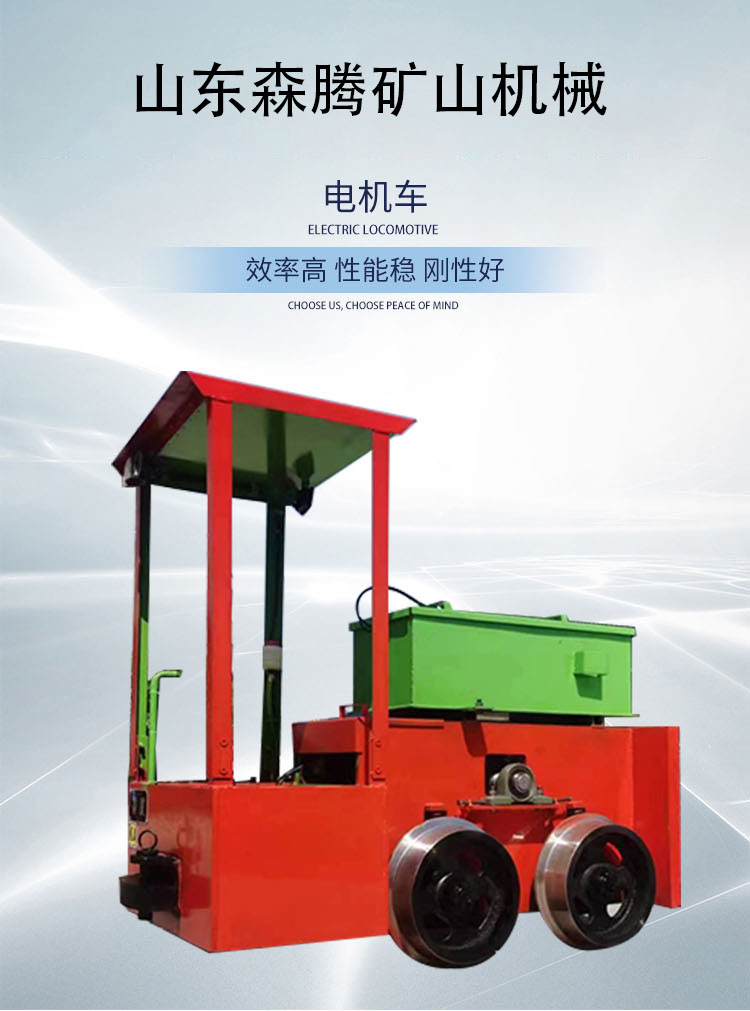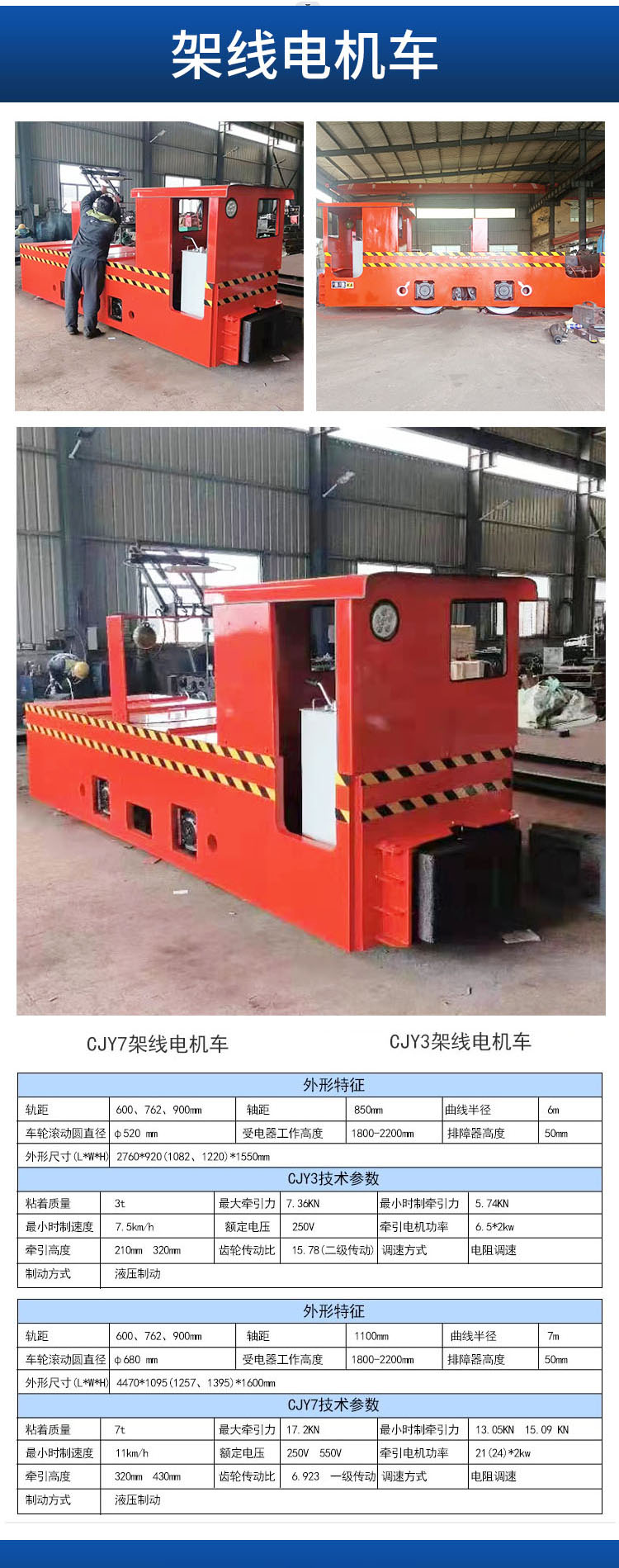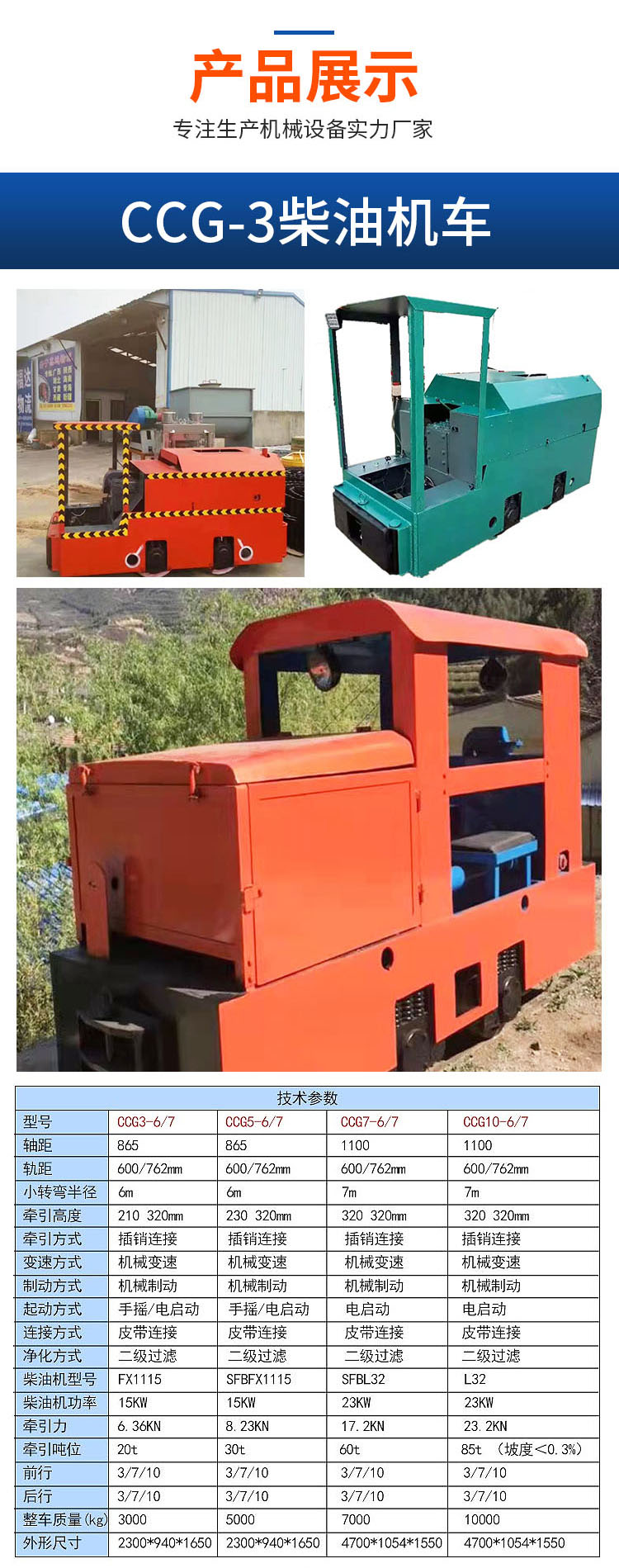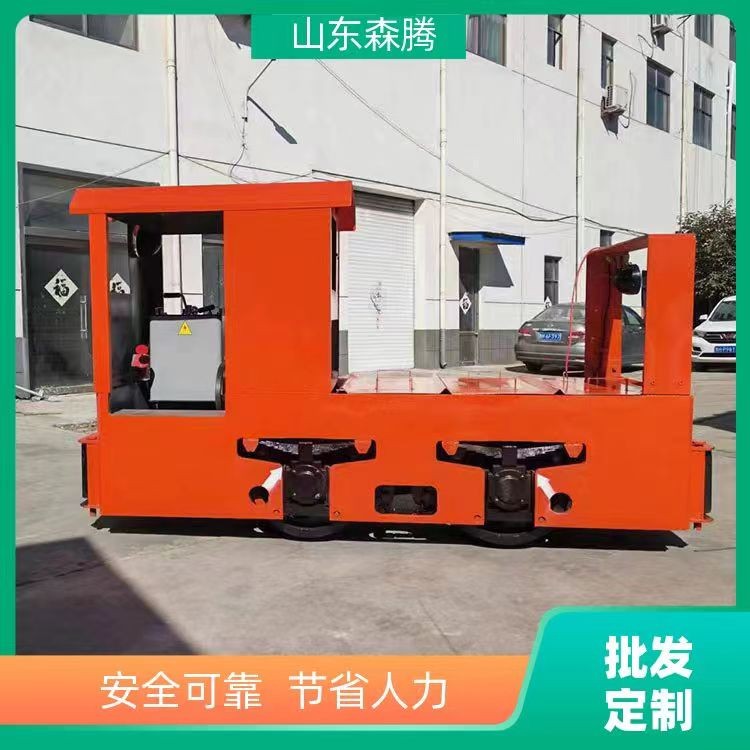














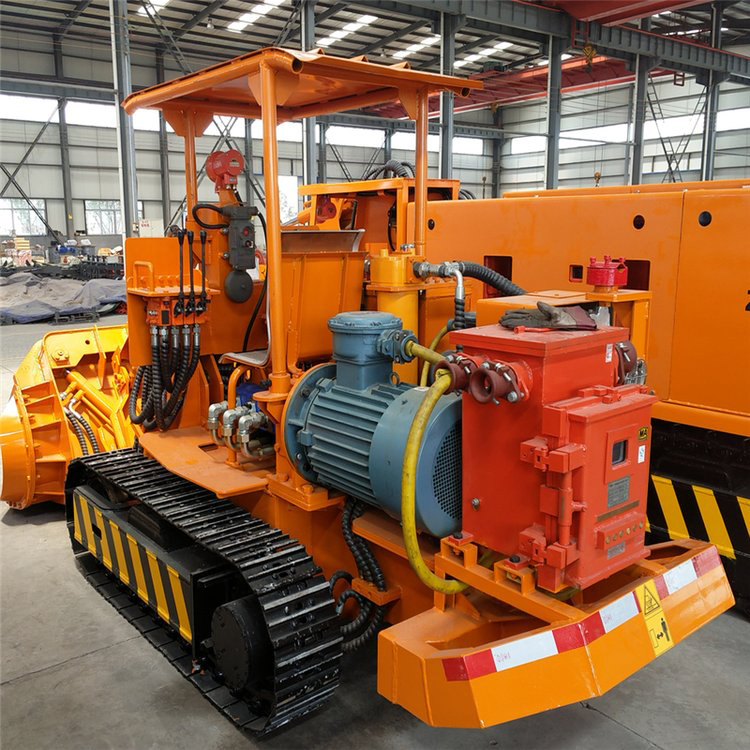


Electric locomotives are a type of traction equipment for rail vehicle transportation. They are powered by driving the wheels with traction motors, utilizing the friction between the wheels and the rail surface to propel the locomotive along the tracks. This mode of operation is limited by both the power of the traction motor (or internal combustion engine) and the friction between the wheels and the rail surface. The transport of locomotives is restricted by the gradient they can travel, with the general gradient of the transport tracks being 3‰, and local gradients not exceeding 30‰. They are categorized structurally into overhead wire-powered electric locomotives and battery-powered electric locomotives.
2.5T Battery Electric Trolley, available in standard, safety, and explosion-proof special models. Key features: compact size, short wheelbase, agile and maneuverable, quick and reliable braking with tension brakes, simple structure, easy to maintain, suitable for transportation in branch tunnels and small mines, as well as for medium and small mine shunting.
Battery-powered electric trolley
Battery-powered electric locomotives are powered by batteries. Battery charging typically occurs at the underground locomotive garage. Once the battery pack on the locomotive reaches a certain level, it is removed and replaced with a fully charged one. Therefore, each locomotive must be equipped with 2-3 battery packs.
Advantages: No spark ignition risk, suitable for use in mines with methane; no need for wiring, flexible usage, highly applicable to small-scale transportation systems and tunneling operations with irregular tunnels.
Drawbacks: Requires charging equipment; High initial investment; Low energy efficiency; High transportation costs.