















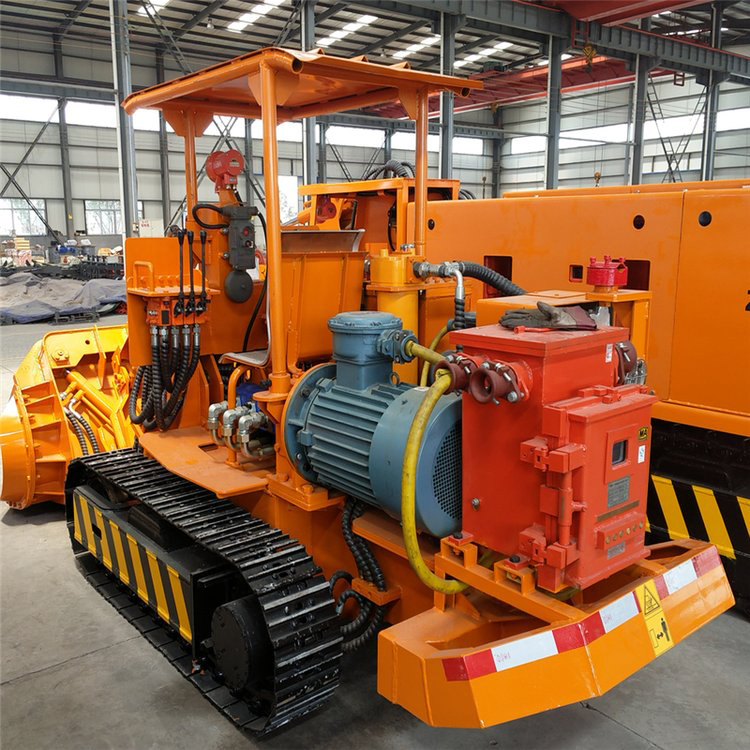


Mine Vehicle Classification
Coal and gangue haulage cars, personnel carriers, material and equipment vehicles, categorized by use; fixed box cars, dump cars, underflow cars, side discharge cars, hopper trains, and shuttle cars (see Shuttle Cars) [2].
The fixed-body mining trucks often feature semi-circular underbodies for the hopper, which is not only convenient for processing but also有利于mechanized cleaning of adherent materials from the bottom. The hoppers are typically made of low-alloy steel plates, known for their good heat and corrosion resistance. The thickness of the steel plates is primarily determined by corrosion resistance requirements. To enhance the rigidity of the hopper, ribs are often pressed into the steel plates, angle irons are welded at the hopper mouth, and drainage holes are provided at the bottom. The hopper of the bottom-discharge mining truck is an open-bottom design with wing plates on both sides for support during unloading. The lower section has sufficient rigidity to prevent deformation.
The longitudinal section of fixed and dump truck bodies is rectangular. The dump truck body section is V-shaped or U-shaped, supported on the flip track of the chassis, and the body flips on the flip track for unloading. The dump truck (also known as a side-dump truck, or simply the dump body) is primarily composed of the following parts: truck body, chassis, buffer truck head, triple rings, truck pinion wheel axle, and wheels, etc. The dump truck features a simple, sturdy structure, ease of use, and materials can be easily unloaded by simply lifting the stopper with human force. The shapes are U and V types, and they are also commonly referred to as drum trucks. The wheel and axle use roller bearings, effectively reducing running resistance, making it easy to be pulled or pushed by locomotives or human effort. The bearings are solid and hollow shafts, with 30313 bearings, solid shaft diameter of 80mm, and the trucks are made of steel plates, typically with a thickness of 4-5mm. Special orders can be made to meet specific requirements, and the base is made of 14# channel steel. It consists of a V or U-shaped body section, manual or foot pedal linkage, flip track, and chassis. The body flips for unloading and returns to its original position by shifting the heavy load center of gravity from loaded to unloaded. The commonly used volume ranges from 0.6 to 1.7 m³ [2].


















