















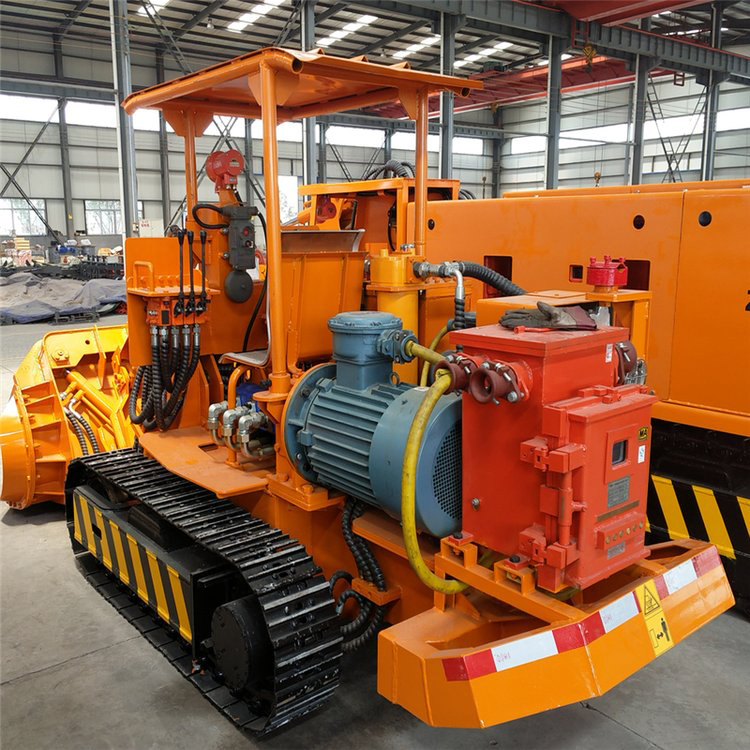


The structure of the miner's car: Announcements indicate that miner's cars are available for loading gates (or loaders) with material. China developed the bucket conveyor train in the 1970s, consisting of bucket cars, a lifting platform, and a series of miner's cars. Once filled with material, the bucket cars are lifted by the platform and transported along the miner's car sides, individually transferring the material into each miner's car, thereby increasing loading speed and achieving continuous miner's car loading. The bucket loading train has a simple structure, a small turning radius, and can be modified from existing standard miner's cars. The miner's car wheels have flanges, and there is a certain gap between the flanges and the rails. The contact surface of the wheels with the rails is shaped conically to keep the wheelsets centered as they run along the tracks, reducing mechanical wear and lowering running resistance. China's standard narrow-gauge rail distances include 600mm, 762mm, and 900mm. The basic structural components of the miner's car are the carbody, chassis, wheelsets, and connectors.
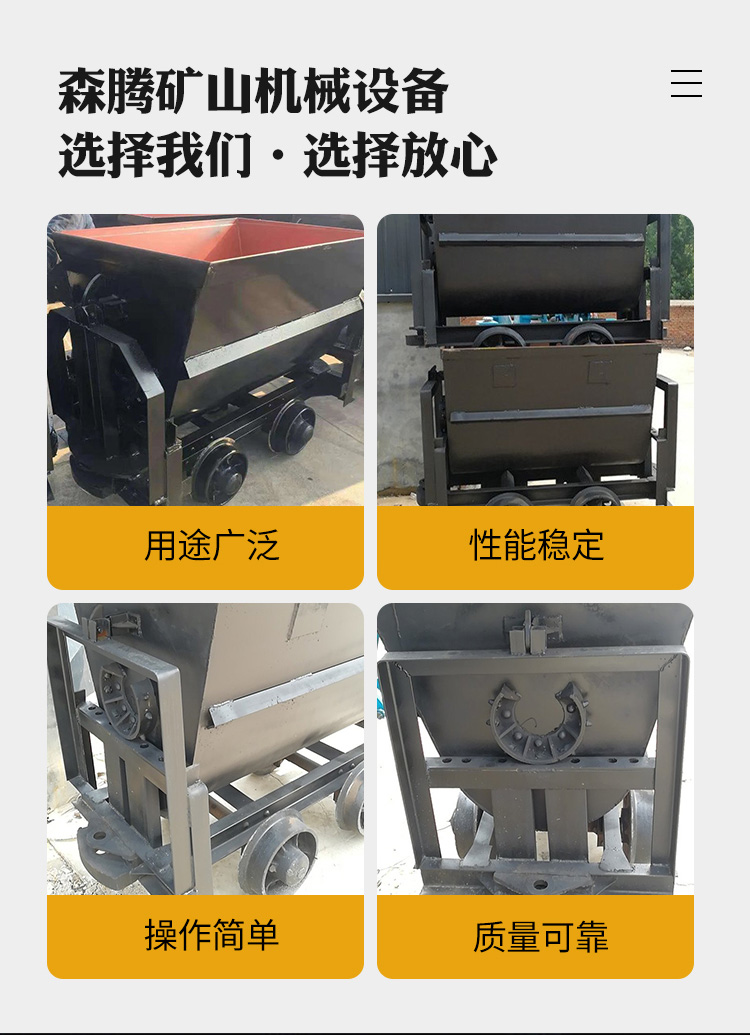
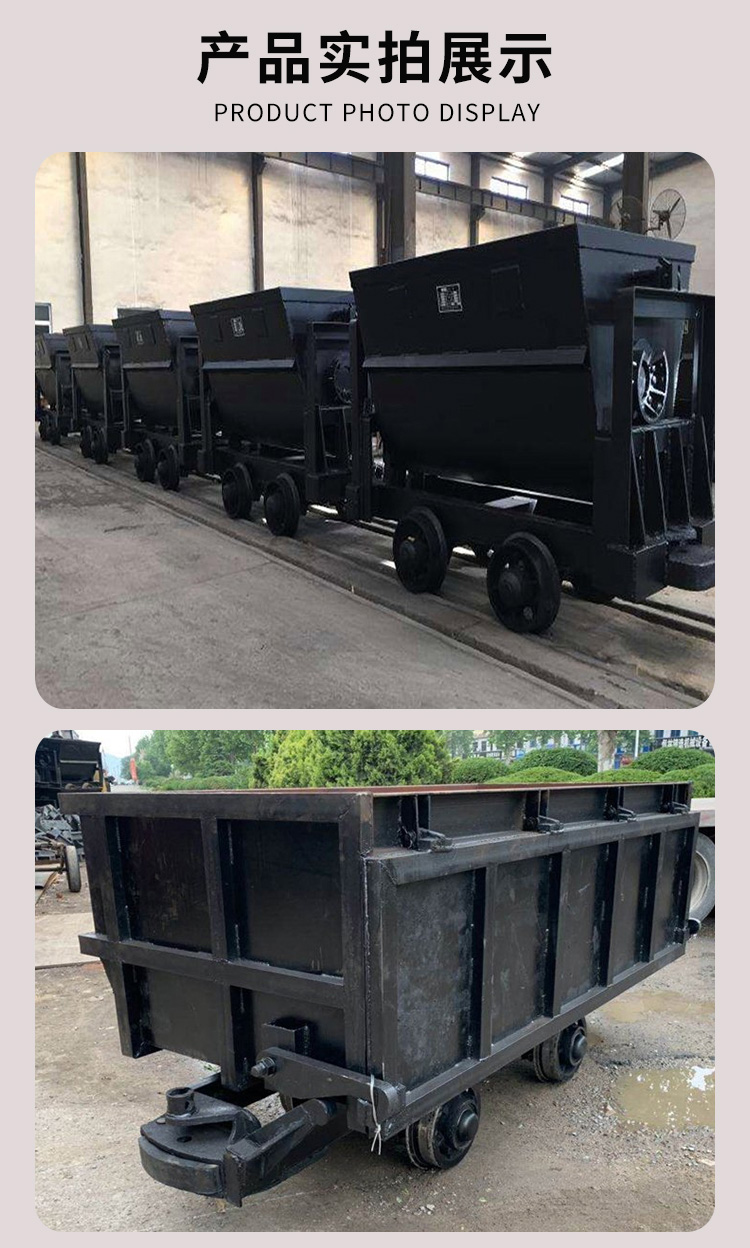
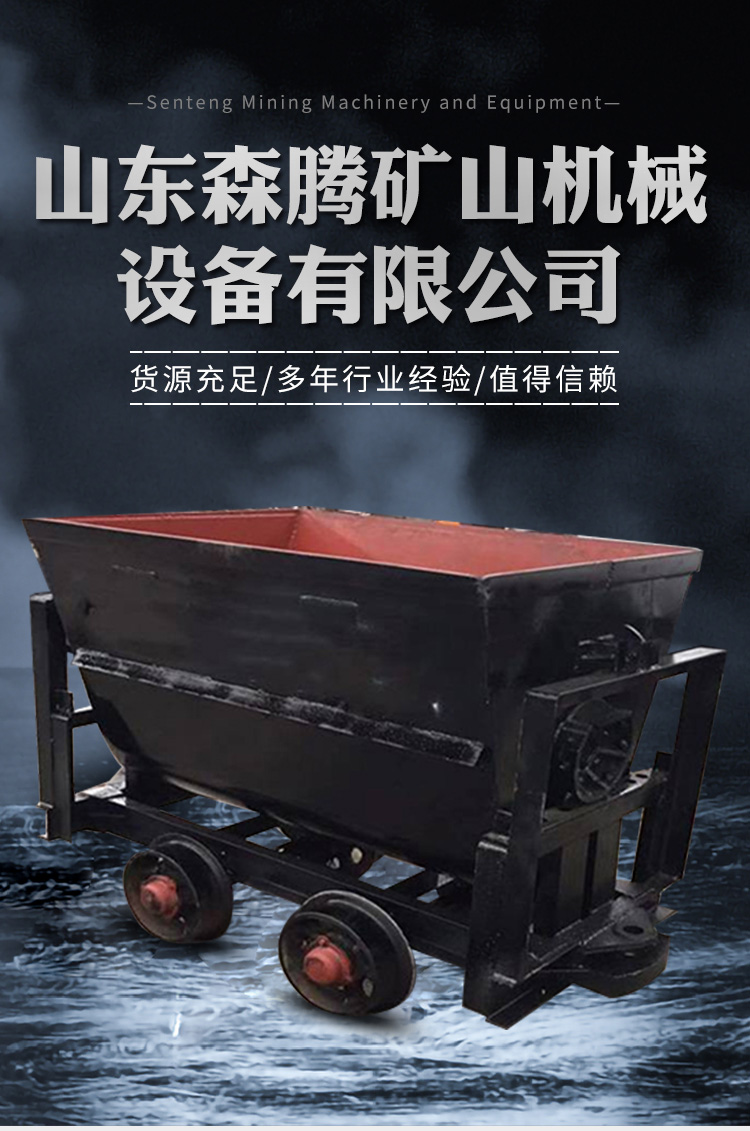

The segmented miner car is composed of interconnected car bodies with hinged, openable undercarriages; the number of car bodies is determined by the traction capacity of the locomotive. Mainly used for underground transportation of ore and waste rock. Compared to a set composed of a single miner car, its advantages include: a higher volume coefficient, lower self-weight coefficient, shorter unloading and shunting times, larger load capacity, higher throughput at loading and unloading stations, increased transport production capacity of electric locomotives, and the ability to reduce the number of car sets and locomotives, thereby enhancing the safety of underground transportation [3].


















