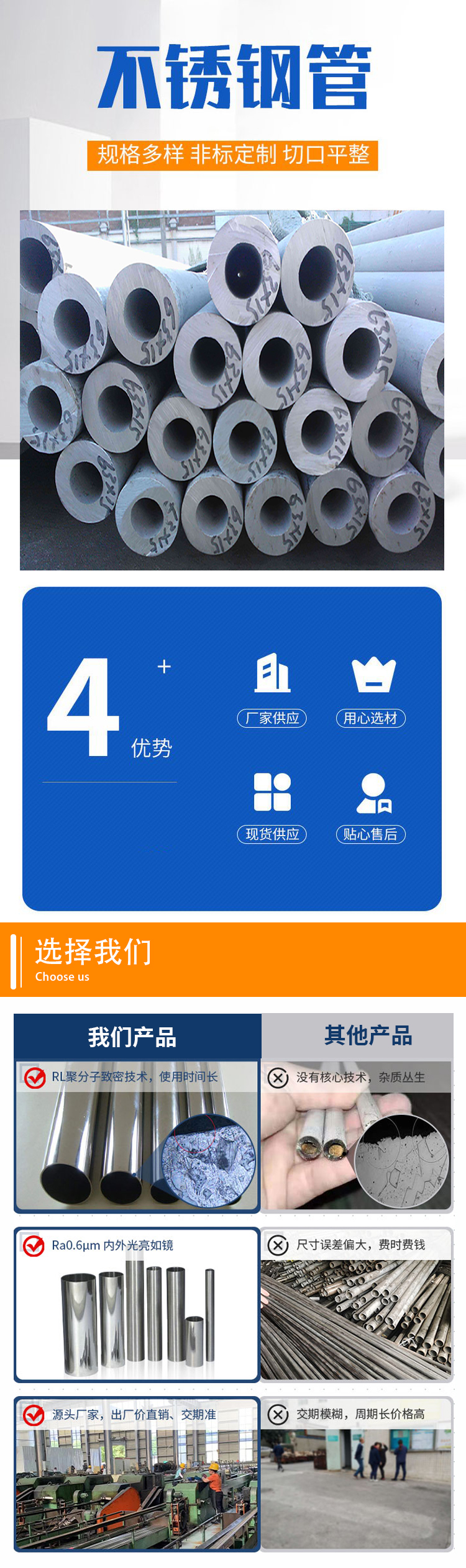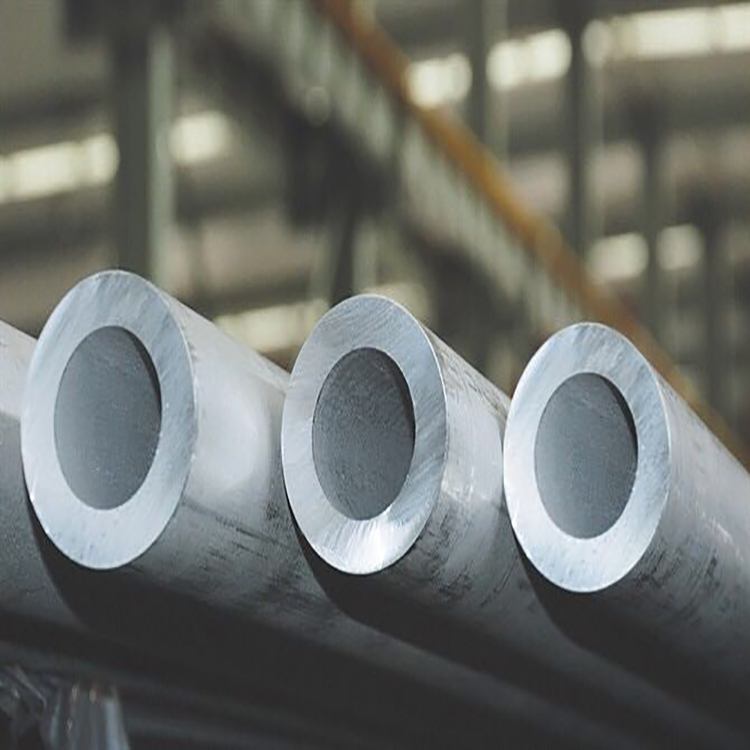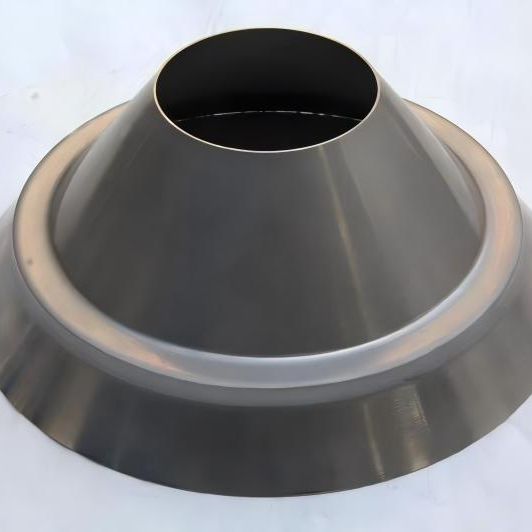
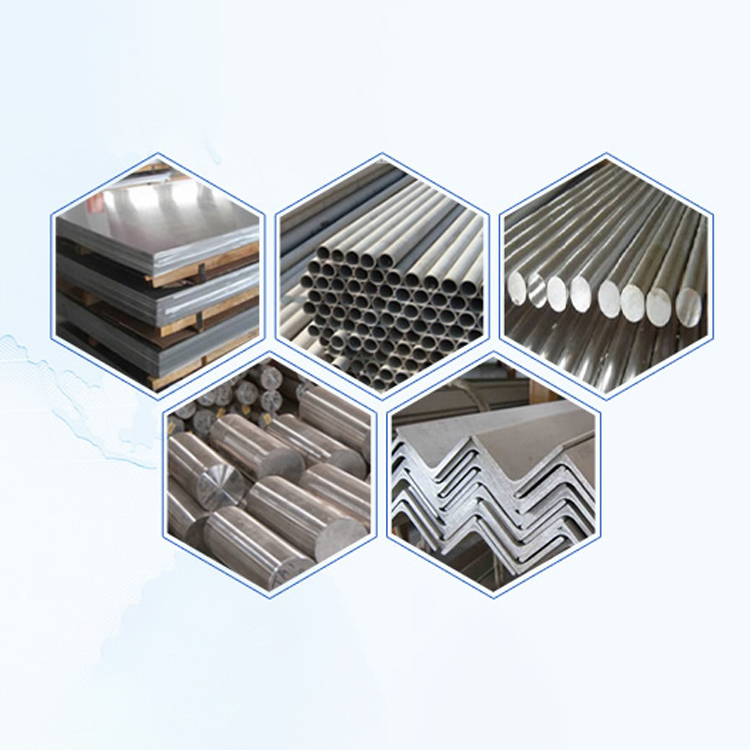


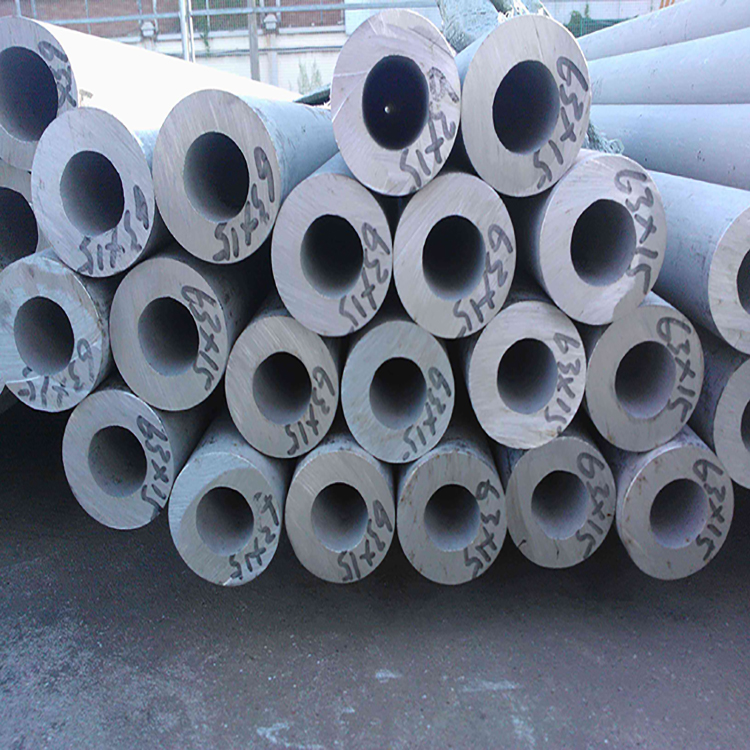











Stainless steel tubes are hollow, long, round steel bars, primarily widely used in industrial pipelines for oil, chemicals, light industry, and mechanical instruments, as well as for mechanical structural components. Additionally, they are also extensively used in manufacturing mechanical parts and engineering structures due to their lighter weight, with equal bending and torsional strength.
Stainless steel tubes can be categorized by composition into Cr series (400 series), Cr-Ni series (300 series), Cr-Mn-Ni series (200 series), and precipitation-hardening series (600 series). 200 series - Chromium-nickel-manganese austenitic stainless steel. 300 series - Chromium-nickel austenitic stainless steel.
301 - Excellent formability for shaped products. Can be rapidly hardened through mechanical processing. Good weldability. Higher wear resistance and fatigue strength than 304 stainless steel.
302----- Corrosion resistance similar to 304; due to higher carbon content, it has better strength.
303-----By adding a small amount of sulfur and phosphorus, it is more easily machinable than 304.
304——Also known as 18/8 stainless steel. The GB grade number is 0Cr18Ni9. 309——Has better temperature resistance compared to 304.
316 - A widely used steel grade after 304, primarily used in industrial and equipment applications. The addition of molybdenum gives it a special corrosion-resistant structure. Due to its superior chloride corrosion resistance compared to 304 stainless steel pipes, it is also used as "shipboard steel." SS316 is typically used in nuclear fuel recovery units. 18/10 grade stainless steel pipes usually meet this application level as well.
Model 321 - Similar to 304 in all other performance aspects, except that it reduces the risk of weld seam rust due to the addition of titanium elements.
400 Series - Ferritic and Martensitic Stainless Steel
Good heat resistance, low corrosion resistance, 11% Cr, 8% Ni.
409—Inexpensive model (UK/US), commonly used for car exhaust systems, belongs to ferritic stainless steel (chrome steel).
410—Martensitic (high-chromium steel), good wear resistance, poor corrosion resistance.
416—Added sulfur to improve the material's processing properties.
420 "Tool Steel" Martensitic steel, similar to early stainless steels like high-chromium Babbit steel. Also used for cutting tools, which can be made extremely bright.
430—Ferritic stainless steel, decorative, e.g., for automotive accessories. Good formability, but poor temperature resistance and corrosion resistance.
440—High-carbon tool steel with a higher carbon content. After proper heat treatment, it achieves a higher yield strength and hardness up to 58HRC, categorizing it among the harder grades of stainless steel. Common applications include razor blades. There are three common types: 440A, 440B, and 440C, with an additional 440F (easier to machine) available.
500 Series – Heat Resistant Chromium Alloy Steel.
600 Series - Martensitic precipitation-hardening stainless steel tubes.