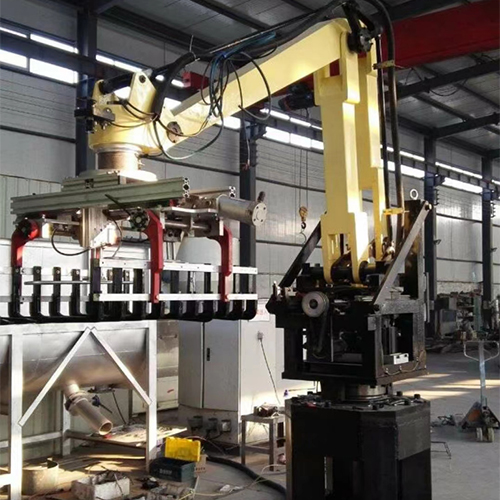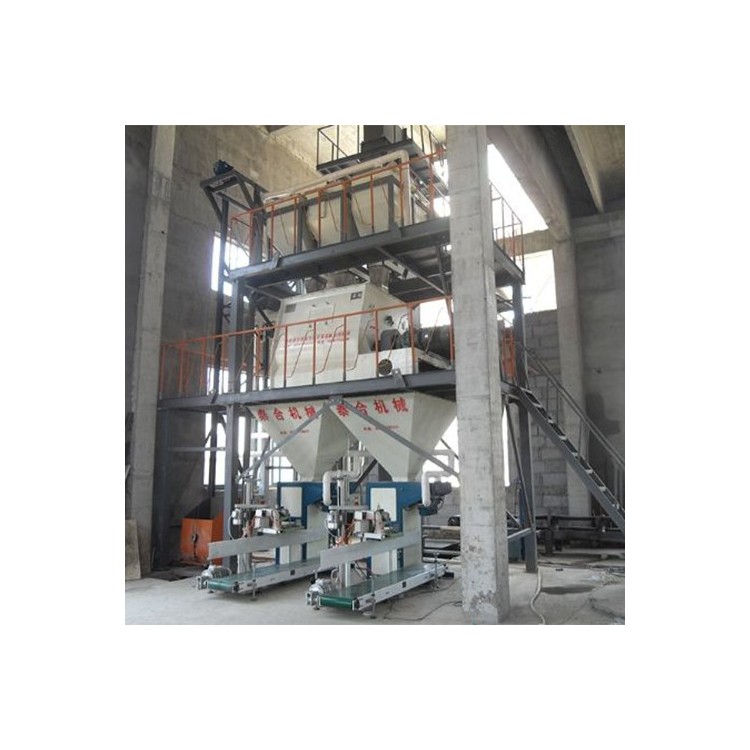


The robot palletizer stacks containers filled with boxes in a certain arrangement onto trays or skids (wooden or plastic), automatically forming piles with multiple layers, which are then discharged for easy transport by forklift to storage. This equipment is controlled by PLC and a touch screen, enabling intelligent operation and management, which is simple and easy to master. It can significantly reduce labor and labor intensity. The palletizer automatically stacks bags, boxes, or other packaging materials transported by conveyors according to the customer's process requirements, and then transports the stacked materials.
Automatic stacking machines are categorized by their level of intelligence into two types: robotic stackers and mechanical stackers. Mechanical stackers can be further divided into: gantry stackers, column stackers, and robotic arm stackers.
Automated Palletizing Machines are categorized by industry as follows: Food and Beverage Industry Palletizing, Cement Automatic Loading Palletizing Machines, Industrial Products Palletizing Machines, etc.
Mid- and low-level stackers are composed of flattening conveyors, decelerating conveyors, transfer conveyors, tray storage, tray conveyors, grouping machines, push-bag devices, stacking devices, and tray conveying machines. Their structural design is optimized for smooth and reliable operation. The stacking process is fully automatic, requiring no human intervention during normal operation, and has a wide range of applications.