














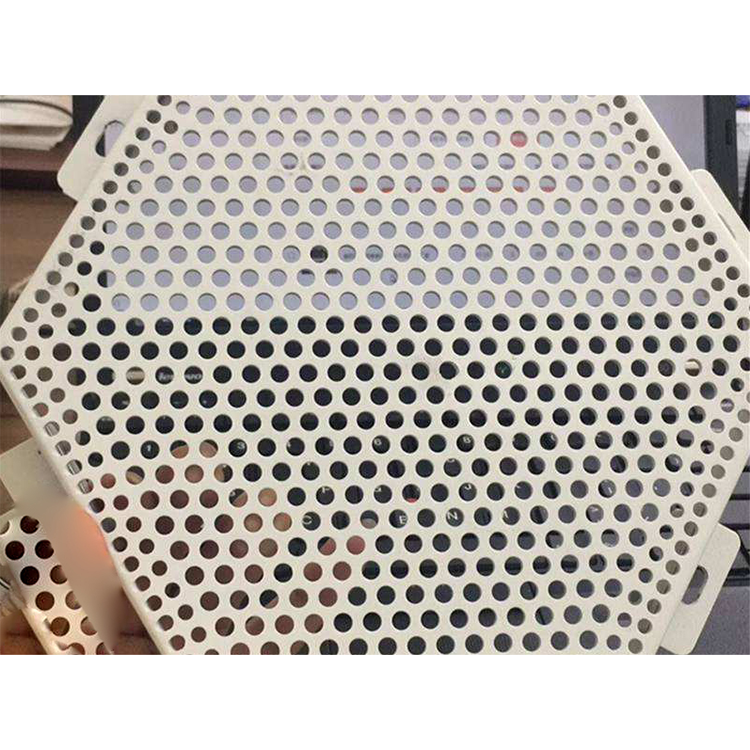


Aluminum Composite Panel
Aluminum composite panels are used for the decorative facades of buildings, originating in Europe and America in the 1950s. Due to their unparalleled advantages in terms of aesthetics, weather resistance, and safety, they have gained worldwide popularity and are widely recognized as luxurious building exterior materials. The combination of aluminum and glass facades is particularly distinctive, thereby providing architects with extensive design space. Aluminum composite panels have become a highly popular and premium decorative material for exterior walls in recent years: the base material is made of high-strength aluminum alloy plates, commonly available in thicknesses of 1.5, 2.0, 2.5, and 3.0mm, with models including 1100, 1060, 3033, and temper H24. Their structure is primarily composed of panels, reinforcing ribs, and corner codes.
Corrosion resistance
The surface is rich in KYNAR500 PVDF resin, which effectively resists acid rain, air pollution, and UV degradation, thus preventing discoloration and peeling.
No light pollution
Due to the matte finish of the fluorocarbon coating (with a gloss level of around 35), it scatters light, thus preventing light pollution. This offers a significant advantage over glass curtain walls.
Self-cleaning properties
Due to the unique molecular structure of KYNAR500 in the fluorocarbon coating, the surface is unable to hold dust, thus offering self-cleaning properties.
Colorful
Fluorocarbon coatings come in over 100 colors and can be custom-mixed to suit specific customer needs, fully meeting their unique color requirements.
Color variation
The color difference of aluminum panels is generally △E=2NBS. To better address color variation issues, our company has specially引进d the world-renowned paint spraying expert - the Lancing 260-meter full production line, which enables the three-coating process to be completed in one operation on the assembly line, ensuring ultra-flatness and zero color difference for the products.
Flatness
If the aluminum panel is larger in area, it may have issues with flatness. To better address this problem, our company guarantees to add a reinforcing rib every 1 square meter (i.e., one reinforcing rib every 500-800mm).
High-strength
Aluminum composite panels are made from rust-resistant aluminum-magnesium alloy sheets, offering high strength. The steel grade of the aluminum panels is significantly enhanced by the welding process at the openings, ensuring the facade's wind resistance, seismic resistance, leak-proofing, and impact resistance.
Flame retardant
Aluminum composite panel curtain walls, made entirely of aluminum sheets and PVDF coatings, are fundamentally non-flammable, offering an unmatched advantage over aluminum-plastic panels.
Lightweight
The weight of aluminum composite panel curtain walls is only 1/10 that of glass curtain walls and 1/20 that of stone curtain walls.
Good molding properties
Aluminum composite panels, due to the process of being processed before painting, can be bent, folded, punched, rolled, and welded into various geometric shapes. This allows for special architectural and shaping requirements to be met, fully reflecting the designer's concept. This is something that other materials for curtain walls struggle to achieve.
High material utilization rate
Aluminum-plastic panels and stone curtain walls have higher processing costs due to limited specifications, whereas aluminum single panels can be custom-made according to customer drawings, without incurring additional processing costs.
Easy installation and construction
Aluminum itself has a low density, and since aluminum composite panels are pre-formed before installation, they are relatively easy and quick to install, construct, and replace. Although other materials for curtain walls have made significant improvements in installation, they still do not match the convenience of aluminum composite panels, and the installation cost is higher.
Aluminum composite panels are typically installed on exterior walls using the following methods:

Aluminum Composite Panel Exterior Wall Construction Process

Technical Requirements for Aluminum Composite Panel Installation
After the aluminum panel and sub-frame are assembled, installation begins on the main frame. The density of the joints between panels is determined by design. Before installing the panels, a two-machine alignment line should be pulled out on the frame to determine the joint release positions. Use a line with low elasticity when pulling the line to ensure the joints are neat. A layer of heat-sealed glue should be added at the contact points between the sub-frame and the main frame, and rigid joints are not allowed. After the panel positioning, insert the two legs of the bracket into the concave part of the sub-frame under the panel, and tighten the clamps on the bracket. The gap between aluminum panels is generally 10-20u, sealed with silicone or rubber strips, etc. Place a pad bar inside the overlapping joints.


















