












How to choose underfloor heating for villa, duplex, and self-built houses with large living spaces
Electrical underfloor heating installation precautions:
Before installing electric floor heating, ensure that the power lines and electricity meter capacity can support the system's power load. For those that are insufficient, apply for an increase in power capacity first to meet the system's power requirements.
2. For newly constructed or newly renovated residential buildings, after the system is installed and ground decoration is completed, it is necessary to wait for the ground to dry naturally (approximately 28 days) before heating. During ground decoration, be mindful to avoid damaging the heating cable to prevent system damage.
3. Strictly prohibit the use of joists as subflooring for flooring installation to avoid nails piercing the ground and damaging cables, leading to electrical leakage.
4. Choose home decorations with a bottom at least 10 centimeters off the ground to ensure heat dissipation and prevent damage to furniture from underfloor heating.
5. Upon first-time system activation, the initial heating rate is slower, taking a minimum of 3 hours, and up to a maximum of 12 hours if the ground heat storage layer is thick. Additionally, there is a structural heat storage process involved, which typically lasts for about a week. During this period, do not lower the heating temperature or shut down the system.
6. During heating, turn the thermostat switch to the "on" position, then adjust the ground temperature and room temperature. Initially, set the temperature to a lower level (3℃ above the base temperature), wait for the heating cable to operate for a while, and then gradually increase the temperature.
7. When you're away for an extended period, ensure that the plumbing systems in rooms with water supply and drainage, such as bathrooms and kitchens, are not turned off. Set the room temperature around 5°C to prevent pipes from freezing and cracking.
Installation of electric underfloor heating:
a. Inspect the laying area to confirm it meets construction requirements.
b. Clear the installation area.
c. Install insulation layer (only on the bottom layer)
d. Lay reflective layer
e. Laying steel mesh.
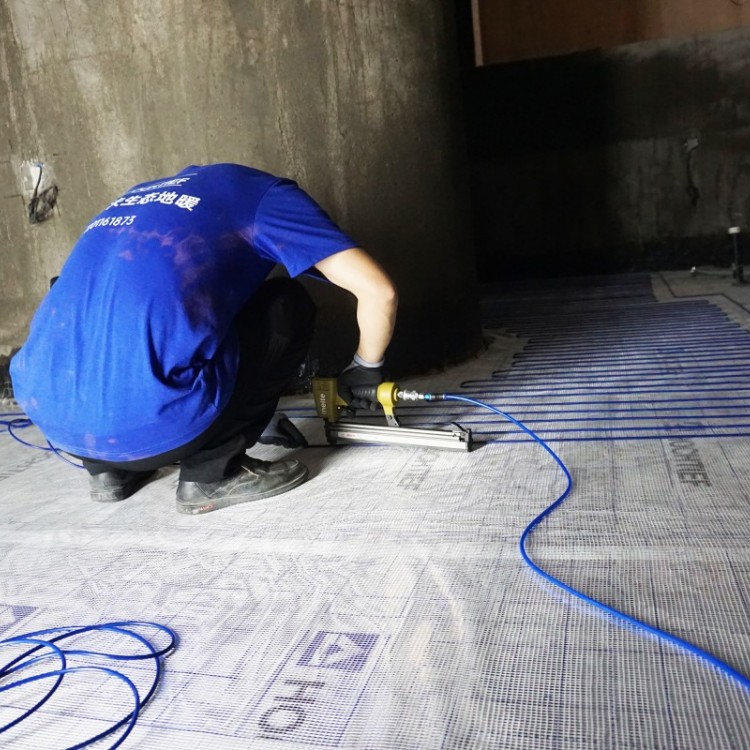
f. Lay out heating cables according to the design drawings.
g. Standard resistance and insulation resistance testing for heating cables.
h. Install the cement mortar thermal storage layer according to design specifications, serve as a moisture-proof isolation layer, lay the floor decorative materials, and complete the floor construction.
i. Install a temperature controller.
Prior to installing the carbon fiber electric underfloor heating system, the insulation resistance and rated resistance of the electric underfloor heating products should be tested. To prevent accidental damage to the insulation layer of the electric underfloor heating products during construction, a retest should be conducted before installing the carbon fiber electric underfloor heating products to ensure the system operates normally after being concealed. The concealed sections should be drawn as concealed work drawings on-site to facilitate the user's understanding of the carbon fiber electric underfloor heating product installation and to avoid damaging the system's structural layers during house repairs.
Electricity is a clean energy, also known as renewable energy. With the vigorous development of our country's electricity industry, the proportion of renewable electricity such as hydropower, nuclear power, solar photovoltaic, wind power, and biomass power is increasing. The reform of the electricity system is advancing step by step, and electricity prices will align with the world, becoming increasingly lower. Using electricity for heating in place of existing centralized heating with carbon fiber ground heating is conducive to achieving energy conservation and emission reduction goals. At the same time, the rapidly developing electric heating technology has proven to be reliable in terms of safety, stability, and energy efficiency.
In the past century, HOCHTIEF has established the gold standard for residential and commercial space heating systems with its innovative application of far-infrared heating technology for incubators for newborns, allowing the temperature to adapt to you, not the other way around.
WeChat Official Account

Scan to follow Official Account