














Production Process
Composite carbon sources are a blended product for various outputs. Adjust the proportions and formulations based on the actual conditions of the customer's wastewater treatment process (process flow, denitrification retention time, incoming water quality, etc.) to achieve good results in denitrification nitrogen removal, water quality standards, cost-effectiveness, and process optimization.
Applications of Composite Carbon Sources
The "Jin Tai Huan Jing" new type of carbon source is a liquid carbon source developed for wastewater treatment. It is a non-hazardous, non-toxic, and green economic product. It is a market-leading carbon source with high cost-performance and is harmless.
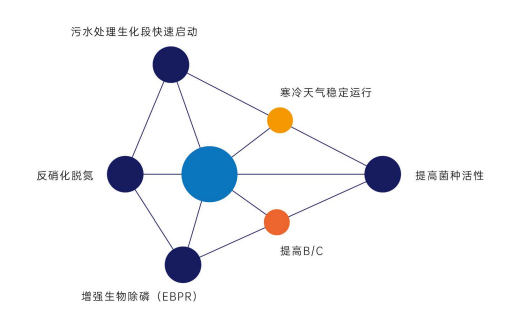
The product is a colorless, non-irritating liquid, consisting of small molecule organic acids, sugars, and biological extracts, with high biodegradability. It can be widely used in wastewater treatment systems to address the issue of elevated total nitrogen in the effluent due to insufficient carbon sources. It enhances the denitrification capacity of the wastewater treatment system and also has a positive effect on the enhancement of biological phosphorus removal.
The product is commonly used in anoxic pools, denitrification filter beds, and other anoxic areas. It can also be used to provide carbon source nutrients to anaerobic or aerobic reactors.
Carbon source characteristics
Supply Chain
a. From abundant renewable resources
b. Quality raw material supplier
c. Ensure product quality and inventory levels
2. Safety
No flammability and toxicity issues with traditional chemicals and methanol; cost savings compared to installing storage and feed systems for flammable liquids.
3. Operability
No additional storage equipment needed; products can be directly added upon arrival at the site, with simple operation and convenient storage.
4. Stability
Stable Chemical Oxygen Demand (COD) values remain unchanged without degradation during long-term storage.
Utilize efficiency
1. The main component of the new carbon source is a small molecular weight polar molecule, which is easy to diffuse through the biomembrane, with a much higher absorption efficiency than that of polar molecules with larger molecular weights.
2. The main component in the new carbon source readily forms a small molecular organic acid (dihydroxyacetone phosphate). This small molecular organic acid is a key substance for denitrification and phosphorus removal. Compared to other carbon sources, it condenses the metabolic time for these substances to convert into small molecular organic acids, indirectly enhancing the efficiency of the biochemical system in denitrification and phosphorus removal.
3. Novel carbon sources exhibit diverse metabolic pathways within microbial cells.
Application Scope
Jin Tai Huan Jing's new type of carbon source is a liquid carbon source product with a certain viscosity. It does not require new dissolution, allowing enterprises to directly add and use it, reducing costs and simplifying the operational process.