
















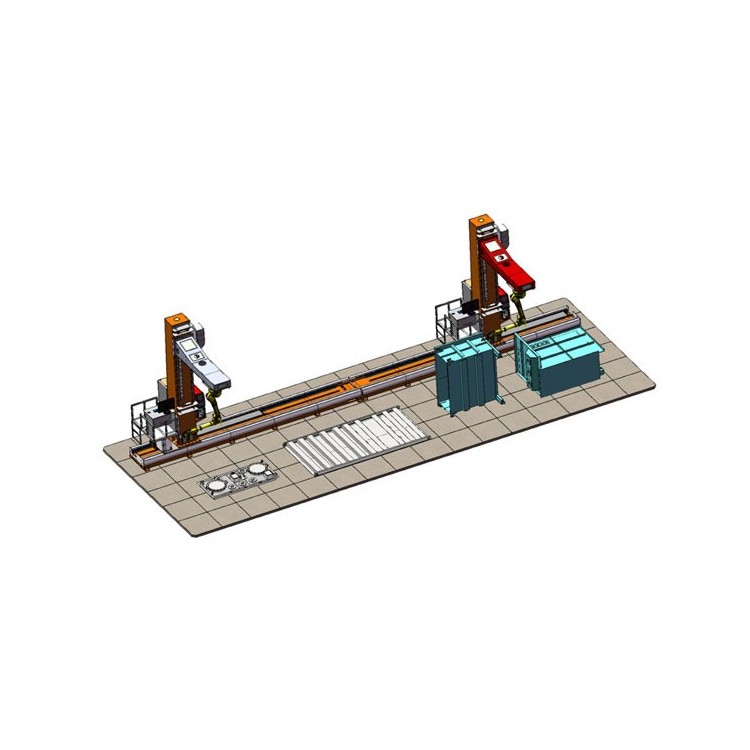


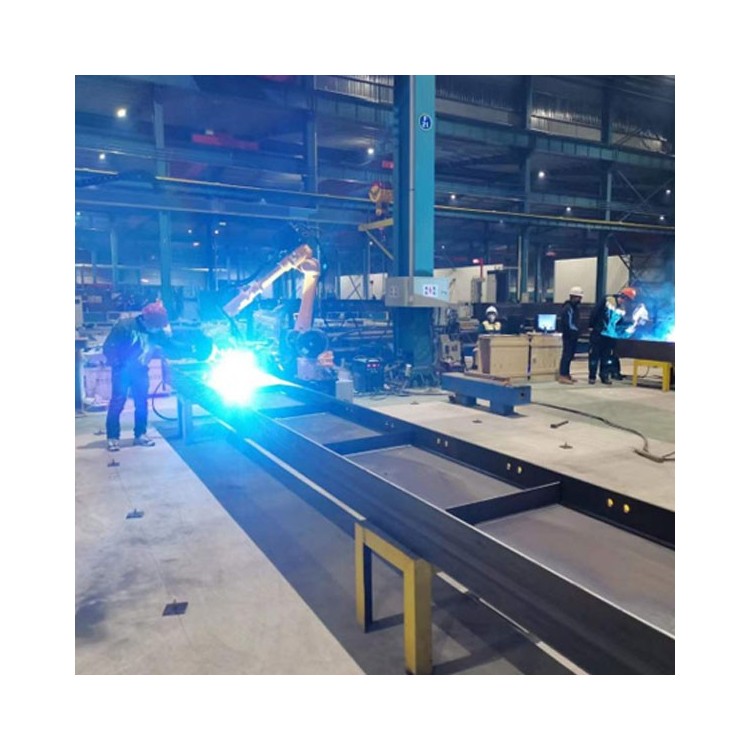
Domestic stamping robots are demonstrating increasing advantages in applications on mechanical presses, hydraulic presses, pneumatic presses, and forging machinery. Stamping robots are being widely adopted in the stamping industry, and with the continuous development and refinement of stamping robot technology, they are poised to bring about a significant transformation in the field.
Pressing Robot Features
Low cost, can recover investment in half a year. A robotic arm typically costs around $60,000 to $100,000, with price variations due to different axis numbers and brands. Initially, the cost can be substantial, but when spread out over time and months, it's roughly equivalent to half a year's salary for an employee.
2. No salary to pay, high efficiency. Of course, press robots don't require salaries and operate at an extremely high efficiency, significantly lower than the error rate of manual labor. Reduces reliance on manual labor skills. In China, the proportion of general workers is high, and the dependence on manual labor skills is substantial as well. As society progresses, the manufacturing industry must continuously embrace technological advancements and efficiency improvements. The substitution of press robots for manual labor will also decrease this reliance on manual skills.
3. Can replace manual labor for hazardous tasks. In some stamping fields, many processes are highly dangerous. The principle of the stamping industry is to use the weight of the press to stamp out products, making manual operation alongside extremely risky. The operation of a stamping robot eliminates this concern for the boss. Otherwise, if an accident occurs resulting in the loss of fingers, the compensation fee could reach 300,000 to 400,000 yuan.
4. Extended operating hours. The facility operates 24/7, while labor requires rest periods.


















