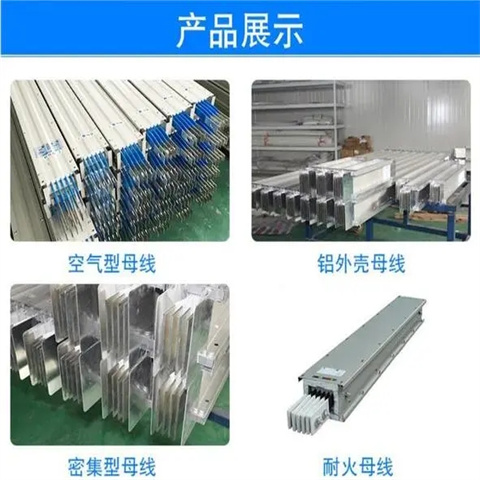






Shanghai busbar recycling, compact busbar recycling, waste high and low voltage busbars recycling, service hotline: high voltage busbar recycling, low voltage busbar, busbar bridge, busbar clamp, busbar bracket, flexible busbar, fire-resistant busbar, aluminum alloy busbar, lighting busbar, low voltage busbar, compact busbar, busbar expansion joint, enclosed busbar, waste busbar plate, high voltage cable, low voltage cable, waste optical cable, etc.
Since the mid-1950s, represented by the Beijing Bai Zhi Fang Airport Electrical Equipment Factory, conductive strips have been supported within the casing by insulating pads, insulated by air medium. The spacing between them is 50mm.
Since the mid-1980s, dense configurations began to emerge, with the Zunyi Changzheng Electrical Control Equipment Factory leading the way. Conductive bars were covered with insulating material and then securely fastened together on both sides.
High-density busbar polyvinyl chloride heat shrinkable tubes, with significant quality variations; some manufacturers use inexpensive products, with actual insulation failing to meet B-grade standards.
Radiation-crosslinked flame-retardant wrapping tape (PER) performs well, with a working temperature of 150°C, good properties, elasticity, and tight wrapping.
A specialized busbar form developed in the evolution of the second-generation busbar, known as the dense busbar air-type connector. Due to changes in technology, it has essentially transformed into a dense busbar dense connector, that is, an overall dense busbar channel.
3rd Generation
The composite insulated busway not only has an insulating layer on the conductive bars themselves but also has air insulation between the phases.
Sulfur insulation technology is used in various elbows.
The straight section is fitted with an MT-7-3 rubber sleeve.
Vulcanized Insulation Technology: Material is CZ260 rapid curing insulation powder, utilizing quaternary cross-linking curing, with no gap between the insulation layer and the conductive strip.
Its heat dissipation, moisture-proof, and insulation reliability are all excellent. However, due to the higher cost compared to the second-generation busbar, it has not been widely promoted.
Busway - Dense busway, air-insulated busway, high-strength enclosed busway.
Modern high-rise buildings and large workshops for cable tray production require immense electrical power, necessitating reliable conductive equipment to handle the massive current loads of hundreds or even thousands of amperes.
Busbar system is your ideal choice.
Busbar tray system is a power distribution unit designed for transmitting electricity, particularly suited for the economical wiring needs of increasingly taller buildings and large-scale factories.
Busbars feature series matching, product production, small size, large capacity, short design and construction cycle, easy installation and removal, non-combustible, and long service life.
Busway products are suitable for AC 50Hz, rated voltage 380V, and rated current from 250A to 4000A in three-phase four-wire and three-phase five-wire power supply and distribution systems.
Fire-resistant busway is used for the power supply of fire-fighting equipment and should not be used for any other purpose.
Therefore, due to the high heat resistance and insulating properties of this busbar, the heat generated in the busbar channel cannot dissipate, hence it should not be operated at full load for extended periods.
Other busbars, except for the refractory busway, can operate at full load for extended periods.