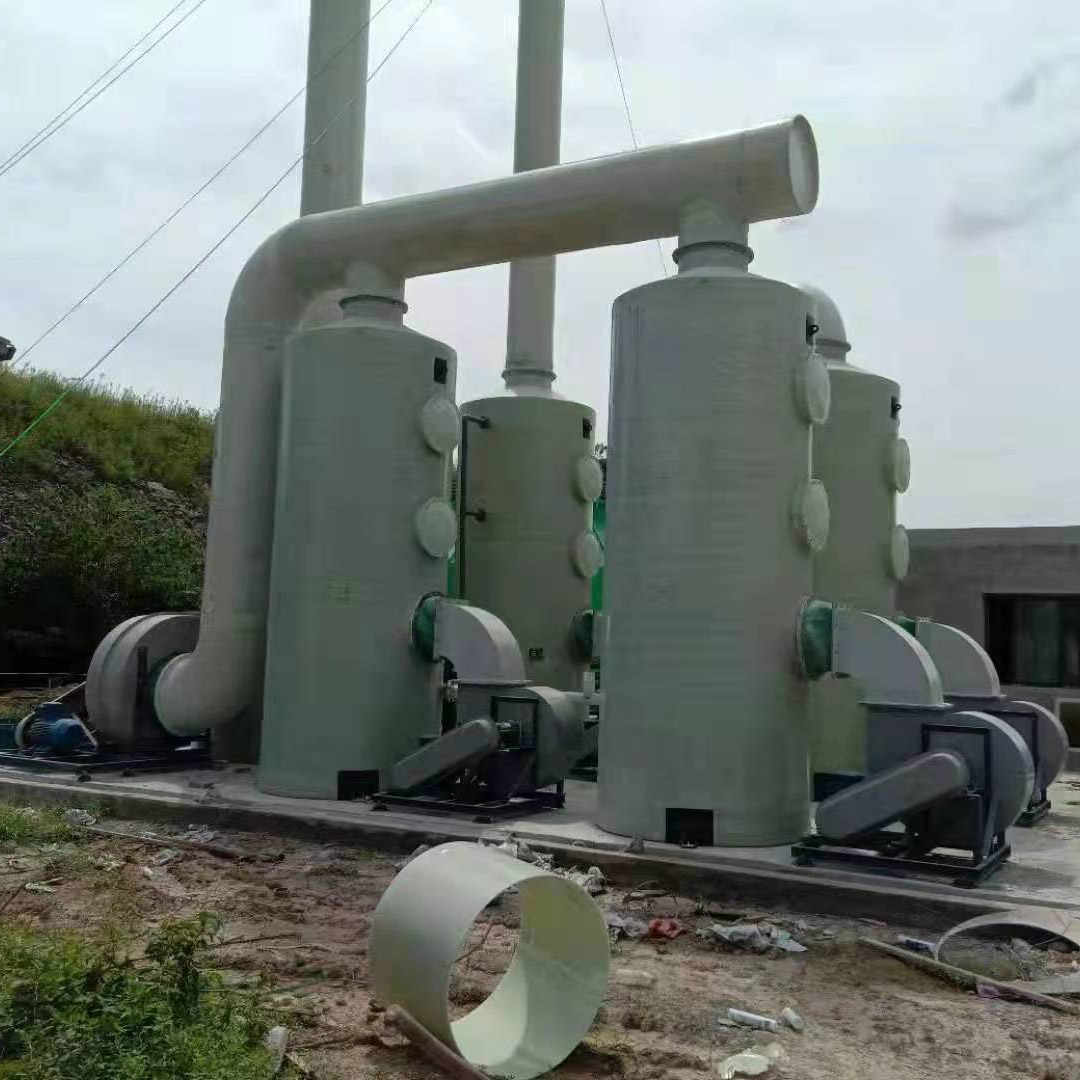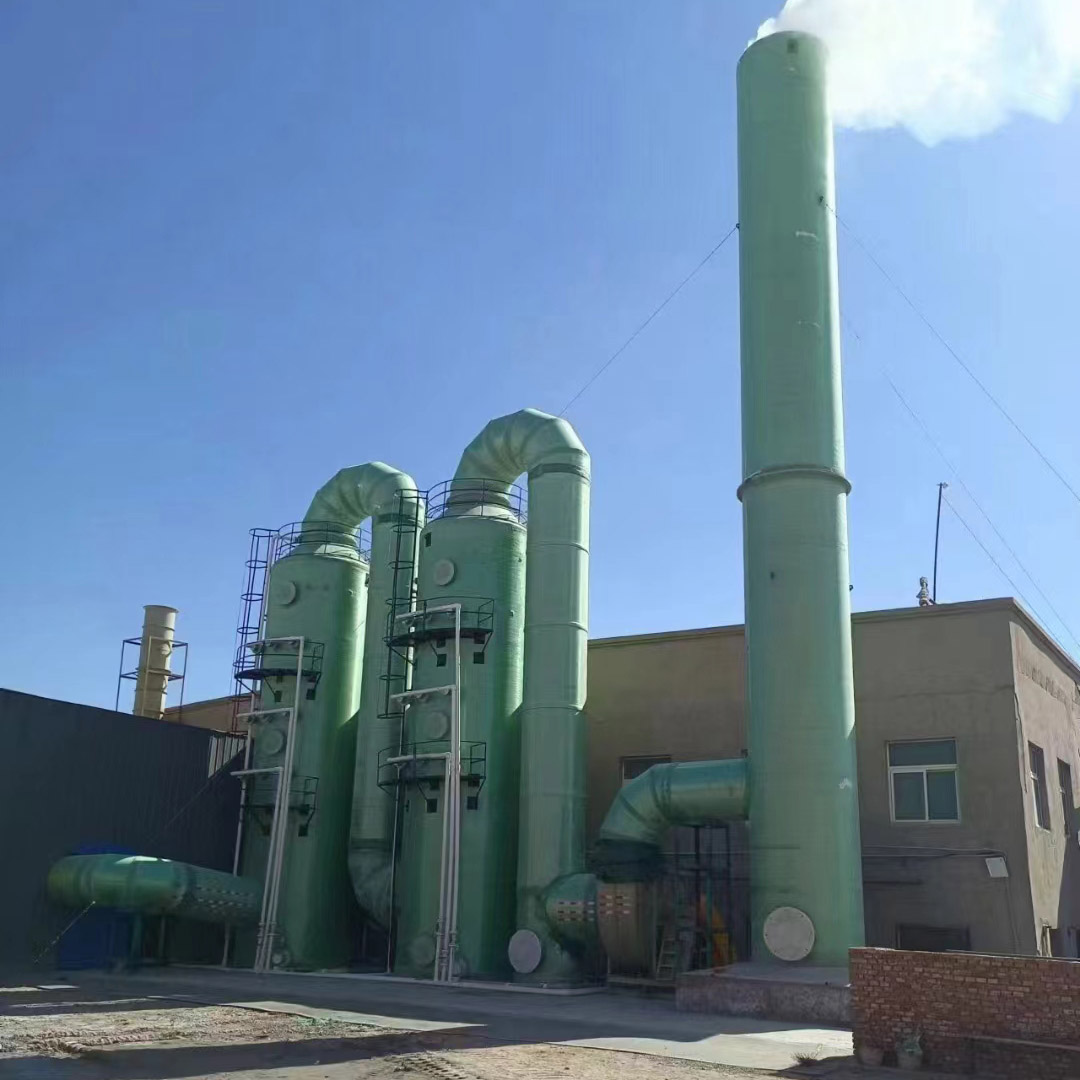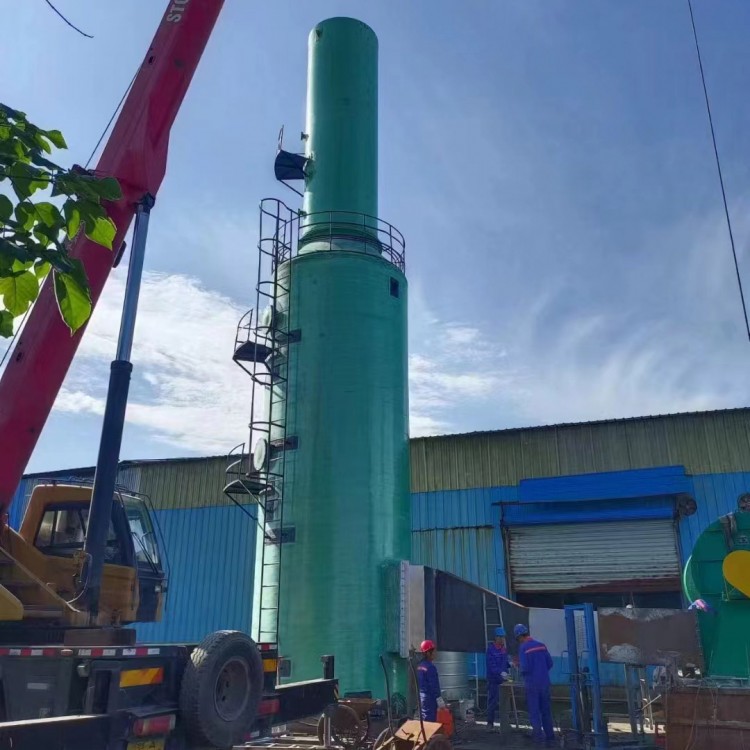

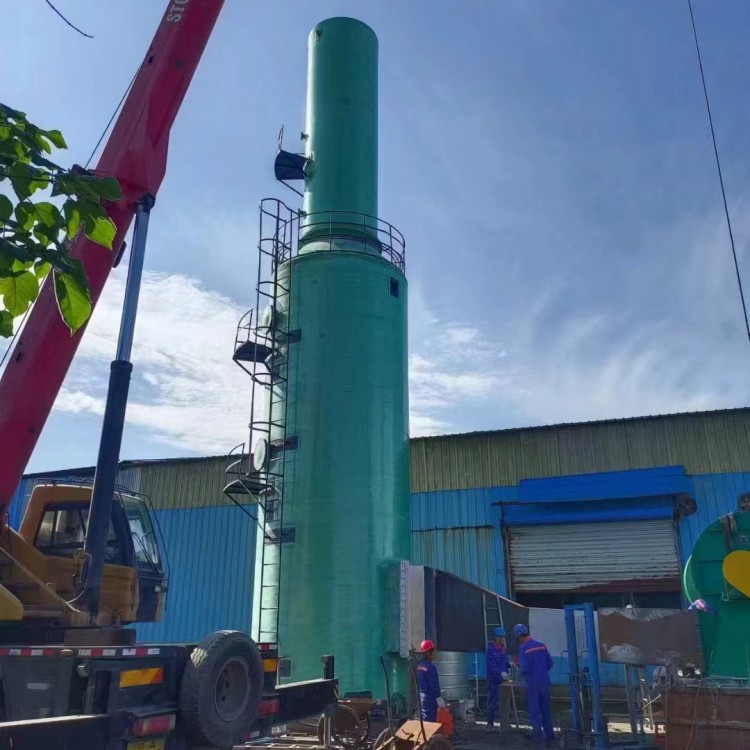









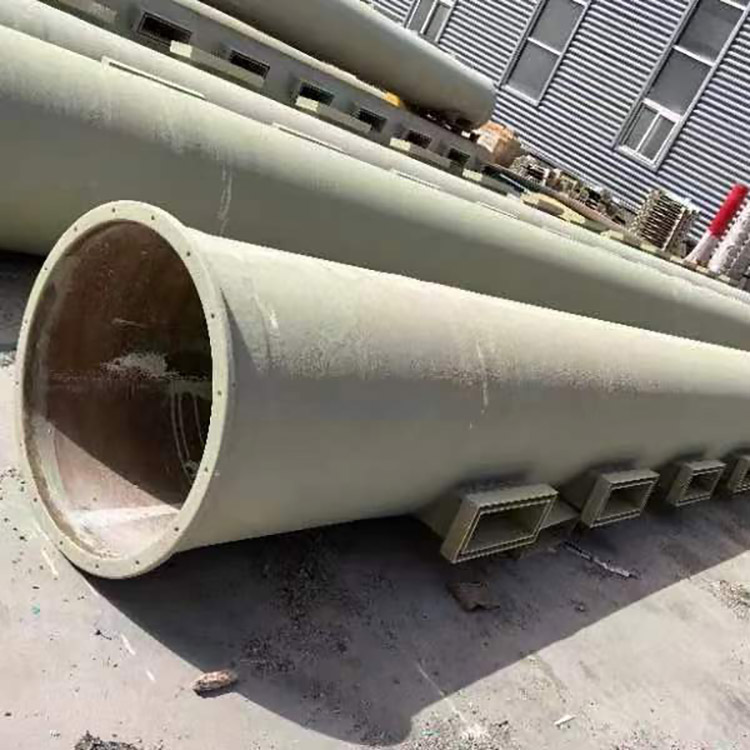
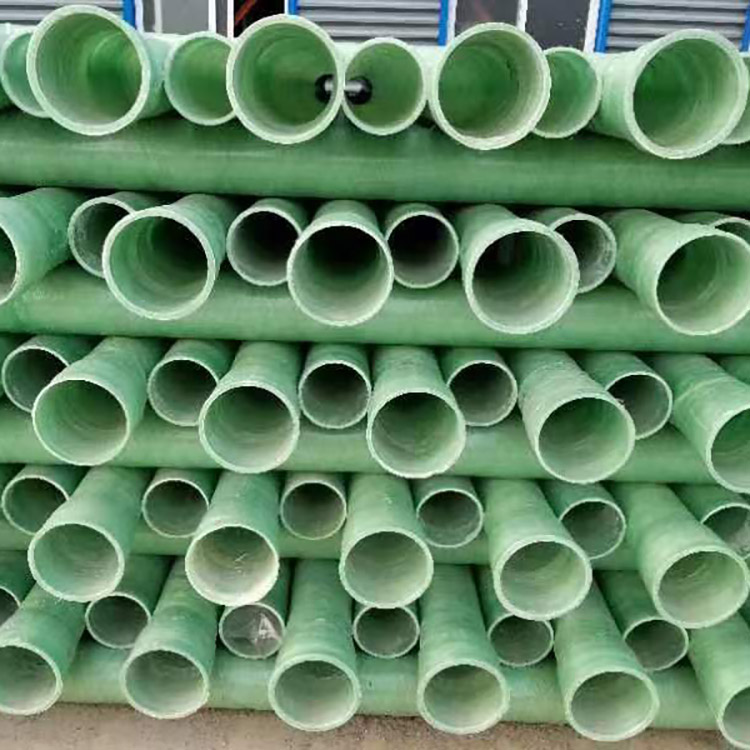
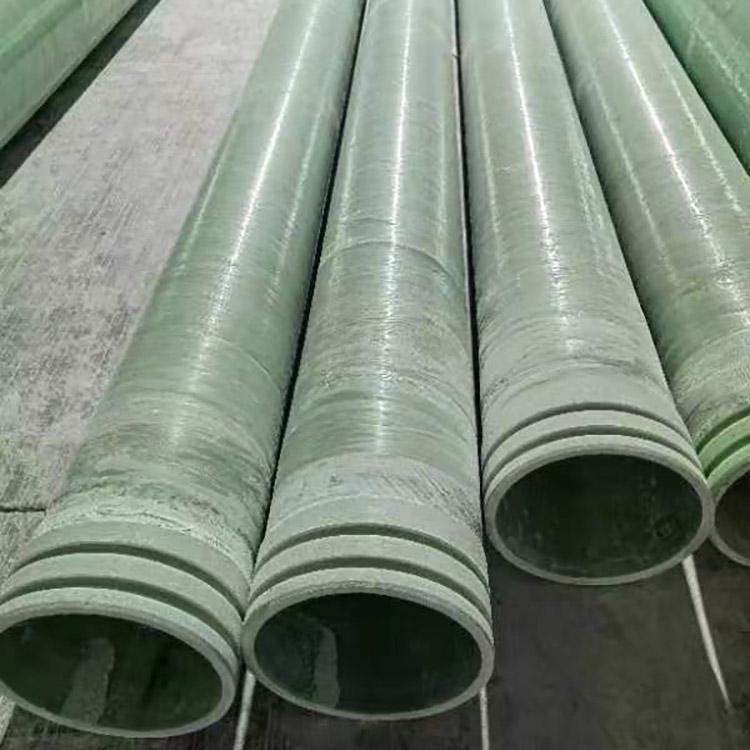
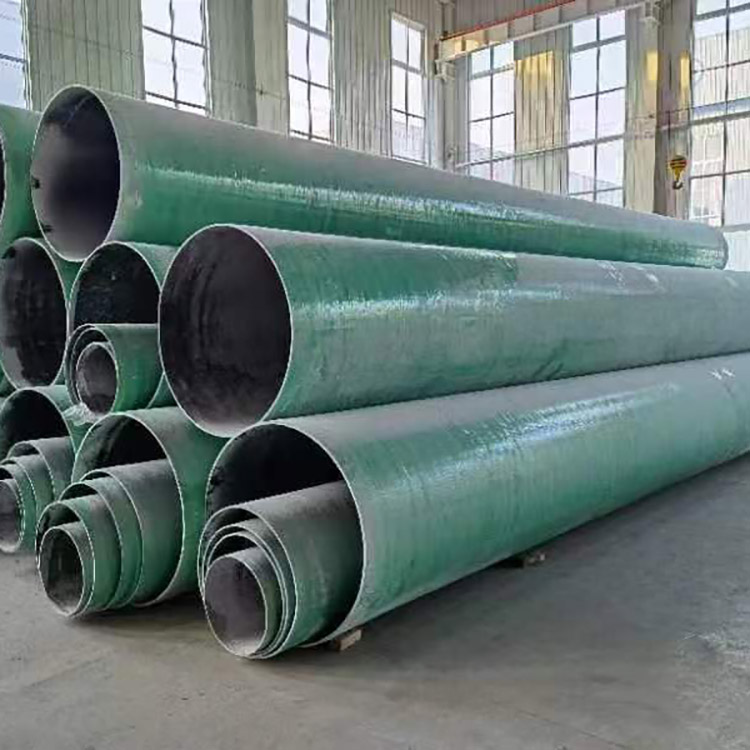
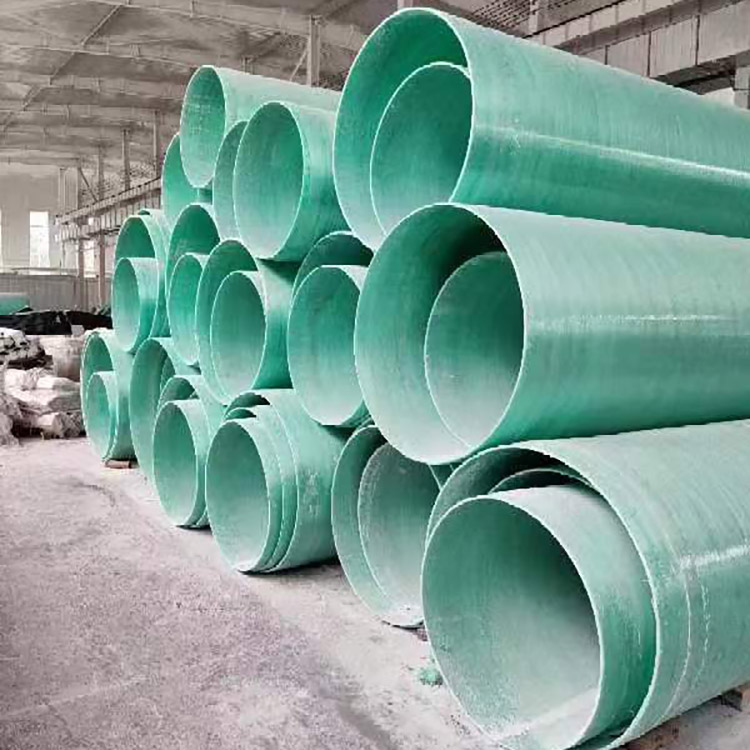
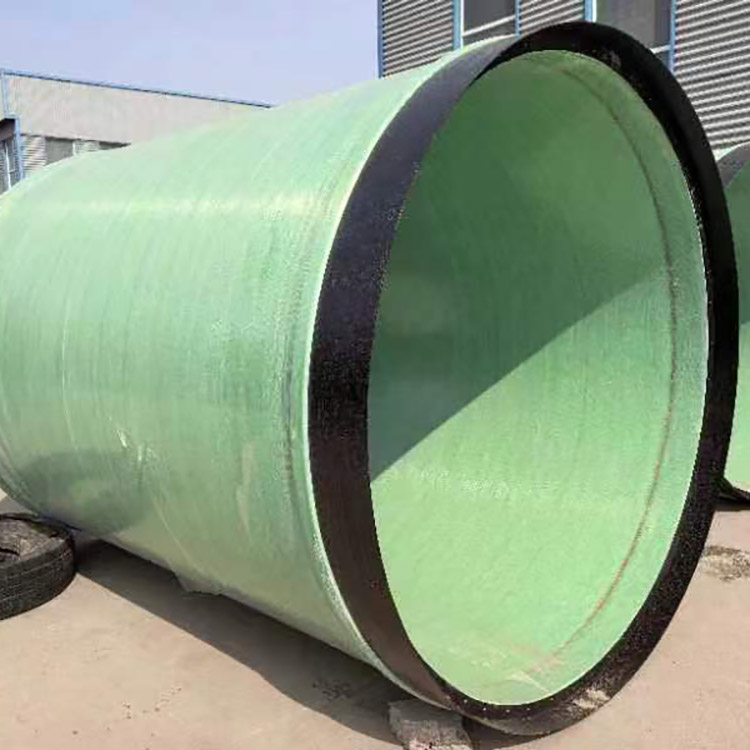
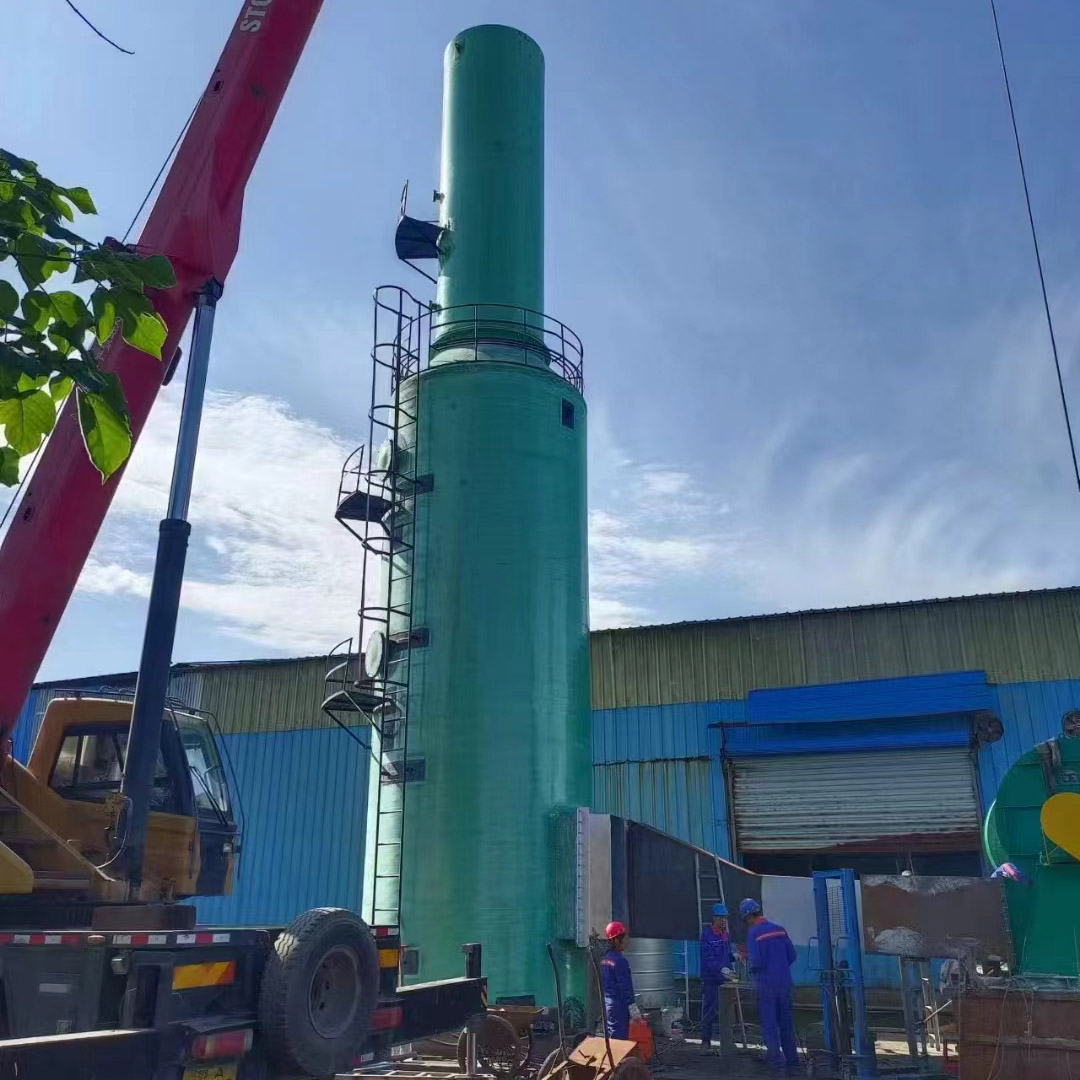
Glass fiber reinforced plastic (GFRP) purification towers are waste gas treatment equipment made of glass fiber reinforced plastic materials. They are widely used in various industrial fields for treating exhaust gases containing harmful substances.
The working principle of the glass fiber purification tower primarily involves the chemical reaction between absorbents (such as alkaline solutions) and harmful substances in the waste gas, thereby removing pollutants from the waste gas. After entering the purification tower, the waste gas passes through the packed bed, where it makes full contact with the absorbent. The harmful substances are absorbed by the absorbent and converted into harmless substances, achieving the purification of the waste gas.
Glass fiber reinforced plastic (GFRP) purification towers offer numerous advantages. Firstly, due to the use of GFRP material, they possess corrosion resistance, lightweight high strength, and excellent weather resistance, enabling long-term stable operation in harsh environments. Secondly, these towers have high purification efficiency, capable of removing various harmful substances from waste gases, meeting stringent environmental protection requirements. Moreover, they also feature a small footprint, stable operation, and easy maintenance.
Glass fiber reinforced plastic (GFRP) purification towers have a wide range of applications, including waste gas treatment in the petrochemical, power, and metallurgical industries. For instance, they can handle harmful gases like acid mist, reducing the environmental and human health impact of waste gases. Additionally, GFRP purification towers can be used for waste gas treatment at wastewater treatment stations and waste disposal sites, protecting the environment and public health.