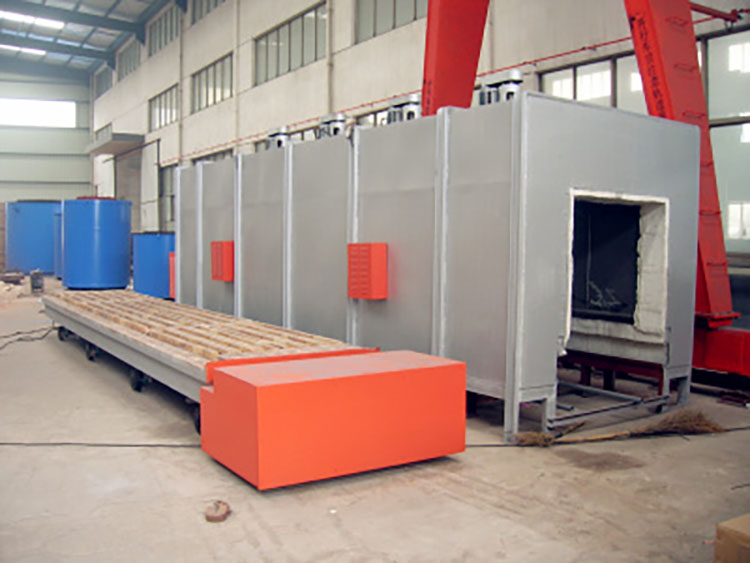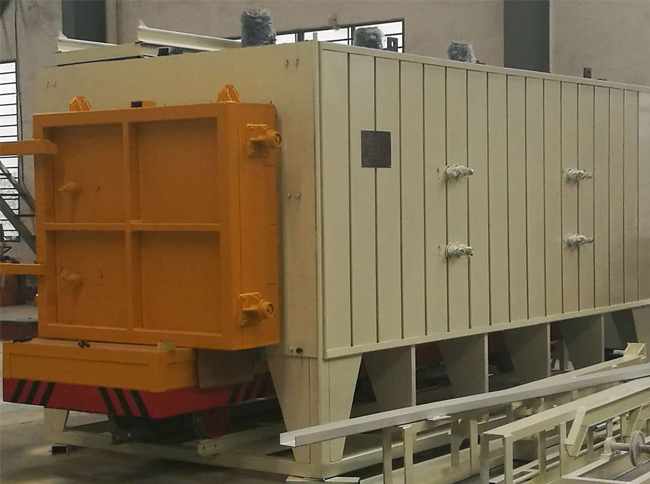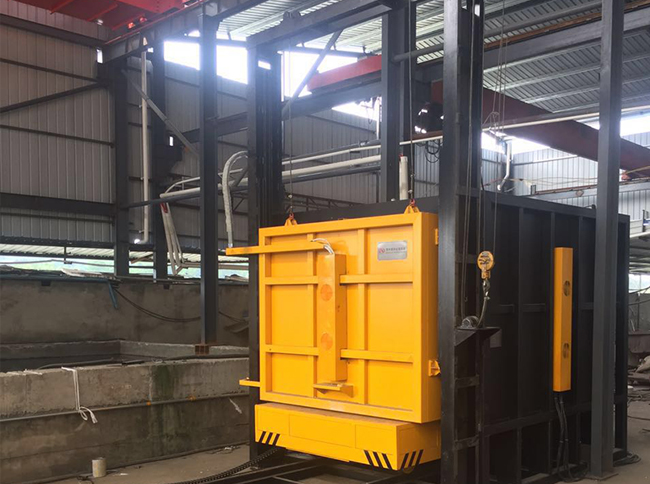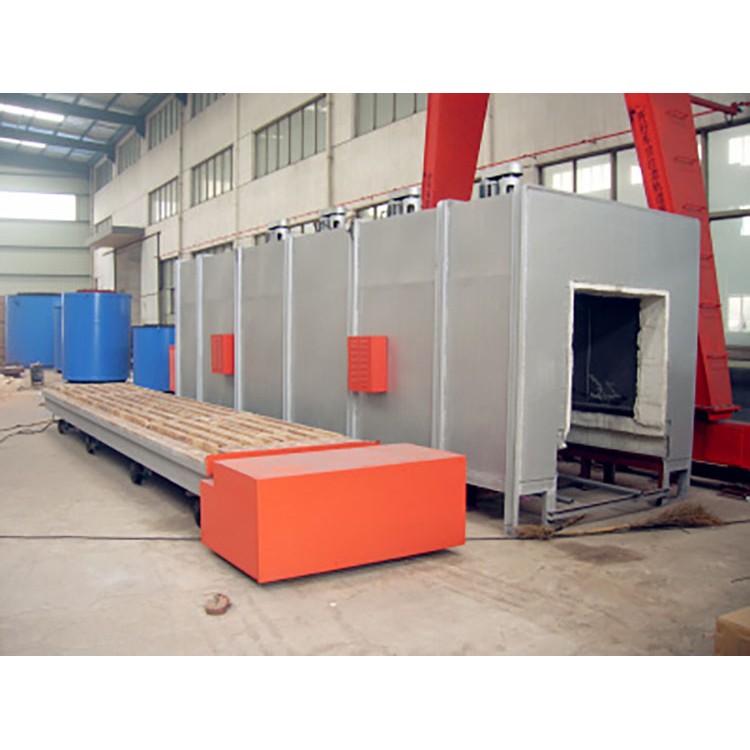

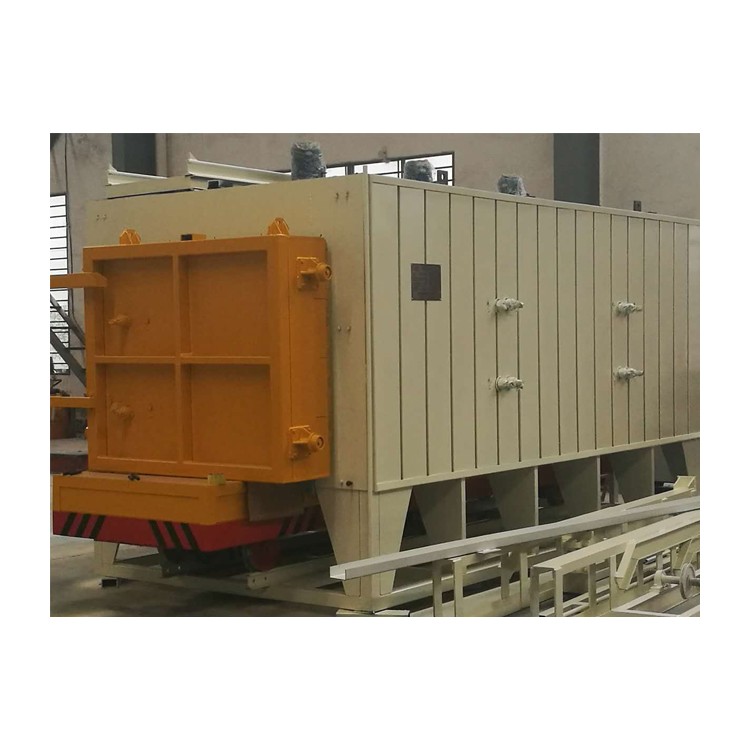
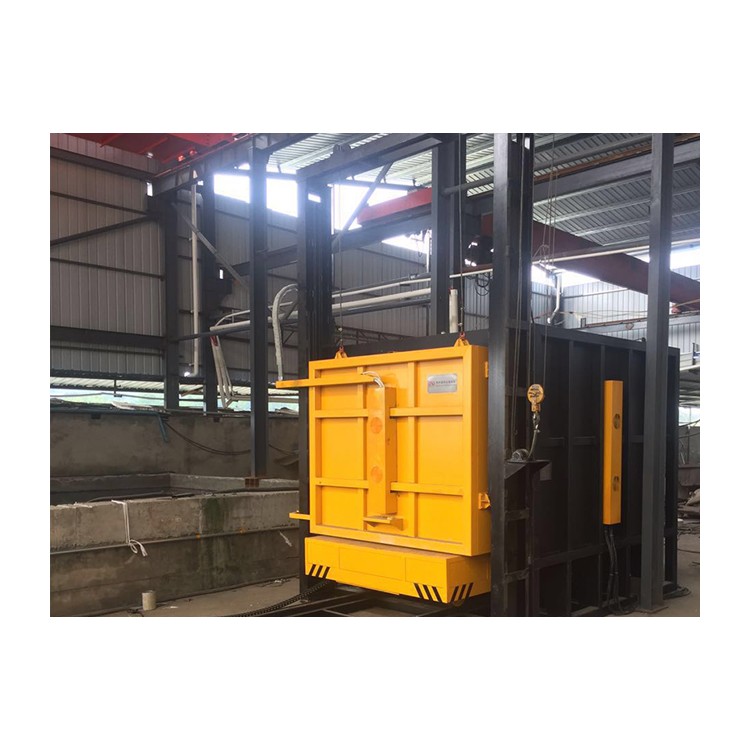












Annealing furnace: It is a metal heat treatment process in which metal parts are slowly heated to a certain temperature in different annealing furnaces, held for a period of time, and then cooled at a suitable speed (usually natural cooling, sometimes controlled cooling). The purpose is to soften materials or workpieces that have been cast, forged, welded, or cut, reduce hardness, improve plasticity and toughness, homogenize chemical composition, remove residual stress, or achieve expected physical properties. The commonly used annealing processes include: ① complete annealing. ② Spheroidal annealing. ③ Isothermal annealing. ④ Recrystallized annealing. ⑤ Graphitic annealing. ⑥ Diffusion annealing. ⑦ Stress relief annealing. The annealing furnace skeleton is welded from various types of steel, with the outer frame made of channel steel as the main beam, the enclosure plate made of cold thin plate, the trolley made of channel steel as the main beam, and the bottom plate and front and rear end plates made of middle plate. Transmission part: The trolley is driven by an electric motor and a reducer through a chain to drive a set of active wheels at the front end. The furnace door transmission adopts a combination of worm gear reducer and electric motor for electric lifting. Sealing: The sealing between the trolley and the furnace body adopts a labyrinth structure, and there is an automatic sand sealing knife sealing device on the trolley side. The furnace door is sealed using a rolling track compression and spring compression automatic mechanism. The furnace body is partially made of refractory bricks to ensure the sealing of the furnace. The pressure resistant part of the trolley is constructed with high alumina bricks, and insulation bricks are added to the lower part for insulation. Combustion system: Install several burners on both sides of the oil furnace, and the heat flow circulates back and forth in the furnace to ensure uniform furnace temperature. Automatic and semi-automatic models can be selected as needed. Smoke exhaust preheating device: A smoke exhaust preheating device is installed at the upper end behind the furnace. When the flue gas in the furnace passes through the preheater, cold air is sent by the fan for preheating, and then sent to the burner for combustion assistance through the pipeline. A manual disc valve is installed at the outlet, which can adjust the pressure inside the furnace. Widely used in heating, cooling, condensation, evaporation and other processes in industrial sectors such as chemical, petroleum, food, metallurgy, machinery, light industry, electricity, shipbuilding, papermaking, mining, and centralized heating.