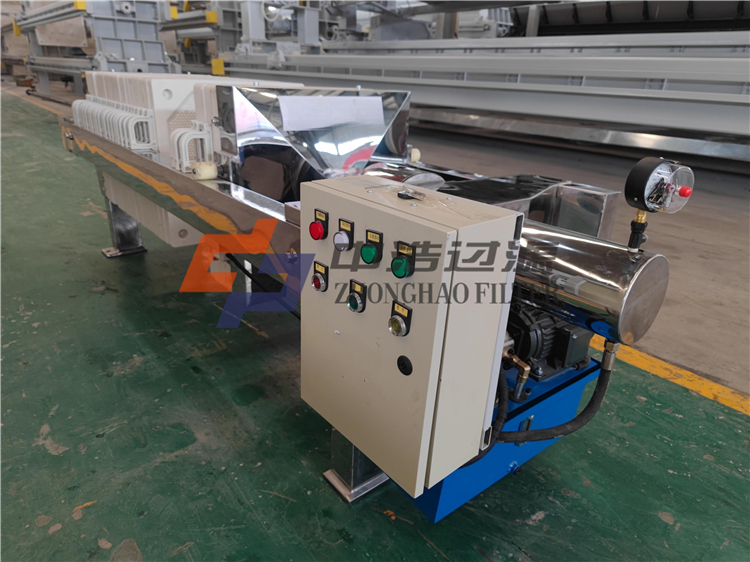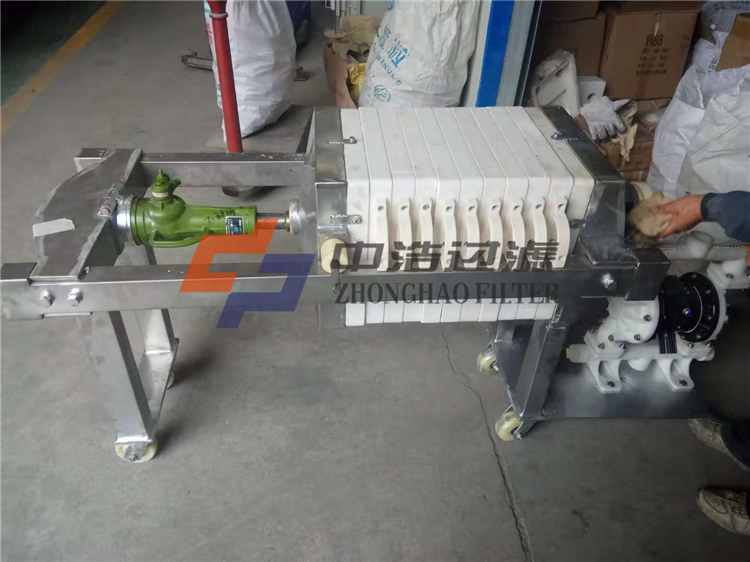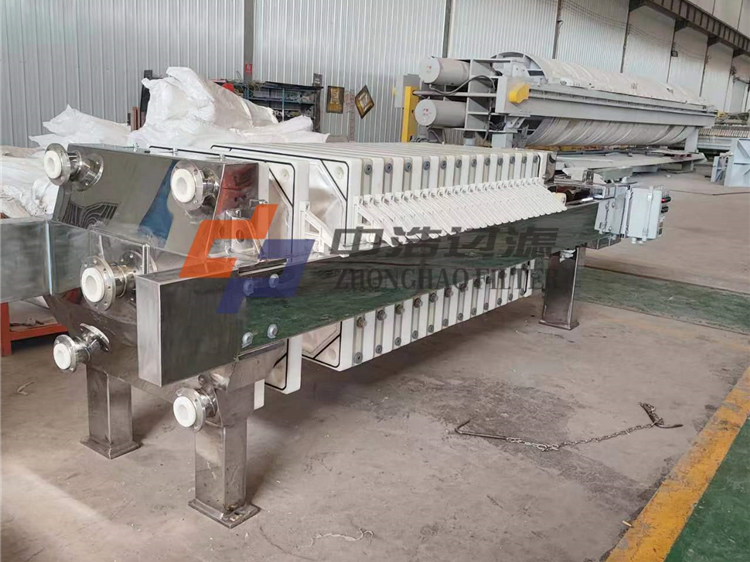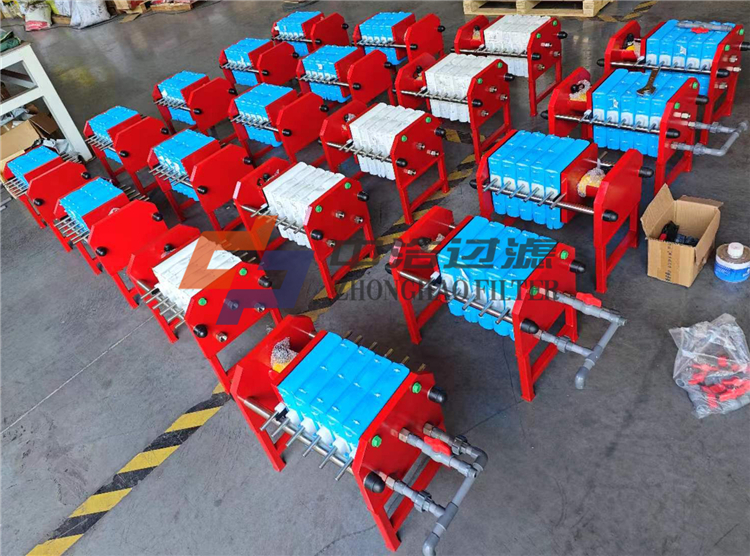





1、 Introduction to Belt Filter Press
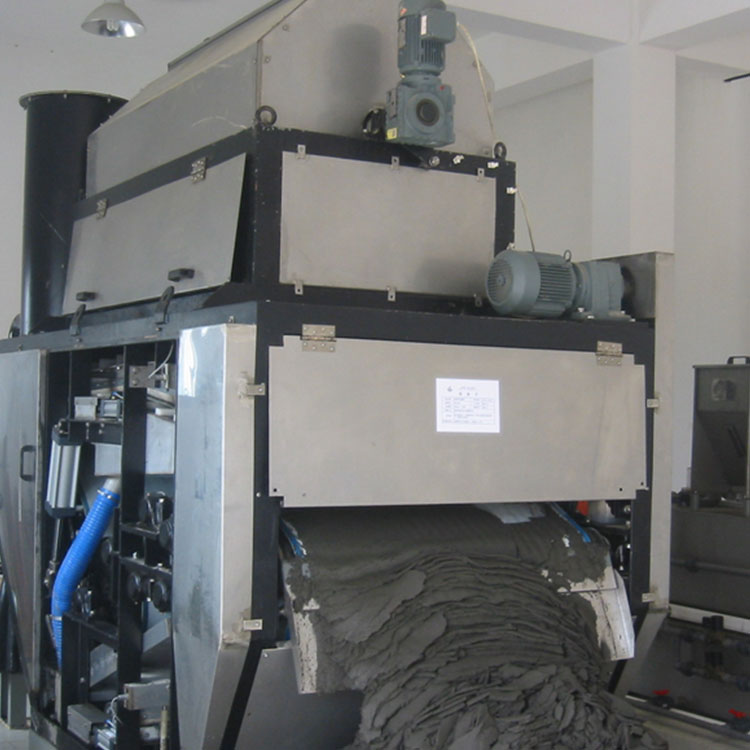
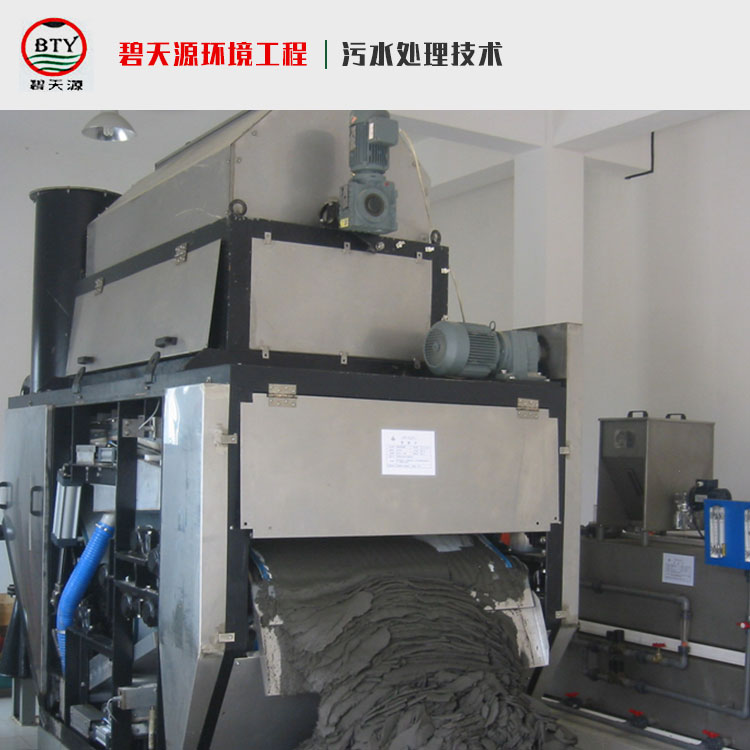
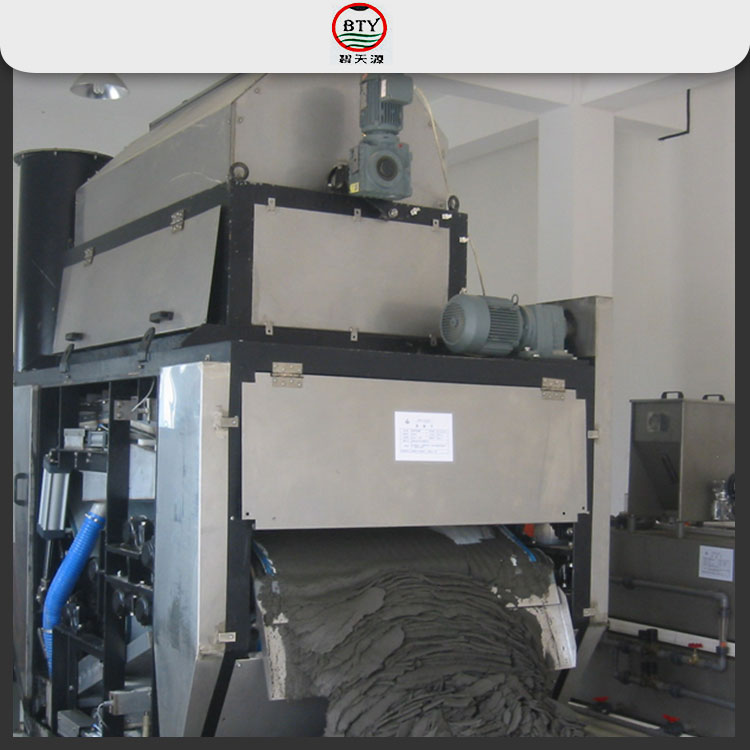
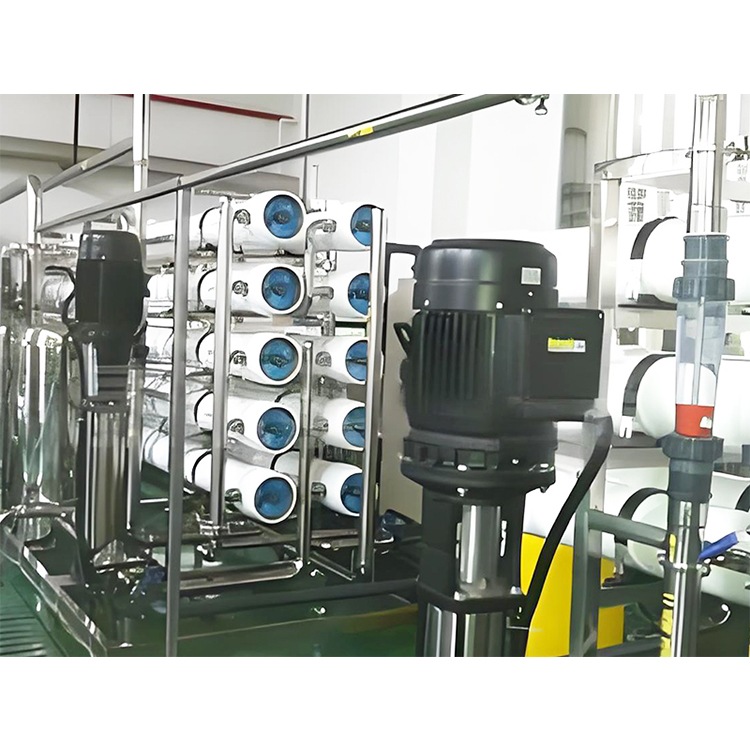
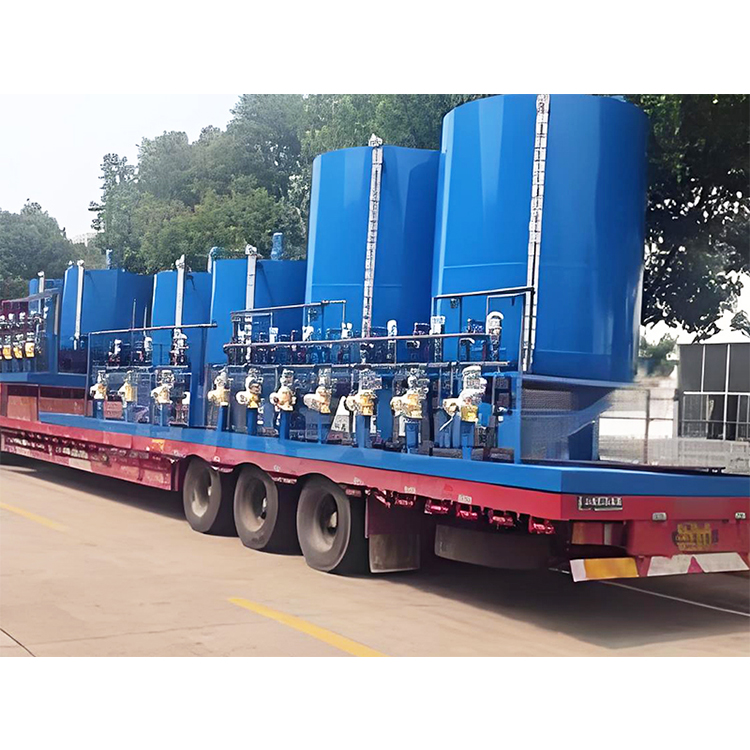
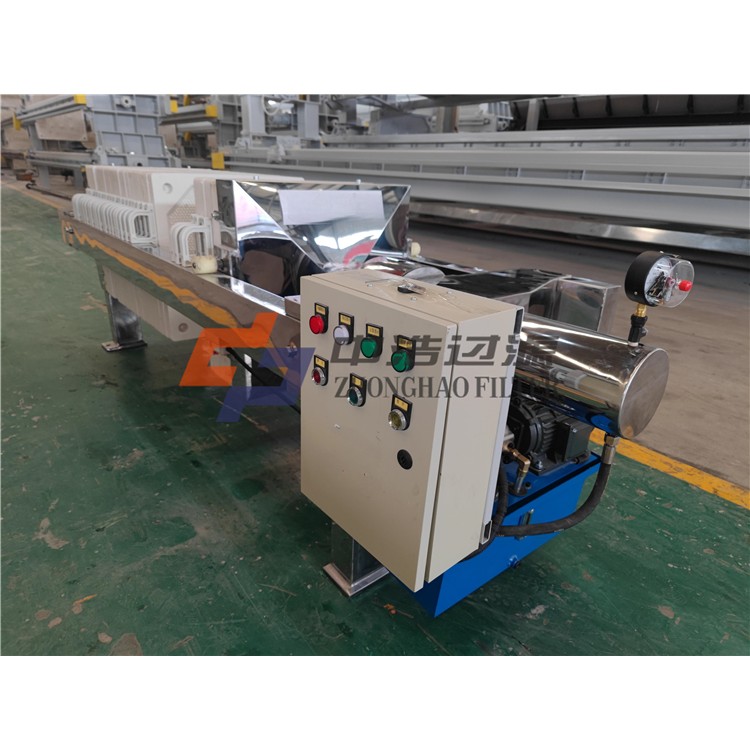
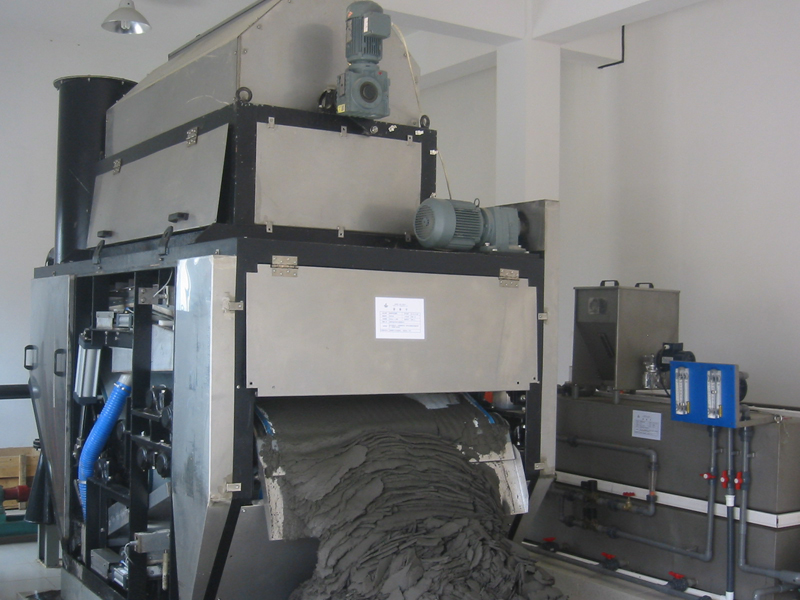
Using a new type of filter press for sewage treatment equipment, belt filter press for sewage treatment equipment, sludge water separation industrial sewage treatment filter press. The belt filter press for sewage treatment equipment consists of a sewage pump sedimentation tank. The concentrated sludge from the belt filter press is mixed in the mixer, and the sludge condenses into larger flocculent masses, separating free water. The flocculated sludge is transported to the belt filter press of the sewage treatment equipment. Under the action of gravity, free water is separated to form non flowing sludge. Under the action of squeezing pressure and shear force, the sludge is gradually squeezed, and then a filter cake is formed and discharged. The system process of the belt filter press should use different types of coagulants and their concentrations, dosages, as well as different arrangements of extrusion rollers and extrusion methods, and different structures, speeds, and tension changes of the filter belt for different types of sludge, in order to achieve more scientific, reasonable, and economically applicable treatment effects. Therefore, in order to achieve good dewatering effect, a corresponding process flow must be designed for sludge with different compositions, concentrations, acids, and alkalinity.
Widely used in urban domestic sewage, textile printing and dyeing, electroplating, papermaking, leather, brewing, food processing, coal washing, petrochemicals, chemistry, metallurgy, ceramics, cement plant sludge, mining sludge, chemical fiber sludge, oil refining sludge, steel plant sludge, carbide slag, electronic wastewater, circuit board factory, brewery sludge, kaolin, starch residue, wine residue, textile activated sludge and other industries for sewage treatment and sludge dewatering treatment. It is also suitable for solid-liquid separation or liquid leaching processes in industrial production.
2、 Main application scope
Factory filter presses can be widely used for sludge dewatering treatment in industries such as urban domestic sewage, textile printing and dyeing, electroplating, papermaking, leather, brewing, food processing, coal washing, petrochemicals, chemicals, metallurgy, ceramics, etc. They are also suitable for solid-liquid separation or liquid leaching processes in industrial production.
3、 The working principle of belt filter press and the dehydration process of the system
After the concentrated sludge is fully mixed with a certain concentration of flocculant in a static and dynamic mixer, the small solid particles in the sludge aggregate into larger flocculent clumps, and free water is separated. The flocculated sludge is transported to a filter belt for concentration gravity dewatering, where free water is separated under the action of gravity to form a non flowing sludge. It is then sandwiched between two mesh belts and gradually squeezed through a wedge-shaped pre pressure zone, a low-pressure zone, and a high-pressure zone under the action of small to large extrusion pressure and shear force, to achieve a large degree of separation between sludge and water, and then discharged as a filter cake.
1. Chemical pretreatment dehydration
In order to improve the dewatering performance of sludge, enhance the properties of filter cake, and increase the permeability of materials, chemical treatment of sludge is required. This machine uses a unique "water flocculation granulation mixer" device to achieve chemical dosing flocculation. This method not only has good flocculation effect, but also saves a lot of chemicals, with low operating costs and significant economic benefits.
2. Gravity concentration dehydration section
The sludge is evenly fed into the mesh belt through the material hopper, and the sludge moves forward with the filter belt. The free water flows into the water receiving tank through the filter belt under its own weight. Gravity dewatering, also known as the highly concentrated section, mainly removes the free water from the sludge, reducing its fluidity and preparing for further squeezing.
3. Wedge shaped pre pressure dehydration section
After gravity dewatering, the fluidity of the sludge is almost completely lost. As the filter belt moves forward, the distance between the upper and lower filter belts gradually decreases, and the material begins to experience slight pressure. As the filter belt runs, the pressure gradually increases. The function of the wedge-shaped zone is to extend the gravity dewatering time, increase the extrusion stability of the flocs, and prepare for entering the pressure zone.
4. High pressure dehydration section of squeezing roller
The material leaves the wedge-shaped zone and enters the pressure zone, where it is compressed. The pressure along the direction of the filter belt increases with the decrease of the diameter of the compression roller, causing the material to shrink in volume. The free water in the gaps inside the material is squeezed out, and at this point, a filter cake is basically formed. Continuing forward to the high-pressure zone at the end of the pressure, the water content of the filter cake can be reduced to a low level after passing through high pressure.
After the dehydration treatment in the above stages, the material forms a filter cake and is discharged. It is scraped off by a scraper plate, and the upper and lower filter belts are separated. After high-pressure flushing water is used to remove trace materials between the filter holes, it continues to enter the next dehydration cycle.
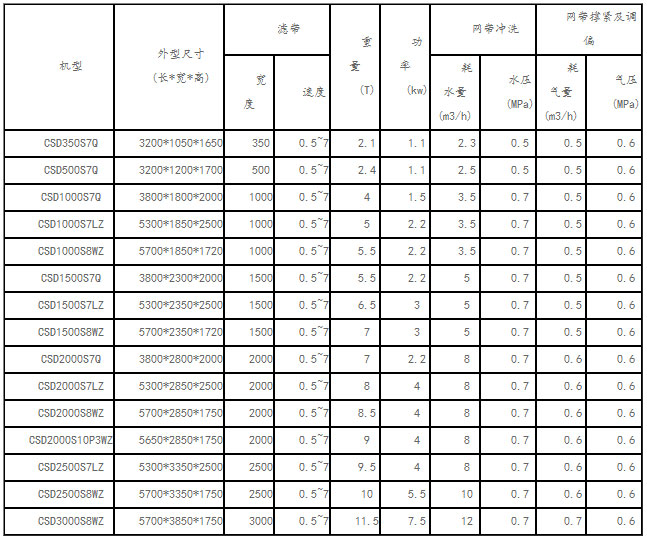
4、 Technical performance