








AOW5000 Drop-adding Weighing Control Instrument
Overview
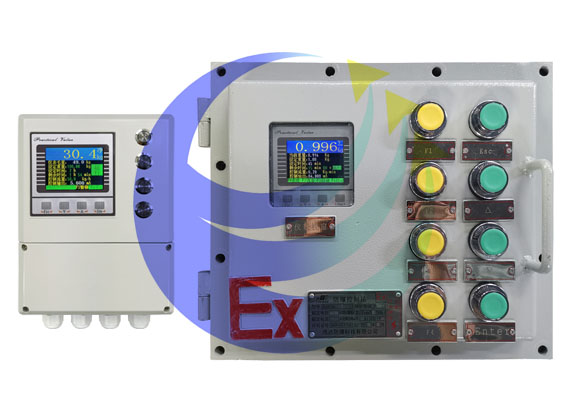
The Drip Control Instrument is a smart device specifically designed for quantitative post-control on valve mouth packaging machines in industries such as chemicals, grains, and cement. It features industrial-grade components, a color LCD display, surface mount technology production, multiple anti-interference measures, and a range of new research achievements in microcontroller technology. It boasts a user-friendly interface, powerful functions, high reliability, and strong adaptability. The application of numerous new technologies ensures the instrument has outstanding advantages in product reliability, operational flexibility, and ease of use, making it reliable for operation in complex and harsh environments.
Feature Highlights
Power Supply: 24VDC.
2. Working Environment: -10 to 50℃ / 10 to 95% RH (no condensation).
3. Weight Detection: 16-bit resolution, input sensitivity of 0.2-1.0μV/d (as per factory-set gain), error less than 0.01%.
4. Instrumental Comprehensive Error: Less than 0.02%.
Monitor: LCD Liquid Crystal Display, Resolution: 320*240.
6. Display Digits: 5 Digits.
7. Analog Input Channels: 16-bit, 2CH, adjustable gain. CH1 can be directly connected to a load sensor, the meter provides a 10V/200mA power supply for the sensor; CH2 input signal is 0-20mA or 4-20mA current signal.
8. Analog Output Channels: 12-bit, 2CH. Dual Analog Output: CH1 and CH2 are both selectable for 0-20mA, 4-20mA, 0-5V, and 1-5V output.
(Limits can be set), load less than 600 Ohms.
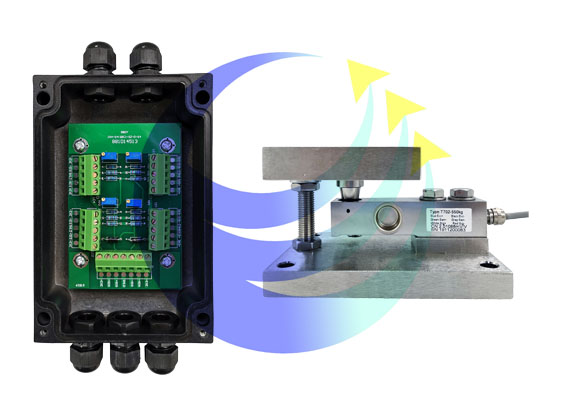
Terminal box + 3-4 weighing modules (including top and bottom mounting plates)
A weight sensor is a device that converts mass signals into measurable electrical signals for output.
The conversion methods are categorized into eight types: photoelectric, hydraulic, electromagnetic force, capacitive, magnetic pole transformation, vibration, gyroscope, and resistive strain, with resistive strain being widely used.
The resistive strain gauges mainly come in several styles, including S-type, cantilever, spoke, plate ring, membrane box, bridge, and column筒.
Weight Sensor Module [Note: Explosion-proof options available]
Sensor + adjustment washers + locking device + anti-tilt bolts + bushes + top mounting mating plate + bottom mounting mating plate assembly
The difference between peeling and zeroing:
Gross Weight = Tare Weight + Net Weight
Reset: Set up completed
Upon emptying the drums (platform, hopper), the operation is similar to zeroing the PV after our pressure changeover is completed. (Zeroing the equipment)
Shell removal: It is necessary for actual processing requirements; some production processes require the determination of gross and net weights. Typically, operations are carried out in the shell weight state.
The instrument will display both gross weight and net weight. (Zeroing of the process)
Drop Feed Controller, Ingredient Controller
Support: Wall-mounted, Cast Aluminum Explosion-proof Cabinet, Stainless Steel Explosion-proof Cabinet in three specifications
Usage: Chemical industry, intermediates, pharmaceutical industry ingredients
Using the signal from the weighing tank (weight sensor), the current feed (or discharge) amount can be evaluated. By operating this with time, the feed (or discharge) rate can be obtained, and compared with the SP value.
Perform positional control (batch control) or PID control (quantitative control).
Address precision issues and cost concerns (for high-quality flow rates) associated with conventional flowmeters. Achieve significant cost reduction while maintaining high precision.
It is the preferred solution for ingredient mixing and addition modification in the current chemical process!
Customizable professional control logic solves the difficulty of process adaptation for imported products.
Excellent industrial-grade design, meeting the requirements of anti-interference in industrial environments. Resolves issues of other traditionalWeighing InstrumentPerformance issues of the (civilian majority, transformed from weighbridges).
Explosion-proof housing (with explosion-proof switches; however, Torpedo uses non-explosion-proof switches, posing significant safety concerns) complies with chemical industry explosion-proof requirements.