






1. Overview
The Anke Energy Management Platform utilizes automation, information technology, and centralized management to implement dynamic monitoring and data management of the production, distribution, and consumption phases. It monitors the consumption of various energy sources such as electricity, water, gas, steam, and compressed air. By analyzing data, mining insights, and trend analysis, it assists companies in energy consumption statistics, year-on-year and month-on-month comparisons, energy cost analysis, energy consumption forecasting, and carbon emissions analysis. This provides a foundation for enhancing energy management, improving energy efficiency, tapping into energy-saving potential, and conducting energy-saving evaluations.
2. Applicable Occasions
Steel, petrochemicals, metallurgy, non-ferrous metals, mining, cement, coal, logistics, rail, aviation industry, timber, chemical raw materials, as well as equipment and machinery, electrical products, and manufacturing of tools and instruments.
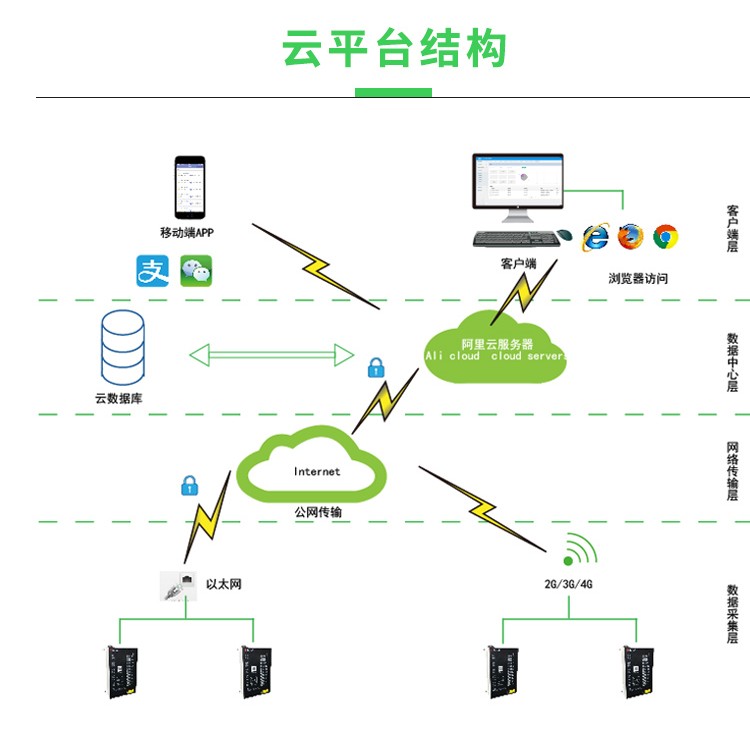
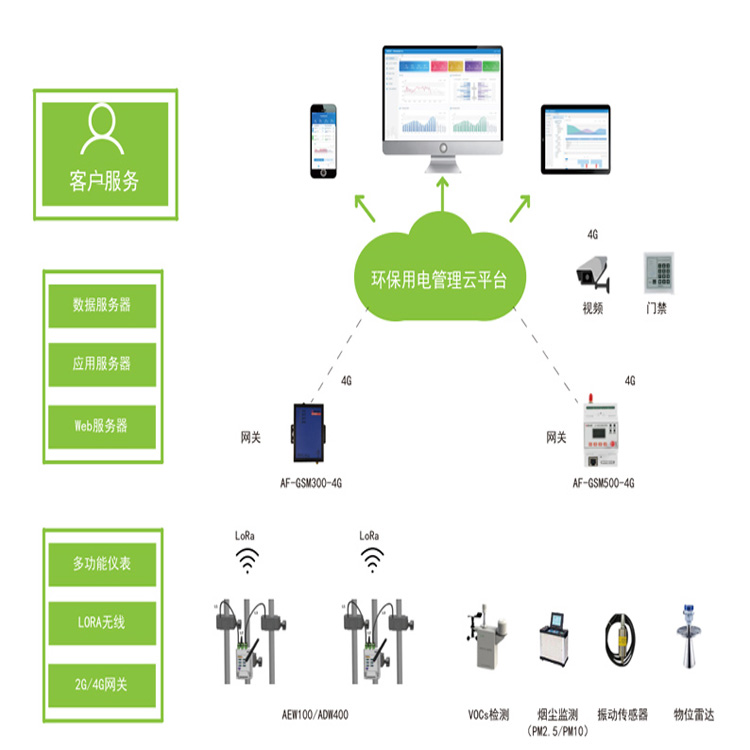
System Structure Composition Diagram:

Platform Features:
Real-time monitoring
Real-time monitoring of energy consumption and alarm conditions at various points within the enterprise. This allows corporate users to monitor the operation of each point in real-time and to quickly grasp alarm conditions at the points.
Video Surveillance
Connect camera for real-time monitoring of the actual situation within the company.
Transformer Monitoring
Display the load conditions of various voltage transformers to scientifically and rationally plan for transformer provisioning. Conduct a comparative analysis of power consumption efficiency under various operating parameters to identify the suitable operating mode. Adjust the load based on the operating mode to reduce per-unit energy consumption and minimize power loss.
Energy consumption statistics
From energy consumption types, monitoring areas, workshops, production processes, procedures, time spans, equipment, teams, and sub-items, utilize methods such as curves, pie charts, histograms, cumulative charts, and digital tables to analyze energy use statistics, year-on-year and month-on-month comparisons, performance analysis, benchmark comparisons, and energy consumption per unit of product or output. Identify inefficiencies and unreasonable aspects in the energy consumption process, thereby adjusting energy allocation strategies and reducing waste during energy use.