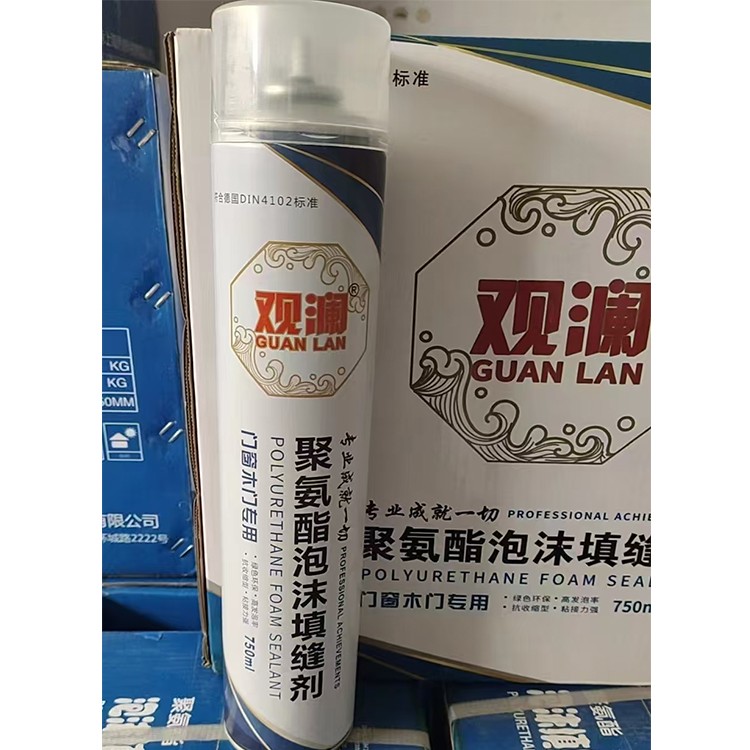















Excellent adhesion properties
Foam sealant effectively fills and seals various gaps, including those in walls, roofs, windows, and doors, ensuring the structural integrity of buildings is tight and seamless. Its powerful adhesive properties make foam sealant an invaluable helper in architectural sealing and soundproofing, significantly enhancing the building's sealing and soundproofing performance.
Excellent thermal insulation and heat retention properties
Foam sealant boasts excellent thermal insulation properties, effectively reducing energy waste and contributing to energy-saving and environmental protection in homes. Additionally, it excels in heat insulation, blocking the transfer of external heat and maintaining stable indoor temperatures.
Excellent waterproof performance
Foam adhesive can generate a large amount of foam, filling loose pores, thus effectively preventing water penetration and enhancing the material's waterproof performance. This allows the foam adhesive to maintain stable performance in humid environments, extending its service life.


Elasticity and flexibility
Cured foam adhesive foam exhibits excellent elasticity and flexibility, capable of accommodating deformation in various building materials. This characteristic ensures that the adhesive maintains stable bonding effects in response to minor structural changes in buildings, enhancing the overall stability of the construction.
Simple construction process
Foam adhesive is easy and convenient to apply, suitable for bonding and filling various construction materials. Simply spray or apply the foam adhesive to the area that needs bonding or filling, and then wait for it to cure. This simple application process significantly improves efficiency and reduces construction costs.
Widespread application scenarios
Foam adhesive finds extensive applications, not only meeting the sealing, sound insulation, and thermal insulation needs in the construction field, but also commonly used for bonding car body parts, seats, glass, and for filling holes in automotive manufacturing. Additionally, in furniture production, foam adhesive is often used as a bonding agent for materials like wood and plastic.