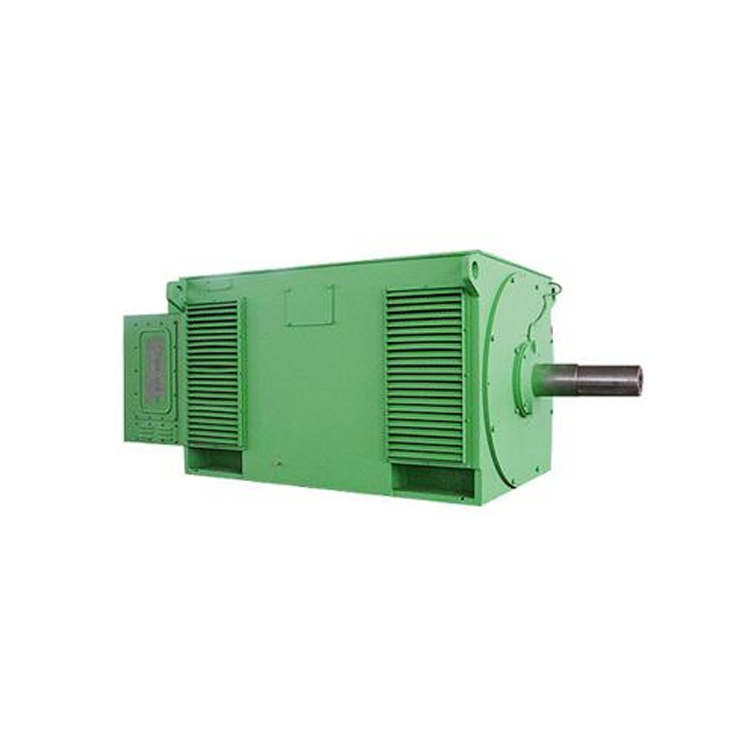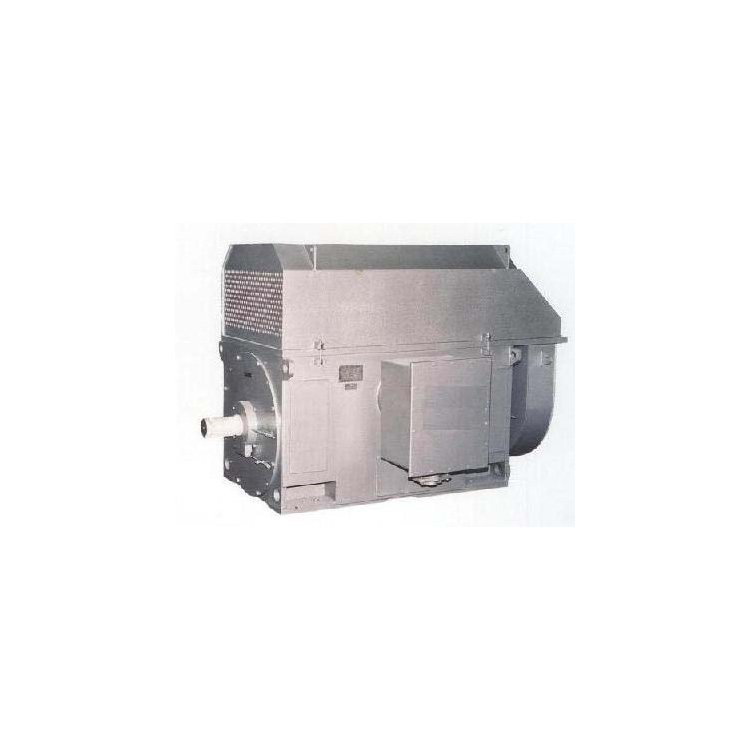

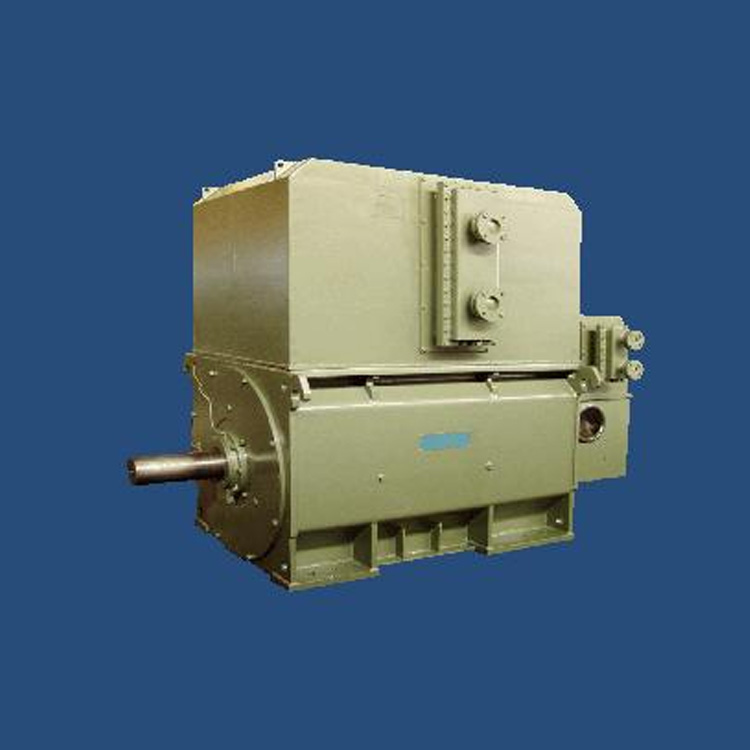

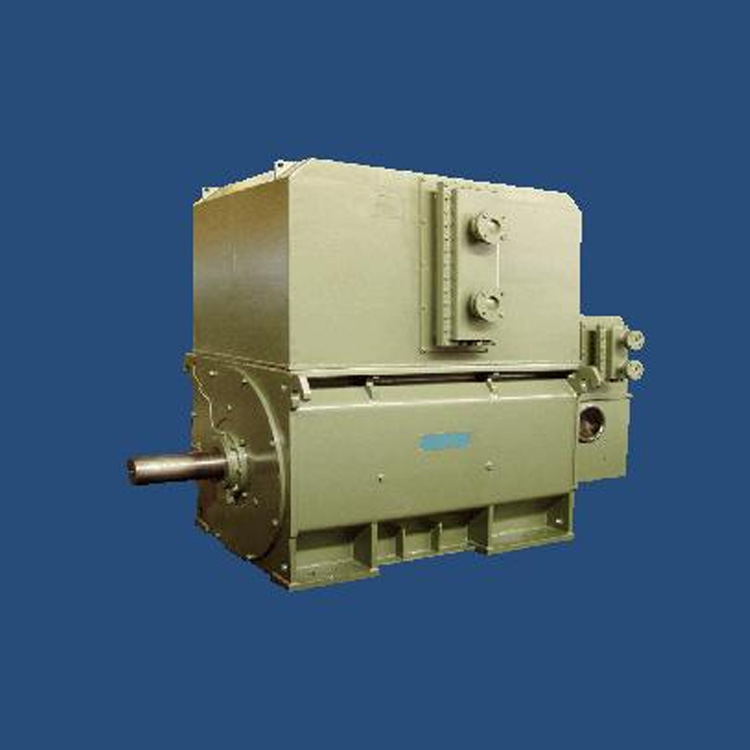
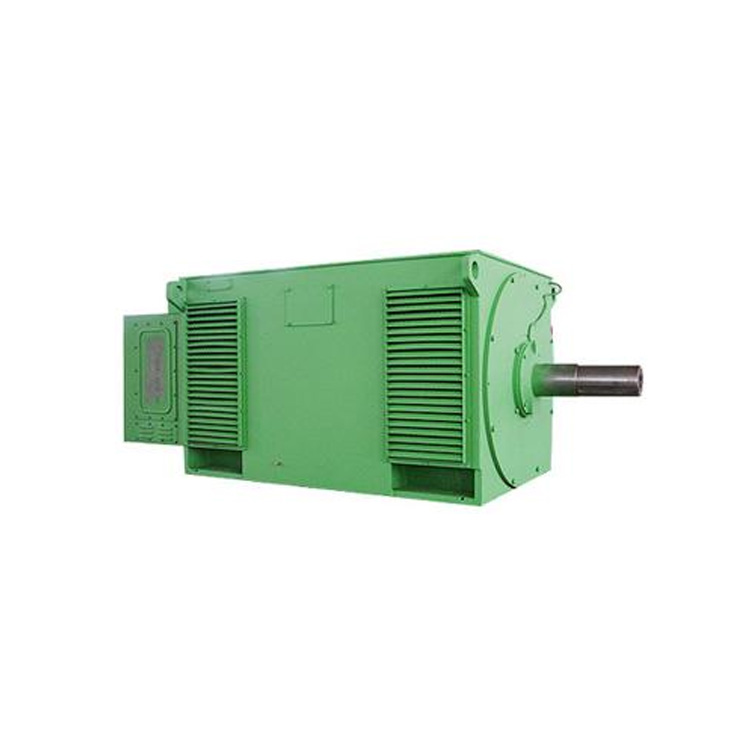
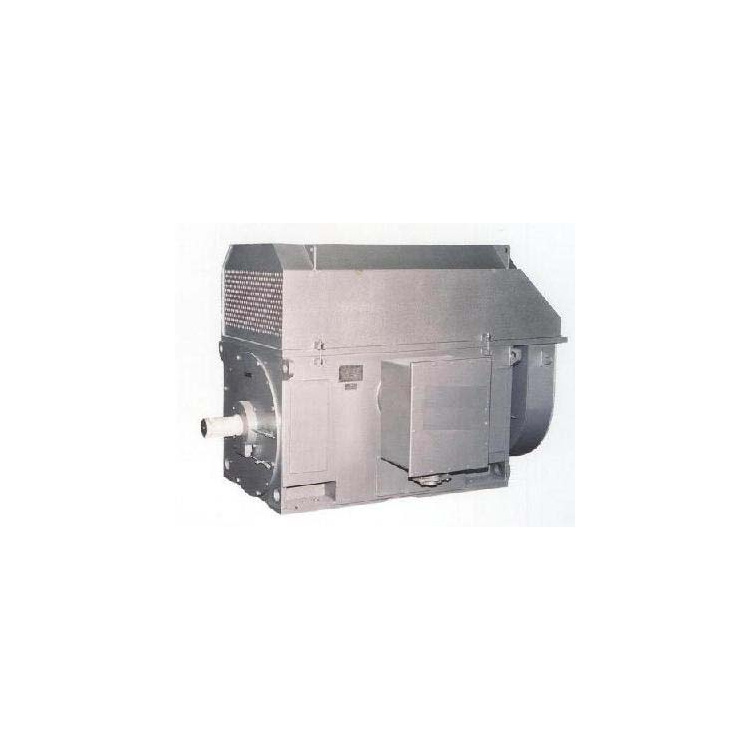





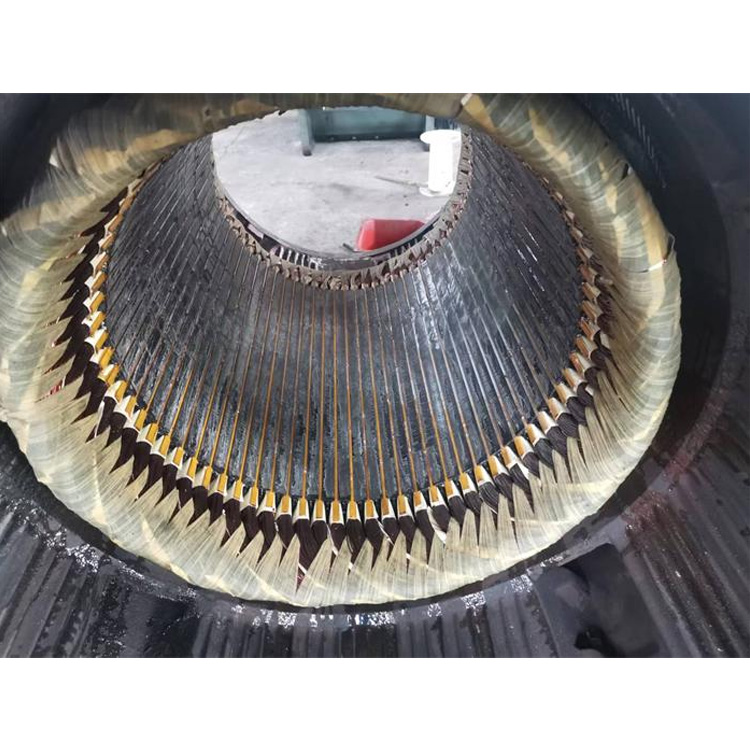
The Z4 series DC motor, widely used as the power source for various mechanical drives, such as metallurgical industry rolling mill drives, metal cutting machine tools, papermaking, printing, textiles, dyeing and finishing, cement, plastic extrusion machinery, etc.
The installation dimensions of this series of motors, excluding the axial dimension 'B' between the two bottom foot holes, comply with the IEC 72 international standard.
The performance and technical requirements of this series of motors can be assessed according to the International Electrotechnical Commission (IEC) Standard, IEC34-1, or the German National Standard DIN57530.
These motors feature a polygonal structure for high space utilization. The stator yoke is in a lamination design, suitable for rectifier power supply, and can withstand pulsating currents and rapid changes in current (load changes). The poles are mounted with positioning, ensuring good commutation.
The motor insulation is F-class, utilizing a reliable insulation structure and impregnation process to ensure stable insulation performance and excellent heat dissipation.
This series of motors features compact size, excellent performance, light weight, high output power, high efficiency, and reliability, making them comparable to the most advanced motors in the international market today.
The motor can be powered by a three-phase full-bridge rectifier power supply and can operate continuously without an external smoothing inductor. The motor rated at 160V is powered by a single-phase bridge power supply, at which point an inductor must be connected to the armature circuit to suppress pulsating current, with the inductance values as shown in the table.
Motor Performance
1. Data in the technical data sheet should operate under the following conditions
a. Altitude not exceeding 1,000m.
b. Surrounding air temperature not exceeding 40℃;
c. The working environment should not contain acidic, alkaline, or any other gases that have a corrosive effect on insulation.
d. Motor operates on continuous duty (S1)
e. The armature circuit and field circuit of the motor can be powered by a static rectifier power supply, and is also suitable for power supply by a DC generator.
f. The motors in this series meet the national standard GB/T755 "Basic Technical Requirements for Rotating Electrical Machines."
2. Standard rated voltage for the motor is 160V, 440V. Derivatives such as 220V and 400V, or other voltages, can also be produced based on specific conditions.
3. The motor has a rated speed of 3000, 1500, 1000, 750, 600, 500, 400, 300, and 200 rpm, totaling nine speeds.
Reducing the armature voltage achieves constant-torque speed control, while reducing the excitation voltage results in constant-power speed control. The speed range is detailed in the technical data sheet.
At rated voltage and below, variable voltage and variable speed operation results in a constant torque. The low-speed range is set not to be less than 20 r/min, at which point it still maintains the rated torque with a stable speed.
4. The basic excitation method for the motor is external excitation, with a standard excitation voltage of 180V; other excitation voltages can also be negotiated.
The motor allows forced excitation, with the excitation voltage not to exceed 500V. During normal operation, the excitation current of the motor must not exceed the rated excitation current.
To ensure the reliability of the excitation system insulation, a discharge resistor should be paralleled across both ends of the excitation winding when the excitation circuit is disconnected to prevent self-induction voltage. At standard excitation voltage, its value is approximately seven times the resistance of the excitation winding (at cold state). When the excitation voltage is higher than the standard voltage, the value of the discharge resistor can be less than seven times; conversely, it should be greater than seven times.
5. The Z4-315, Z4-355, Z4-400, and Z4-450 frames come with compensating windings. It is also possible to derive motors with compensating windings from the Z4-250 and Z4-280 frame numbers.
6. Motors are provided with接地labeled terminals.