











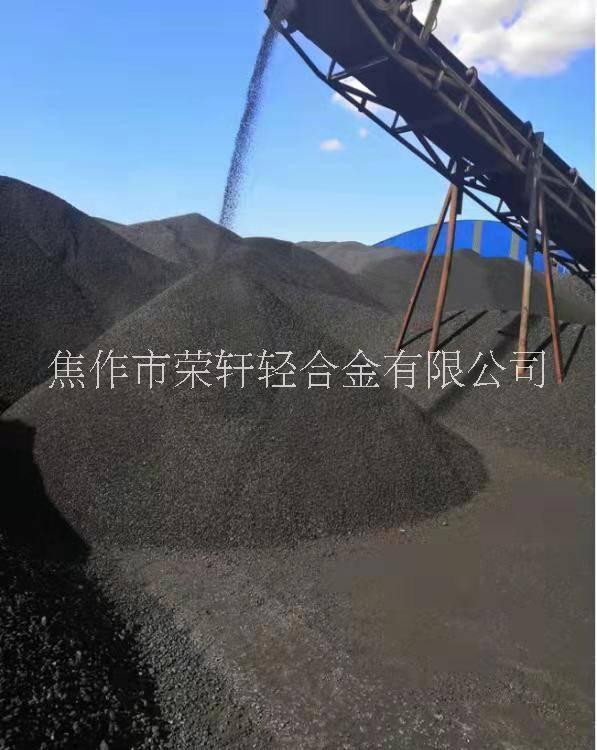
We produce and supply coke. Welcome to inquire and purchase from our factory!
Charcoal filter media features a rational porous structure and a long service life. It is suitable for both domestic and industrial water treatment systems. Charcoal filter media is primarily used in blast furnace ironmaking and smelting of non-ferrous metals like copper, lead, zinc, titanium, antimony, and mercury, serving as a reducing agent, heat generator, and structural support for the charge. The use of charcoal instead of wood in blast furnace ironmaking laid the foundation for the large-scale modern blast furnaces and marked a significant milestone in metallurgy. To achieve good technical and economic performance in blast furnace operations, the charcoal used for smelting (metallurgical coke) must possess appropriate chemical and physical properties, including thermal properties during the smelting process. In addition to extensive use in ironmaking and non-ferrous metal smelting (metallurgical coke), charcoal filter media is also employed in foundry, chemical industry, calcium carbide production, and iron alloys, with varying quality requirements. For foundry coke, typically, larger particle size, lower porosity, high fixed carbon content, and low sulfur content are required; for chemical gasification coke, strength is not a strict requirement, but good reactivity and a high ash fusion point are; and for calcium carbide production coke, the goal is to maximize the fixed carbon content.
Coal Tar Technical Specifications:
Analyze project unit data: mud content 1, wear rate 0.26, breakage rate 0.54, solubility rate 0.86, cleanliness rate 98, porosity 79.5. Bulk density 0.86, strength 98, fixed C80.12, ash content 16.23, moisture 1.66.
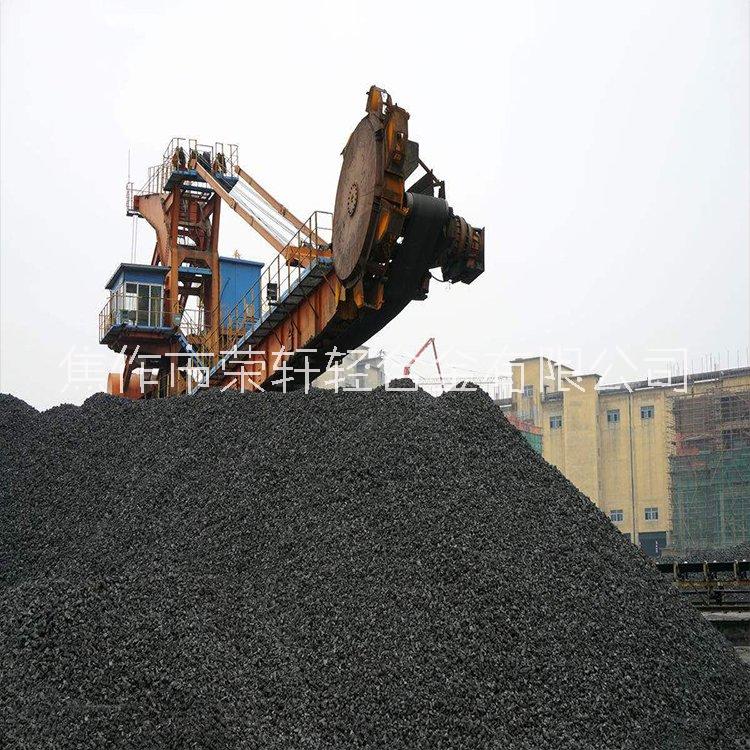
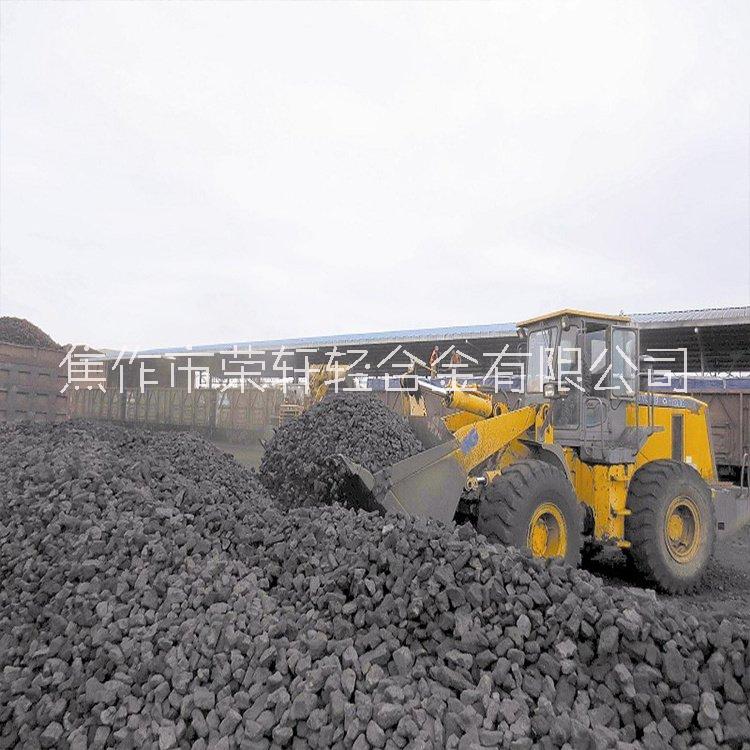
Coal tar filter media is a raw material obtained from coke, which is selected through strong vibration screening to achieve a strength of 98%. After secondary water washing to remove dust between coke particles, it is dried, sun-dried, and then undergoes three rounds of screening, dust removal, and packaging. Coal tar filter media, with its high mechanical strength, high porosity, good adsorption performance, and strong wastewater interception capability, effectively removes suspended solids in water and purifies the water quality. It is widely used in industrial water treatment, such as in coal tar filters for chemical, steel, oil, dyeing and printing, and other industries. Related products include my coal filter media, quartz sand filter media, manganese sand, activated carbon, and more.
Mingyang Water Purification Service Program:
1) After product delivery, the engineering department should actively seek customer feedback using the "Customer Satisfaction Survey" on a regular basis, or promptly organize relevant departments to formulate countermeasures and send service personnel to the customer's location within the requested time upon receiving a service request notification from the customer.
2) Upon arrival at the site, the service personnel solicit customer feedback, carefully inspect the system and materials, meticulously analyze the root cause of the issue, and swiftly resolve the fault. Routine problems should be addressed the same day, while complex issues require immediate reporting to the engineering department, with a plan of action formulated by the end of the day. All issues should be resolved within one week to restore your project to normal operations.
3) Upon service completion, promptly fill out the "Customer Feedback Form," write a report detailing the resolution and cause of the issue. Have the customer sign off on the "Customer Feedback Form" to confirm satisfaction before returning.
4) The Engineering Department and Quality Control Department conduct a thorough analysis and research of the contents of the "Customer Feedback Form," identify the causes and responsible parties for the issues, propose penalties for the parties involved, and organize relevant units to propose rectification measures for the identified issues to further improve quality.
Charcoal Filter Media, Charcoal Filter Media for Water Treatment, Product Description
Charcoal filter material is primarily used in blast furnace ironmaking and in smelting furnaces for non-ferrous metals like copper, lead, zinc, titanium, antimony, and mercury, serving as a reducing agent, heat generator, and skeleton for the material column. The use of charcoal instead of wood in blast furnace ironmaking laid the foundation for the large-scale modern blast furnaces and marked a significant milestone in metallurgy. To achieve good technical and economic indicators in blast furnace operations, the charcoal used for smelting (metallurgical coke) must possess appropriate chemical and physical properties, including thermal properties during the smelting process. Besides being extensively used in ironmaking and non-ferrous metal smelting (metallurgical coke), charcoal is also used in foundry, chemicals, calcium carbide, and ferroalloys, with varying quality requirements. For foundry coke, it generally requires large particle size, low porosity, high fixed carbon, and low sulfur content; for chemical gasification coke, strength is not a strict requirement, but good reactivity and high ash fusion point are; and for calcium carbide production, the aim is to maximize the fixed carbon content. Charcoal filter material quality indicators: Charcoal is a solid product of high-temperature dry distillation, mainly composed of carbon, and has a cracked and irregular spongy structure (or spongy porous body). The amount of cracking directly affects the strength and abrasion resistance of the charcoal, with the indicator generally measured by the crack degree (the amount of crack length per unit volume of charcoal). The indicator for the spongy structure is mainly represented by the porosity (the volume of the charcoal pores as a percentage of the total volume), which affects the reactivity and strength of the charcoal. Different applications of charcoal have varying requirements for porosity, with metallurgical coke typically requiring 40-45% porosity, foundry coke 35-40%, and export coke around 30%. The crack degree and porosity of the charcoal are directly related to the type of coal used for coking, such as gas coal, which results in more cracks, higher porosity, and lower strength, whereas coke produced from coking coal as the base coal has fewer cracks, lower porosity, and higher strength. The strength of charcoal is usually indicated by two metrics: the abrasion resistance (represented by the m40 value), which is the ability of the charcoal to withstand external impact without breaking along structural cracks or defects; and the strength (represented by the m10 value), which is the ability of the charcoal to withstand external friction without producing glass-like fragments or powder on the surface. The crack degree of the charcoal affects its abrasion resistance m40 value, while the spongy structure affects the strength m10 value. The determination of m40 and m10 values is extensive, with China commonly using the German Migun drum test. Charcoal filter material, due to its high mechanical strength, reasonable porous structure, good adsorption properties, strong pollution intercepting ability, fast filtration speed, and long service life, is suitable for domestic and industrial water treatment facilities.
Sulfur Content in Coke Filler: Sulfur is one of the harmful impurities in pig iron smelting, which reduces the quality of pig iron. If the sulfur content in steelmaking pig iron exceeds 0.07%, it is considered scrap. Of the sulfur introduced into the furnace from the blast furnace charge, 11% comes from ore; 3.5% from limestone; and 82.5% from coke, making coke the primary source of sulfur in the charge. The sulfur content in coke directly affects blast furnace iron production. When the sulfur content in coke exceeds 1.6%, for every 0.1% increase in sulfur content, the coke usage increases by 1.8%, limestone addition increases by 3.7%, and ore addition increases by 0.3%, resulting in a decrease in blast furnace output by 1.5-2.0%. The sulfur content in metallurgical coke is specified not to exceed 1%, and the sulfur content in metallurgical coke used in medium and large blast furnaces is less than 0.4-0.7%.
Phosphorus content in coke: The metallurgical coke used for iron smelting should have a phosphorus content below 0.02—0.03%.
Ash content in coke: The impact of ash content in coke on blast furnace smelting is significant. An increase of 1% in ash content in coke requires a 2-2.5% increase in coke usage, hence reducing the ash content in coke is essential.
Volatiles in coke: The maturity of coke can be determined by its volatile content. If the volatile content exceeds 1.5%, it indicates green coke; if less than 0.5-0.7%, it signifies overburnt coke. Generally, the volatile content of mature metallurgical coke is around 1%.
Moisture content in coke: Fluctuations in moisture can lead to inaccurate coke measurement, causing fluctuations in furnace conditions. Additionally, an increase in coke moisture can result in higher M04 and lower M10, introducing errors to the drumming index. Coke wastewater treatment, coke filter material


Service: We offer free phone or on-site technical support, taking your feedback seriously every time.
Jiaozuo Rongxuan Corrosion Protection Production: Aluminum alloy sacrificial anodes, magnesium sacrificial anodes, zinc alloy sacrificial anodes, sacrificial anodes, magnesium strips, zinc strips; as well as matching products: test piles, reference electrodes, aluminum thermosetting flux, etc., plus the full range of impressed current cathodic protection materials. Large semi-continuous casting machines can cast various specifications of magnesium rods and alloy rods! The anodes I produce guarantee quality, offer discounts, and ensure timely supply!!!