

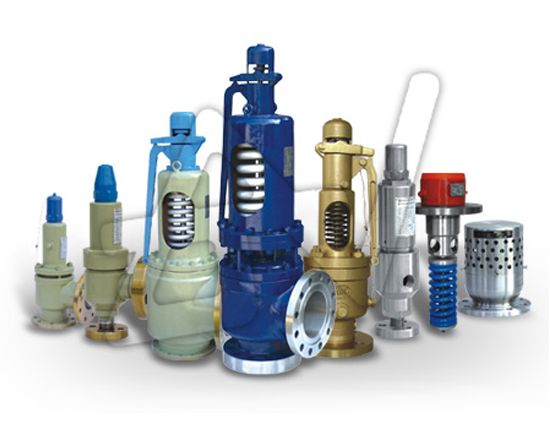

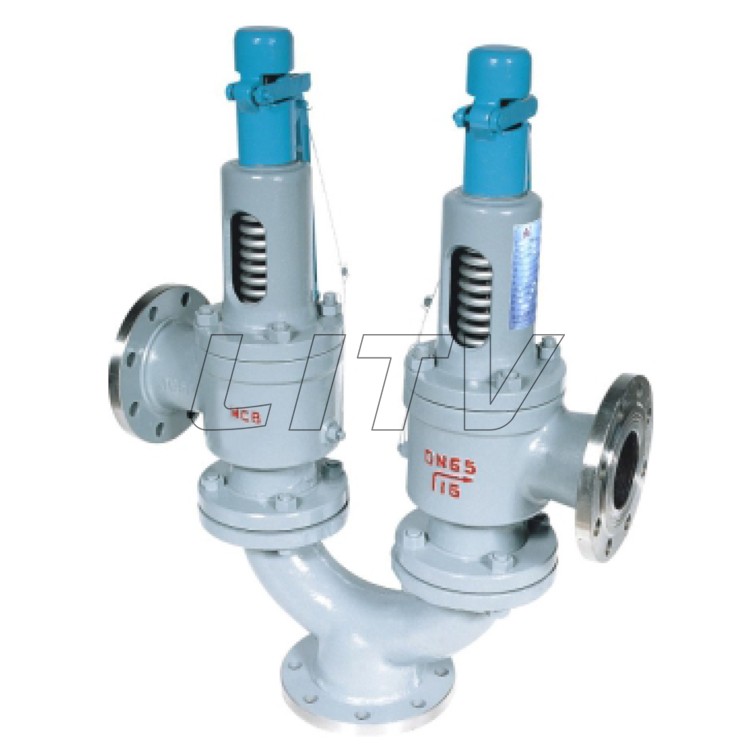













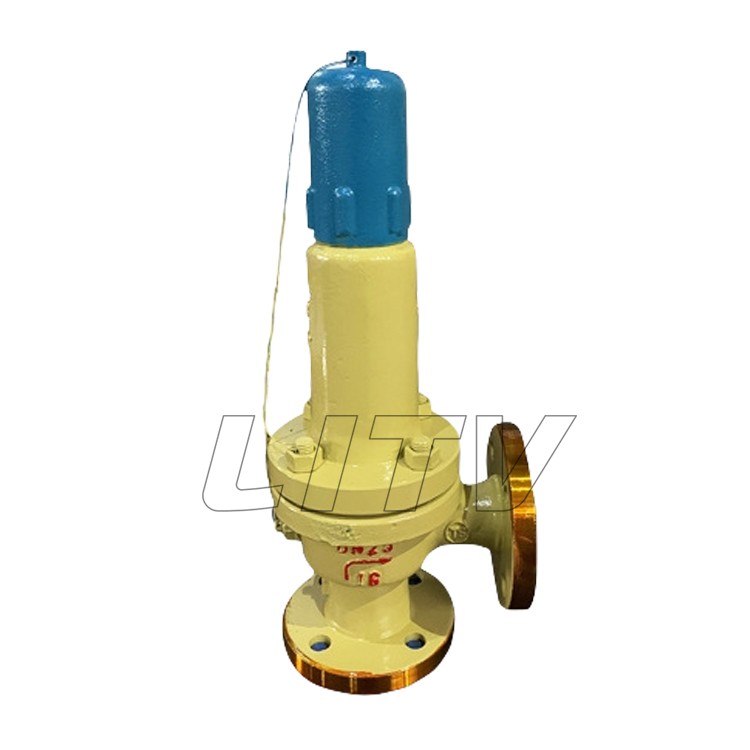
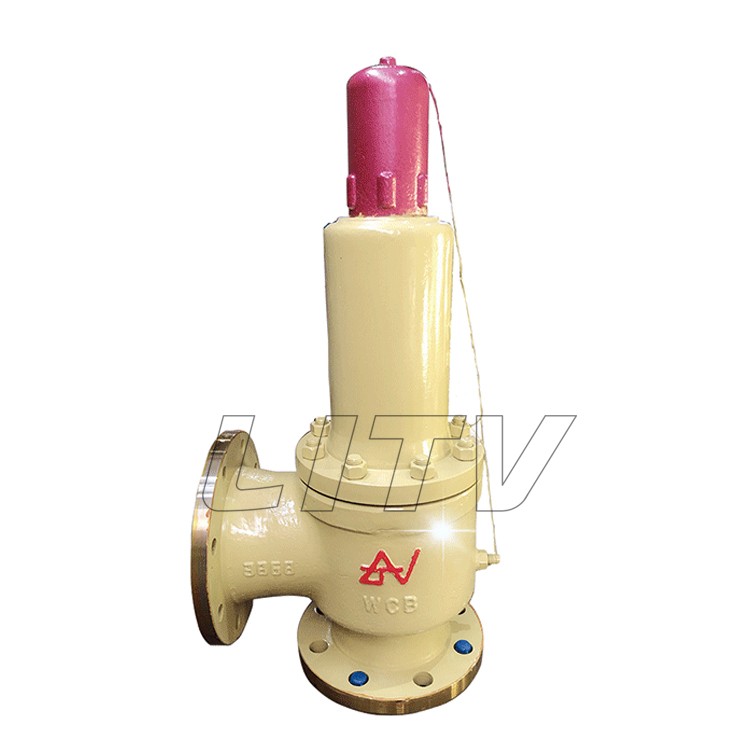
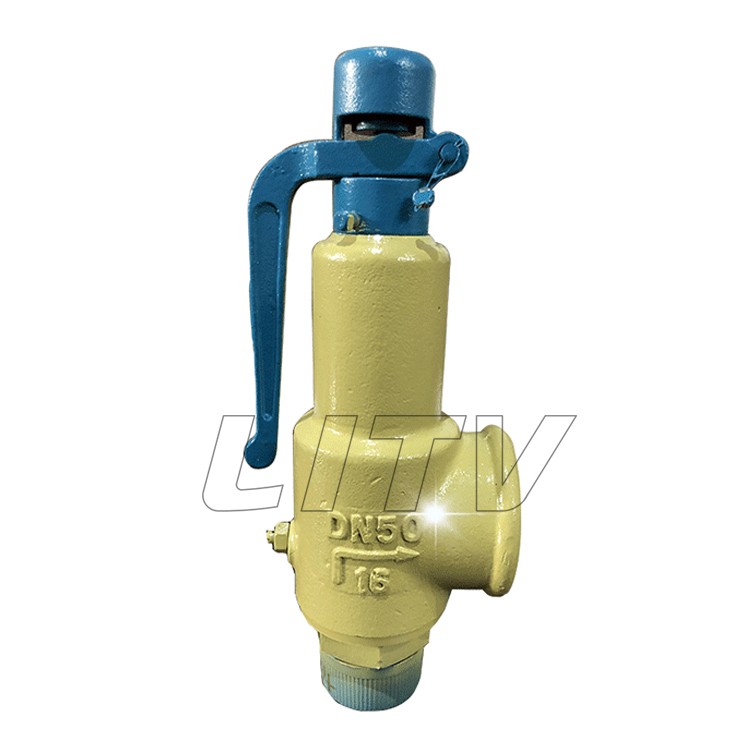


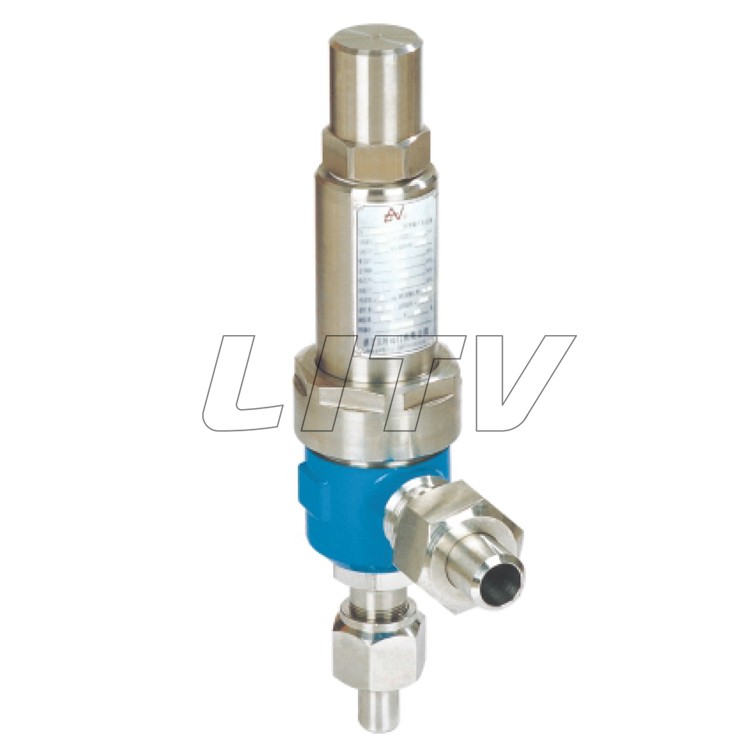
Spring-loaded Safety Valve Series
A38Y-16C/25/4aA43H-16C/25/40A37H-16C/25/40
The spring-loaded safety valve is suitable for equipment and pipelines handling steam and water media with operating temperatures of ≤350℃. As an overpressure protection device, the connecting flange standards are in accordance with the JB/T-94 series.
Operating Principle:
Based on the analysis of the opening action characteristics of spring-loaded safety valves, it can be concluded that: Under the influence of the external force FW, during the entire process of a safety valve transitioning from closed to open and then to closed, the variation pattern of the external additional force FW is such that when the additional force gradually increases from zero to match the sum of the internal pressure PL multiplied by S with the spring pre-tension force, the valve slightly opens, increasing the effective area S of the medium. This causes the internal pressure force required to overcome the spring pre-tension to急剧 increase, resulting in a sudden decrease in the external additional force. This leads to the formation of the characteristic peak A. As the external additional force gradually decreases to reach the closing point, due to the sudden decrease in the effective area of the medium, to maintain the balance of forces, there is a momentary increase in the external additional force, which is the second characteristic peak B. These two characteristic peaks A and B serve as the technical basis for detecting the opening pressure and the seating pressure of safety valves under online conditions.
Structure:
Safety valves are categorized by their structural forms into pendulum type, lever type, spring type, and pilot type (pulsating type); and by their body construction, into sealed and unsealed types. Sealed safety valves ensure that the excluded medium does not leak out, but is fully discharged to the outlet location. They are generally used in environments with toxic and corrosive media. For safety valves used with air and steam, unsealed safety valves are more commonly adopted. When selecting safety valve products, the actual sealing pressure should be determined. For spring-loaded safety valves, within a specific nominal pressure (PN) range, there are various working pressure-grade springs available. When placing an order, in addition to specifying the model, name, medium, and temperature of the safety valve, the body sealing pressure should also be noted; otherwise, the supply will be based on a default sealing pressure.
Installation & Maintenance:
All safety valves should be installed vertically.
The safety valve outlet should be free of resistance to prevent pressure buildup.
The safety valve should be tested specifically before installation and its sealing integrity checked.
Regular inspections should be conducted on safety valves in use.
The installation of the safety valve should comply with the following requirements:
(l) Boilers with an evaporation capacity greater than 0.5t/h must be equipped with at least two safety valves; boilers with an evaporation capacity of 0.5t/h or less must have at least one safety valve. Safety valves must be installed at the outlet of the divided economizer and at the outlet of the steam superheater.
(2) The safety valve should be vertically mounted at a high position on the kettle or header. No outlet pipes or valves for extracting steam should be installed between the safety valve and the kettle drum or header.
(3) The lever-type safety valve must be equipped with a device to prevent the heavy hammer from moving independently and a guide frame to limit the lever from derailing. The spring-type safety valve should have a lifting handle and a device to prevent the adjustment screw from being randomly twisted.
For boilers with a rated steam pressure of 3.82MPa or less, the safety valve throat diameter should not be less than 25mm; for boilers with a rated steam pressure greater than 3.82MPa, the safety valve throat diameter should not be less than 20mm.
(5) The connecting pipe between the safety valve and the boiler should have an area not less than the inlet area of the safety valve. If multiple safety valves are installed together on a short pipe that is directly connected to the drum, the cross-sectional area of the short pipe should not be less than 1.25 times the total steam discharge area of all the safety valves.
(6) Safety valves should generally be equipped with exhaust pipes, which should directly lead to a safe location and have an adequate cross-sectional area to ensure smooth exhaust. The bottom of the exhaust pipe of the safety valve should have a drain pipe leading to a safe location, and valves should not be installed on either the exhaust pipe or the drain pipe.



















