


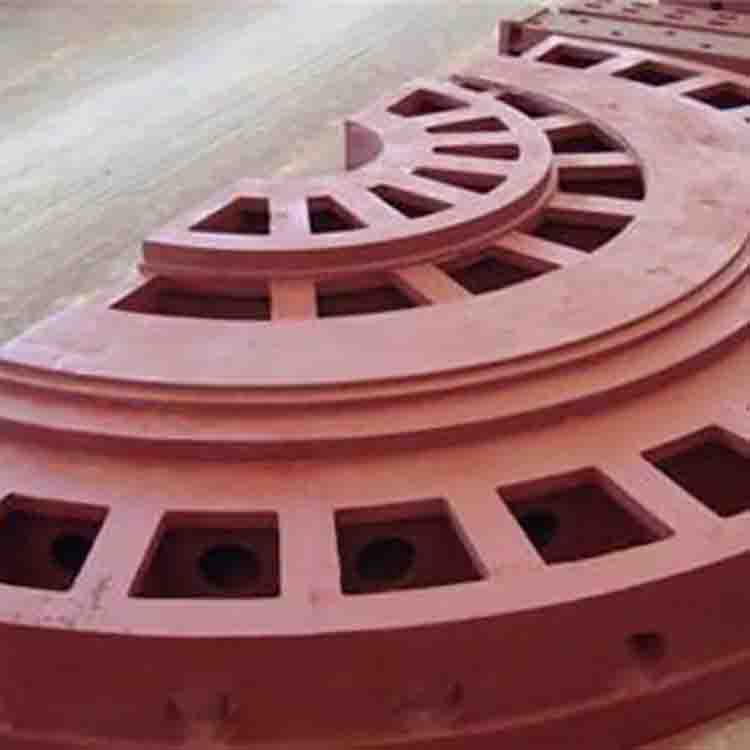













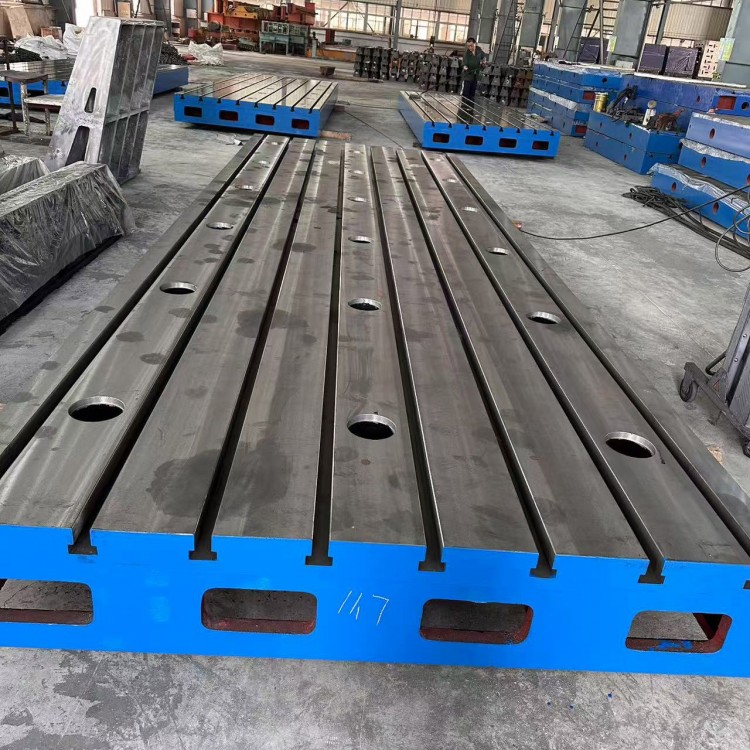
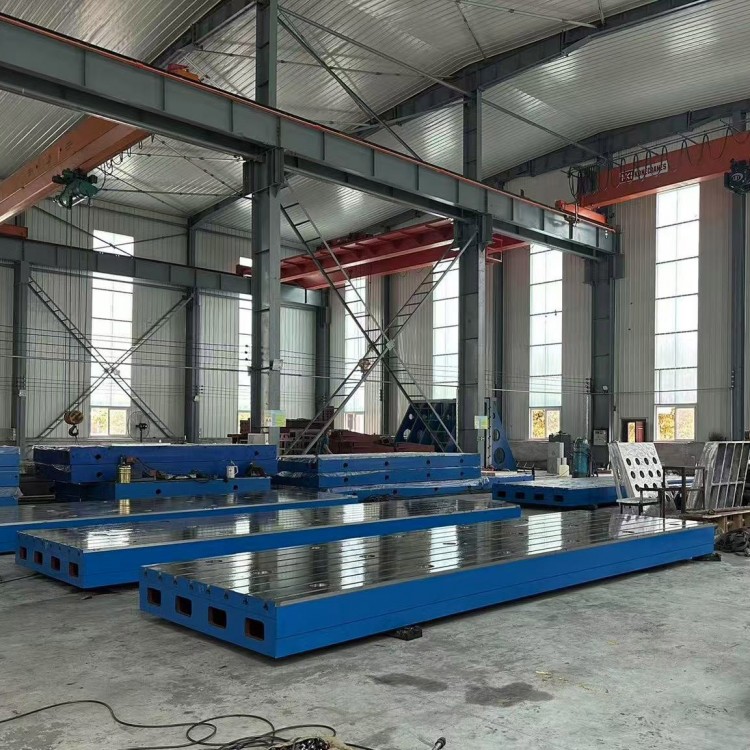


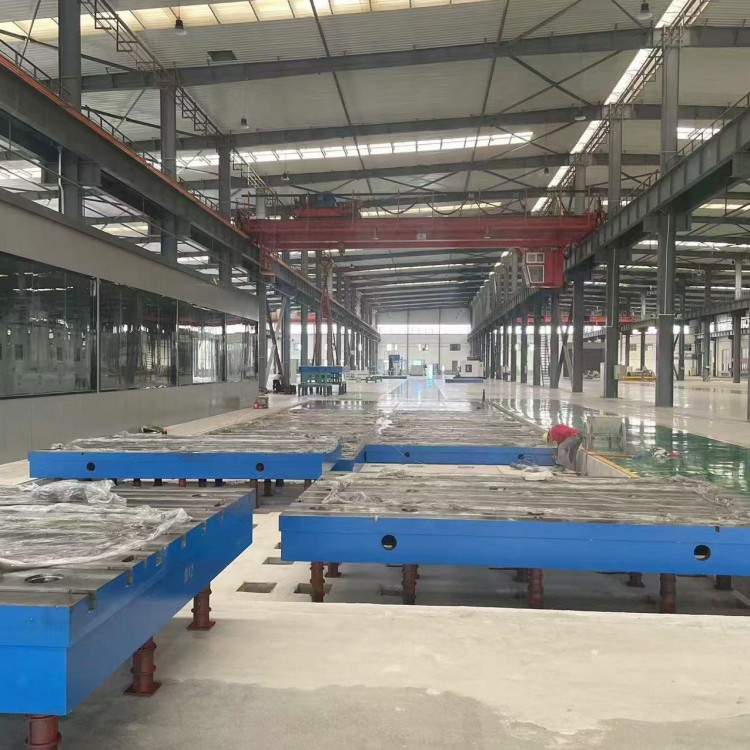
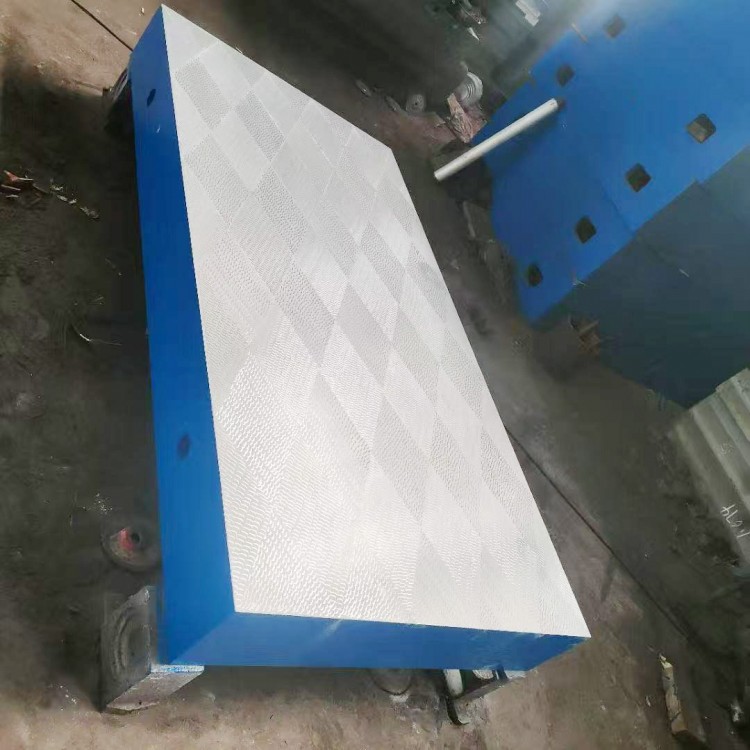
Large castings: The fundamental approach to solving casting shrinkage defects is"Hot balance." The method is:
(1In the thick areas and hot spots of machine tool casting structures, solidification is carried out to artificially achieve basic temperature field balance across various parts of the machine tool casting. Internal and external chillers are used, with locally applied zirconia sand, chromite sand, or special coatings with high heat retention.
(2Reasonable process design. The inner runner is located at the relatively thin-walled part of the machine tool casting, numerous and scattered. The metal liquid solidifies early in the thick-walled sections, later in the thin-walled sections, achieving roughly uniform solidification throughout. For machine tool castings with uniform wall thickness, multiple internal gates and vent holes are used. More internal gates, distributed and evenly placed, ensure overall heat balance. The vent holes are small and numerous, allowing for smooth exhaust while also serving as a heat dissipation mechanism.
(3Change the location of the internal gating
(4Selecting high heat capacity molding materials is extremely important for producing wear-resistant products using the lost foam process! Replacing quartz sand with chromite sand, which has lower heat capacity, will yield good results, followed by slight vibrations after casting. Great!
(5Low-temperature fast burn, open pouring system. Ensures metal liquid fills the mold smoothly and evenly. This requires case-by-case adjustment.
(6Gray iron machine tool casting has high strength and surface hardness ≧90The sand box has high rigidity, which is beneficial for shrinkage resistance.
(7When a sprue is required, when The riser should be located away from the hot spot. Placing the riser on the hot spot will inevitably increase the riser size, creating a "heat on heat" situation. Mismanagement can result not only in difficult-to-remove shrinkage but also in localized shrinkage holes, further reducing the process yield.
(8Mold inclination and alloying both benefit. The shrinkage porosity defect in machine tool castings is a complex process of understanding and implementation. The basic principle should be "thermal equilibrium," with analysis of the casting, formulation of a reasonable process plan, selection of suitable molding materials, tooling, and correct operation with standardization. Then, any shrinkage porosity defect in machine tool castings can be resolved.
Factors affecting the shrinkage rate of large castings:
Large castings typically shrink in size during the solidification process. The percentage by which the casting size shrinks is known as the shrinkage rate or solidification shrinkage. Casting mold manufacturing ( Inclusive of core box) When casting, the mold should be slightly enlarged according to the established shrinkage rate to ensure the castings meet the required dimensions after cooling. The shrinkage amount for each dimension of large castings can be calculated using the following formula:
Shrinkage = Large casting size × casting shrinkage rate
1. Large castings have complex structures and are difficult to shrink, resulting in a reduced shrinkage rate of the casting. For instance, cast steel parts with the same composition, due to different structural shapes, exhibit varying shrinkage rates during free shrinkage.
2. Material for large castings varies, and so does the shrinkage rate. For instance, the shrinkage rate of cast steel is greater than that of gray cast iron; when there is more sulfur in gray cast iron, the shrinkage rate increases, while it decreases when there is more silicon.
3. Large castings with good shrinkage compensation have a higher shrinkage rate. For instance, castings cast with wet and water glass sand molds have a greater shrinkage rate than those cast with dry molds. Similarly, as the size of the casting increases, the shrinkage compensation of the mold decreases, and thus the shrinkage rate of the casting also diminishes.
So, the casting shrinkage rate should be selected in conjunction with the actual circumstances. Dimension requirements Large castings, the shrinkage rate should be corrected based on the trial casting of the large casting. For the same large casting, due to structural reasons, the shrinkage rates in the axial, radial, or length, width, and height directions may be inconsistent. For castings with stringent dimensional requirements, Large castings require different shrinkage rates in various directions. In actual production, most large castings, especially those of modest size, typically employ the same shrinkage rate across all directions. Although this does introduce some error, the discrepancy is usually not significant and this approach facilitates the molding and manufacturing process.
Casting process for large castings
Large castings are products of the casting process. Casting is one of the earliest metal heat treatment processes mastered by humans, with a history of approximately6000About [number] years of history. Casting is the process of melting metal into a liquid that meets specific requirements and pouring it into a mold, where it is cooled, solidified, and finished to achieve predetermined shapes, dimensions, and properties. Casting is one of the fundamental processes in modern mechanical manufacturing industries. China approximately dates this back to around [year] BC.1700~ prior1000Over the years, we have entered the heyday of bronze casting, with our techniques reaching a quite high level. The Shang Dynasty in China...875The Shangmu Square Tripod in kilograms, the Zenghouyi Vase from the Warring States period, and the Transparent Mirror from the Western Han Dynasty are all representative products of ancient casting.
Large castings selected Fine gray cast ironHT200-HT300, High tensile and bending strength ensure your purchase with peace of mind. Popular heat treatment processes reduce casting stress deformation toLittle D. UsedTrending stable.
Large machine processing available, including milling, boring, and turning.3.2*16Full processing of rice mill boring mills, large castings guaranteed16The straightness of the entire body of the rice bed and the machine tool's Final processing accuracy.
Steel grades and chemical compositions for large bed casting in stainless cast steel — Unit: (Mass fraction)%)
The primary advantages of large castings
1.Large bed casting dimensions and shapes Good reproducibility, featuring casting characteristics.
2.The surface finish of the large bed casting is highly polished.
3.Non-boxing and no mold removal streamline the shaping process, eliminating casting defects and waste caused by mold removal and boxing.
4.You can set up reasonable riser shapes at ideal locations, unrestricted by traditional factors such as parting and mold removal, which reduces internal defects in castings.
5.Assembly casting, with multiple pieces in a box, enhances the process yield and production efficiency of large machine tool castings.
6.Reduced machining allowance, lowering machining costs;
7.Utilizing dry sand molding without any binder, water, or additives, eliminating casting defects and waste products caused by moisture, additives, and binders.
8.Streamlined the sand treatment system, allowing all molding sand to be reused; eliminated the molding sand preparation and waste sand treatment departments.
9.Large bed casting with no burrs or flash, reducing the amount of cleaning and sanding work.50%Above.


















