












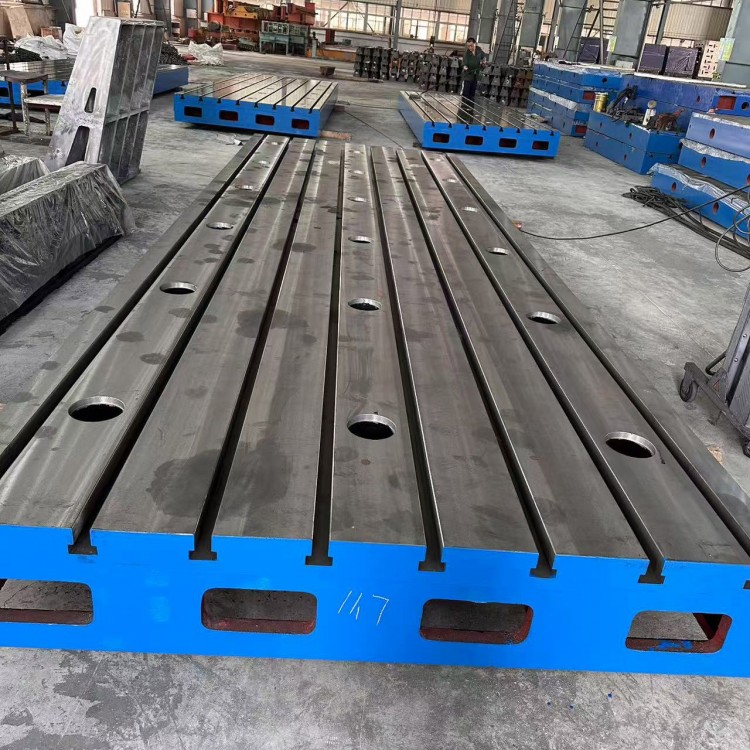
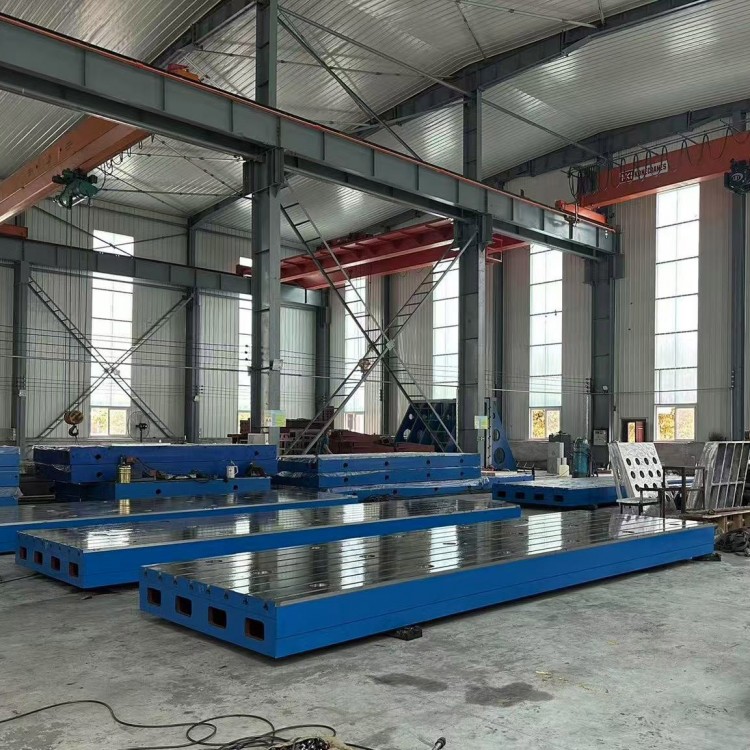


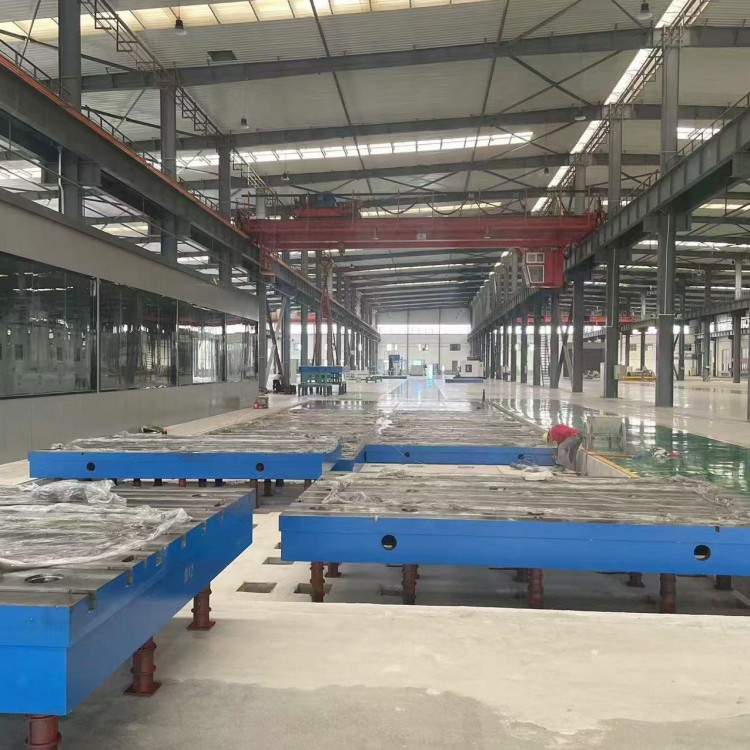
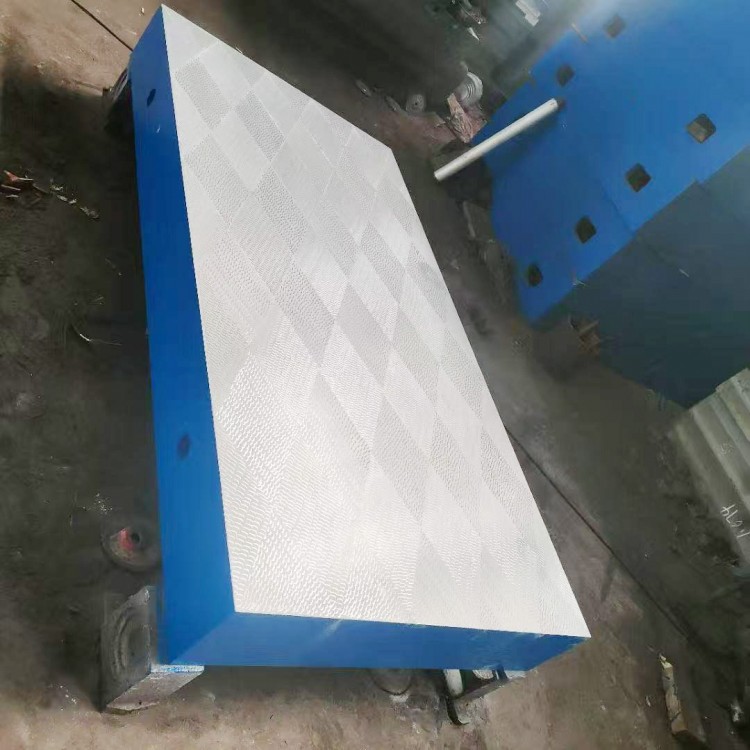
Large cast iron platforms require installation and debugging before use. Then, clean the working surface of the flat plate and use it only after confirming there are no issues. During use, be cautious to avoid any aggressive collisions between the workpiece and the working surface of the flat plate to prevent damage to the plate; the weight of the workpiece Do not exceed the rated load of the flat surface, as it may lead to reduced work quality and potentially damage the structure of the flat surface, even causing deformation that may render it unusable. The working surface of the cast iron flat (cast iron platform) should be free from rust, scratches, dents, and other aesthetic defects that may affect its use. There are various types of cast iron flats, including assembly flats, cast iron flats, inspection platforms, marking flats, foundation platforms, and any other applications using the same.
Cast iron plates (cast iron platforms) should not have casting defects such as sand holes, gas holes, cracks, inclusions, and shrinkage porosity on their working surfaces. The surfaces of various cast iron platforms should be sand-molded and flat, with paint that is firmly adhered. The edges of the cast iron platforms should be rounded and chamfered. On precision grades below0On the grade flat work surface, for diameters less than15mmThe sand holes can be plugged with the same material, with the hardness being lower than that of the surrounding material. The plugged areas on the working surface should not exceed four, and the distance between them should be no less than80mm.
Large cast iron platform (cast iron flat plate) accuracy0-3The working face should be processed using scraping technology; the surface roughness of the planing working surface is calculated based on the arithmetic mean deviation of the contour.RaThe value should not exceed5um。
Large cast iron platform (cast iron flat plate) flatness: Laboratory grade, verification grade, tool room grade,
Large cast iron platform application: Suitable for various inspection tasks, as a reference plane for measurement, used as a benchmark for machine tool mechanical measurement, to check the size accuracy or geometric deviation of parts, and for marking. It is also a basic tool in mechanical manufacturing.
Cast iron flat plate material: Material: Cast IronHT200-250Working surface hardness:HB160—210.After two treatments (artificial annealing)600?----700?With natural aging2---3 The year, ensuring the product's accuracy remains stable and superior.
Cautionary Notes for Large Cast Iron Platforms
Caution for using cast iron platforms: To prevent deformation of the platform, remove the workpiece after the inspection or marking is completed. Do not leave it on the platform for an extended period. During use, be cautious to avoid hard tools striking or colliding with the surface of the cast iron platform to maintain its precision. Cast iron flat plate,Cast iron platforms must undergo periodic calibration; the calibration cycle should be determined based on the specific usage circumstances, generally speaking.1Year.
Large Gray Cast Iron Plate/Platform surface quality:
Inspection Standards:Inspect using the coloring method.
0Grade1Grade flat platform on each side25Within a range of mm², not less than25Dot.
2Grade flat platform on each side25Within a range of mm², not less than20Dot.
3Grade flat platform on each side25Within a range of mm², not less than12Dot.