















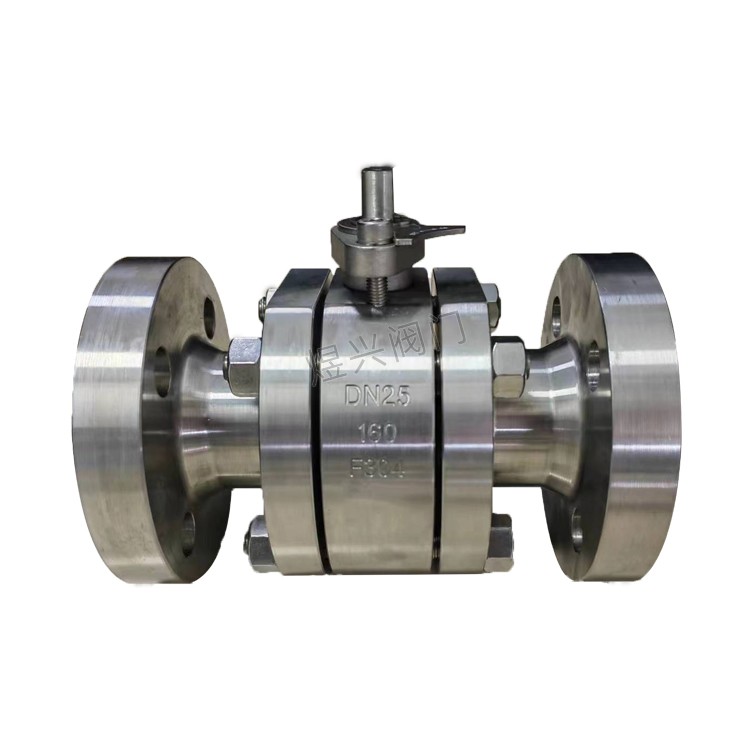
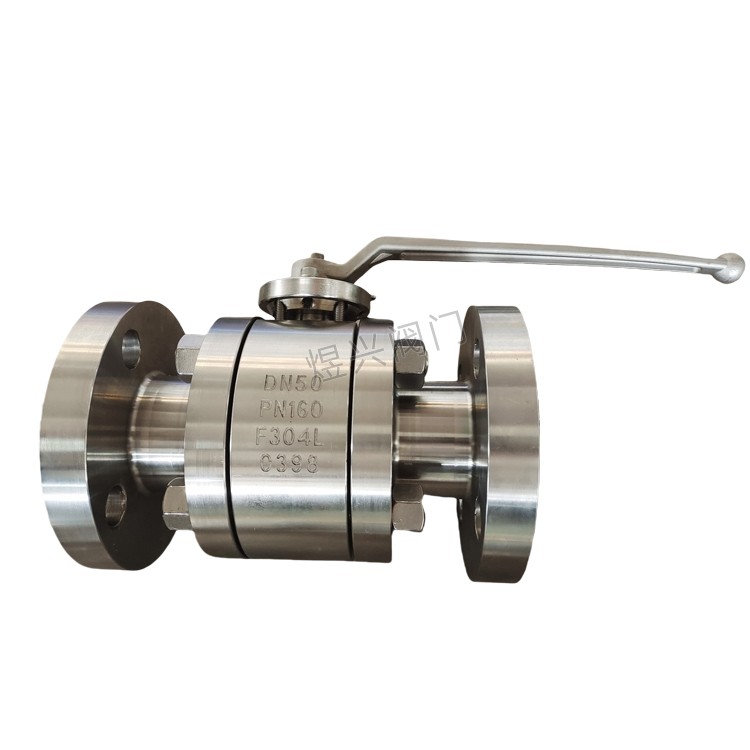
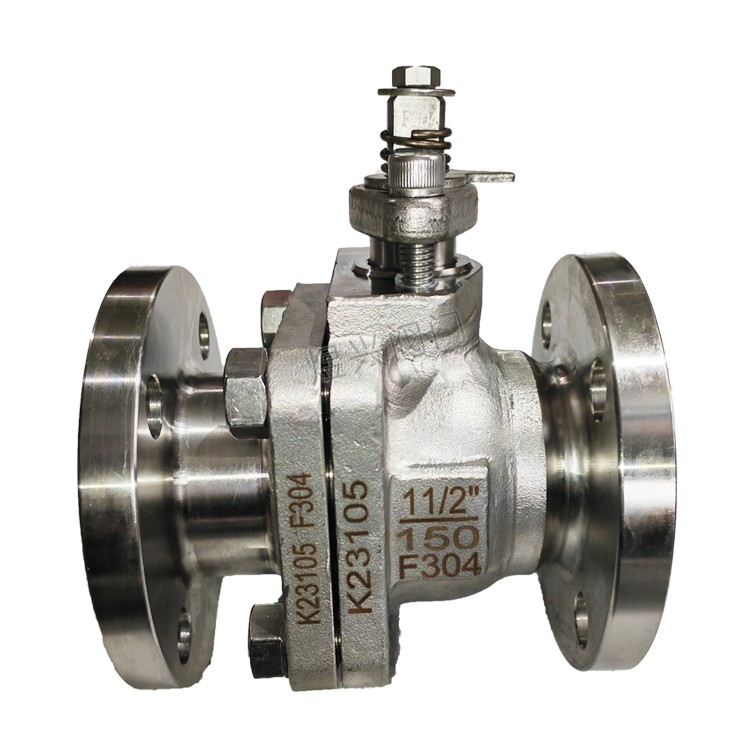


Explosion-proof pneumatic ball valves are valves composed of AT(GT) series pneumatic actuators and floating ball valves, suitable for regulating and cutting applications. Their features include excellent sealing performance, low fluid resistance, simple structure, long service life, and ease of maintenance.
Operating Principle
The explosion-proof pneumatic ball valve operates by driving the ball to rotate within the valve body using compressed air, thereby opening or closing the pipeline. When the passage on the ball aligns with the valve body's inlets and outlets, the valve is open and fluid can pass through; after the ball rotates 90 degrees, the passage is perpendicular to the valve body's inlets and outlets, closing the valve and stopping the fluid flow. The pneumatic actuator includes a cylinder, piston, valve, and control components, which, upon receiving a control signal, converts the energy of compressed air into mechanical kinetic energy, driving the valve stem and the connected ball to rotate.
Application Scenario
Explosion-proof pneumatic ball valves are widely used in industrial sectors such as chemicals, petrochemicals, light industry, textiles, power, food, refrigeration, aviation, aerospace, and papermaking. They are capable of controlling gases, liquids, and steam media, and are also suitable for controlling sewage and media containing fibers. Moreover, they are extensively employed in pipelines of coal chemical, petrochemical, rubber, and papermaking industries as devices for分流和合流 or changing the flow direction of the medium.
Technical Specifications
Nominal Pressure: PN10MPa ~ 16MPa
Nominal Diameter: DN50mm - DN300mm
Temperature Range: -29℃ to 300℃
Maintenance and Care Suggestions
To ensure the long-term stable operation of explosion-proof pneumatic ball valves, it is recommended to regularly inspect and maintain the following points:
Cleaning: Regularly remove debris from the valve body to prevent blockage.
Lubrication: Ensure good lubrication of the valve stem and sealing parts to reduce friction.
Inspection: Regularly inspect the aero-mechanical actuator's sealing and output torque to ensure proper operation.
Explosion-proof Equipment Inspection: Regularly inspect the functionality and safety of explosion-proof limit switches, explosion-proof solenoid valves, and other explosion-proof equipment.


















