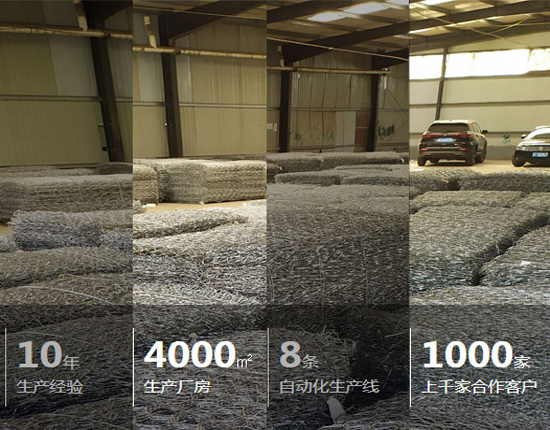

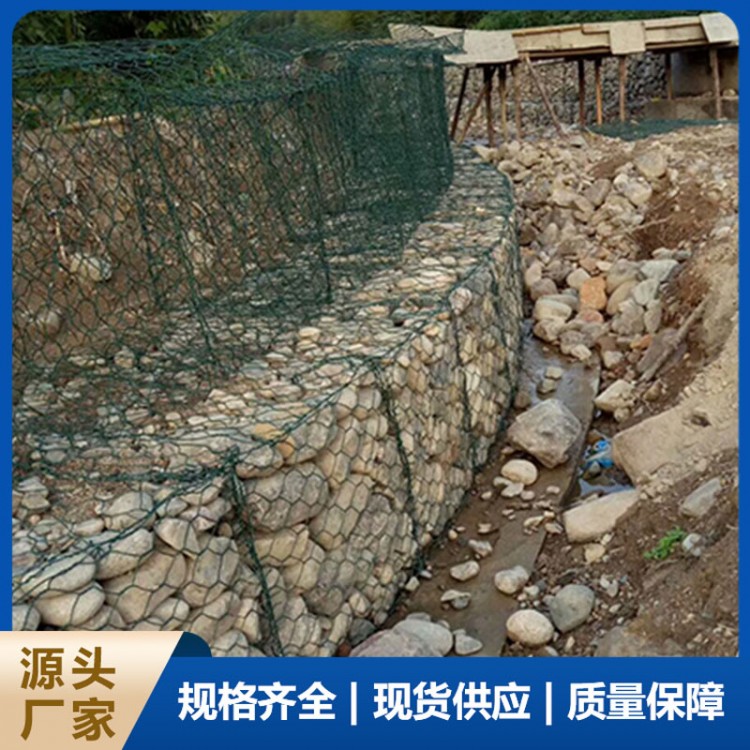










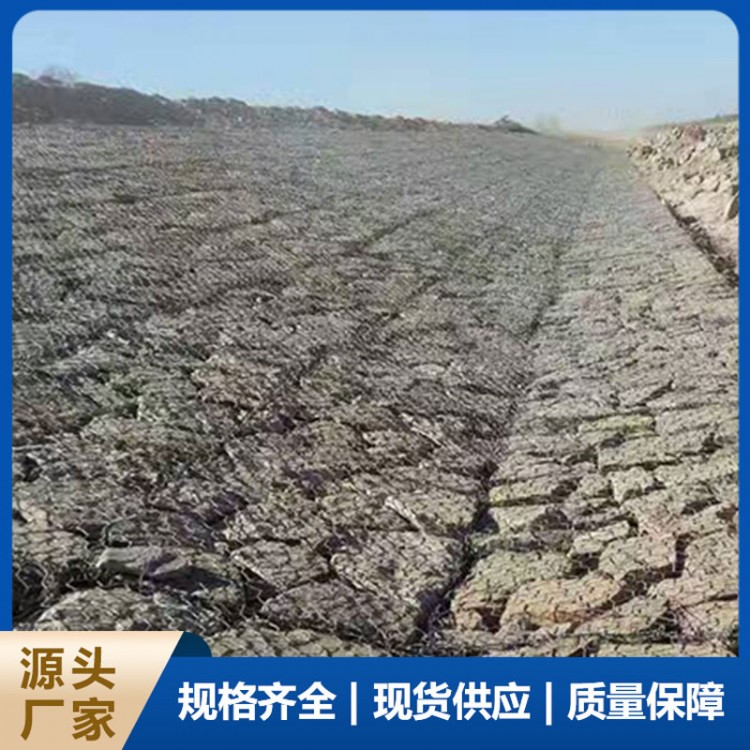
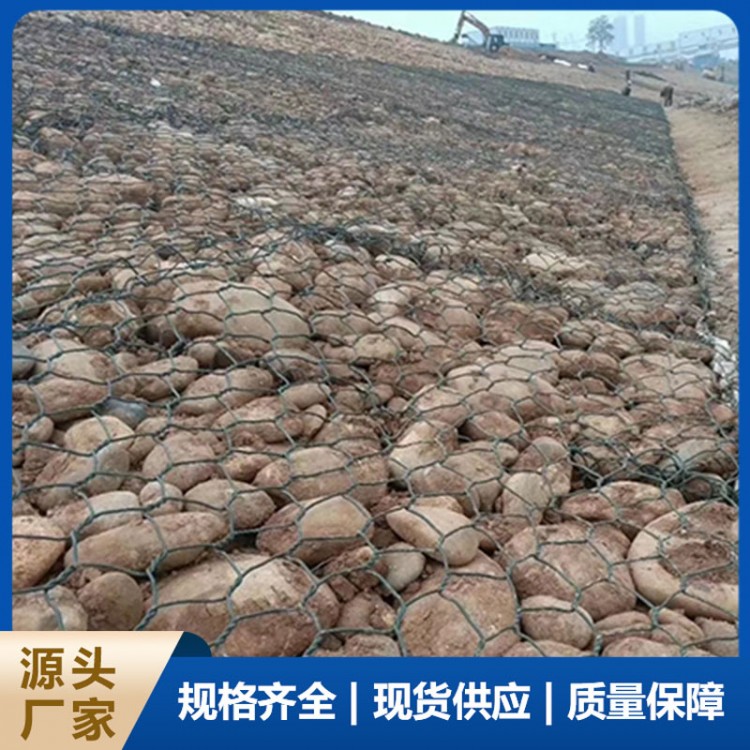
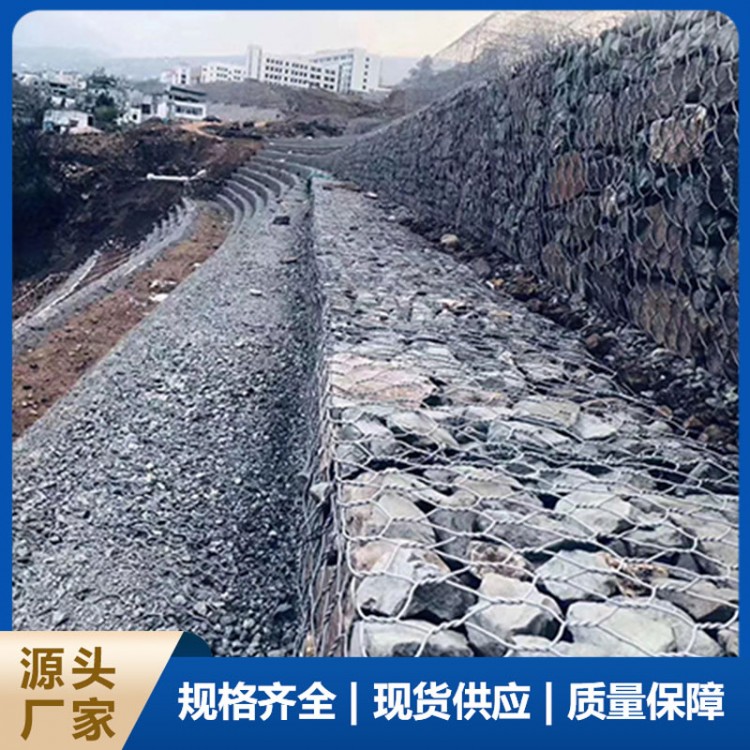
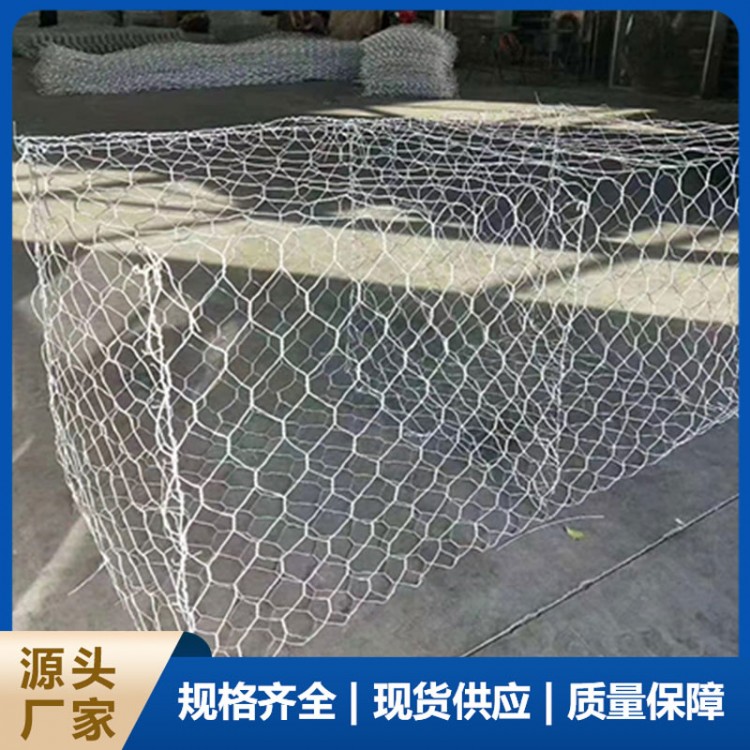
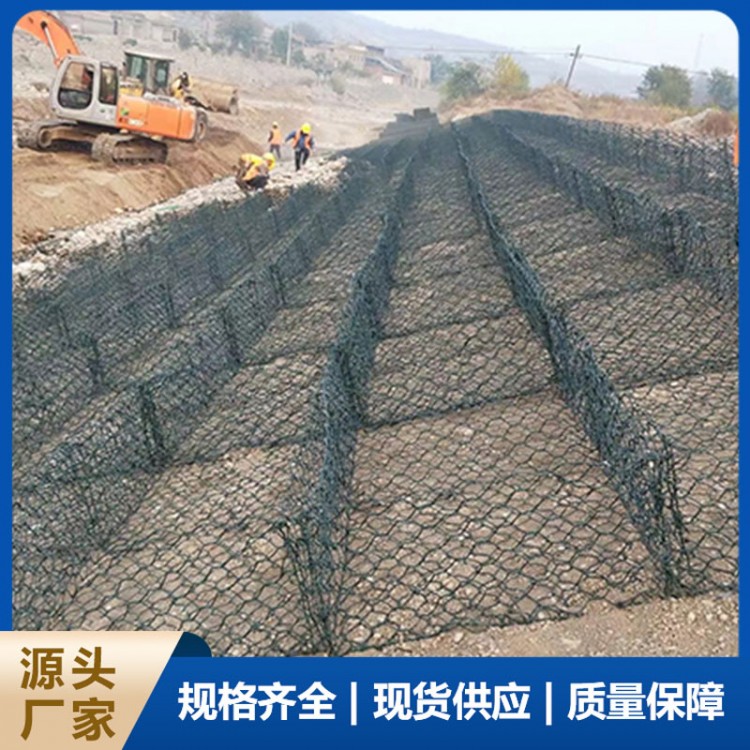
Gabion mesh refers to box-like mesh cages made of heavy-duty hexagonal wire, hence also known as "stone笼mesh" or "stone笼box." In Europe, it is also called gabion mesh or gabion stone mesh box. Gabion boxes, when filled with stones at construction sites, form flexible, permeable, and integral structures, such as erosion-resistant projects for retaining walls, riverbank lining, and embankments.
Galfan mesh is divided into individual cells by 1-meter spacing panels (double twisted hexagonal metal mesh sheets). To enhance the strength of the gabion box structure, all face mesh panel edges are made with thicker diameter steel wire. Controls and guides river and floodwater spillways and diversion dams, rockfall protection, prevention of soil and water erosion, bridge stabilization, soil retention structures, coastal defense projects, port engineering, retaining walls, and road protection.
Galfan wire mesh features:
(1) Economy. Just load the stones into the cage and seal it.
(2) Easy installation, no special skills required.
(3) Excellent resistance to natural degradation, corrosion, and adverse weather conditions.
(4) Can withstand a wide range of deformation without collapsing.
(5) The silt between the stones of the cage is conducive to plant growth, merging seamlessly with the surrounding natural environment.
(6) Excellent permeability to prevent damage caused by hydrostatic pressure.
(7) Save transportation costs. Can be folded for transport and assembled on-site.
The primary uses of gabion mesh:
(1) River and flood control and guidance
(2) Floodgates and Diversion Dams
(3) Rockfall Protection
(4) Prevent水土流失
(5) Bridge Protection
(6) Soil stabilization structure
(7) Coastal Defense Engineering
Port Engineering
(9) Retaining Wall
(10) Road Protection
The mesh of the Gabion net can also be made into triangular or trapezoidal shapes. Such Gabion nets stacked into embankments have an inclined plane on a single plane.
Gabion mesh, often used in hydraulic engineering for retaining walls, is a type of retaining wall constructed by stacking gabion boxes, which are 0.5 to 1.0 meters in size. Gabion box retaining walls are primarily used on steep slopes to control mud and rock flows, prevent landslides, and protect the subgrades of roads and railways, among other applications.
The reason for using gabion baskets is because of their...The cages possess unique ecological functions. A light sprinkling of soil on the protective surface allows for greening. Due to the gaps between the stones, which accommodate soil, it promotes the development of plant root systems, creating a favorable ecological environment. Even without spreading soil, over time, the gaps between the stones will settle with soil, leading to the growth of herbaceous plants, forming a natural ecological habitat.
WeChat Official Account

Scan to follow Official Account