



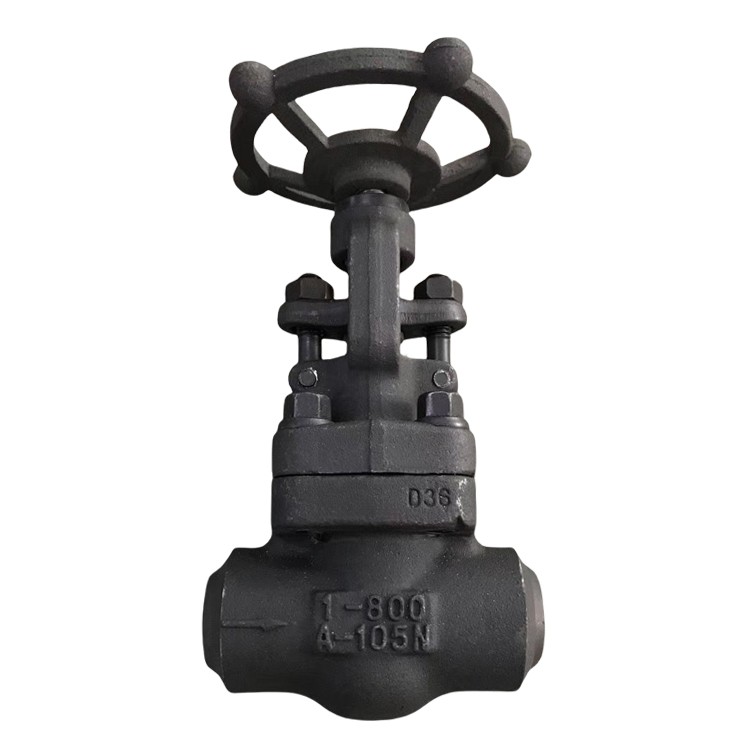

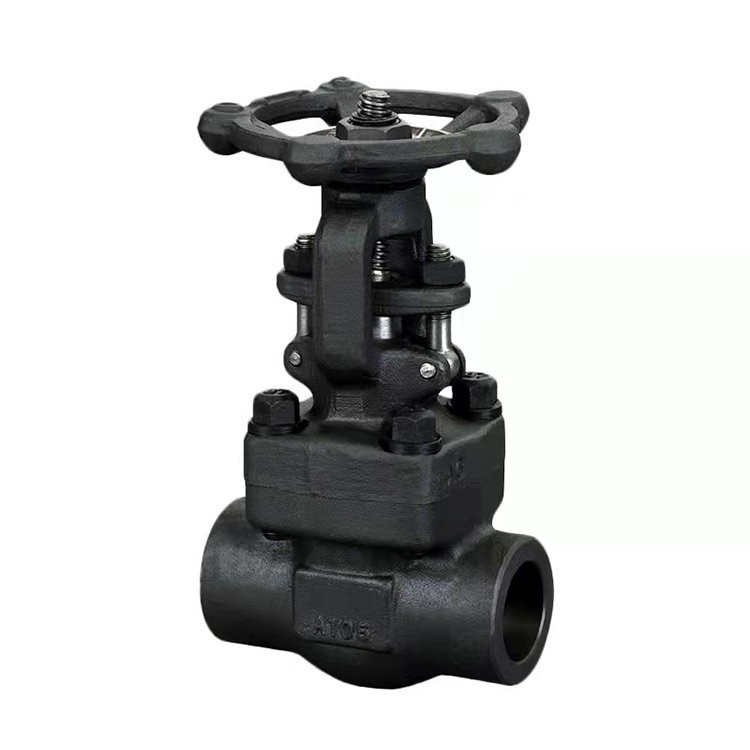















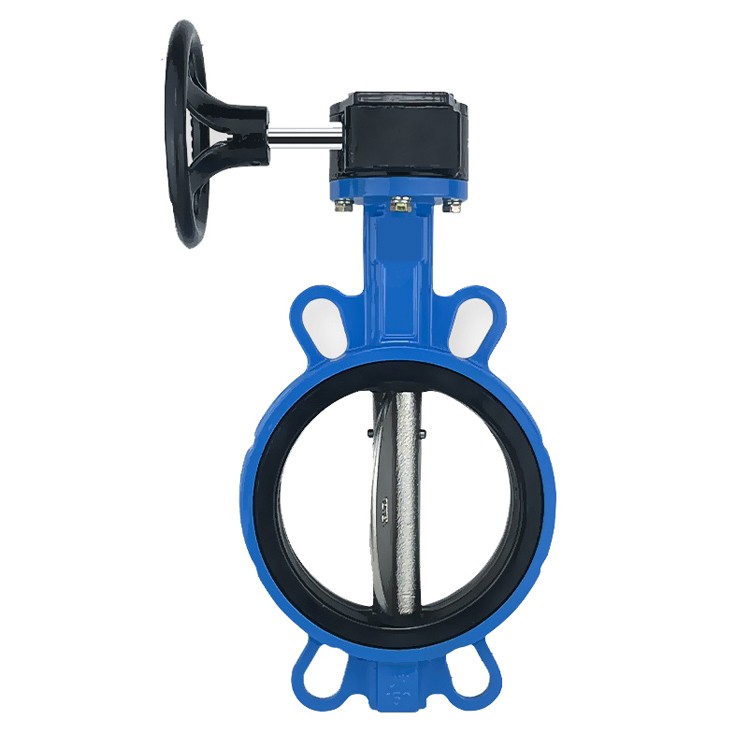

Flanged Welded Forged Steel Gate Valve is a forged steel gate valve connected by flanged welding, featuring various design forms and structural characteristics.
Definition and Working Principle
A socket weld forged steel gate valve is a type of valve where the closure element (gate) moves vertically along the centerline of the passage. The moving part is the gate, which moves perpendicular to the fluid direction and can only be fully open or fully closed; it cannot be used for regulation or throttling. When the valve is in the closed position, a sealed space is formed between the gate and the valve seat, preventing the flow of the medium; when the valve is open, the space between the gate and the valve seat is opened, allowing the medium to flow freely.
Structural Features
The structure of the socket welding forged steel gate valve mainly includes the valve body, gate plate, valve stem, valve cover, and sealing surface, among other components. Its features include:
Bolted Valve Cover: The valve body is connected to the valve cover with bolts and nuts, sealed with a spiral gasket.
Welded Valve Cover: The valve body and cover are connected with threads and fully sealed by welding.
Pressure Self-Tightening Valve Cover: The valve body and cover are connected by a threaded connection, sealed by an internal pressure self-sealing ring.
Additionally, the design standards for the socket weld forged steel gate valve include API 602, BS 5352, and ASME B16.34. Inspections and tests are conducted according to API 598, and markings are in compliance with MSS-SP-25.
Application Scenarios
The socket-weld forged steel gate valves are widely used in the fields of oil, chemical, power, environmental protection, water conservancy, heating, water supply and drainage, industry, and machinery. They are suitable for controlling the flow of various types of fluids such as water, oil, steam, corrosive media, sludge, oil products, liquid metals, and radioactive media.


















