


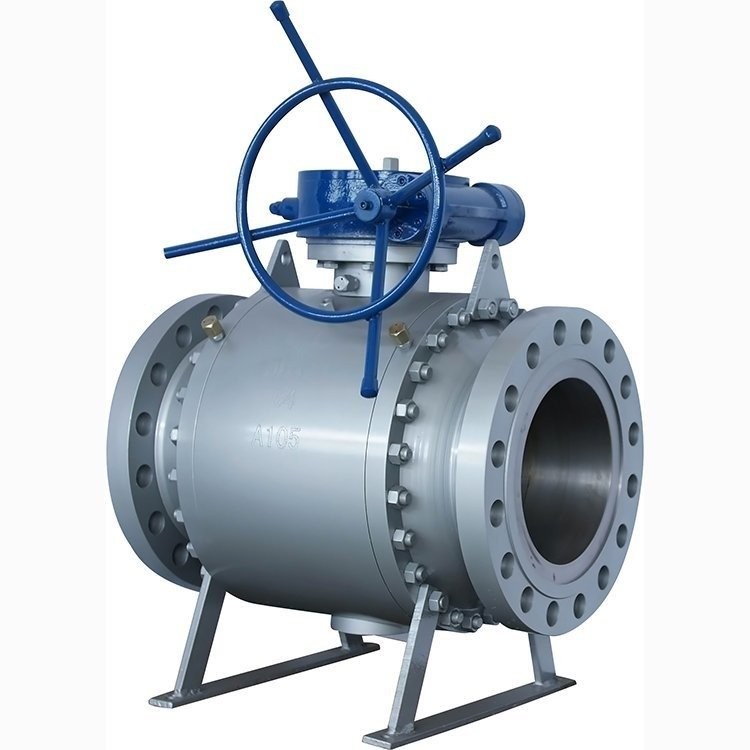















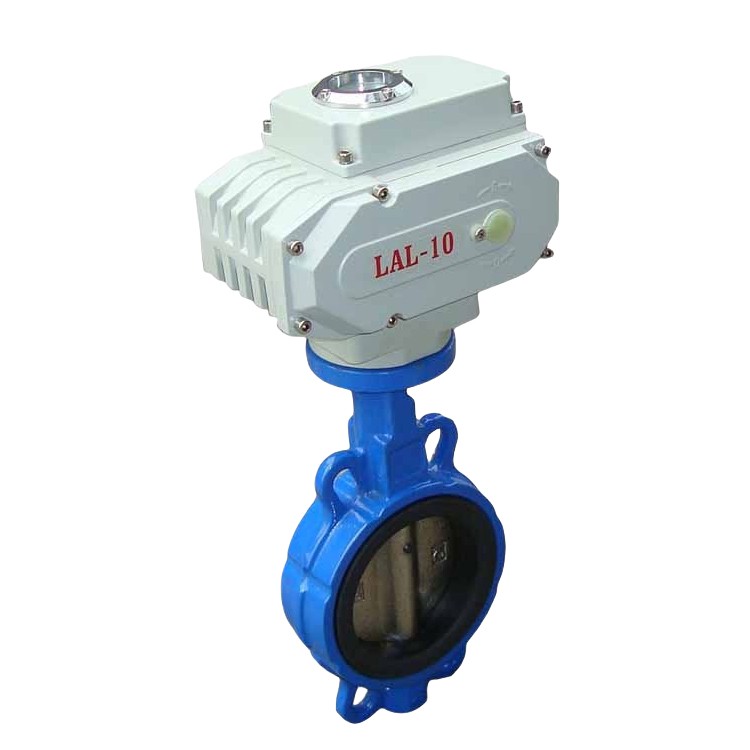
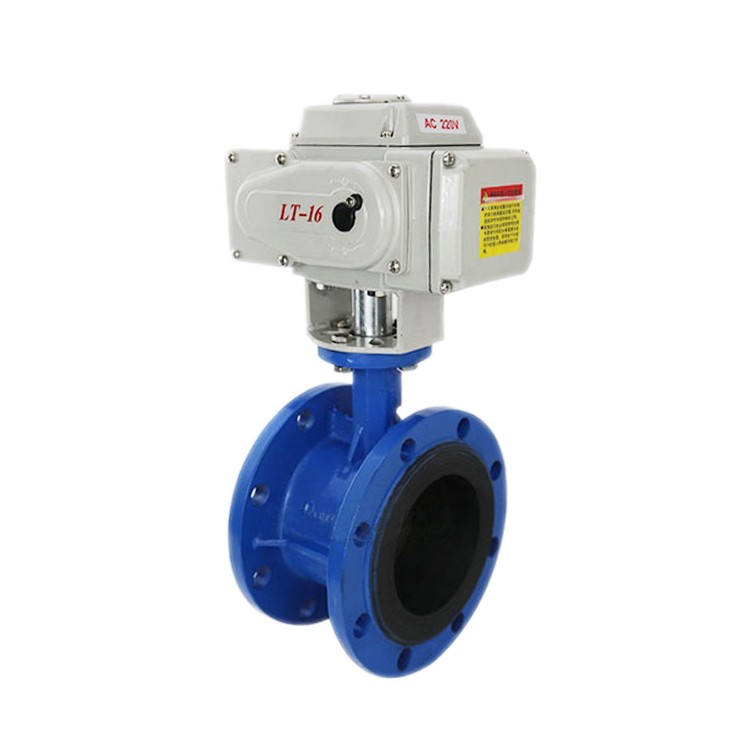
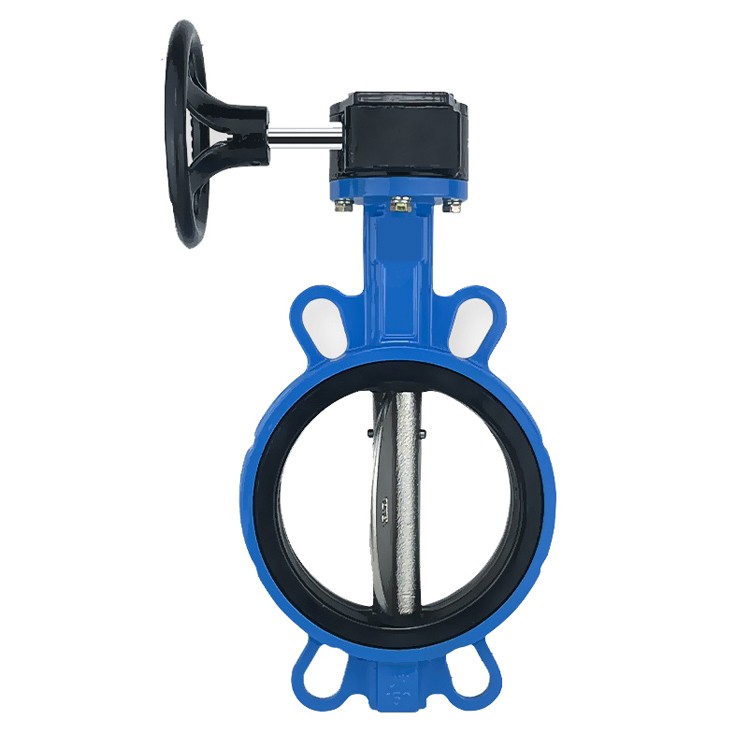

A fixed, hard-seated ball valve is a high-performance valve primarily used in long-distance pipelines and general industrial pipelines, featuring high strength, safety, and resistance to harsh environments. Its design takes into account the suitability for various corrosive and non-corrosive media, suitable for high-pressure and large-diameter applications.
Structural Features
Fixed Ball Design: The ball in the fixed ball valve remains stationary, while the relatively moving parts are made of self-lubricating materials with a low coefficient of friction, resulting in a small operating torque and greater flexibility.
High platform structure: Utilizes ISO 5211 connection standard for easy installation of electric/pneumatic actuators.
Full-bore design: Low flow resistance, suitable for various operating conditions.
Bi-directional metallic sealing structure: Equipped with automatic compensation and self-cleaning functions, boasts excellent sealing performance.
Pre-tensioned Spring: Equipped with a pre-tensioned spring, the ball valve features an automatic pressure relief function.
Fire-retardant and static-proof structure: Conductive springs are installed between the valve stem and the valve body, as well as between the valve stem and the ball, to prevent static sparks from igniting flammable media.
Fire-resistant Structure: In the event of seal ring damage, all sealing parts of the ball valve can form a metal-to-metal hard seal structure.
Automatic Pressure Relief Structure: When the liquid medium trapped in the valve cavity vaporizes due to temperature increase, the medium can automatically relieve pressure by pushing the valve seat with its own force, ensuring the safety of the valve._
Application Fields
Fixed hard-seated ball valves are widely used in the extraction, refining, processing, and pipeline transportation systems of oil, natural gas, coal, and ore; in the production of chemical products and food; in the power generation systems of hydropower, thermal power, and nuclear power; in urban and industrial water supply, drainage, heating, and gas supply systems; in agricultural irrigation and drainage systems; and in metallurgical production systems.