



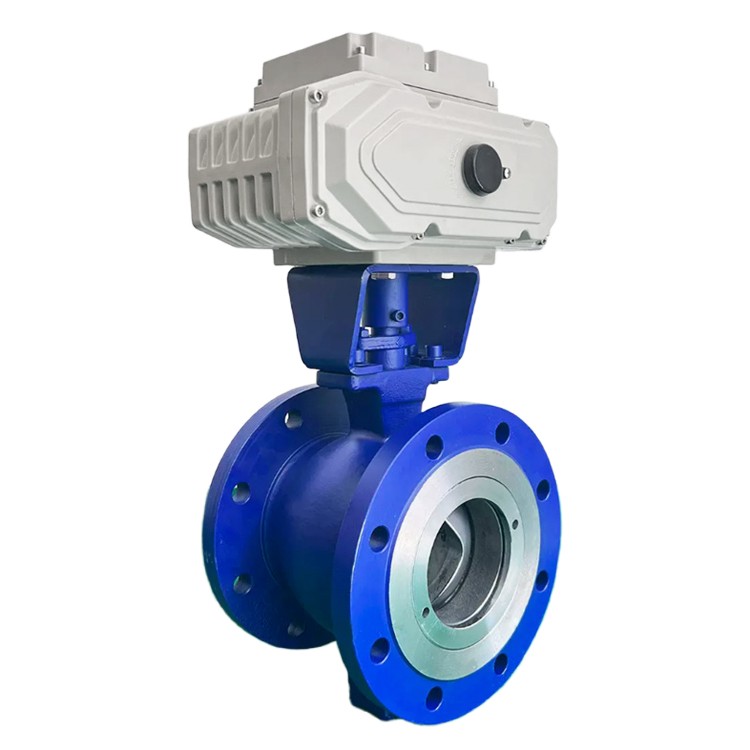

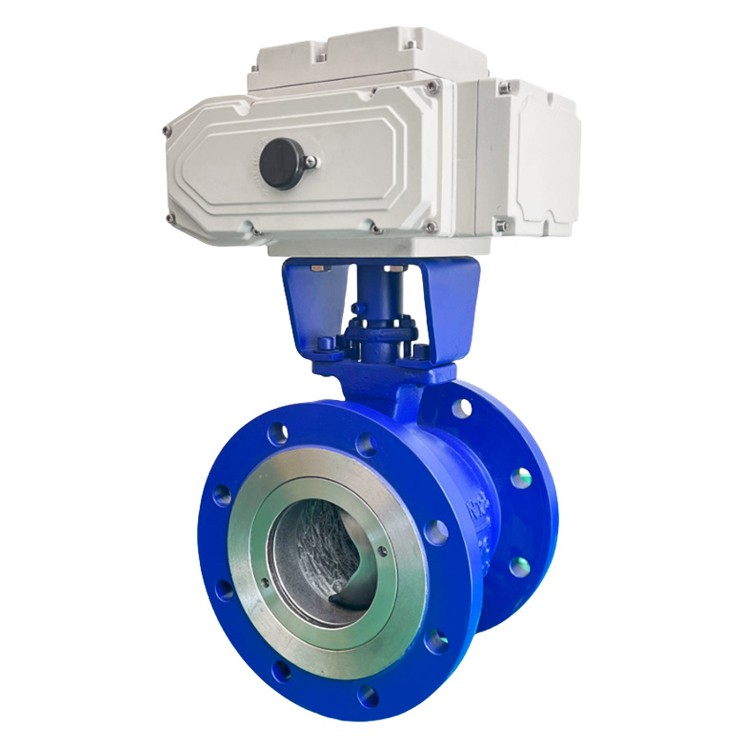















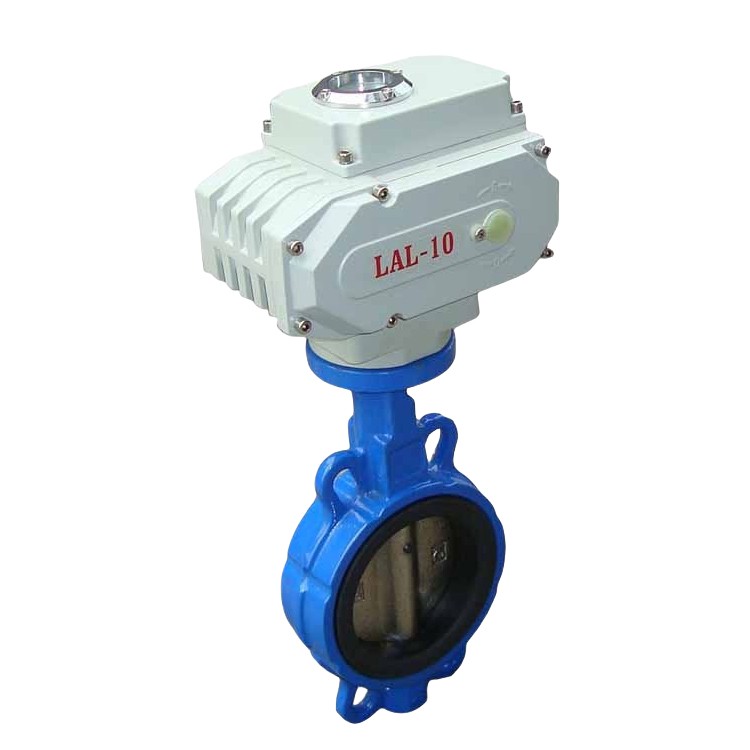
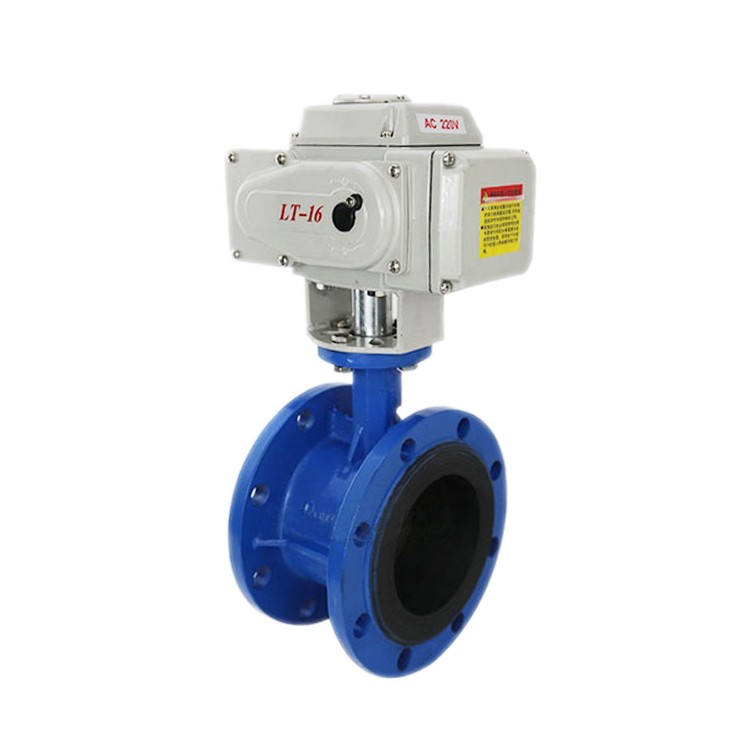
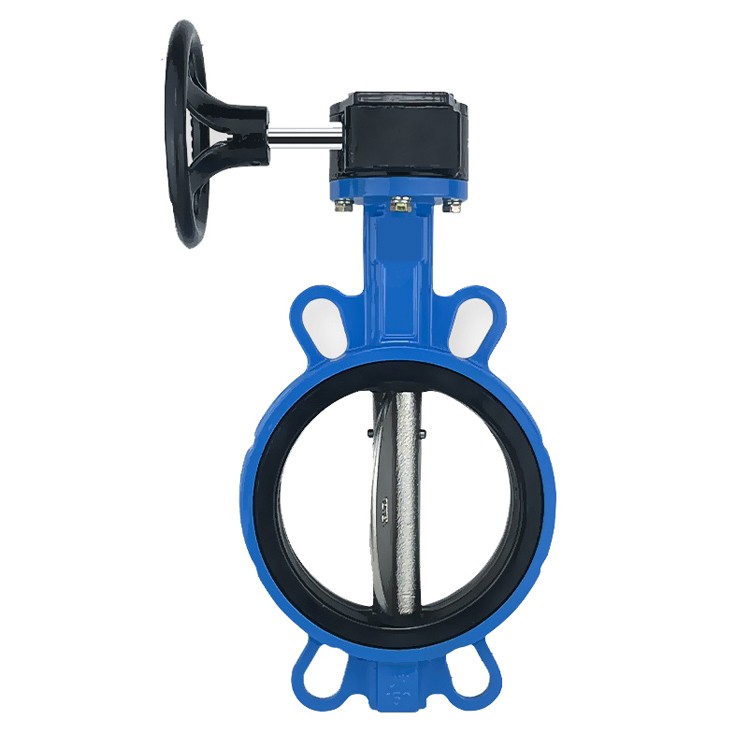

Electrical V-type flanged ball valves are a valve that combines the control characteristics of ball and butterfly valves, primarily used for controlling media such as high viscosity substances, fibrous materials, solid particles, and slurries. They feature a compact structure, easy operation, and are suitable for various industrial automation control systems.
Operating Principle and Structural Features
The core component of an electric V-groove ball valve is a spherical body with a V-shaped incision. As this sphere rotates within the valve body, the angle of the V-shaped opening adjusts accordingly, precisely controlling the cross-sectional area of the fluid flow, achieving fine flow control and flexible adjustment capabilities. This design not only simplifies the structure but also enhances sealing performance and reduces the risk of leakage.
Application Scenarios and Advantages
Electrical V-type flanged ball valves are particularly suitable for mediums containing fibers, fine solid particles, and slurry that tend to clog traditional valves. Their V-shaped cut offers significant shearing action, easily slicing through these mediums and effectively preventing clogging. Moreover, the valve maintains excellent sealing performance under high differential pressures and large bore conditions, making it ideal for high viscosity mediums and low Reynolds numbers.
Operation and Maintenance
The electric V-flanged ball valve can be operated by rotating the handle or using an electric, pneumatic actuator, etc., to rotate the ball, altering the flow area between the V-groove and the valve seat, thereby achieving precise control of fluid flow and pressure. During routine maintenance, it is necessary to regularly inspect the valve's sealing performance and the operational status of the actuator to ensure proper functioning.


















