


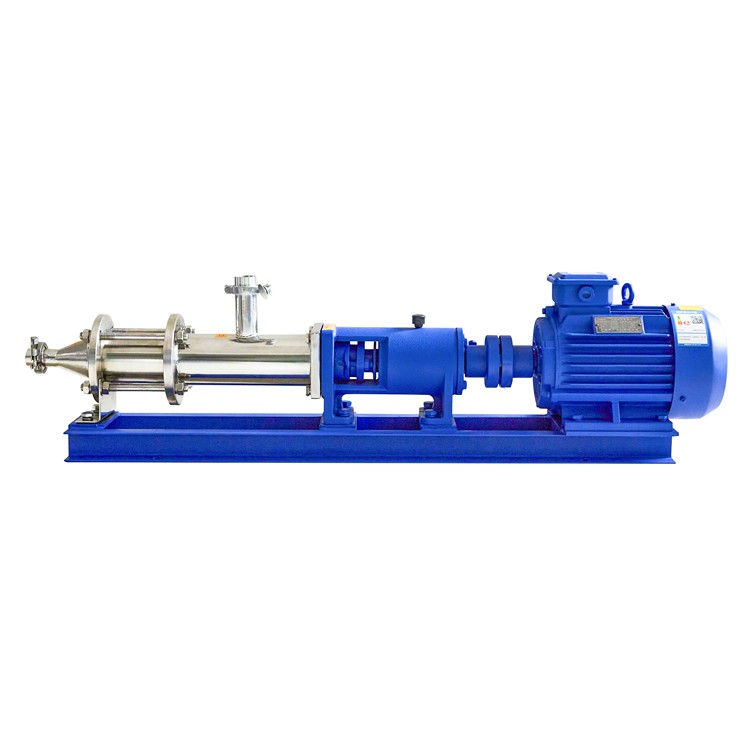

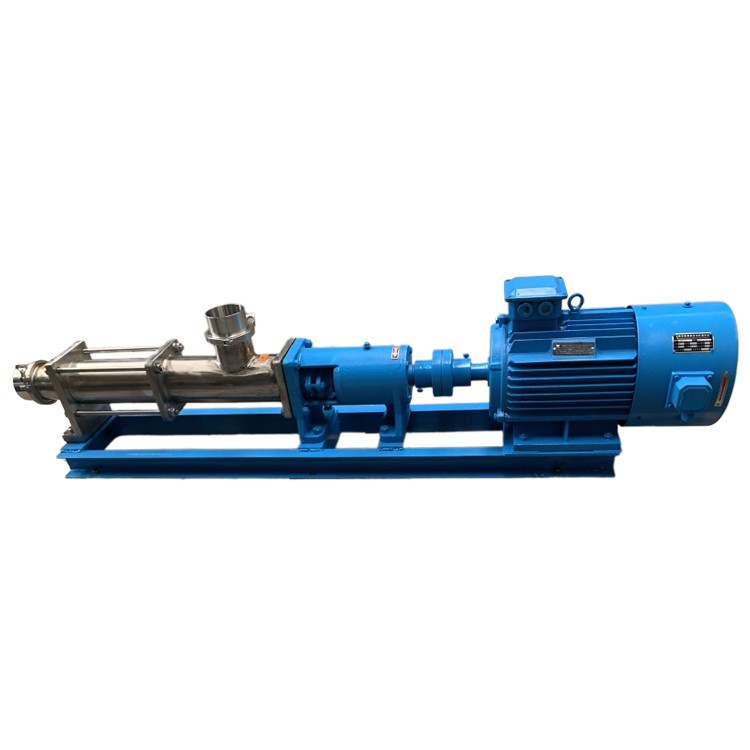













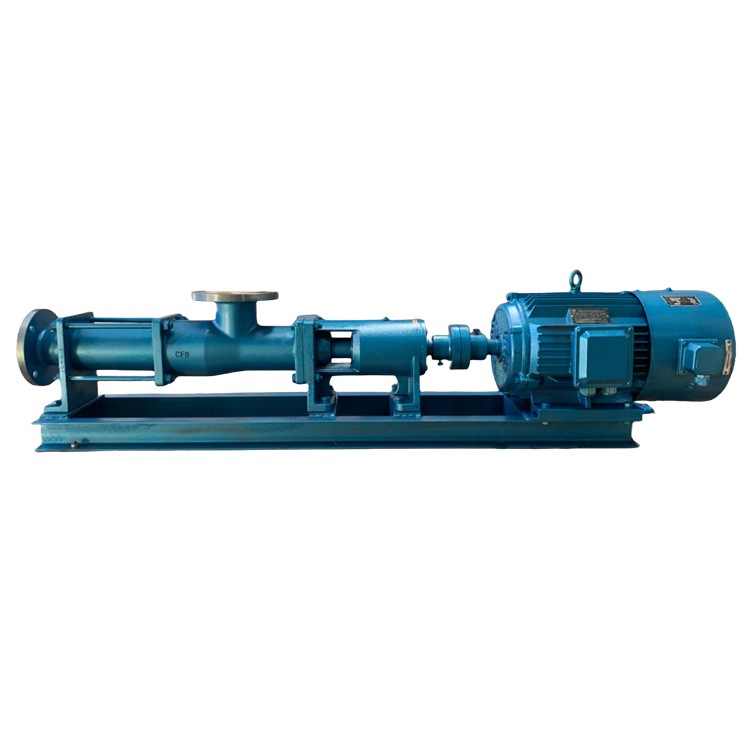
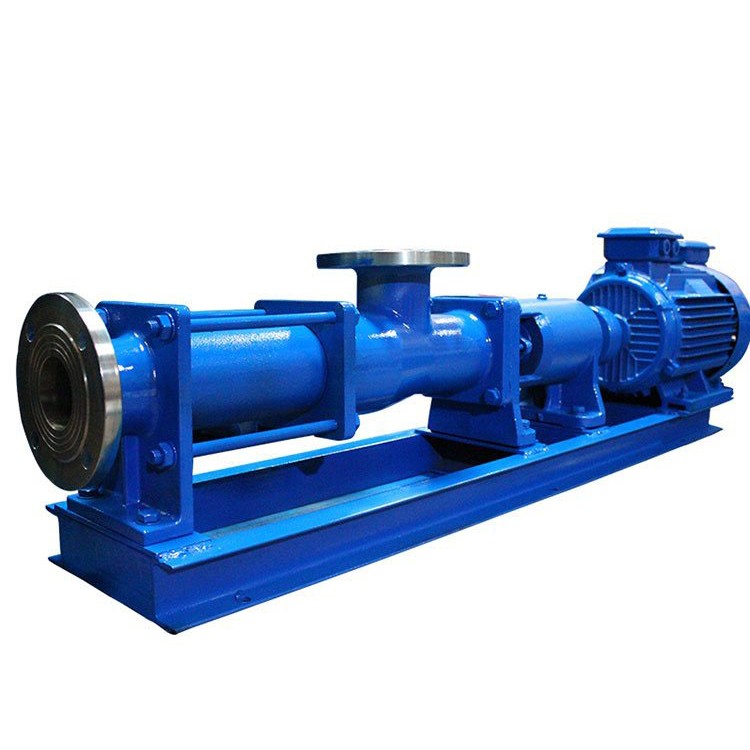
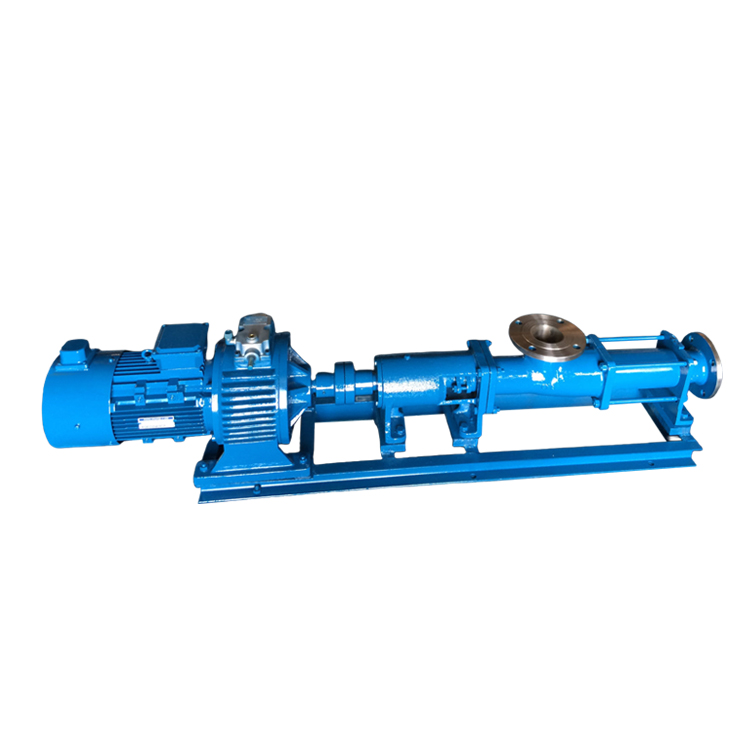
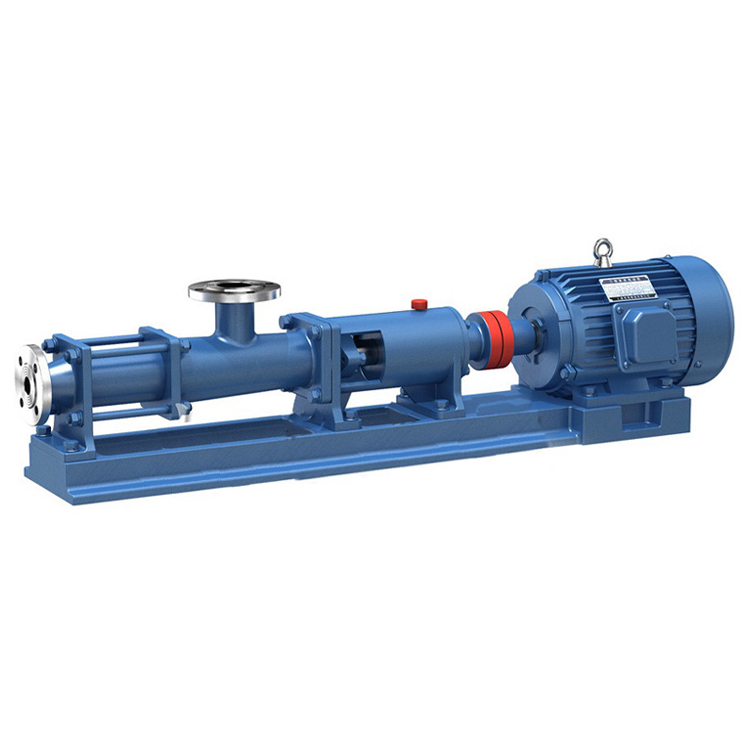
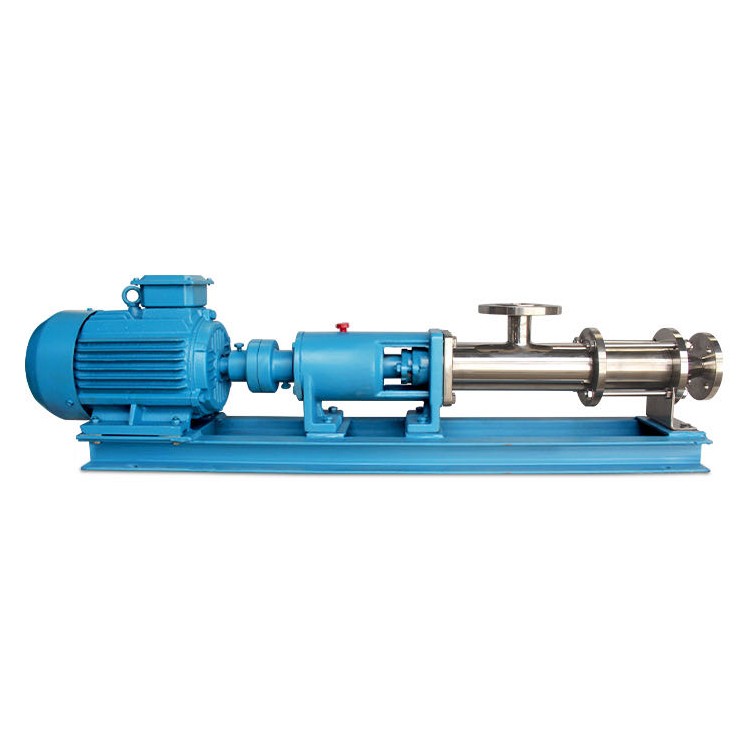

A Sanitary Grade Stainless Steel Screw Pump is a single-screw transport pump, primarily comprising an eccentric spiral screw (rotor) and a screw sleeve with a double helical inner surface (stator). This pump operates based on the reciprocating meshing volumetric principle, forming individual sealed cavities through the special geometric shapes of the rotor and stator. The medium flows uniformly in an axial direction, with low internal velocity, constant volume, stable pressure, and no vortices or turbulence.
Working Principle
As the motor drives the pump shaft to rotate, the screw rotates around its own axis and also rolls along the inner surface of the sleeve, forming sealed compartments in the pump. With the continuous rotation of the screw, these compartments are formed at the suction end of the pump, sealing the liquid inside, and then continuously push the liquid along the screw axis from the suction chamber to the discharge end, thereby achieving the transport of the liquid.
Structural Features
The compact, parts-limited, and easy-to-maintain design of the stainless steel sanitary screw pump features a sleeve (pump cylinder) fixed in the pump body and an active screw rod and two driven screw rods meshing with it, inserted into the cylinder. The three intermeshing screws form a sealed chamber in the cylinder for each thread, creating a seal between the intake and discharge ports.
Application Fields
Stainless steel sanitary screw pumps are widely used in various industries such as food processing, beverage production, pharmaceutical manufacturing, etc. For instance, they are suitable for transporting milk, juice, pharmaceutical liquids, creams, and face lotions, and are compatible with high viscosity, solid-laden, corrosive, high or low-temperature fluids. Additionally, these pumps are also applicable in environmental protection, shipbuilding, oil industry, daily chemicals, brewing industry, and more.
Pros and Cons
Advantages:
Wide pressure and flow range, suitable for a variety of liquids and viscosity ranges.
A wide variety and viscosity range of liquid types are available for shipping.
Strong self-priming ability, uniform and continuous flow, low vibration, and low noise.
Solid structure, easy installation and maintenance.
Disadvantages:
The screw shaft requires high precision in processing and assembly.
The pump's performance is quite sensitive to changes in the fluid's viscosity.


















