


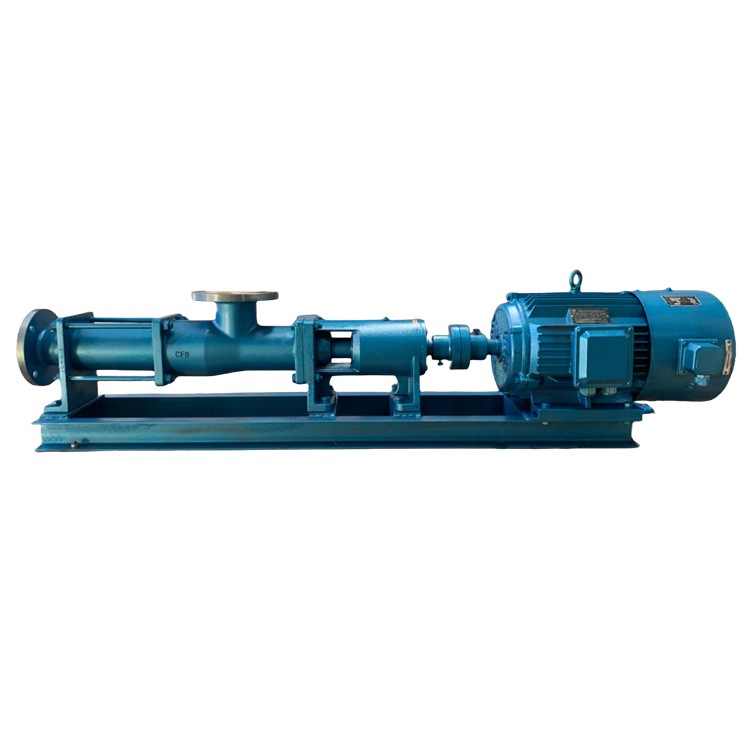













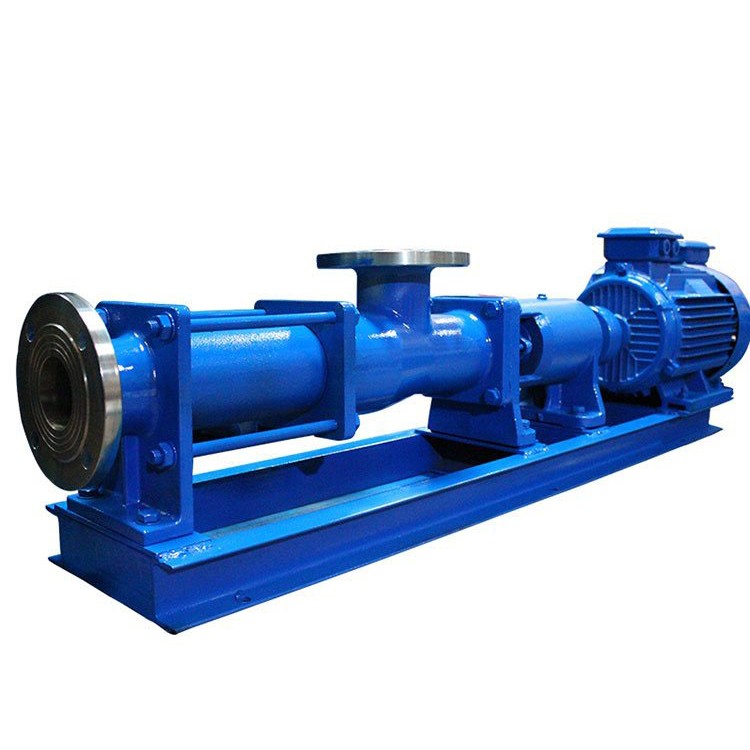
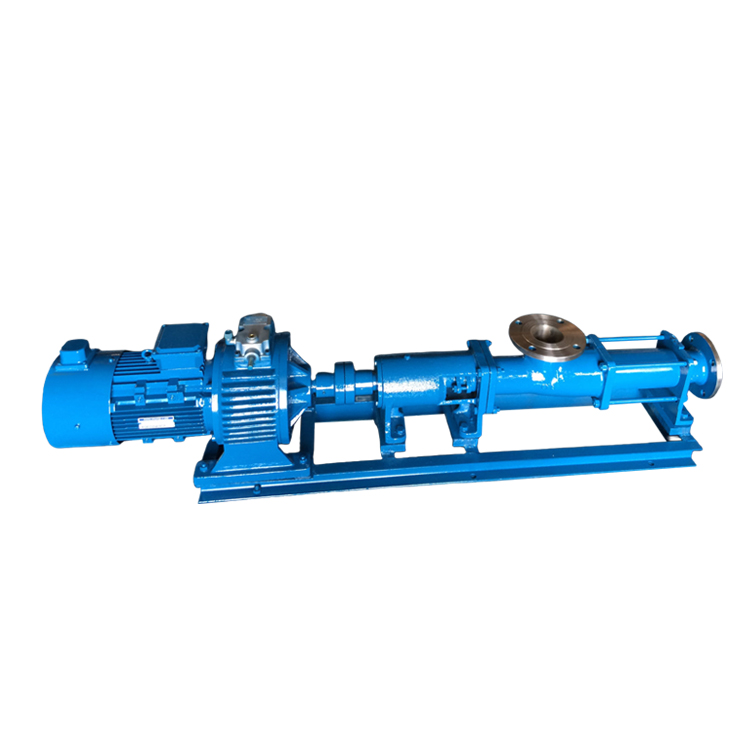
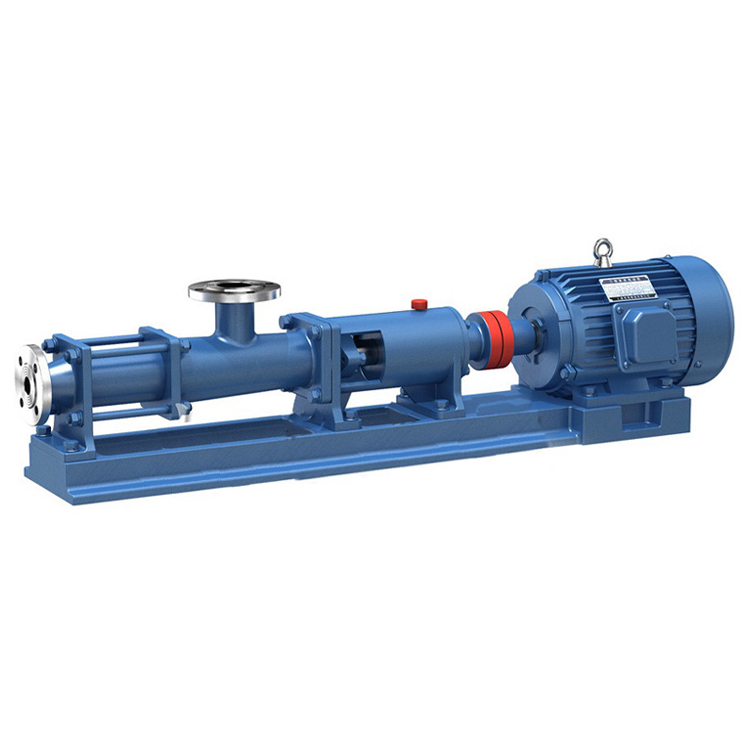
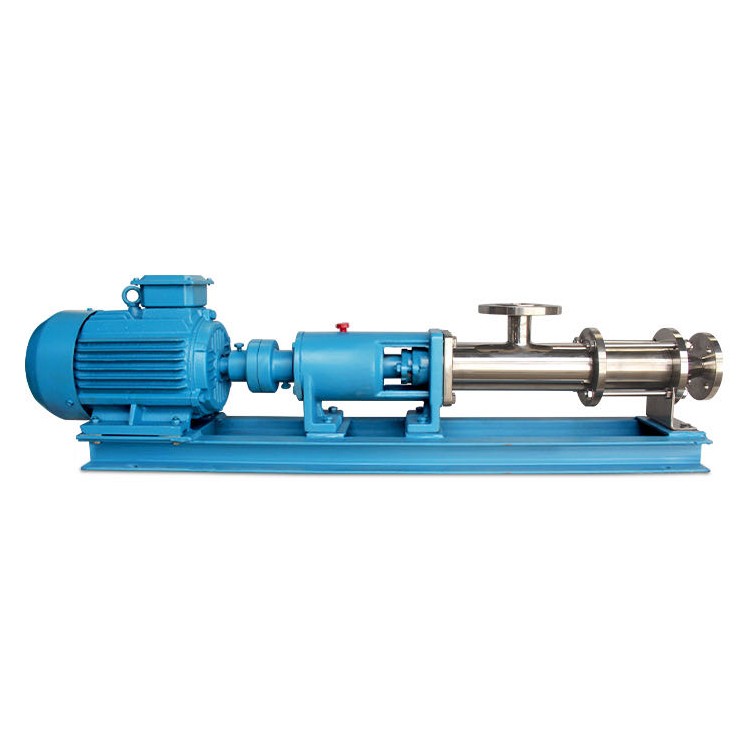
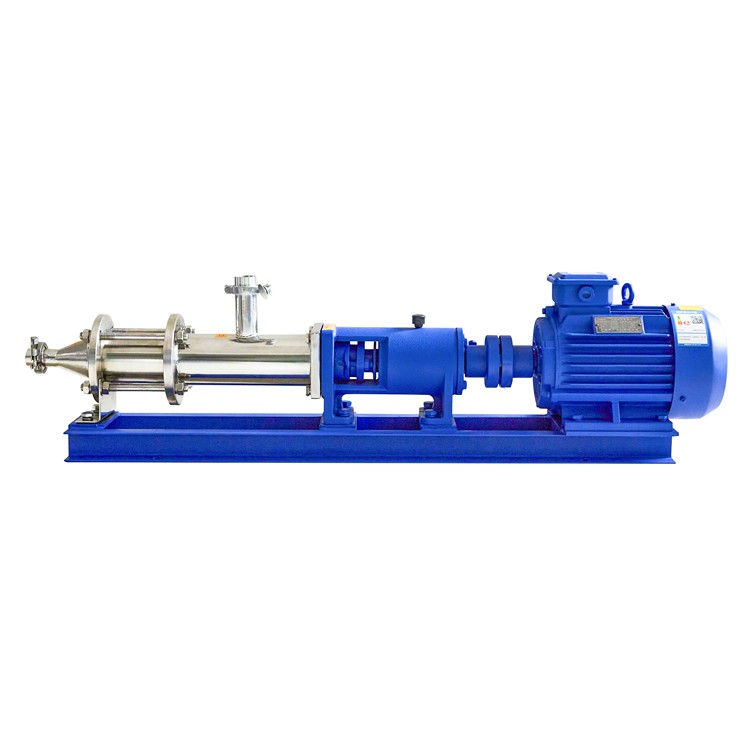

G-type single screw pump is a device used for conveying liquids, classified as a rotary vane pump. Its working principle relies on the interlocking of the screw and sleeve, creating volume changes in the suction and discharge chambers to transport the liquid. The main working components of the G-type single screw pump include the sleeve (stator) with a double-headed spiral cavity and the single-headed spiral screw (rotor) that meshes with it within the stator cavity.
Operating Principle
As the input shaft drives the rotor to rotate around the stator center through a universal joint, the stator-rotor pair continuously engages to form a sealed chamber. These sealed chambers move axially at a constant speed with unchanging volume, conveying the medium from the intake end through the stator-rotor pair to the discharge end. Since the screw rotates at a constant speed, the outflow of the liquid is also uniform.
Application Scenario
The G-type single screw pump is widely used in various industrial fields, including the oil industry, environmental protection, food industry, brewing industry, printing industry, industrial boilers, construction, mining, and chemical industry. It is particularly suitable for transporting high-viscosity fluids, mediums containing hard suspended particles, or mediums containing fibers. The G-type single screw pump has strong adaptability to mediums, stable flow, low pressure pulsation, and high self-priming capability.
Technical Specifications
Flow Range: 0.8-150 m³/h
Flow Range:0-120m
Work Pressure: ≤2.5 MPa
Operating Temperature: -20℃ to 120℃
Overcurrent Material: Cast Iron, Stainless Steel
Pros and Cons
Advantages: Steady flow, stable pressure, strong self-priming capability, high adaptability to media, and easy maintenance._
Disadvantages: Complex structure, higher cost._


















