



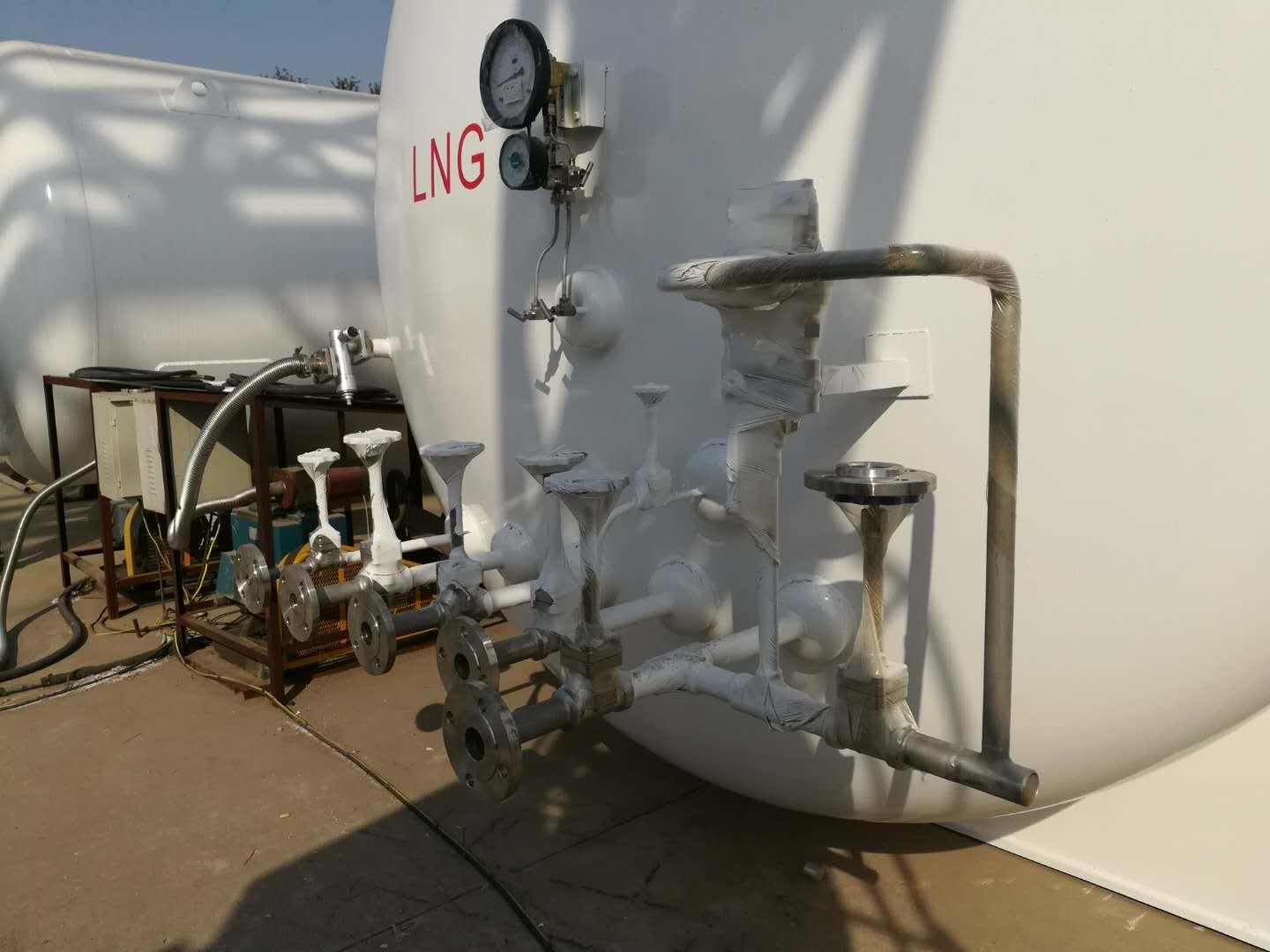

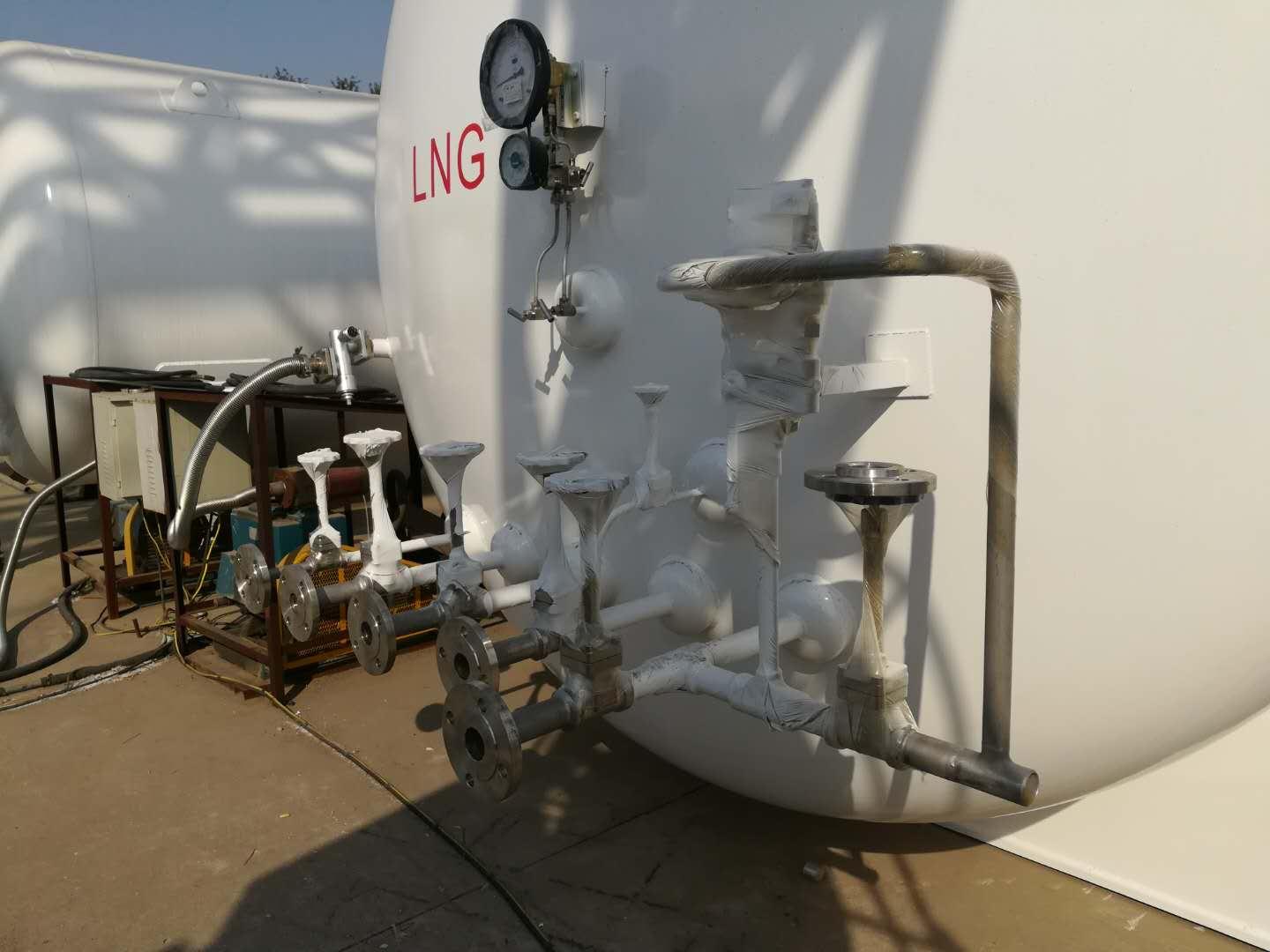
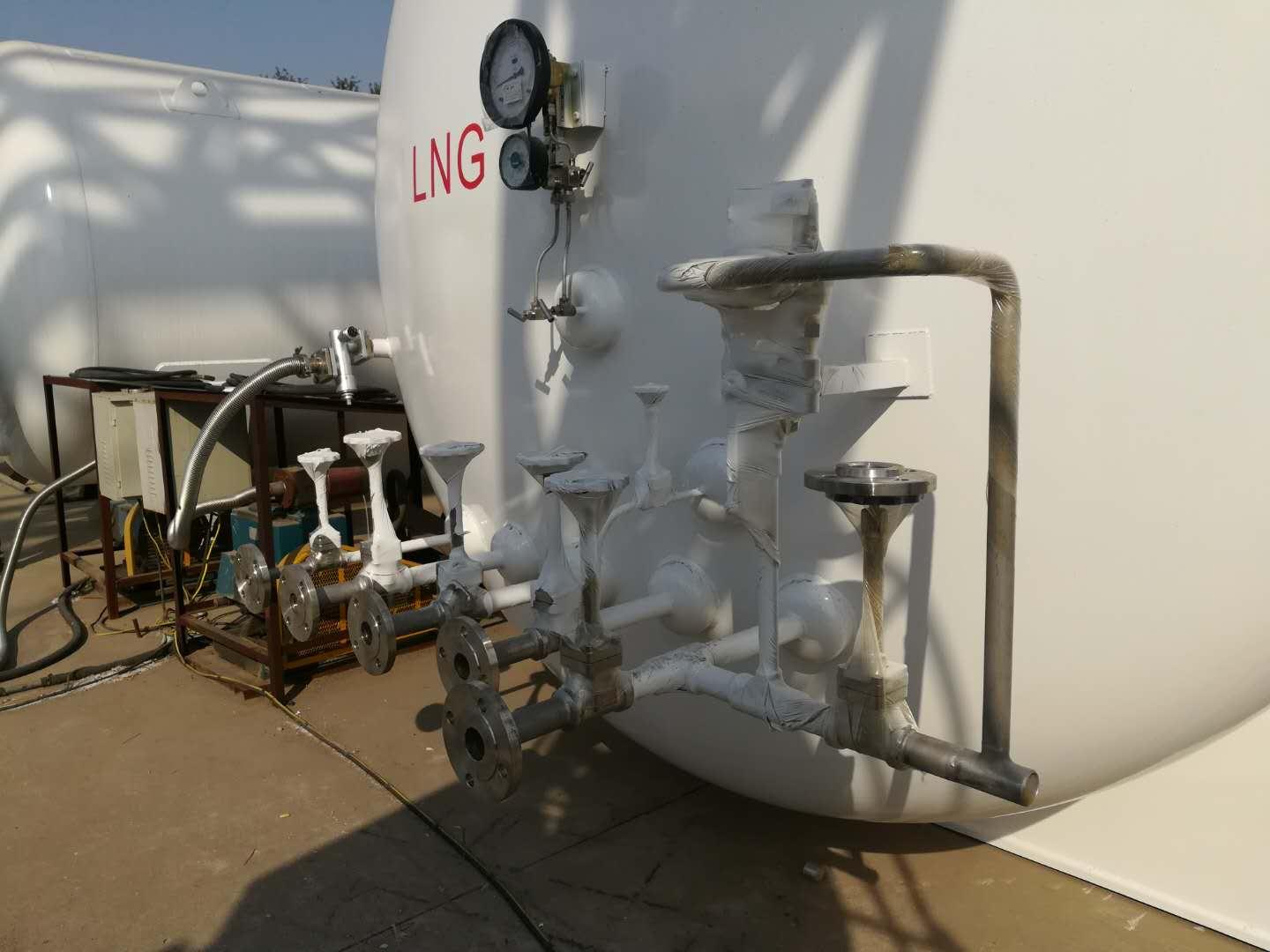



















babjehec specializes in the production and sale of LNG tanks, competitive pricing

Operation Instructions
Utilize Security Management
(1) The using unit shall apply for and obtain the "Special Equipment Operation Registration Certificate" from the department responsible for special equipment operation registration at the location within 30 days before or after the product is put into use, in accordance with the regulations.
(2) Users should comply with the relevant requirements of the "Special Equipment Operation and Management Regulations" by implementing safety management for this product. This includes appointing a safety management supervisor, safety personnel, and operational staff, establishing various safety management systems, drafting operational procedures, and conducting inspections.
2. Pre-use Preparation
Tanks and associated piping are installed and in place; after passing the acceptance inspection, prepare for pre-use.
Tanks must be purged with dry nitrogen and pre-cooled with liquid nitrogen prior to first use. The purge pressure should not be less than 0.2 MPa.
Prior to blowing, loosen the connections at both ends of the differential pressure (level) gauge, and fully open the combination valve A9 of the differential pressure (level) gauge. Check if there is any moisture in the exhaust air. If moisture is present, continue blowing until it stops. Tighten the connections at both ends of the differential pressure (level) gauge, and close the balancing valve to place the differential pressure (level) gauge in normal operating condition.
Prior to the first filling of the tank with LNG, the tank should be purged with LNG gas to replace the liquid nitrogen or nitrogen inside. First, open the drain valve A-6 to vent the nitrogen, then close the valve. Open the vent valve A-12 and transfer the LNG gas from the tank container into the storage tank via the unloading platform. When the tank pressure reaches 0.1-0.2 MPa, close the vent valve A-12, stabilize for 3 minutes, and then open the drain valve A-6 to vent. Repeat this process 2-3 times until the purge is complete. Use a flammable gas detector or take a sample of the vented air for a点火 test to check the degree of purge.
When initially filling with LNG, the tank must be pre-cooled or the pre-cooling status of the tank should be checked. The liquid filling speed should be strictly controlled and the operation should be slow. First, slowly open the upstream filling valve A-2, and transfer LNG from the tanker to the tank via the unloading platform. Due to the lagging vaporization process when LNG is transferred to the tank, closely monitor the rate of pressure increase within the tank, ensuring minimal liquid inflow. When the pressure reaches 0.3 MPa, open the gas exhaust valve A-12 to reduce pressure, and if necessary, close the upstream filling valve A-2. Through continuous liquid filling and exhaust, pre-cool the tank. After controlling the liquid inflow for a period of time, once the tank pressure stabilizes and the level gauge indicates a certain liquid level within the tank, gradually open the upstream filling valve A-2 wider and open the downstream filling valve A-1.
3. Initial Filling Operation for Storage Tank
(1) Open the liquid inlet valves A-2 and A-1 at the top and bottom simultaneously for filling. During the filling process, monitor the differential pressure (level) gauge readings. Open the full indicator valve A-4, vent the gas in the storage tank, and immediately close the full indicator valve A-4 upon the release of LNG gas.
(2) Close the lower inlet valve A-1 when the tank is filled to more than 50% of its volume.
(3) Upon reaching 85% capacity of the storage tank, close valve A-2 to stop filling and wait for 5 minutes to allow the liquid level to stabilize. Then, reopen valve A-2 to continue filling and open indicator valve A-4. Close valve A-4 and valve A-2 immediately once liquid begins to flow from valve A-4.
4. Tank Refueling Procedure
(1) Upon the first formal filling, the gas phase pressure inside the tank should be as low as possible during subsequent refills.
(2) Fill both the upper and lower sections simultaneously. When the differential pressure (level) gauge indicates approximately 50% of the tank's volume, close the lower inlet valve A-1. When filled to about 85% of the tank's volume, close the upper inlet valve A-2, stop filling for 5 minutes to allow the liquid level in the container to stabilize, then open the upper inlet valve A-2 to continue filling, and open the full indicator valve A-4. Continue filling until liquid begins to discharge from the full indicator valve A-4, then close the full indicator valve and simultaneously close the upper inlet valve A-2, stopping the filling process.
(3) Monitor the pressure gauge and differential pressure (level) meter during filling. (If the pressure rises above the filling输送 pressure or near the safety valve pressure, the exhaust valve A-12 must be opened to release an appropriate amount of gas from the storage tank to relieve pressure.)
(4) Fill out the operation record form.
5. Tank Pressurization Operation Procedure (Valves and equipment for this section are to be provided and installed by the owner)
Using a supercharger can increase the pressure inside the tank, with the boost pressure controlled according to the draining requirements and not exceeding the tank's maximum working pressure. The boost system of this tank is controlled by a pressure regulating valve, with the product pressure adjustable from 0.2 to 0.8 MPa. The boost operation procedure is as follows:
Check if the pressure gauge is in working condition.
(2) Confirm that the boost system pressure regulating valve is open.
(3) Gently open the by-pass valve.
(4) When stopping the draining, close the shutoff valve to prevent the tank's pressure from rising.
(5) Important Notes:
1) During operation, the LNG tank must maintain a liquid level of ≥15%.
2) When operating the boost system, safety should be a priority, and strict monitoring is mandatory. Unauthorized personnel must not leave the scene.
6. Tank Pressure Reduction Procedure
Open valve A-12 to reduce the vapor pressure inside the storage tank to no more than the new set pressure of the pressure regulating valve, then close valve A-12.
7. Tank Discharge Operation Procedure
(1) Check that the tank's pressure gauge, differential pressure (level) meter, combustible gas detector, and safety valve are operating normally.
(2) Inspect the pipeline valves, pressure gauges, and safety valves to ensure they are in normal working condition.
(3) Prepare all explosion-proof tools and wear protective gear.
(4) Inspect the IV line and open the drain valve A-6.

LNG tanks are essential storage containers for LNG fueling stations, an indispensable part of such stations. As a professional in the LNG industry, do you truly understand them? Let's delve into them in detail below:
1. Shipment Form
LNG tanks typically come in vertical and horizontal types. Vertical tanks have the advantage of requiring less land area, are convenient to use, and reduce the power consumption of submersible pumps due to the gravitational difference, thereby saving electricity. However, vertical tanks usually exceed 10 meters in height, which can cause fear among nearby residents, making them unsuitable for urban settings. Horizontal tanks are the most commonly used type currently. Their drawback is that they occupy more land space, and there are safety distance requirements between the storage tanks and surrounding structures and facilities both within and outside the station. According to GB50156, this increases the design complexity.
2. Insulation form
Common insulating forms for LNG tanks include high vacuum multi-layer winding insulation and pearl sand powder insulation. The latter is more common in practical applications due to its lower cost.
3. Materials
The container is made of high-quality Austenitic stainless steel plate 0Cr18Ni9 or imported 304 steel plate; the outer container is made of high-quality carbon steel Q345R steel plate.
4. Safety Protection System
Safety protection system consists of tank accessories including: pressure gauge, level gauge, redundant full-closed safety valves (one in use and one in reserve), overflow port, bursting disc.
5. Filling Form
The LNG storage tanks have two methods: filling from the top and filling from the bottom. Filling from the top uses cold liquid to liquefy the BOG gas inside the tank. Both methods can be used, and the choice depends on the on-site conditions during the unloading process. It's quite complex and can't be explained in just a few sentences. Friends with questions can discuss privately.
6Level Conversion
LNG液位换算质量容积及质量需要按照储罐厂家提供的数据,结合液厂的气质报告数据综合确定。
7Technical Requirements
General technical agreements require the design pressure for LNG storage tanks.0.8MPA, designed for temperatures down to -196°C, with a daily evaporation rate of less than or equal to 0.20%. The actual working pressure of the tank is generally less than 0..8MPA's, the operating temperature is generally determined by the quality of the liquid, around -100°F.
A seemingly simple white storage tank, but there's a deep water under the surface. How to choose the right tank that minimizes investment while meeting usage requirements, how to use the tank rationally to reduce losses at the gas station, and cut down on maintenance costs? Feel free to message me for more information.






















