























LPG Storage Tanks
1、Liquefied Petroleum Gas TankSafety Operation: mm_+0 To prevent excessive temperature and pressure phenomena in the liquefied gas storage tank, the pressure and temperature of use should be controlled. The reasons for excessive temperature and pressure in the liquefied gas storage tank include the following:
(1) Operation Errors To prevent operation errors, tags should be hung on critical operation devices. The tags should be clearly marked or written with the opening and closing directions of valves, their on/off status, and precautions, etc.
(2) Excessive Filling of Liquefied Gases - Measures to prevent over-filling include: strictly filling according to the specified storage capacity, and if over-filling is detected, it should be immediately addressed to remove the excess; all instruments used for filling must be regularly inspected, and the level gauge should be periodically flushed; any residual liquid inside the container should be included in the filling quantity, and its weight cannot be ignored; when the surrounding temperature rises, spraying for cooling should be conducted.
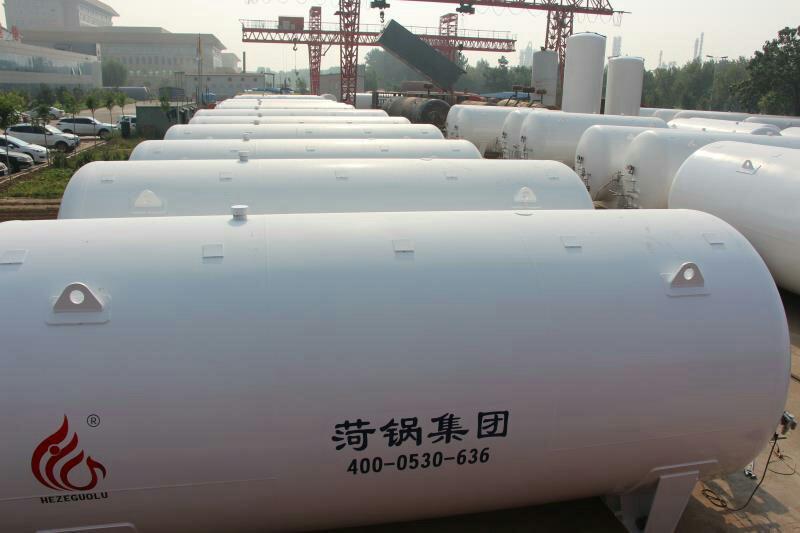
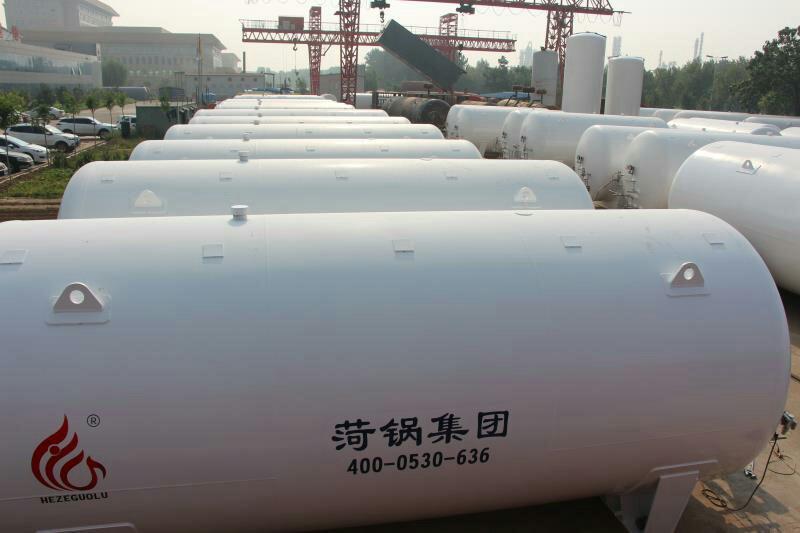
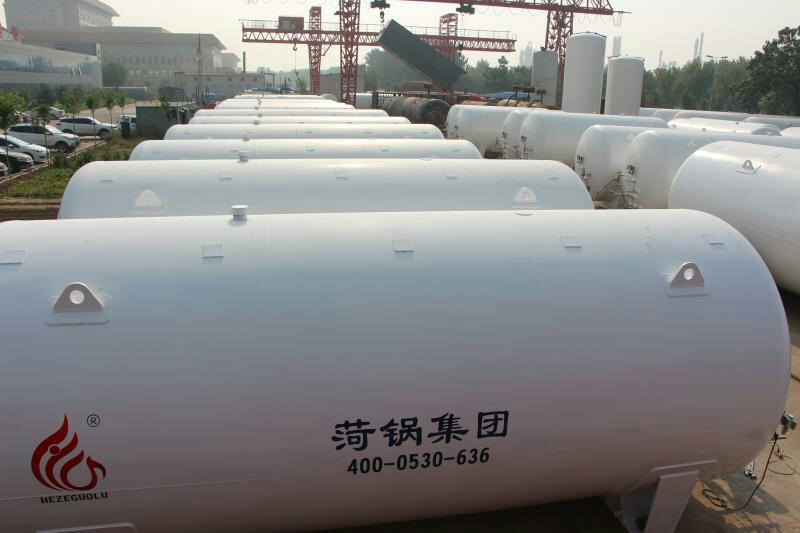
Manufacturers produce liquefied gas storage tanks.LPG Storage Tank, Liquid Ammonia Storage Tanks. Our company is dedicated to the production of equipment for low-temperature storage tanks, liquefied gas storage tanks, liquid ammonia storage tanks, boilers, pressure vessels, and central air conditioning systems. Heze Boiler Co., Ltd. is a manufacturer of gas boilers, biomass boilers, and waste heat recovery boilers, located conveniently along National Highway 201 with easy access and a beautiful environment. Heze Boiler Factory Co., Ltd. is a professional manufacturer of liquefied gas storage tanks.Liquefied Petroleum Gas (LPG) Storage Tank, Liquid Ammonia Storage Tank. Our developed Liquefied Gas Storage Tank, Liquid Ammonia Storage Tank.Liquefied Petroleum Gas (LPG) Storage TankHigh-quality, real-priced LPG storage tanks. Welcome to choose liquid ammonia and LPG storage tanks. Our factory's gas boilers are corrosion-resistant, energy-saving, efficient, environmentally friendly, and easy to maintain and operate. They are widely used for heating in residential areas and for domestic hot water, as well as in hotels, bath centers, and other heating and hot water needs. We offer superior product quality and comprehensive after-sales service. Our waste heat boilers have good sealing performance, no pollution, low system resistance, easy operation, and are safe and reliable, ensuring full recovery of waste heat. We have threaded flue tube waste heat boilers, organic heat carrier matched waste heat boilers, and dual-boiler waste heat boilers, etc. The company strictly controls the quality of each production stage, adhering to the service tenet of honesty, professionalism, and providing high-quality products that meet quality standards, are reasonably priced, and have excellent after-sales service!

4.1 Selection of Design Firm: The selection of a design firm for the liquefied gas storage tank system engineering design should be handled by the project organization department of each provincial (city, district) company. The firm should be chosen from the list of shortlisted design institutes and approved by the relevant department head. The design firm must possess qualifications for petrochemical engineering design and industrial pipeline (GC2) design. 4.2 Site Inspection: 4.2.1 The site inspection should be organized by the project organization department of each provincial (city, district) company, involving the construction, pipeline installation, quality safety, and design departments of the branch company located at the gas station, as well as personnel from the design institute. 4.2.2 Research and investigate the layout and burial depth of the existing underground pipelines and cable installations at the gas station. For stations unable to provide on-site pipeline data, pipeline detection technology should be employed to determine the existing processes, electrical, and water supply and drainage pipelines. 4.2.3 The construction department of the branch company where the gas station is located shall propose recommendations for the scope of renovation, renovation methods (unloading oil vapor recovery system, refueling oil vapor recovery system [dispersed, centralized], and oil-gas emission treatment equipment), and related facility renovations based on the principle of economic feasibility and local government requirements. These proposals should be submitted to the relevant department head and the project organization department of the provincial (city, district) company for approval before the design firm proceeds with the design. 4.3 Design Proposal: 4.3.1 The design proposal submitted by the design institute should include general layout, oil vapor recovery process diagrams, and a list of main equipment and materials. 4.3.2 The design proposal should be submitted to the project organization department of the provincial (city, district) company, who will then organize the pipeline installation, quality safety departments, branch company construction personnel, and the design institute to review the proposal before reporting to the department head for approval. 4.4 Construction Drawing Design: 4.4.1 Equipment selection: The project organization department of each provincial (city, district) company will provide a list of shortlisted suppliers for oil vapor recovery equipment. The design institute will select the relevant equipment based on this list. The selection should adhere to principles of safety, reliability, technical advancement, cost-effectiveness, and compliance with emission standards, and should use products that are easy to install, convenient, and have minimal on-site modifications. The following points should also be considered: 4.4.1.2 Prefer to select equipment from the same manufacturer in the same region for ease of after-sales service. 4.4.1.2 Gasoline stations with an annual gasoline sales volume of over 3,000 tons and more than 10 gasoline nozzles should opt for a centralized refueling oil vapor recovery system; others should choose a dispersed system. 4.4.1.3 Select different types of refueling oil vapor recovery technologies and equipment based on the internal space of the fuel dispenser. For example, a secondary recovery dispersed vacuum pump should have a smaller power rating and be powered by the existing power supply of the fuel dispenser, avoiding additional power cable installation. For minimizing the tank modification volume, an electric-driven vacuum pump should be used for centralized vacuum pumps instead of an oil-filled pump-driven vacuum pump. 4.4.1.4 The oil-gas emission treatment equipment should be selected based on the surrounding environment of the gas station, the size of the site, and the volume of operations. The maximum processing capacity of the oil-gas emission treatment device should be 10% to 20% of the maximum fuel volume. 4.4.2 Construction drawing design: 4.4.2.1 The design institute will proceed with the construction drawing design based on the approved design proposal. 4.4.2.2 The liquefied gas storage tank pipelines should be made of seamless steel pipes that comply with the current national standard "Seamless Steel Tubes for Transporting Fluids" GB/T 8163. The design pressure for oil pipelines should not be less than 0.6 MPa, and the design pressure for oil vapor recovery pipelines should not be less than 0.13 MPa. Flexible materials such as thermoplastic plastic pipes should not be used.






















