



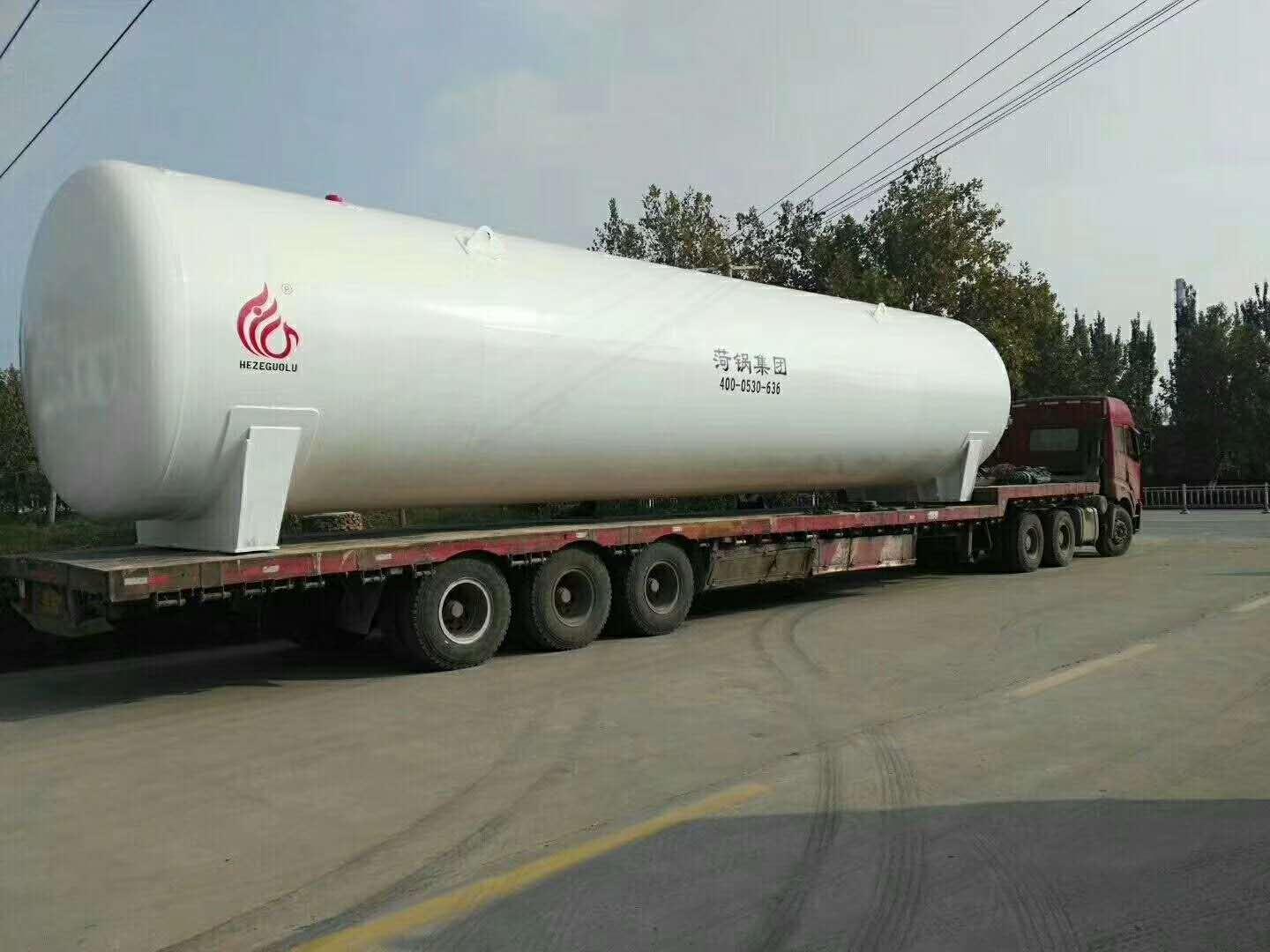

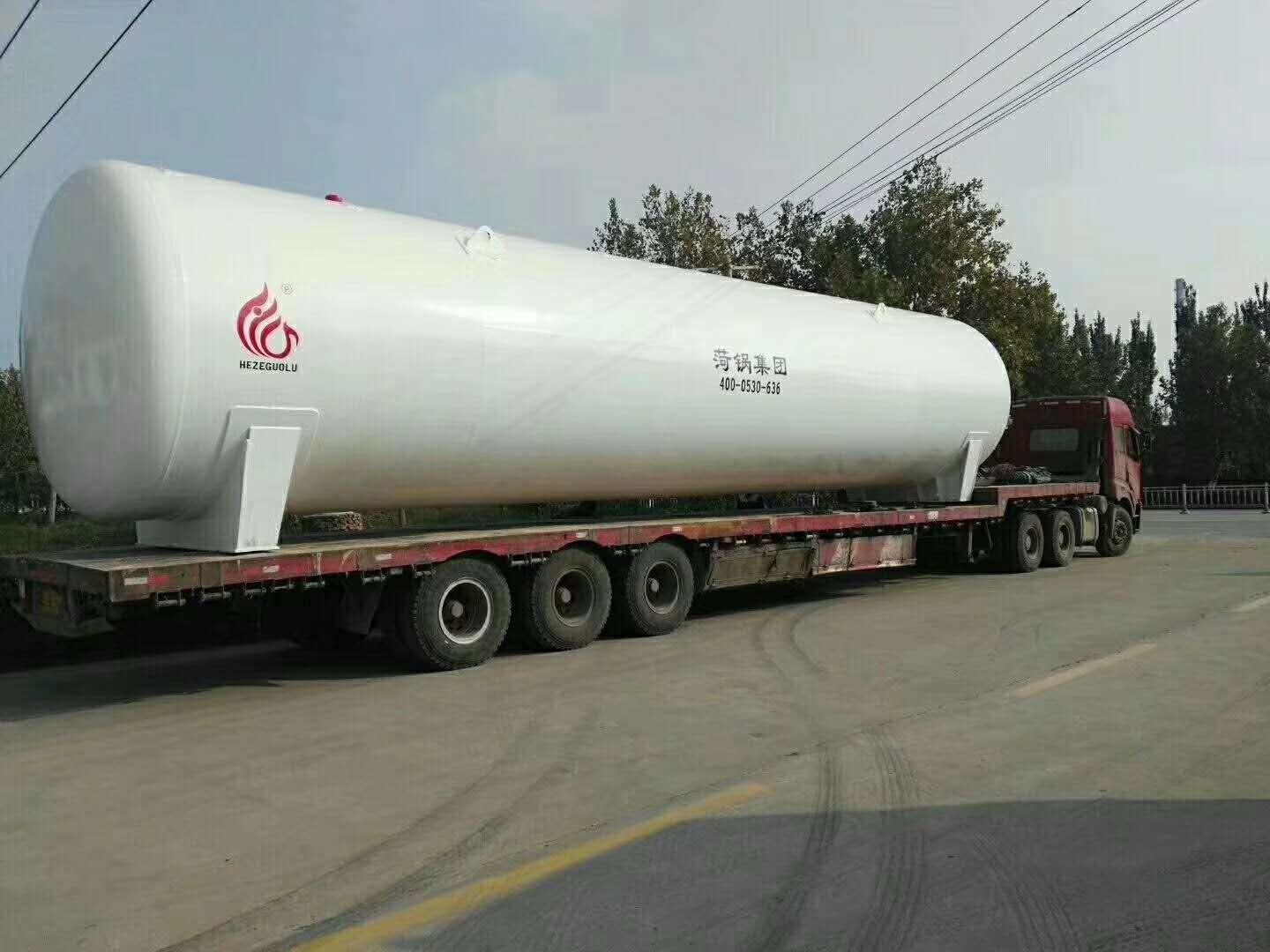
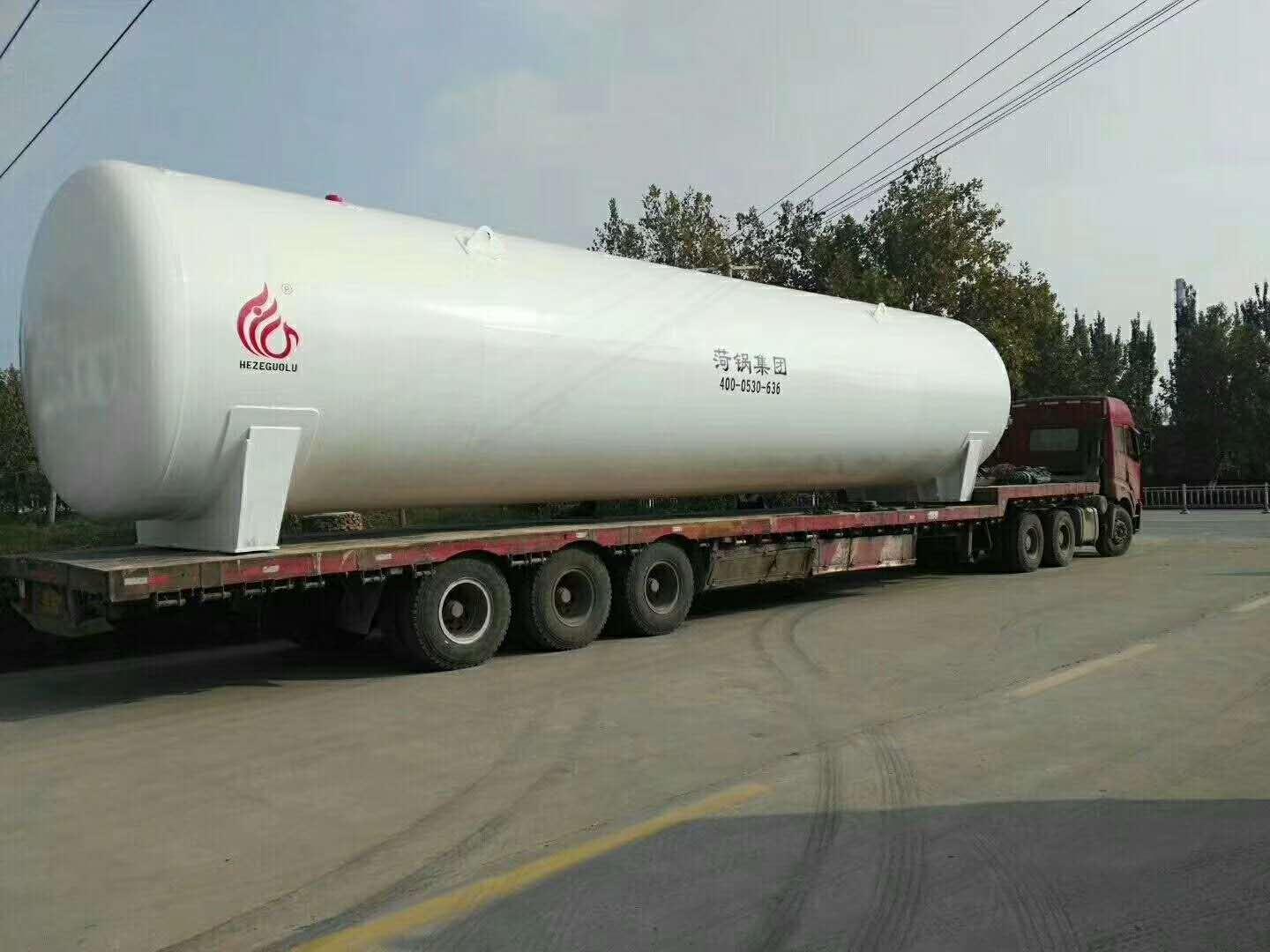



















7 LNG Storage Tanks
7.1 General Provisions
7.1.1 Selection of Liquefied Natural Gas (LNG) Storage Tanks shall comply with the following regulations:
Assess the risk associated with the tank design of liquefied natural gas storage tanks, determining the impact on surrounding environment, personnel, and property safety.
Choose the tank type shown in Appendix B of this specification for liquefied natural gas storage tanks.
In areas with dense entry points or facilities, it is advisable to choose dual-container tanks, full-container tanks, or film tanks.
4 A single containment tank may be selected, provided the required safety spacing is met.
7.1.2 The design of the liquefied natural gas storage tank shall comply with the following specifications:
During and after the OBE period, the tank system should continue to operate.
During and after the SSE, the storage capacity of the tanks should remain unchanged and be capable of isolation and maintenance.
3. The liquefied natural gas (LNG) storage tanks should undergo seismic calculations under OBE and SSE conditions, ensuring the tanks can safely shut down under SSE conditions. The prestressed concrete outer shell of the full-volume tanks should be subjected to ultimate bearing capacity calculations under ALE conditions.
7.1.3 The pipe openings of the liquefied natural gas storage tank should be located at the top of the tank.
7.1.4 The response spectra for OBE, SSE, and ALE should be determined according to the following requirements:
OBE should represent seismic ground motion with a 10% exceedance probability within 50 years (return period of 475 years) and a damping ratio of 5%, and its response spectrum should not be less than the corresponding value for seismic fortification as specified by the current national standard "Code for Seismic Design of Buildings" GB 50011 for the region in question.
2. SSE should represent seismic ground motion with a probability of exceedance of 2% within 50 years (return period of 2475 years) and a damping ratio of 5%, and its response spectrum should not be less than the corresponding value for rare earthquakes specified in the current national standard for seismic design of buildings, GB 50011, for the region in question.
The acceleration value of the ALE spectrum should be half of the SSE spectrum acceleration value.
4 When the response spectrum of vertical earthquake is lacking, the vertical earthquake influence coefficient should not be less than 65% of the maximum value of the corresponding horizontal earthquake influence coefficient.
7.1.5 The auxiliary structures of the Liquefied Natural Gas (LNG) storage tank shall be designed in accordance with OBE.
7.1.6 During seismic action, the damping ratios for each design component of the liquefied natural gas storage tank should be selected according to the specifications in Table 7.1.6.
Table 7.1.6: Neonite Ratio for Various Design Components
7.1.7 The permanent loads and variable loads of the liquefied natural gas storage tank shall comply with the specifications in Table 7.1.7.
Table 7.1.7: Permanent and Variable Loads on Liquefied Natural Gas Storage Tanks
Note: 1 a), b) Refer to Appendix B of this specification, where "√" indicates consideration and "—" indicates non-consideration.
"√* indicates that it only applies to the normal temperature steel tank top for low-temperature steel exterior cans."
7.1.8 The seismic loads and accidental loads for liquefied natural gas storage tanks shall comply with the specifications in Table 7.1.8.
Table 7.1.8 Seismic and Accidental Loads on Liquefied Natural Gas Storage Tanks
Note: a), b) Refer to Appendix B of this specification. "√" indicates consideration, while "—" indicates non-consideration.
7.1.9 The site of a liquefied natural gas receiving station should undergo seismic and geological disaster assessments.

30, 60, and 100 cubic meter LNG storage tanks, LNG gasification station, and CNG refueling station process and equipment selection
1. LNG, CNG, LPG: Natural Gas Liquids, Compressed Natural Gas, Liquefied Petroleum Gas
CNG: Compressed Natural Gas (CNG) refers to natural gas compressed to a high pressure of 20MPa. Natural gas stored in high-pressure cylinders, used as fuel for vehicles, is known as CNG vehicles. High-pressure cylinder storage at normal temperature: 20MPa.
LNG: Liquefied Natural Gas (LNG) is formed by cooling natural gas to -162℃ through cryogenic processes. It is stored in low-temperature tanks, and vehicles powered by this fuel are known as LNG cars. Cylinder Low-Pressure Low-Temperature Storage: 1.6 MPa.
LNG and CNG refueling, storage, and supply systems have some differences, but natural gas ultimately enters the car engine in a gaseous state after being pressurized through a pressure-reducing valve to 0.15 MPa for combustion and work.
LPG: Liquefied Petroleum Gas
Section 2: Applications of LNG Tanks: Gasification Stations and Vehicle Fueling Stations
LNG Gasification Station
(1) Peak load and load balancing for urban pipeline gas supply and accident adjustment
(2) Gas source for city municipal pipeline supply in areas not served by natural gas pipelines.
(3) Gas sources for community supply: Boiler gas supply and domestic gas supply.
(4) Source for corporate gas supply; (Image)
2. Gasoline Filling Station: Used for automotive fuel
III. Types of Gas Filling Stations for Vehicles:
LNG vehicle refueling station
1) Conventional Station: Located at a fixed site, LNG is unloaded using unloading equipment, filled into storage tanks, and refueled to vehicles using fueling machines. (Image)
2) Skid-mounted Station: This involves installing related equipment and facilities of a CNG station onto a truck or skid, achieving a high degree of integration for easy transportation and relocation. Ideal for smaller-scale CNG stations. (Image)
CNG Vehicle Fueling Station
3. L-CNG Vehicle Fueling Station






















