


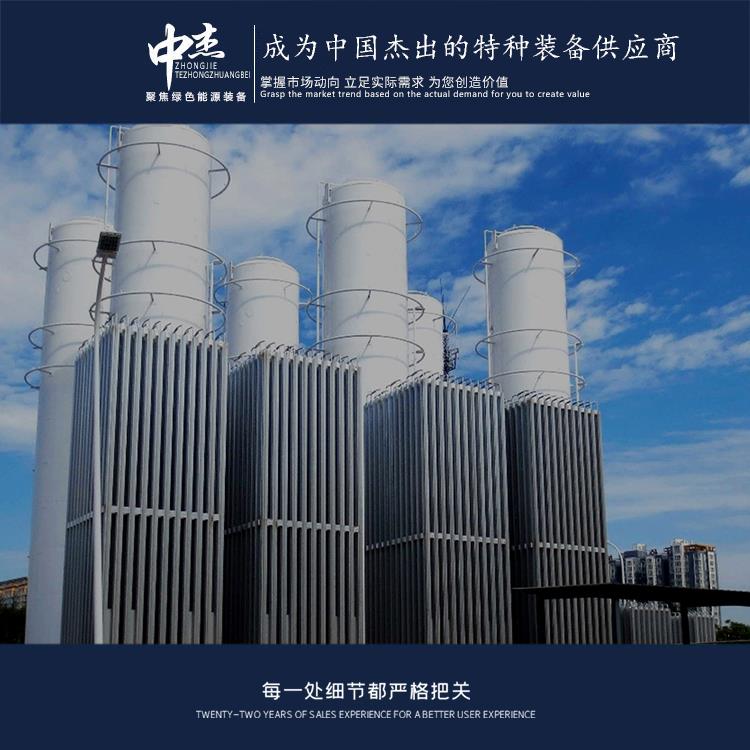

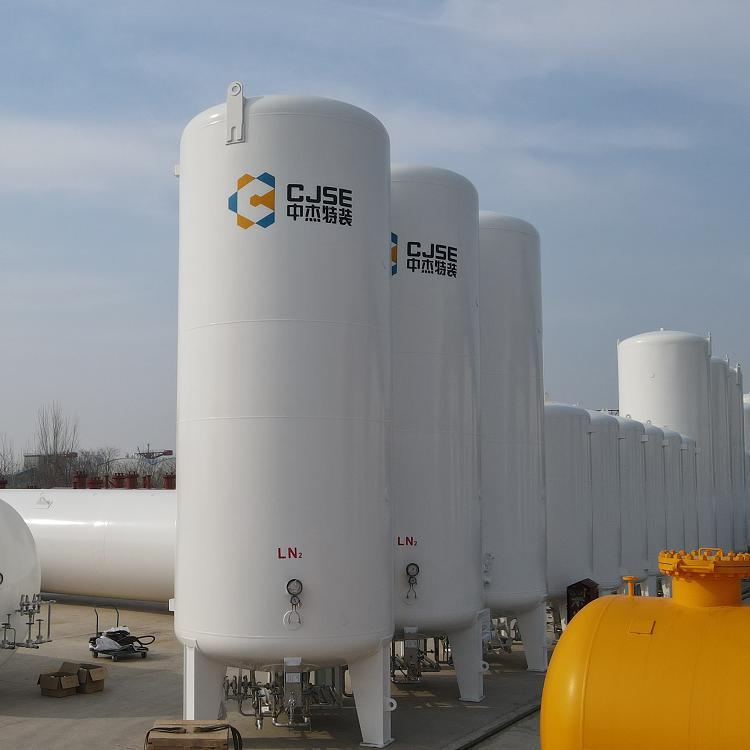
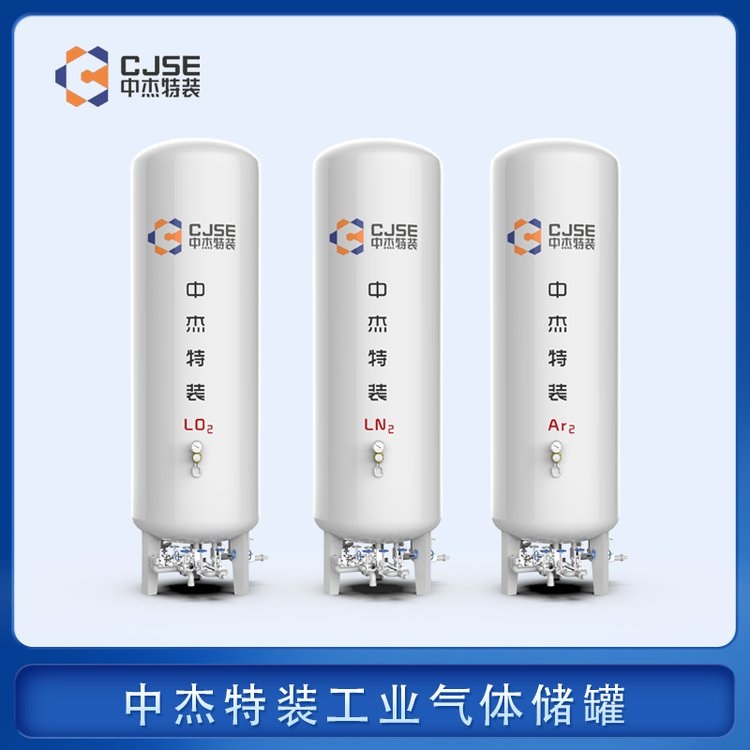



















Shandong Zhongjie Special Equipment's main products include: fuel (gas) boilers, organic heat carrier boilers, biomass boilers, waste heat boilers, and other boiler products; vacuum insulation deep cooling pressure vessels such as LNG storage tanks, oxygen/nitrogen/argon storage tanks, and CO2 storage tanks; pressure vessel products such as denitrification engineering equipment, heat storage and energy storage equipment, and complete chemical equipment; central air conditioning and HVAC equipment such as ground (water) source heat pumps, air source units, water-cooled screw units, and air-cooled modular units. Planned products include large-scale energy centers, LNG transport vehicles, LNG tank containers, and other green energy equipment.
The spacing regulations between liquid oxygen storage tanks are typically governed by relevant safety standards and specifications to ensure safe distances and fire separations between the tanks. The following is a reference to general spacing rules for liquid oxygen storage tanks:
Horizontal spacing between tanks: The horizontal spacing between liquid oxygen tanks is typically required to maintain a certain distance to prevent heat conduction and mutual interference between tanks. The specific spacing distance should be determined based on factors such as the tank's capacity, pressure, and arrangement, with a general recommendation to maintain a safe distance to ensure safe operation and maintenance between tanks.
Tank and building or other facility separation: The spacing between liquid oxygen tanks and buildings, other facilities must also meet the relevant safety requirements. This is to prevent the tank from causing danger to surrounding buildings or facilities in case of leakage or accidents. The specific spacing requirements will be determined based on factors such as the tank's capacity, pressure, and surrounding environment, with a general recommendation to maintain a certain safety distance.
Fire protection distances: It is crucial to maintain fire protection distances between liquid oxygen tanks and between tanks and buildings. Liquid oxygen has a high oxygen content and flammability, and in the event of a leak or accident, it could ignite a fire. Therefore, liquid oxygen tanks must be kept at a certain distance from other facilities to prevent the spread of fire or danger to the surrounding environment.
Note that specific liquid oxygen tank spacing regulations may vary by region or industry. When designing, arranging, and operating liquid oxygen tanks, adhere to local safety standards and regulations, and consult with experts for accurate guidance.
In pressure vessel design, several common "thickness" parameters must be considered:
Wall Thickness: Refers to the actual thickness of the wall of a pressure vessel, i.e., the thickness of the container wall. The selection of wall thickness should consider factors such as the design pressure of the container, the strength of the material, and its corrosion resistance, to ensure the strength and safety of the container.
Bend Allowance: The bend allowance refers to the additional thickness added to the wall thickness during the manufacturing process to ensure the strength and shape of the container's bending section. The calculation and selection of bend allowance must consider factors such as the bending radius of the container and the bendability of the material.
Corrosion Allowance: The corrosion allowance refers to the additional thickness added to the wall to counteract the effects of corrosion inside or outside the container. The selection of the corrosion allowance must consider the working environment of the container and the corrosive nature of the medium it comes into contact with, to ensure that the container can withstand the effects of corrosion throughout its service life.
These "thickness" parameters play a crucial role in pressure vessel design, affecting the vessel's strength, corrosion resistance, and safety. During the design process, it is necessary to select and calculate these thickness parameters reasonably, based on relevant standards and specifications, in conjunction with the vessel's usage conditions and requirements, to ensure that the design and manufacturing meet the standards.
When selecting the support for a liquid argon tank, consider the following factors:
Load Capacity: The support must be capable of bearing the weight of the liquid argon tank. Select a support with sufficient load capacity based on the tank's volume and dimensions. Typically, the weight of the liquid argon tank is specified in the design specifications, which can be used to determine the support's load capacity.
Stability: The support must provide sufficient stability to prevent the tank from tilting or swaying during operation. The design of the support should take into account the tank's center of gravity and its changes to ensure stable support.
Corrosion Resistance: Liquid argon has low temperature and corrosive properties, so the support material should have good corrosion resistance to prevent corrosion and damage. Common support materials include stainless steel, aluminum alloys, etc.
Insulation: Liquid argon storage tanks generally require thermal insulation. The supports should possess certain insulation properties to reduce heat transfer and evaporation of liquid argon. The design of the supports should consider the installation and protection of the insulation layer.
Installation and Maintenance: The support should feature ease of installation and maintenance for convenient tank installation and routine maintenance tasks.
When selecting the support for a liquid argon tank, it's advisable to consult with engineers or suppliers. Choose an appropriate support based on the specific tank requirements and operating environment. Additionally, adhere to relevant design specifications and safety standards to ensure the quality and reliability of the support.
The medical oxygen steel cylinder filling area, in addition to the liquid oxygen storage tank, includes the following components:
Oxygen Compressor: Oxygen compressors are used to compress gaseous oxygen into high-pressure oxygen. These compressors are typically made with special materials and designs to ensure safe handling and compression of oxygen.
Oxygen Purification System: The oxygen purification system is designed to remove impurities and contaminants from oxygen, ensuring the purity and quality of the supplied oxygen. The system typically includes filters, adsorbents, and molecular sieves.
Oxygen Storage System: In addition to liquid oxygen tanks, the oxygen filling area may also include a gaseous oxygen storage system for temporary storage and supply of gaseous oxygen. The gaseous oxygen storage system typically includes high-pressure oxygen cylinders or gas storage tanks.
Filling Equipment: Filling equipment is used to transfer oxygen from liquid oxygen storage tanks or gaseous oxygen storage systems into medical oxygen steel cylinders. The filling equipment usually includes filling machines, filling pipelines, and filling control systems.
Oxygen Quality Monitoring System: The oxygen quality monitoring system is used to monitor the quality and purity of the oxygen being filled. Quality inspections and surveillance of the filled oxygen are conducted through an oxygen analyzer or other detection equipment.
Safety Facilities: The filling area should be equipped with corresponding safety facilities, such as fire alarm systems, oxygen leak detection systems, ventilation systems, etc., to ensure the safety and protective measures during the filling process.
It is imperative that the design and equipment configuration of the medical oxygen cylinder refilling area comply with relevant regulations, standards, and specifications. During the refilling process, strict adherence to operational procedures and safety protocols is required to ensure the safe supply of oxygen.
Shandong Zhongjie Special Equipment, welcome customers to visit our factory for business discussions.
WeChat Official Account

Scan to follow Official Account




















