



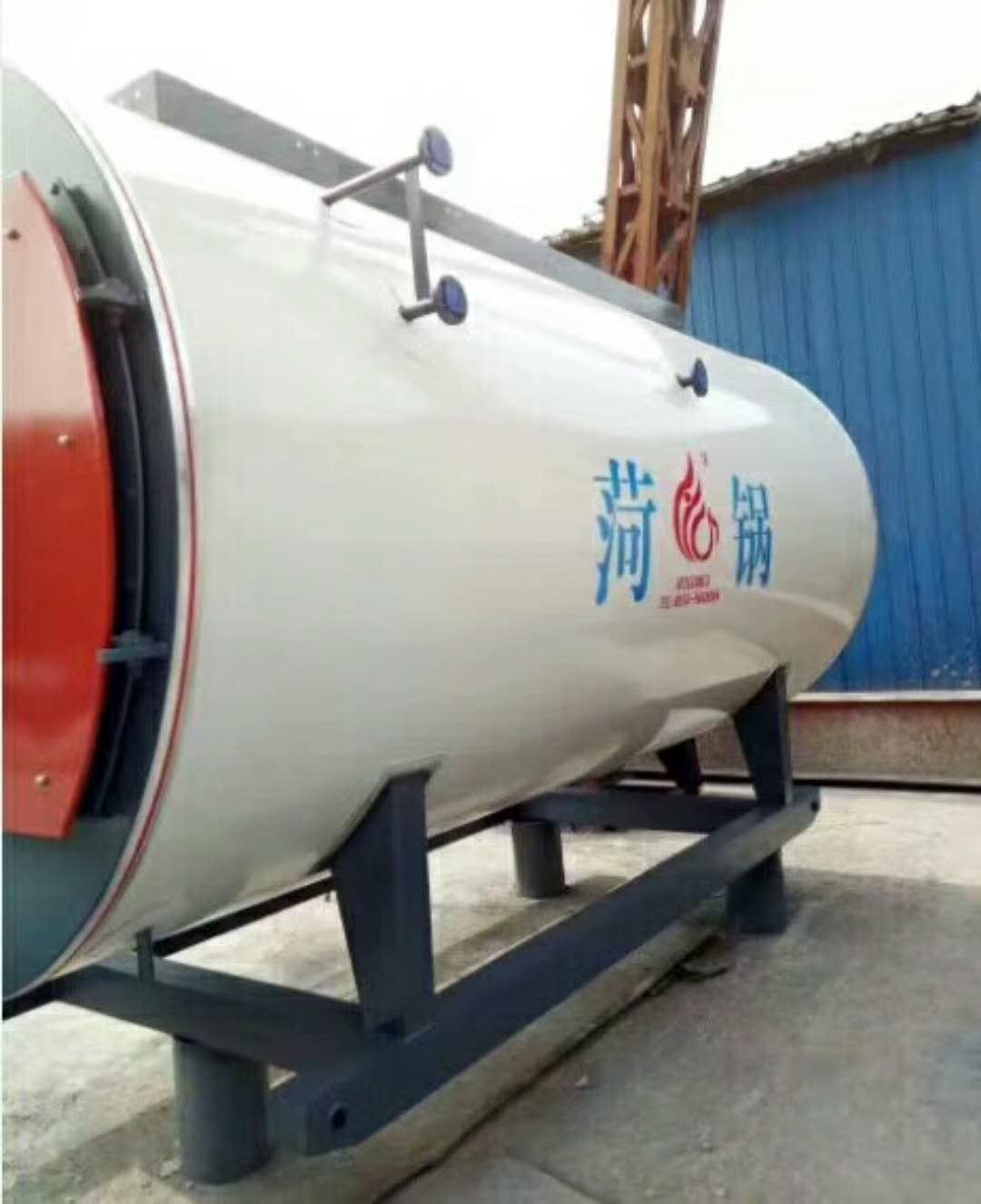
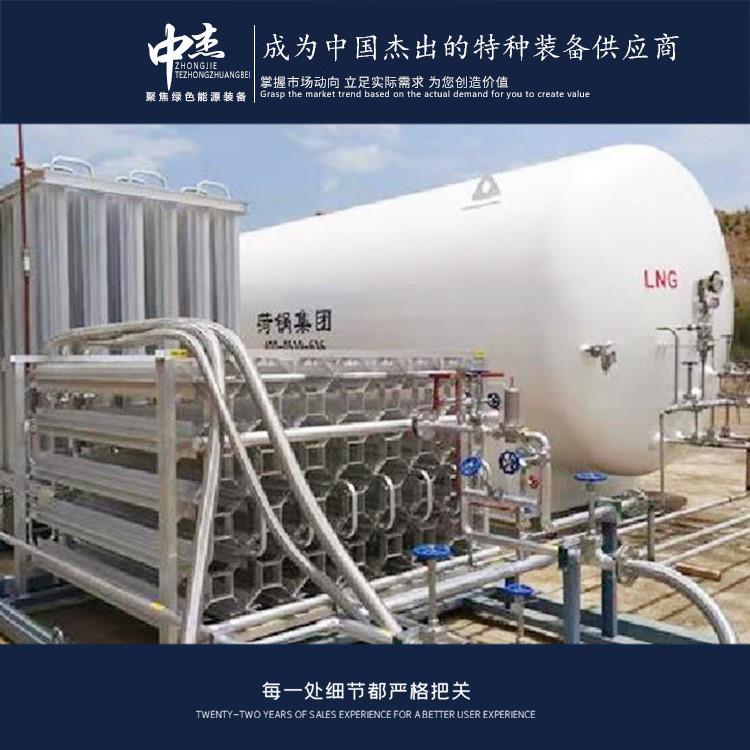



















Shandong Zhongjie Special Equipment's main products include: fuel (gas) boilers, organic heat carrier boilers, biomass boilers, waste heat recovery boilers, and other boiler products; vacuum insulation cryogenic pressure vessels such as LNG tanks, oxygen/nitrogen/argon tanks, and CO2 tanks; pressure vessel products like denitrification engineering equipment, heat storage and energy storage equipment, and complete chemical equipment; central air conditioning and ventilation equipment such as ground (water) source heat pumps, air source units, water-cooled screw units, and air-cooled modular units. Planned products include large-scale energy centers, LNG transport vehicles, LNG tank containers, and other green energy equipment.
CO2 flooding is a commonly used enhanced oil recovery technique, designed to increase the recovery rate of oil fields. It works by injecting CO2 gas into the reservoir to alter its physical and chemical properties, thereby promoting fluid flow and enhancing recovery. The working principle of CO2 flooding is as follows:
- Solubility Principle: CO2 has a high solubility in oil. When CO2 gas is injected into the reservoir, it dissolves within the oil, reducing its viscosity and surface tension, making it easier to flow.
- Expansion Displacement Principle: After CO2 gas is injected into the reservoir, it expands to form a gas phase, increasing the internal pressure of the reservoir, which in turn drives the oil towards the wellbore. Additionally, CO2's high permeability can improve the reservoir's permeability, enhancing fluid flow.
- Chemical Reaction Principle: CO2 reacts with certain components in the oil, producing soluble substances that further reduce viscosity and improve fluidity.
CO2 flooding technology offers certain advantages in oilfield development, such as:
- Environmental Friendliness: CO2 is a clean, non-toxic, and renewable gas. Using CO2 for flooding can reduce environmental pollution.
- Economic Viability: CO2 flooding can increase the recovery rate of oil fields, boost production, and thus enhance economic benefits.
- Sustainability: CO2 can be separated from air or captured and stored from industrial flue gases, enabling the recycling of CO2 and ensuring sustainability.
It is important to note that the application of CO2 flooding technology requires consideration of reservoir characteristics, geological conditions, and economic feasibility factors. Before implementing CO2 flooding, a thorough reservoir evaluation and engineering design must be conducted to ensure the effectiveness and safety of the technology.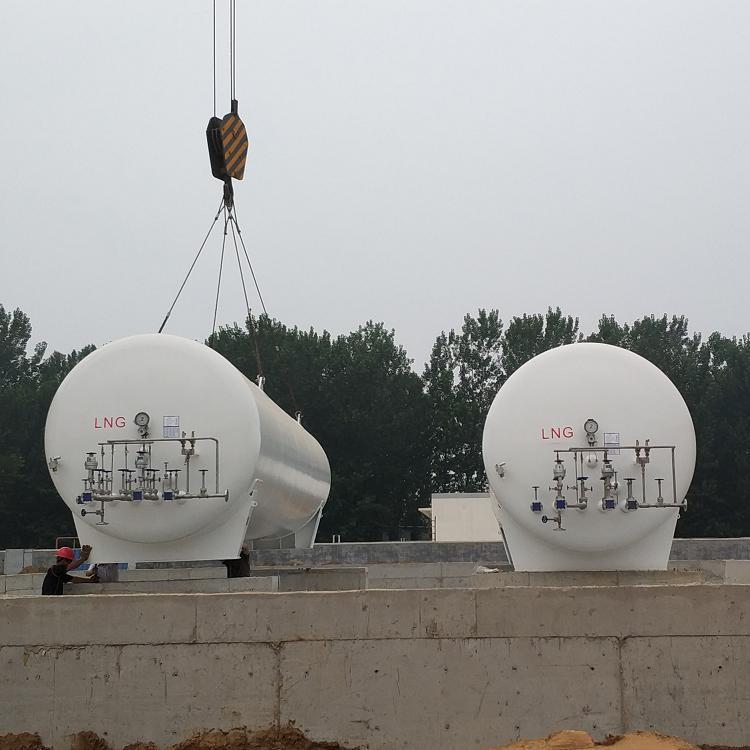
Low Temperature Carbon Dioxide Storage Tank Knowledge
1. Structure of Low Temperature Carbon Dioxide Storage Tank
The low temperature carbon dioxide storage tank typically features a double-layered cylindrical structure. The inner cylinder is made of 6MnDR alloy steel, while the outer cylinder is constructed from Q245R or Q345R pressure vessel steel plate. The piping is made of austenitic stainless steel, and the insulation space is filled with high-vacuum sintered sand or wrapped with multiple layers of insulation. The storage tank is equipped with valves for operation, which are arranged for ease of use. It also includes a pressure gauge and a level gauge for monitoring the internal pressure and liquid level of the tank.
2. Key Features of Low Temperature Carbon Dioxide Storage Tank
(1) The tank is fitted with a liquid filling connection for tanker trucks, allowing supply to vaporizers, tanker trucks, and pumps.
(2) Both the inner and outer cylinders are equipped with safety devices to ensure safe operation for the user.
(3) The insulation material of the tank has been specially treated to provide a longer vacuum life. Additionally, the tank is equipped with a vacuum gauge for measuring the insulation space vacuum when necessary.
3. Transportation of Low Temperature Carbon Dioxide Storage Tank
(1) During road transportation, the tank should be securely fastened to the vehicle, travel at moderate speeds, and avoid collisions with other objects.
(2) After arrival, the unloading personnel should work together with the equipment supervisor to develop a scientific and reasonable unloading plan.
4. Installation of Low Temperature Carbon Dioxide Storage Tank
(1) Upon arrival at the installation site, the tank can be positioned when installation conditions are met. During the installation process, avoid impacts and pay special attention to the explosion-proof equipment on the outer cylinder and the vacuum valve, which should not be touched.
(2) Perform a gas-tightness test on the inner cylinder system using nitrogen to the working pressure. After checking that valves, pipes, flanges, etc., are leak-free, the installation is complete.
(3) The installation dimensions are as specified in the supply materials. When considering liquid loading and unloading with tanker trucks, account for the vehicle's travel path.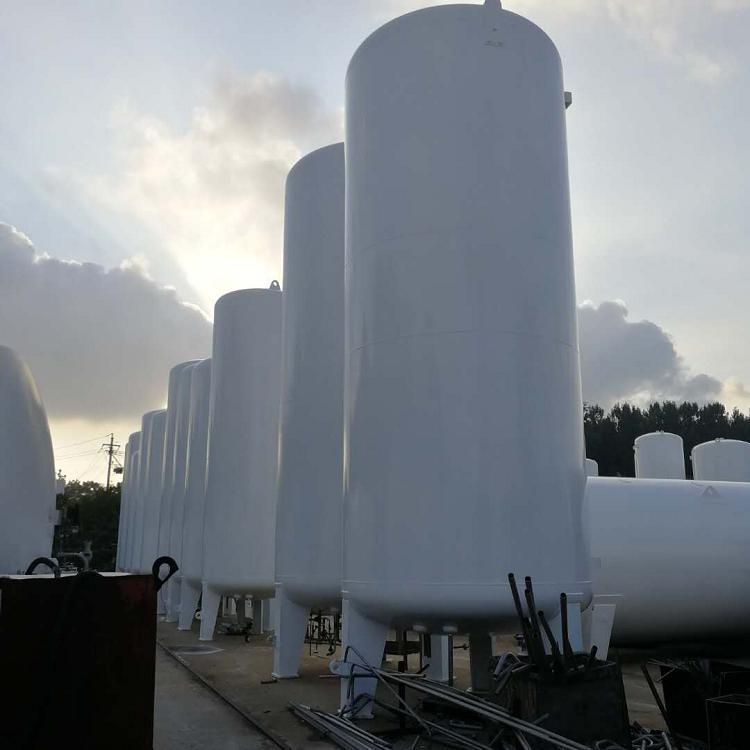
Carbon dioxide has various applications in the new energy field, including some common uses such as:
1. Carbon Capture and Storage (CCS): This technology reduces carbon dioxide emissions by capturing CO2 from industrial sources and storing it in underground formations, preventing it from entering the atmosphere. It aids in cutting greenhouse gas emissions and mitigating climate change.
2. Carbon Utilization: CO2 can be utilized to produce valuable chemicals and fuels. For instance, through carbon dioxide catalytic conversion technology, CO2 can be transformed into fuels like ethanol or chemical raw materials. This carbon utilization technique helps decrease reliance on traditional fossil fuels and promotes sustainable energy development.
3. Carbon Dioxide Batteries: These are a new battery technology that uses CO2 as the battery's material. By converting CO2 into electrical energy, carbon dioxide batteries can serve as a sustainable energy storage solution, contributing to the advancement of electric vehicles and renewable energy.
4. Carbon Dioxide Photocatalysis: This technology uses solar energy to convert CO2 into useful chemicals. With the help of photocatalysts, CO2 and water can be transformed into combustible gases or organic compounds, realizing the resource utilization of CO2.
These applications aim to reduce CO2 emissions, enhance energy efficiency, and drive the development of sustainable energy. However, these technologies are still in continuous development and research, requiring further technical breakthroughs and practical verification.
According to China's "Regulations for the Safety Supervision of Pressure Vessel Technology," carbon dioxide storage tanks are classified as Category II pressure vessels. The regulations categorize pressure vessels as follows:
- Category I pressure vessels: Pressure vessels with working pressures of 10 MPa (MegaPascals) or higher, such as steam boilers and pressure vessels.
- Category II pressure vessels: Pressure vessels with working pressures of 0.1 MPa (MegaPascals) or higher but less than 10 MPa, such as air compressors and liquefied gas storage tanks.
- Category III pressure vessels: Pressure vessels with working pressures of 0.05 MPa (MegaPascals) or higher but less than 0.1 MPa, such as storage tanks.
- Category IV pressure vessels: Pressure vessels with working pressures less than 0.05 MPa, such as gas cylinders.
Based on this classification, carbon dioxide storage tanks typically have working pressures above 0.1 MPa, thus falling under Category II pressure vessels. It is important to note that specific classification criteria may vary depending on different regions' regulations and standards. When using and managing carbon dioxide storage tanks, it is essential to comply with the corresponding regulatory and standard requirements.
Shandong Zhongjie Special Equipment, welcome customers to visit our factory for business discussions.
WeChat Official Account

Scan to follow Official Account




















