


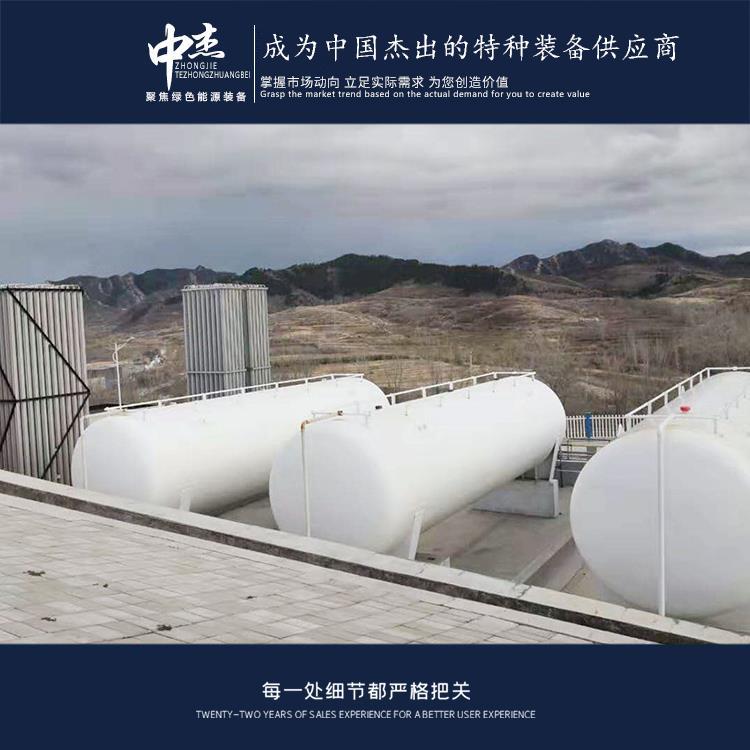

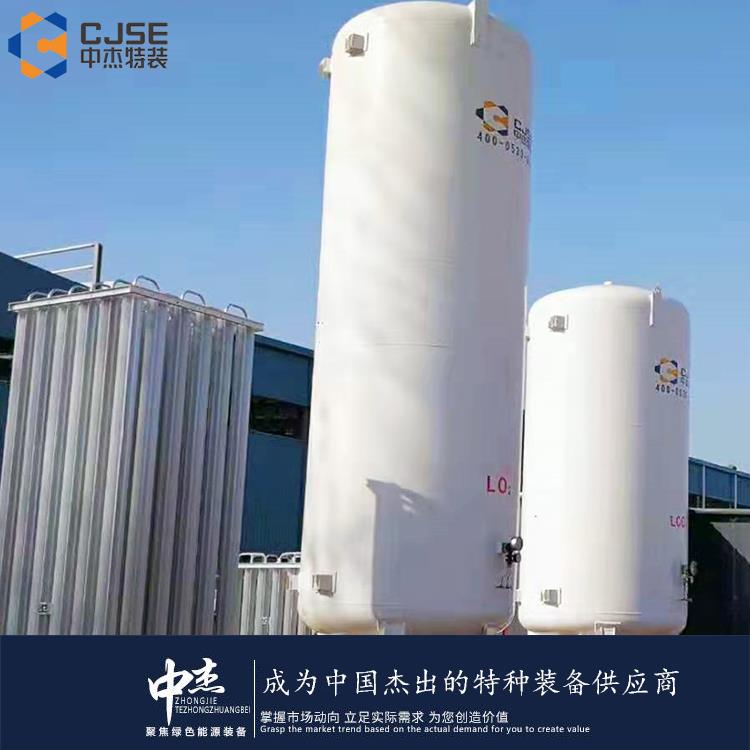
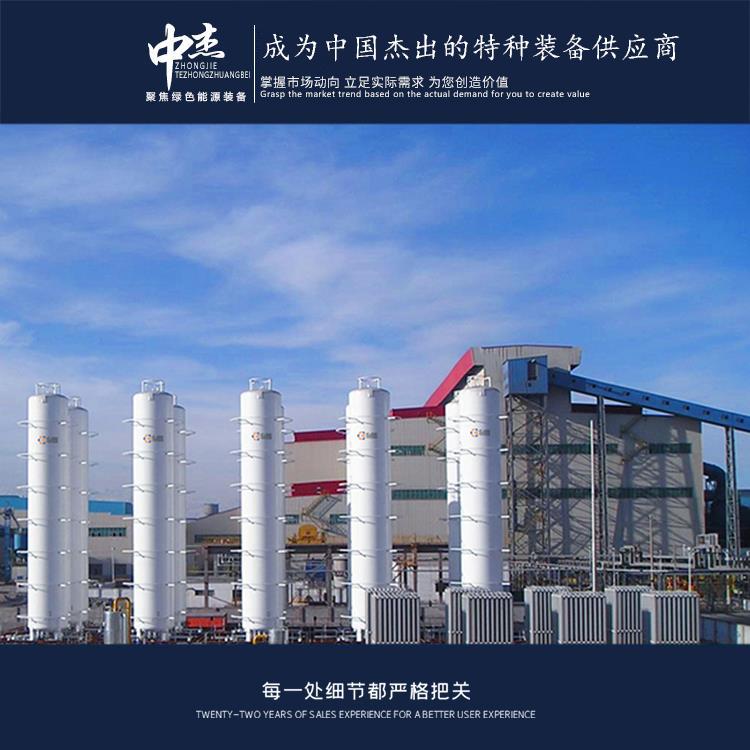



















Shandong Zhongjie Special Equipment (formerly Heze Boiler Factory Co., Ltd.) holds an A-grade boiler manufacturing license, an A2-grade pressure vessel manufacturing license, an A2-grade pressure vessel design license, a B-grade boiler installation license, and GB2/Class and GC2/Class pressure pipeline installation licenses, as well as a qualification for the installation and construction of electromechanical equipment. It is a member of the China Boiler and Water Treatment Association, the China Chemical Equipment Association, and the Council Member of the Shandong Equipment Manufacturing Association. The company has also passed certifications for the ISO9001 Quality Management System, ISO14001 Environmental Management System, OHSAS18001 Occupational Health and Safety Management System, and the American ASME/U2 certification.
The temperature difference between the interior and exterior of a low-temperature liquid storage tank depends on various factors, including the tank's design, insulation performance, the liquid's temperature, and the ambient temperature outside. Generally, the temperature inside the storage tank for low-temperature liquids will be significantly lower than that of the external environment.
Low-temperature liquid storage tanks are commonly used for storing liquefied nitrogen, oxygen, argon, and other low-temperature liquids. These liquids have very low boiling points, usually below -100 degrees Celsius. To maintain the low temperature of the liquids, the storage tank must have excellent insulation properties to minimize heat transfer and evaporation loss.
Low-temperature liquid storage tanks usually provide a smaller temperature difference. Generally, the internal temperature of the tank can be maintained near the boiling point of the liquid, typically several tens of degrees Celsius lower than the ambient temperature. The specific temperature difference depends on the tank's design and insulation properties, as well as the characteristics of the liquid.
Note that the temperature differences in low-temperature liquid storage tanks may change over time. As time passes, the performance of the insulation material may be affected by wear or aging, leading to an increase in temperature differences. Therefore, regular inspection and maintenance of the tank's insulation layer are crucial to ensure its effective and stable insulating performance.
The reason for occasional venting of liquid oxygen tanks is primarily to maintain the safe pressure range within the tank and prevent excessive pressure buildup. Here are several scenarios for occasional venting of liquid oxygen tanks:
Pressure Control: During the operation of the liquid oxygen tank, due to the evaporation of liquid oxygen and temperature changes, the pressure inside the tank will vary. To maintain a safe pressure range within the tank, regular venting is required to control the tank's pressure within the safe limits.
Prevent Overpressure Accumulation: During oxygen filling or usage, external factors or operational errors may cause the pressure inside the liquid oxygen tank to exceed the safe limit. To prevent overpressure accumulation, timely venting is required to alleviate the pressure within the tank.
Prevent Gas Accumulation: Liquid oxygen storage tanks may contain certain gas impurities such as air and water vapor. These gases can condense into liquids or solids at the low temperatures of liquid oxygen, clogging pipelines or affecting the normal operation of the tank. Regular venting can expel these impurities, maintaining the tank's cleanliness and unobstructed flow.
It is essential that the discharge operation of liquid oxygen be performed by authorized personnel, strictly adhering to the relevant operational procedures and safety measures. During the discharge process, attention must be given to prevent any leakage of liquid oxygen and contact with it, ensuring the safety and reliability of the operation.
Liquid nitrogen cylinders are widely used in various industries, mainly including the following aspects:
Industry: Liquid nitrogen tanks are used for storing and supplying liquid nitrogen in the field, which is utilized for low-temperature freezing preservation of biological samples, cells, tissues, and vaccines. They are widely used in biopharmaceutical research institutions and biobanks, among other organizations.
Research Studies: Liquid nitrogen tanks are used in scientific research and laboratories to provide low-temperature environments for cryopreservation and freezing experiments. Liquid nitrogen tanks play a significant role in experimental research across various fields, including physics, chemistry, biology, and materials science.
Metalworking Industry: Liquid nitrogen tanks are used in the metalworking and welding industries for providing low-temperature cooling, used in processes such as metal cutting, welding, and heat treatment. Liquid nitrogen tanks can provide low temperatures, enabling metals to achieve the required hardness and toughness during the processing.
Food Industry: Liquid nitrogen tanks are used in the food industry for freezing and refrigeration of food items such as frozen meats, frozen fruits, and frozen seafood. The low temperature of liquid nitrogen can quickly freeze the food, preserving its freshness and quality.
Semiconductor Industry: Liquid nitrogen tanks are used in semiconductor manufacturing and the electronics industry to provide low-temperature environments for the freezing and preparation of semiconductor materials. The low temperature of liquid nitrogen enhances the purity and performance of semiconductor materials.
The configuration of liquid nitrogen tanks typically includes the following aspects:
Vessel Structure: Liquid nitrogen tanks typically feature a double or multi-layered design, filled with insulating material in between to minimize heat transfer and evaporation of the liquid nitrogen. The tank material is usually stainless steel or aluminum alloy, offering excellent corrosion and low-temperature resistance.
Insulation Layer: The insulation layer of liquid nitrogen tanks typically uses multi-layered insulation materials, such as polyethylene foam, glass fiber, and vacuum layers, to reduce heat transfer and evaporation of liquid nitrogen.
Temperature Control System: Liquid nitrogen tanks are usually equipped with a temperature control system to regulate the tank's temperature, ensuring the maintenance of the liquid's state.
Nitrogen charging of liquid nitrogen tanks refers to the process of injecting nitrogen gas into the tank to increase the nitrogen concentration and pressure inside, in order to meet certain safety requirements and operational objectives. Here are some precautions to consider when nitrogen charging liquid nitrogen tanks:
Safety Operation: Prior to performing nitrogen purge operations on liquid nitrogen tanks, it is mandatory to ensure that operators have relevant safety knowledge and operational skills. Operators should wear appropriate personal protective equipment, such as safety goggles, gloves, and protective clothing.
Nitrogen Quality: Utilize high-purity nitrogen for inerting operations to ensure the quality and purity of the nitrogen. Low-purity nitrogen may contain impurities or oxygen, which could have adverse effects on the liquid nitrogen within the storage tank.
Nitrogen Inerting Speed Control: During the nitrogen inerting process, the speed of nitrogen inerting should be controlled to avoid being too fast or too slow. Excessive speed of nitrogen inerting may lead to overly high internal pressure in the storage tank, while a slow speed may result in prolonged inerting time.
Pressure Monitoring: During the nitrogen filling process, the internal pressure of the tank should be regularly monitored. Ensure the internal pressure of the tank remains within the safe range and adjust as necessary.
Temperature Control: During the nitrogen charging process, it is important to monitor and control the tank's temperature. The low temperature of liquid nitrogen can cause condensation and dew on the tank and pipes. Appropriate measures such as heating or insulation should be taken to prevent condensation and dew formation.
Post-nitrogen flushing treatment: After the nitrogen flushing operation is completed, promptly shut down the flushing unit and inspect and clean the storage tank. Ensure that there is no residual nitrogen or impurities inside the tank.
Note that nitrogen charging operations for liquid nitrogen tanks must strictly adhere to relevant safety standards.
Our company attaches great importance to technological innovation and R&D design. We have 1 municipal-level enterprise technology center in Heze City, equipped with non-destructive testing, physical and chemical testing, welding testing, hydrostatic testing, and other testing facilities. We have over 600 various equipment and instruments, including CNC machine tools, X-ray flaw detectors, digital ultrasonic flaw detectors, mechanical property testing machines, chemical analyzers, spectrometers, tensile testing machines, plasma welding machines, etc. The key products and technologies we have developed, such as temperature-pressure vessel welding, biomass boiler emission reduction, and waste heat utilization, have successively been selected for multiple Shandong Provincial Department of Industry and Information Technology scientific and technological innovation projects, Shandong Provincial key projects, and Heze City innovative and excellent projects. We have cumulatively obtained 27 authorized utility models, 16 authorized inventions, participated in drafting 2 standards, 2 industry standards, and registered 15 trademarks. The technical team of our company, in collaboration with Professor Yajiang Li of Shandong University, has developed deep cryogenic container processing technology, utilizing the international plasma arc + filler wire tungsten inert gas arc welding (PAW-GTAW) technology. The provincial-level scientific and technological achievement identification has confirmed that the technology level in the field of deep cryogenic container manufacturing has reached an international standard. Choose Zhongjietech, and let's create brilliance together!
WeChat Official Account

Scan to follow Official Account




















