


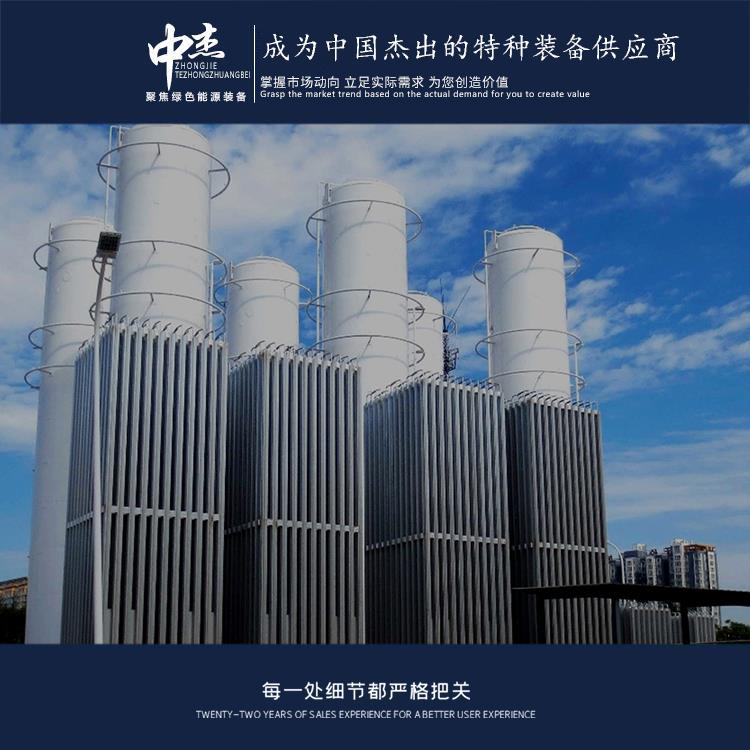

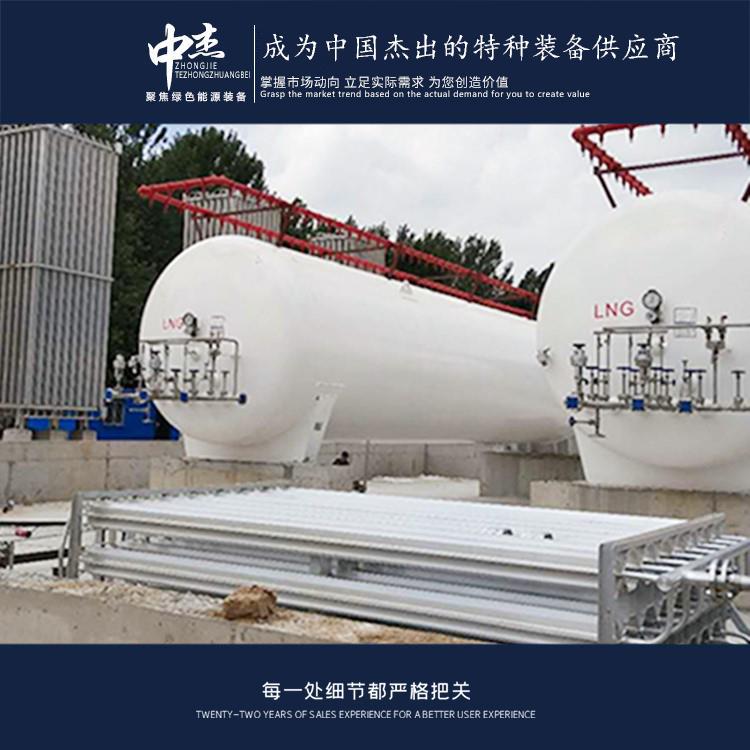
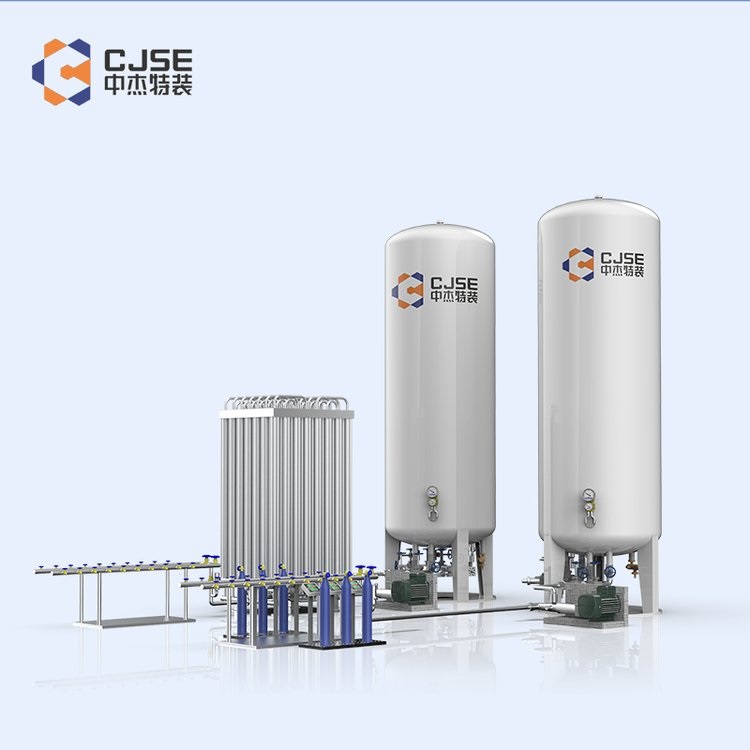



















Shandong Zhongjie Special Equipment Co., Ltd. specializes in the following products: fuel (gas) boilers, organic heat carrier boilers, biomass boilers, waste heat recovery boilers, and other boiler products; vacuum insulation cryogenic pressure vessels such as LNG tanks, oxygen/nitrogen/argon tanks, and CO2 tanks; pressure vessel products including denitrification engineering equipment, heat storage and energy storage equipment, and complete chemical equipment sets; central air conditioning and ventilation equipment such as ground (water) source heat pumps, air source units, water-cooled screw units, and air-cooled modular units. Planned products include large-scale energy centers, LNG transport vehicles, LNG tank containers, and other green energy equipment.
Carbon dioxide synthesis is a chemical reaction that utilizes carbon dioxide for synthesis. This process has several applications:
Fertilizer production: It is an essential raw material for manufacturing fertilizers, and carbon dioxide synthesis represents a sustainable production method. By reacting carbon dioxide, it can be synthesized to create nitrogen fertilizers like urea, reducing reliance on fossil fuels used in traditional production methods and lowering greenhouse gas emissions.
Energy storage: Carbon dioxide synthesis can also serve as a form of energy storage. By converting carbon dioxide and a reactant, energy can be stored in the form of chemical bonds. When energy is needed, the reverse reaction can decompose it back into carbon dioxide and a reactant, releasing the stored energy.
Fuel cells: It can act as a clean fuel for fuel cells. By synthesizing carbon dioxide with a reactant and then using it in fuel cells, electricity can be generated, with water and nitrogen as byproducts, reducing environmental pollution.
Chemical synthesis: It is a crucial raw material for many chemical synthesis processes. Carbon dioxide synthesis can provide sustainable supply for the chemical industry, used to synthesize other chemicals such as etc.
The development of carbon dioxide synthesis technology aims to reduce dependence on fossil fuels used in traditional production methods, lower greenhouse gas emissions, and promote the development of sustainable energy and the chemical industry. However, this technology is still in continuous development and research, requiring further technological breakthroughs and practical verification to achieve large-scale application.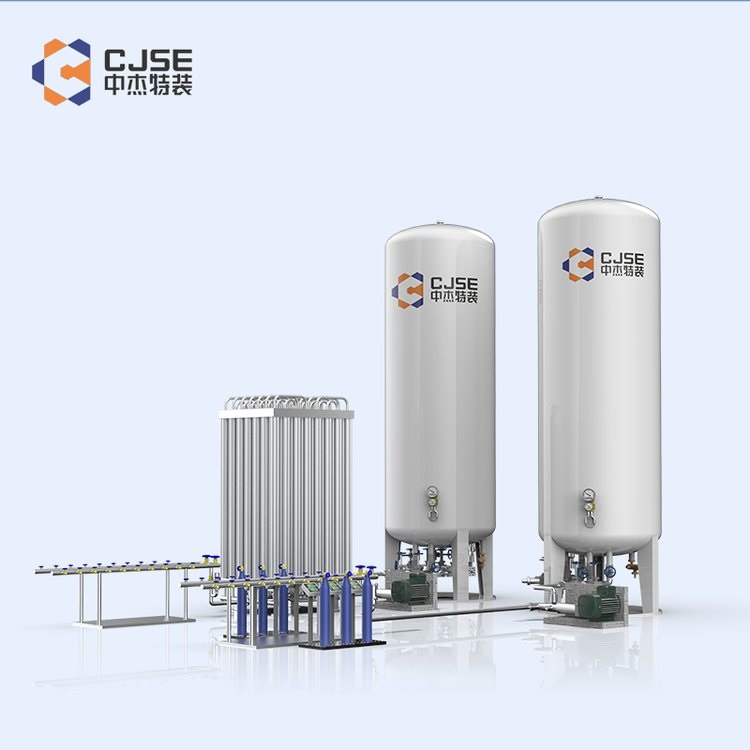
Carbon dioxide has several primary applications in the battery industry:
- Solvent in Electrolytes: Carbon dioxide can serve as one of the solvents in battery electrolytes. In certain types of batteries, carbon dioxide can be mixed with organic solvents to enhance the performance and stability of the electrolyte.
- Protective Gas in Battery Manufacturing: During the manufacturing process, carbon dioxide can be used as a protective gas. For instance, during battery assembly and encapsulation, carbon dioxide can be used instead of air to prevent oxidation and corrosion of battery materials due to oxygen and moisture in the battery.
- Battery Performance Improvement: Carbon dioxide can improve battery performance by altering the atmosphere within the battery. For example, by injecting carbon dioxide gas into the battery, pressure and temperature can be regulated, enhancing the battery's cycle life and safety performance.
- Carbon Dioxide Capture and Storage: The production of batteries generates carbon dioxide emissions. Carbon dioxide capture and storage technologies can be employed to reduce these emissions. By capturing and storing carbon dioxide, atmospheric emissions can be minimized, reducing environmental impact.
- It is important to note that the application of carbon dioxide in the battery industry is continually evolving and being researched. With technological advancements and innovation, there may be more breakthroughs and developments in the application of carbon dioxide in the battery field.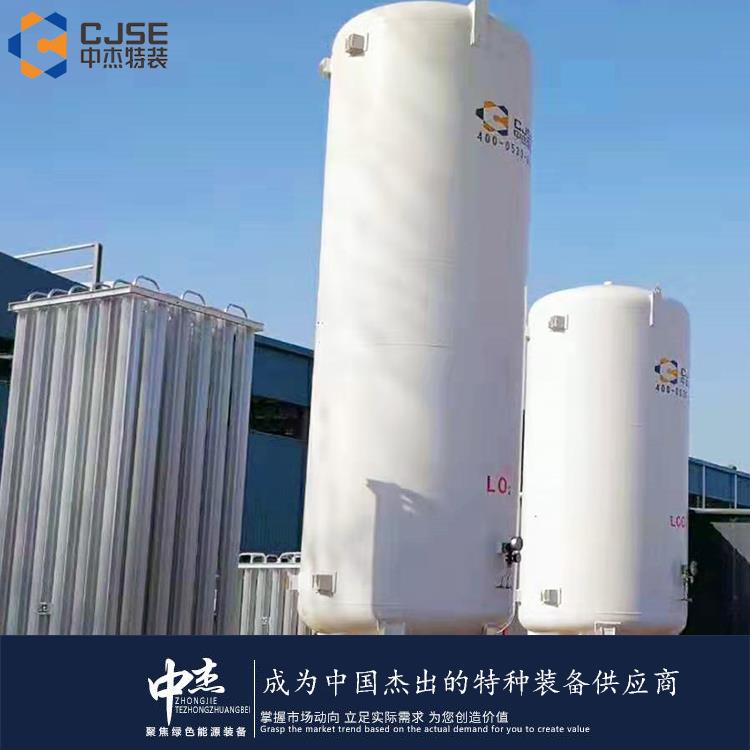
A Carbon Dioxide Storage Tank Pressure Maintenance System is a system designed to maintain the internal pressure of a carbon dioxide storage tank. Since carbon dioxide is a gas at room temperature, it needs to be compressed into a liquid state for storage to increase density. The primary function of the pressure maintenance system is to monitor and adjust the pressure inside the tank, ensuring that the carbon dioxide remains within a safe and stable pressure range. The system typically consists of the following components:
- Pressure Sensors: Installed inside the tank, these sensors monitor the pressure in real-time and transmit pressure signals to the control system.
- Control System: Receives signals from the pressure sensors and controls the tank pressure within a set range. When the tank pressure exceeds or falls below the set range, the control system triggers appropriate control measures.
- Pressure Regulating Valve: Adjusts the pressure inside the tank according to the control system's instructions. When pressure is too high, the valve opens to release some gas to lower the pressure. When pressure is too low, the valve closes to prevent further gas release, increasing the pressure.
- Pressure Reserve Device: Usually a pressure vessel used to store additional gas for providing extra pressure support when needed. When the tank pressure drops, the reserve device releases gas to maintain the tank pressure.
Through the coordinated work of these components, the Carbon Dioxide Storage Tank Pressure Maintenance System ensures that the pressure inside the tank remains within a safe and stable range, which is crucial for the normal operation and safety of the tank.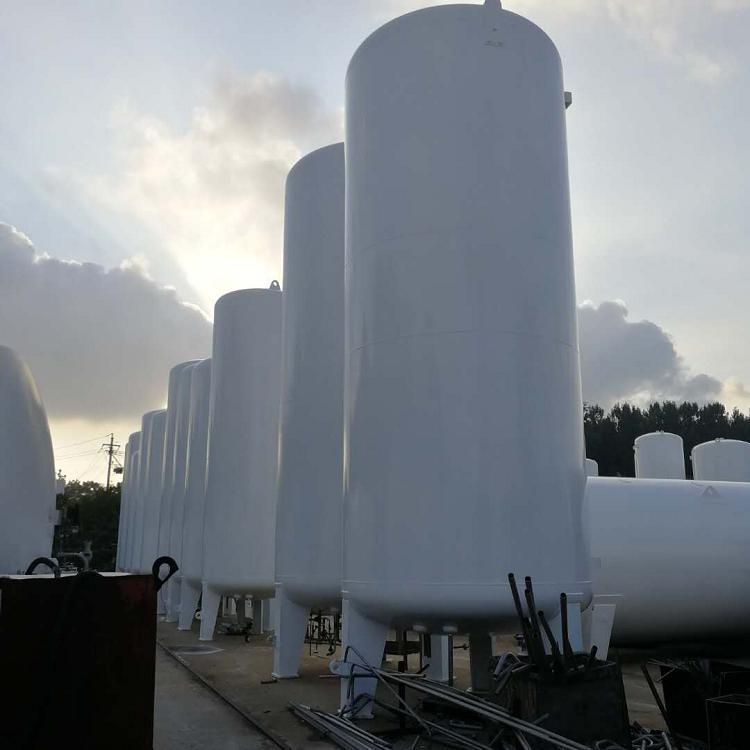
The automated maintenance system for carbon dioxide tanks typically includes the following main components:
- Pressure Maintenance System: Monitors and regulates the internal pressure of the tank to ensure that the carbon dioxide within remains within a safe and stable pressure range. This system includes pressure sensors, control systems, pressure regulators, and pressure reserve devices.
- Temperature Control System: Monitors and regulates the internal temperature of the tank to ensure that the carbon dioxide within stays within an appropriate temperature range. This system includes temperature sensors, control systems, and temperature regulation devices.
- Level Monitoring System: Measures and monitors the liquid level within the tank to ensure the carbon dioxide level remains within a safe range. This system can utilize float level gauges, pressure level gauges, and ultrasonic level gauges.
- Leak Detection System: Monitors leaks in the tank and pipeline systems, enabling timely detection and alarms. This system can employ gas sensors, liquid sensors, and leak detectors.
- Fire Detection and Extinguishing System: Monitors fire conditions in the tank area and takes appropriate extinguishing measures. This system includes fire detectors, alarms, and extinguishing equipment.
- Remote Monitoring and Control System: Remotely monitors and controls the operational status and parameters of the tank, allowing for remote operation and management. This system connects via network to provide real-time data and remote control capabilities.
These are the main components of a typical automated maintenance system for carbon dioxide tanks. The specific system configuration and functions can be customized according to the tank's design requirements and application scenarios. These automated maintenance systems enhance the tank's safety, stability, and reliability, reducing the need for manual intervention and operational risks.
Shandong Zhongjie Special Equipment, welcome customers to our factory for cooperation negotiations.
WeChat Official Account

Scan to follow Official Account




















