


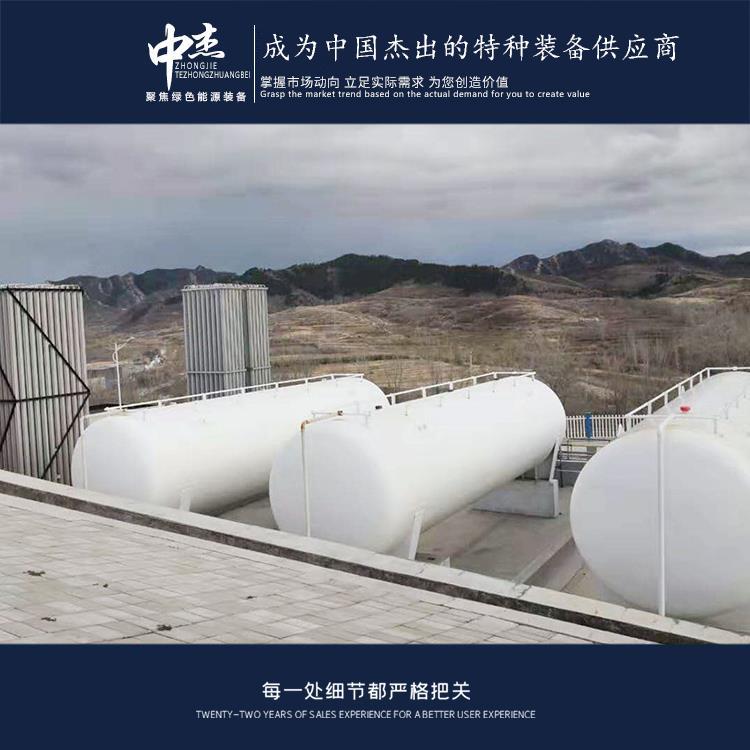

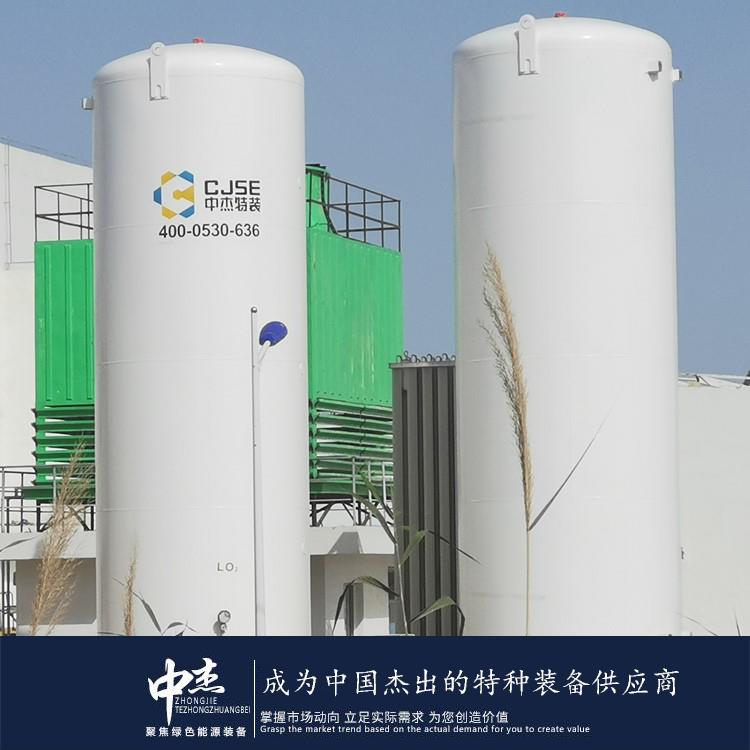
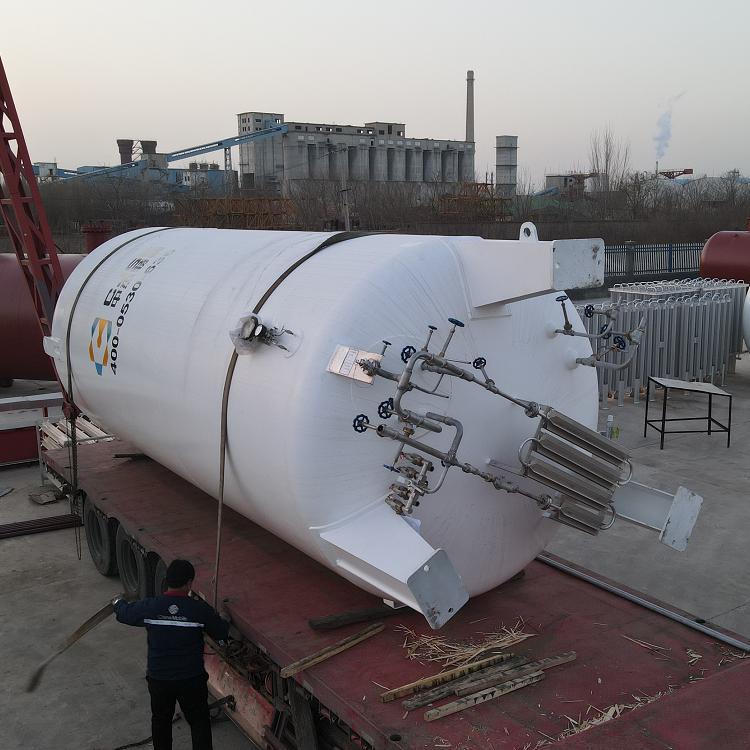



















Shandong Zhongjie Special Equipment's main products include: fuel (gas) boilers, organic heat carrier boilers, biomass boilers, waste heat recovery boilers, and other boiler products; vacuum insulation cryogenic pressure vessels such as LNG tanks, oxygen/nitrogen/argon tanks, and CO2 tanks; pressure vessel products like denitrification engineering equipment, heat storage and energy storage equipment, and complete chemical equipment sets; central air conditioning and HVAC equipment such as ground (water) source heat pumps, air source units, water-cooled screw units, and air-cooled modular units. Planned products include large-scale energy centers, LNG transport vehicles, LNG tank containers, and other green energy equipment.
Operation procedures for liquid oxygen storage tanks should be established based on specific tank design and usage requirements. The following are some common contents of general operation procedures for liquid oxygen storage tanks:
- Operator Training: Ensure operators have received relevant training for liquid oxygen storage tanks, understanding the tank's structure, performance, operation procedures, and safety precautions.
- Safety Inspections: Conduct necessary safety checks before operating liquid oxygen storage tanks, including checking the integrity of the tank, the sealing of valves and pipes, and the condition of the insulation layer.
- Liquid Oxygen Supply: Ensure the liquid oxygen supply system is functioning properly, including checking the status of the liquid oxygen supply pipes, valves, and pressure gauges to ensure adequate supply.
- Tank Pressure Control: Monitor the pressure of the liquid oxygen storage tank to ensure it remains within a safe range. If necessary, control the tank pressure by adjusting pressure valves or pressure relief devices.
- Leak Control: Regularly check the sealing of the tank and pipes to ensure there are no leaks. In case of a leak, take immediate measures to control the leak and notify relevant personnel.
- Fire Prevention Measures: Prohibit open flames and prevent sparks and high-temperature objects from contacting the tank. Establish fire prevention facilities and fire-fighting equipment, and check and maintain them regularly.
- Safety Distance: Maintain a certain safety distance around the liquid oxygen storage tank to prevent the spread of fires, explosions, and leaks.
- Maintenance and Repair: Regularly perform maintenance and repairs on the tank, including cleaning the tank, inspecting the insulation layer, valves, and pipes to ensure normal operation.
- Waste Disposal: Properly dispose of waste generated by liquid oxygen storage tanks, including liquid oxygen residues, waste gases, and waste liquids, in accordance with relevant environmental protection regulations and standards.
Note that operation procedures for liquid oxygen storage tanks should be established based on specific tank design and usage requirements, and should comply with applicable regulations, standards, and safety guidelines. When operating liquid oxygen storage tanks, cooperate with local regulatory authorities and personnel to ensure the safety and reliability of the tanks.
During the degreasing process of high vacuum pipelines in low-temperature liquid storage tanks, the following steps can be taken:
Preparation: Ensure the cleanliness and readiness of the defatting equipment and tools. Check the connections and sealing of the pipeline system to ensure there are no leaks.
Pipe Cleaning: Clean pipes using appropriate cleaning agents and tools to remove surface dirt and grease. Methods may include mechanical brushing, high-pressure water jetting, or chemical cleaning.
De-greasing Process: Select an appropriate de-greaser and inject it into the pipeline system. The de-greaser can be an organic solvent or an alkaline solution, the choice depending on the pipeline material and type of dirt. Ensure the de-greaser thoroughly covers the inner pipeline wall and maintains a certain contact time.
Pipe flushing: Drain the degreaser from the pipeline system and flush with clean water to remove any residual degreaser and dirt. During the flushing process, high-pressure water or gas can be used to scrub the interior of the pipeline to ensure cleanliness.
Dry Pipe: Utilize drying equipment or ventilation systems to evaporate or exhaust moisture from within the pipe, ensuring the interior surface is dry. Drying can be achieved with hot air or nitrogen.
Inspection and Testing: After degreasing, inspect and test the pipeline to ensure cleanliness and sealing. Visual inspection, pressure testing, or other relevant tests can be conducted.
Note that during the degreasing process of high vacuum pipelines for low-temperature liquid storage tanks, it is essential to adhere to relevant safety operation procedures and guidelines. Ensure that operators possess the necessary safety awareness and operating skills to prevent accidental incidents.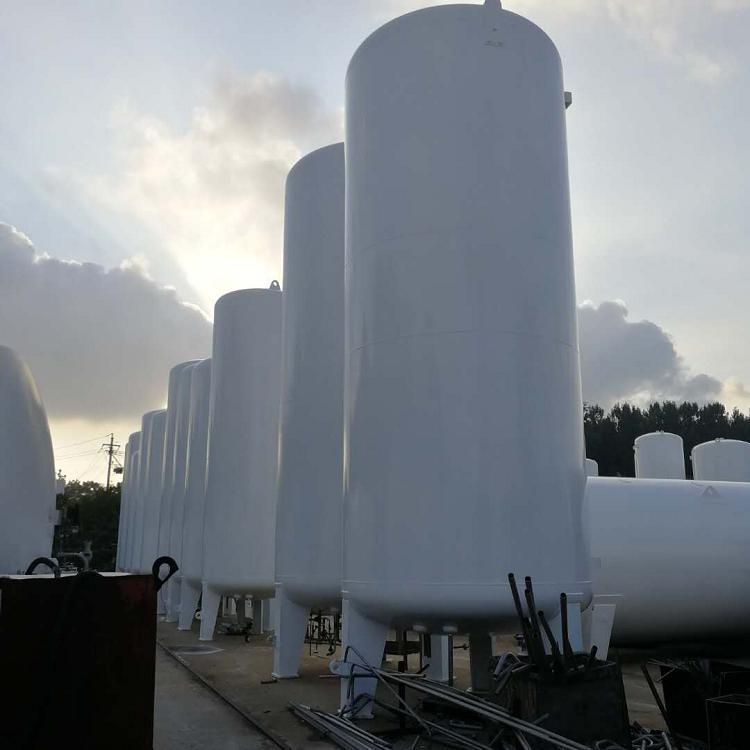
Liquid Argon Storage Tank is a device used for storing and transporting liquid argon, with the following scope of application and characteristics:
Application Scope:
Industrial Applications: Liquid argon storage tanks are widely used in various industrial sectors, such as metal processing, electronic manufacturing, semiconductor production, and more.
Applications: Liquid argon tanks are used in the field for cryogenic preservation of biological samples, cells, tissues, and vaccines.
Laboratory Applications: Liquid argon storage tanks are used in scientific research laboratories for low-temperature experiments, cryogenic preservation, and sample processing, etc.
Features:
Low-temperature Performance: Since liquid argon has a boiling point of -185.7°C, the liquid argon storage tank must have excellent low-temperature insulation properties to maintain the低温 state of the liquid argon.
High-sealed integrity: Liquid argon storage tanks must have excellent sealing performance to prevent evaporation loss of liquid argon and the entry of external air.
Safety: Liquid argon is a flammable and explosive substance, hence the liquid argon storage tank must be equipped with safety valves, leak detectors, and other safety devices to ensure the safe operation of the tank.
High Capacity: The capacity of liquid argon storage tanks ranges from a few liters to several thousand liters, allowing for selection of an appropriate capacity based on demand.
Cautionary Notes:
Protective Gear: When operating liquid argon tanks, it is mandatory to wear appropriate protective gear, including gloves, protective suits, and non-slip shoes, to safeguard against the low temperatures of liquid argon and other hazards.
Ventilation Requirements: At
The oxygen-filling process for liquid oxygen tanks must adhere to specific operational procedures and safety measures. Here are the steps for filling liquid oxygen tanks:
Preparation: Ensure the storage tank and oxygen-filling equipment are in good working order, check the tank's seal integrity and the proper functioning of the safety valve.
Connect equipment: Link the aeration equipment to the storage tank, ensuring a secure and sealed connection.
Prepare liquid oxygen: Transfer liquid oxygen from the storage container to the storage tank of the oxygen-filling equipment. During the transfer, be cautious to avoid any leakage or contact with the liquid oxygen.
Oxygen Filling Operation: Open the valve of the oxygen filling equipment and fill liquid oxygen from the oxygen storage tank into the storage tank. During the filling process, control the filling speed and pressure to avoid excessive pressure and temperature rise in the storage tank.
Monitoring and Control: During the aeration process, it is necessary to monitor the tank's pressure and temperature to ensure they remain within safe limits. In the event of any anomalies, aeration should be promptly stopped and appropriate measures taken.
Oxygen Filling Completed: Close the valve of the oxygen filling equipment and cease the oxygen filling operation once the tank reaches the required oxygen level or pressure.
Safety Processing: After oxygenation is complete, safety processing is required, including closing relevant valves and draining the remaining liquid oxygen from the oxygenation equipment.
Note that liquid oxygen is highly oxidizing and flammable; the oxygen filling process must strictly adhere to relevant safety operational procedures and standards. Operators should receive training and strictly follow the operational procedures and safety measures to ensure the safety and reliability of the filling process.
Shandong Zhongjie Special Equipment, welcome customers for factory talks and cooperation.
WeChat Official Account

Scan to follow Official Account




















