






















Shandong Zhongjie Special Equipment Co., Ltd. (formerly Heze Boiler Factory Co., Ltd.) holds an A-grade boiler manufacturing license, an A2-grade pressure vessel manufacturing license, an A2-grade pressure vessel design license, a B-grade boiler installation license, and GB2/Class and GC2/Class pressure pipeline installation licenses, as well as a mechanical and electrical equipment installation contracting qualification. It is a member of the China Boilers and Water Treatment Association, the China Chemical Equipment Association, and a director unit of the Shandong Equipment Manufacturing Association. The company has also passed certifications for the ISO9001 Quality Management System, ISO14001 Environmental Management System, OHSAS18001 Occupational Health and Safety Management System, and the American ASME/U2 certification.
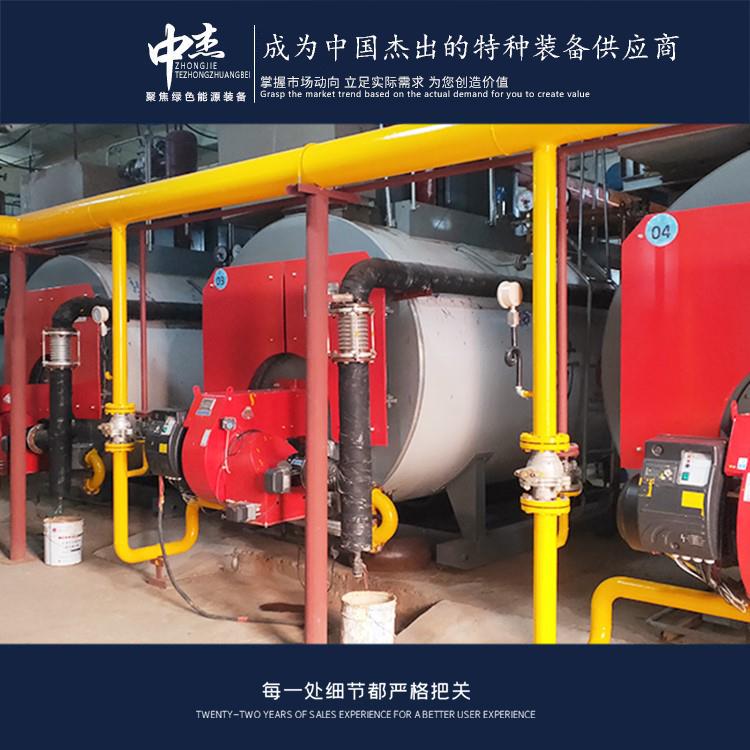
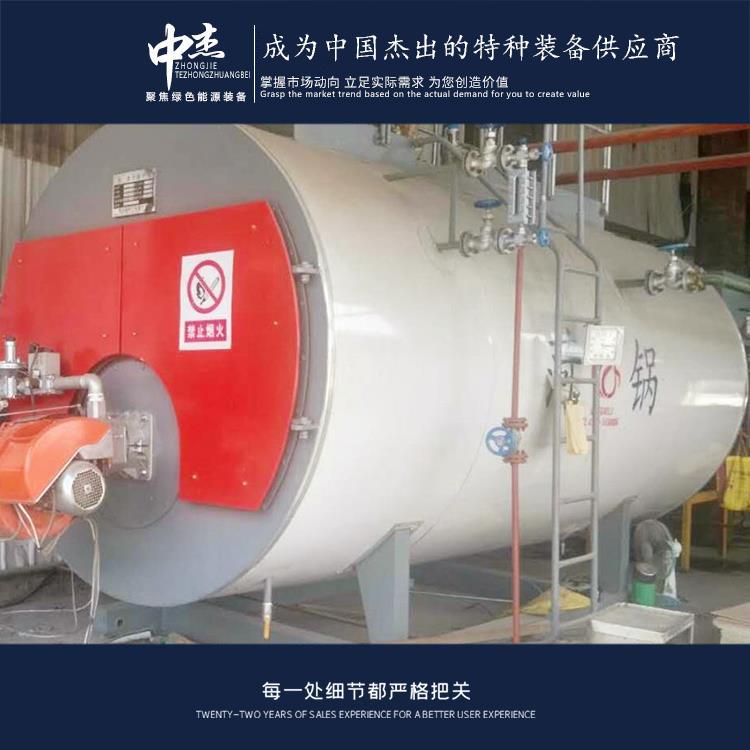
A condensing steam boiler is an energy-saving boiler equipment with the following working principles and features:
Working Principle:
- Steam Generation: The condensing steam boiler produces high-temperature flue gas by burning gas, which then exchanges heat with the water pipes inside the boiler, heating the water into steam.
- Steam Condensation: After steam is generated, it enters the condenser, where it exchanges heat with the condensing medium (usually cold water or recycled water) to release heat from the steam, causing it to condense into water.
- Flue Gas Reuse: The flue gas after condensation still contains a certain amount of heat, which can be recovered and utilized by a flue gas reuse unit to improve the boiler's thermal efficiency.
Features:
- Energy Saving: The condensing steam boiler utilizes the principle of steam condensation to fully utilize the heat in the steam, enhancing the efficiency of heat utilization and saving energy consumption.
- Low Emission: Due to the recovery of most heat during the flue gas condensation process, the flue gas temperature is lower, resulting in a reduced amount of pollutants emitted, minimizing environmental impact.
- Compact Structure: The condensing steam boiler typically features a compact design, occupying less space, making it suitable for places with limited space.
- Fast Start-Up: The condensing steam boiler has the characteristics of quick start-up and shutdown, allowing for flexible adjustment and operation according to actual needs.
- Wide Application Range: The condensing steam boiler is suitable for heating and steam requirements in industrial production processes, such as power plants, chemical factories, textile factories, etc.
It should be noted that proper maintenance and care are required for the condensing steam boiler during use to ensure its normal operation and performance, including regular cleaning of the condenser and flue gas reuse unit.
Key benefits of installing expansion grooves in thermal oil heaters include:
- Alleviating thermal expansion and contraction: During operation, temperature changes in thermal oil heaters can cause thermal expansion and contraction of the oil. The expansion grooves provide space for the oil to expand, mitigating the impact on equipment and pipelines from thermal expansion and contraction, and preventing stress concentration and equipment deformation caused by it.
- Protecting equipment and pipelines: The expansion grooves can absorb the expansion and contraction of the thermal oil, reducing impact and vibration on equipment and pipelines. This helps extend the lifespan of equipment and pipelines, reducing the frequency of maintenance and replacement.
- Reducing leakage risk: The expansion grooves provide an enclosed space to reduce the risk of thermal oil leakage. When the oil expands, excess oil can be accommodated through the expansion grooves, preventing leakage and environmental pollution.
- Facilitating maintenance and inspection: The presence of expansion grooves makes maintenance and inspection of the thermal oil heater system more convenient. When equipment or pipelines need repair or replacement, the flow and shutdown of thermal oil can be controlled through the expansion grooves, reducing downtime and maintenance difficulty.
In summary, the expansion grooves in thermal oil heater systems play a role in alleviating thermal expansion and contraction, protecting equipment and pipelines, reducing leakage risk, and facilitating maintenance and inspection. They are an important design element that helps improve the safety and reliability of the thermal oil heater system.
Regular inspections of industrial boilers are crucial for ensuring safe operation, improving efficiency, and extending their lifespan. Here are the importance of regular inspections for industrial boilers:
Safety Assurance: Industrial boilers are high-temperature, high-pressure equipment. Without regular inspections, safety hazards may exist. Regular inspections can detect and eliminate potential issues within the boiler, such as combustion system failures, water level control malfunctions, and safety valve malfunctions, ensuring the safe operation of the boiler.
Efficiency Enhancement: Regular inspections can identify dirt and sediments within the boiler, maintaining the cleanliness of heat exchangers and thermal conductivity efficiency, thus improving the boiler's thermal and energy efficiency. This helps reduce energy consumption and operating costs.
Lifespan Extension: Regular inspections can detect and address corrosion, wear, and fatigue issues within the boiler, preventing further damage and malfunctions, thereby extending the boiler's lifespan. Regular maintenance and care can also prevent and minimize damage and malfunctions.
Legal and Regulatory Requirements: Many regions have established laws, regulations, and standards for boiler safety management, requiring regular inspections and maintenance of industrial boilers. Regular inspections are a crucial aspect of complying with legal and regulatory requirements.
Insurance Requirements: Some insurance companies have specified insurance requirements for industrial boilers, mandating regular inspections and maintenance. Regular inspections can meet insurance company requirements and protect the enterprise's insurance rights.
In summary, regular inspections of industrial boilers are important for ensuring safety, improving efficiency, extending lifespan, complying with legal and regulatory requirements, and meeting insurance demands. Regular inspections should be conducted by qualified institutions or individuals, adhering to relevant laws, regulations, and standards. Timely inspections and maintenance can ensure the safe and efficient operation of industrial boilers.
Properly utilizing fuel-gas boilers can enhance energy efficiency and reduce consumption. Here are some suggestions:
1. Select the right boiler model: Choose a suitable fuel-gas boiler model based on actual needs, considering factors like heat load, fuel type, and combustion efficiency.
2. Regular inspection and maintenance: Conduct regular checks and maintenance to ensure the boiler operates smoothly. This includes cleaning burners, inspecting the combustion system, adjusting parameters, and promptly repairing or replacing damaged parts.
3. Control combustion: Manage the combustion process to ensure it's thorough, stable, and efficient. Adjust burner parameters such as air flow and fuel supply to boost efficiency and minimize waste.
4. Heat recovery: Utilize heat recovery systems to capture and reuse excess heat from flue gases, heating water or other processes requiring heat, to improve energy efficiency.
5. Control operating parameters: Adjust boiler operating parameters like water level, pressure, and temperature based on actual needs and operational conditions to avoid extremes that could compromise efficiency and safety.
6. Regularly clean heat exchangers: Clean the heat exchangers of fuel-gas boilers regularly to remove dirt and deposits, maintaining their heat transfer efficiency and reducing energy loss.
7. Energy management: Establish an energy management system to monitor and analyze consumption, create reasonable usage plans, and implement energy-saving measures. Scientific management will enhance energy efficiency and reduce consumption.
These are common methods and suggestions, but specific application should be determined based on actual conditions and boiler characteristics. Also, adhere to relevant laws, regulations, and safety protocols to ensure safe boiler operation.
Our company highly values technological innovation and R&D, boasting one municipal-level enterprise technology center in Heze City. We have established testing facilities for non-destructive testing, physical and chemical testing, welding testing, hydrostatic testing, etc. We are equipped with over 600 various instruments and equipment, including CNC machine tools, X-ray flaw detectors, digital ultrasonic flaw detectors, mechanical property testing machines, chemical analyzers, spectrometers, tensile testing machines, plasma welding machines, and more. Our developed key products and technologies, such as welding for temperature and pressure vessels, biomass boiler emissions reduction, and waste heat utilization, have successively been shortlisted for multiple Shandong Provincial Department of Industry and Information Technology innovation projects, key projects in Shandong Province, and Heze City innovation and excellence projects. We have cumulatively obtained 27 authorized utility models, 16 authorized inventions, participated in drafting 2 standards, 2 industry standards, and registered 15 trademarks. Our technical team, in collaboration with Professor Yajiang Li from Shandong University, has developed deep cryogenic vessel processing technology using the internationally recognized plasma arc + filler wire tungsten inert gas (PAW-GTAW) welding technique. The provincial-level scientific and technological achievement identification has confirmed that our technology level in deep cryogenic vessel manufacturing has reached an international standard.
Choose JETSTAR for your outfitting needs, let's create brilliance together!
WeChat Official Account

Scan to follow Official Account




















