


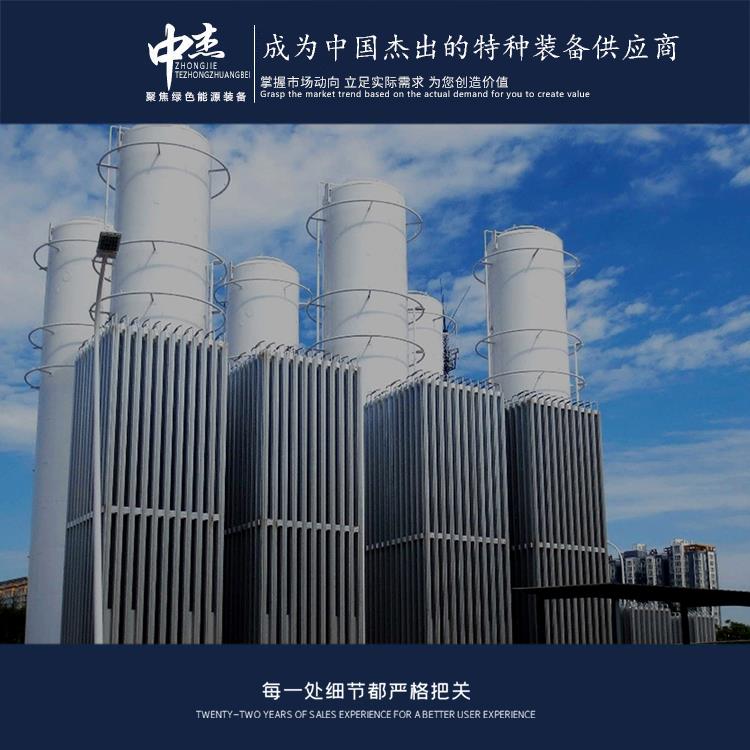

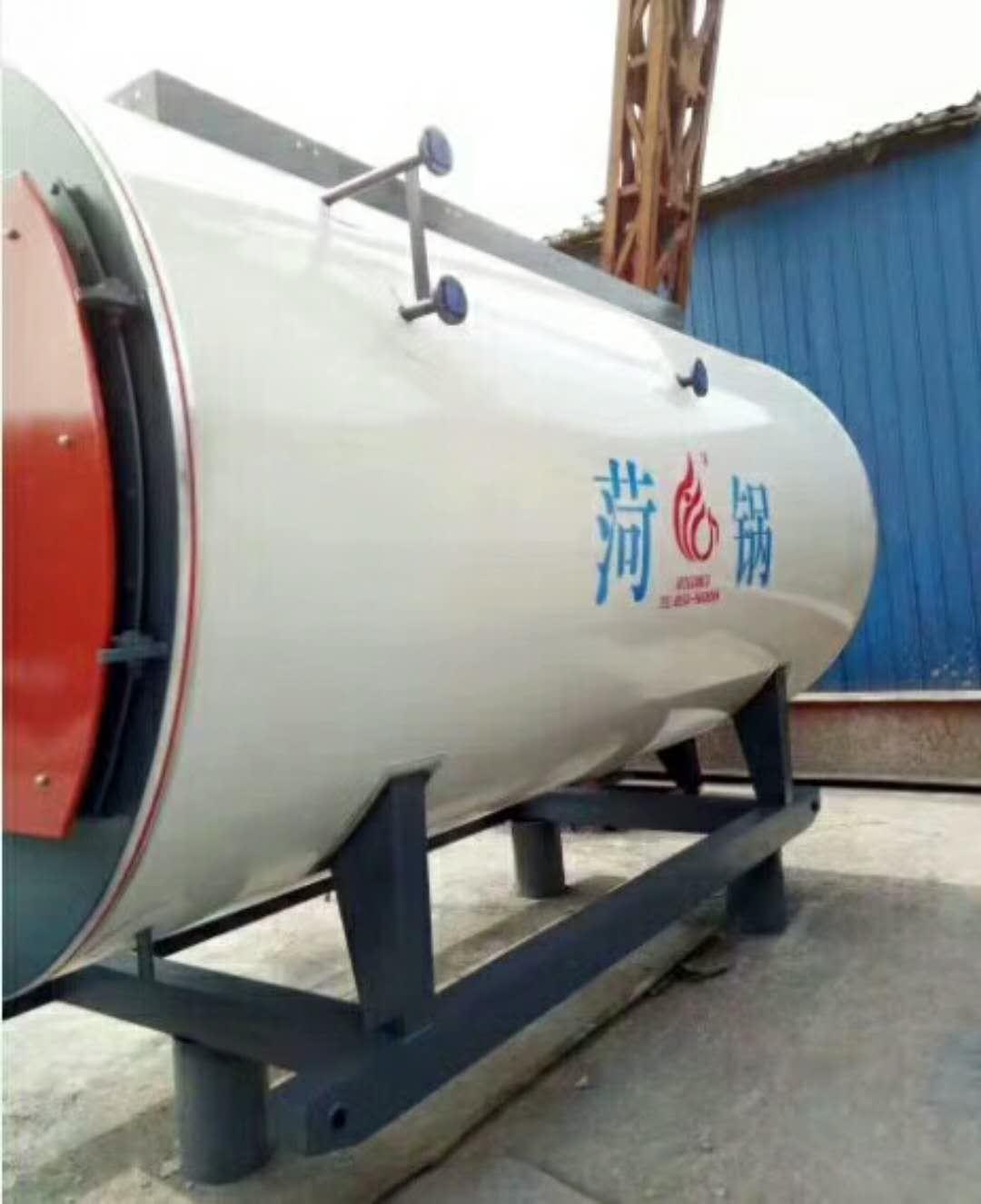



















Shandong Zhongjie Special Equipment (formerly Heze Boiler Factory Co., Ltd.) holds an A-grade boiler manufacturing license, A2-grade pressure vessel manufacturing license, A2-grade pressure vessel design license, B-grade boiler installation license, GB2 and GC2 class pressure pipeline installation licenses, and mechanical and electrical equipment installation contracting qualifications. It is a member of the China Boiler and Water Treatment Association, the China Chemical Equipment Association, and the Council Member of the Shandong Equipment Manufacturing Association. The company has also passed certifications for the ISO9001 Quality Management System, ISO14001 Environmental Management System, OHSAS18001 Occupational Health and Safety Management System, and the U.S. ASME/U2 certification.
Liquid oxygen storage tanks may deform during use. The following are common deformation defects in liquid oxygen storage tanks:
Elastic Deformation: Liquid oxygen tanks may undergo elastic deformation when subjected to external pressure or temperature changes. This deformation is typically reversible, meaning the tank will return to its original shape once the external pressure is removed or the temperature returns to normal.
Plastic Deformation: When a liquid oxygen tank is subjected to significant external force or pressure, it may experience plastic deformation. This deformation is irreversible, and the tank cannot return to its original shape. Plastic deformation can cause changes in the tank's shape, such as dents or warping.
Hot Deformation: Liquid oxygen storage tanks may experience hot deformation when subjected to high temperatures or temperature changes. Hot deformation can lead to changes in the tank's shape, expansion, or contraction.
Cold Deformation: Liquid oxygen tanks may experience cold deformation when subjected to low temperatures or temperature changes. Cold deformation can cause the tank to change shape, contract, or crack.
These deformation defects may affect the structural integrity and safety of the liquid oxygen storage tank. Therefore, regular inspections and assessments of the tank's deformation are crucial to ensure normal operation and safe use. If deformation defects are found in the tank, timely repair or replacement measures should be taken to avoid further damage and safety risks.
Standard parameters for liquid oxygen storage tanks typically include the following:
Capacity: The capacity of liquid oxygen tanks is typically expressed in liters or cubic meters, with common ranges varying from a few liters to several thousand liters.
Working Pressure: The working pressure of liquid oxygen tanks is typically expressed in megapascals (MPa) or bars, with common working pressure ranges varying from 0.2 MPa to 2.5 MPa.
Design Temperature: The design temperature of liquid oxygen storage tanks is typically expressed in degrees Celsius, with a common range varying from -196°C to -150°C.
Material: The primary material for liquid oxygen storage tanks is typically stainless steel, which boasts excellent corrosion resistance and low-temperature properties.
Insulation Layer: Liquid oxygen tanks are typically equipped with an insulation layer to reduce the evaporation loss of liquid oxygen. The material for the insulation layer usually consists of multi-layer composite materials or foamed glass.
Safety Valve: Liquid oxygen storage tanks must be equipped with a safety valve to control internal pressure within the tank and prevent bursting due to excessive pressure.
Leak Detectors: Liquid oxygen tanks are typically equipped with leak detectors to promptly detect and alert of any liquid oxygen leaks.
Appearance Design: The appearance design of liquid oxygen storage tanks generally complies with relevant standards and regulations, including color, labeling, and safety warning signs.
Note that the specific parameters of liquid oxygen tanks may vary depending on different manufacturers and application requirements; the above are merely general common standard parameters. In actual use, choose the appropriate liquid oxygen tank based on the specific circumstances.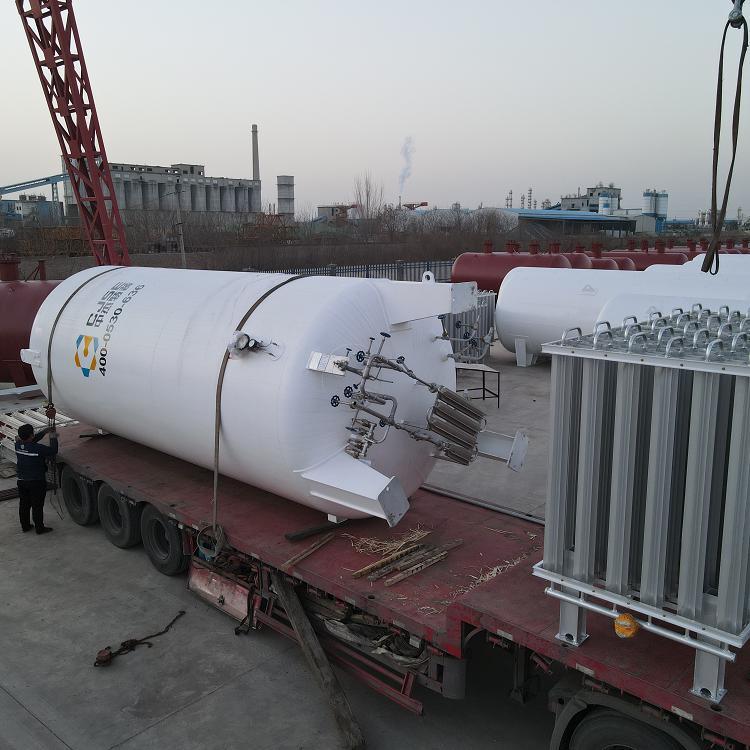
The filling process for liquid nitrogen tanks typically includes the following steps:
Preparation: Ensure the tanks and filling equipment are in good condition, free from damage or leaks. Check that the tank's insulation layer is intact and undamaged.
Safety Inspection: Check the tank and its surrounding environment for safety. Ensure there are no flammable materials or other hazardous items in the vicinity of the tank.
Connect equipment: Link the filling equipment to the storage tank. Ensure the connection is secure and leak-proof.
Prepare Liquid Nitrogen: Prepare for liquid nitrogen supply, ensuring the quality and purity meet the requirements.
Open valves: Follow the operational instructions for the filling equipment to gradually open the corresponding valves, allowing liquid nitrogen to flow from the supply source into the storage tank.
Regulate Flow: Adjust the flow control valve of the filling equipment as needed to control the inflow speed of liquid nitrogen. Ensure the flow rate is moderate, avoiding too fast or too slow.
Level Monitoring: Monitors the liquid nitrogen level in the storage tank in real-time through a level gauge or other level monitoring device. Ensures the level is maintained within a safe range.
Discontinue Filling: Close the valve of the filling equipment when liquid nitrogen is filled to the tank or reaches the desired level, halting the inflow of liquid nitrogen.
Disconnect: Disconnect the filling equipment from the storage tank and ensure there are no leaks at the connection point.
Safety Inspection: Recheck the tank and its surrounding environment for safety, ensuring there are no leaks or other potential hazards.
Please note that this is for general reference only; the actual filling process may vary depending on the specific type of storage tank and filling equipment. When performing filling operations for liquid nitrogen tanks, please adhere to relevant operational specifications and safety requirements, and ensure that operators have received the necessary safety training and skills.
Liquid nitrogen tanks are equipment used for storing liquid nitrogen and are widely used in the following fields: Frozen Food and Cold Chain Logistics: Liquid nitrogen tanks are used in the frozen food and cold chain logistics industry to freeze or refrigerate food and other perishable items, extending their shelf life and maintaining freshness. The low temperature of liquid nitrogen can quickly freeze food, prevent bacterial growth, and prevent food spoilage. Biomedical Research: Liquid nitrogen tanks are extensively used in the field for cryopreservation of biological samples, cells, tissues, and more. The low temperature of liquid nitrogen can effectively preserve the integrity and viability of biological materials, used in medical research, biomedical engineering, and transplantation fields. Laboratory Research: Liquid nitrogen tanks are used in scientific research and laboratories to provide liquid nitrogen as a coolant and freezing medium. The low temperature of liquid nitrogen can be used for cooling laboratory equipment, material research, superconducting electronics, and low-temperature physics. Metal Processing and Welding: Liquid nitrogen tanks are used in metal processing and welding for cooling and controlling the temperature of metals. Liquid nitrogen can rapidly cool metals, improve their hardness and strength, and reduce deformation and stress. Gas Storage and Supply: Liquid nitrogen tanks are also used for storing and supplying nitrogen gas. Liquid nitrogen can be converted into gaseous nitrogen through evaporation and used in applications such as gas shielded welding, gas fire suppression systems, gas analysis, and laboratory gas supply. In summary, liquid nitrogen tanks are widely applied in the fields of frozen food, laboratory research, metal processing, and gas supply, providing storage and supply functions for liquid nitrogen at application sites.
Shandong Zhongjie Special Equipment, welcome clients to our factory for negotiations and cooperation.
WeChat Official Account

Scan to follow Official Account




















