


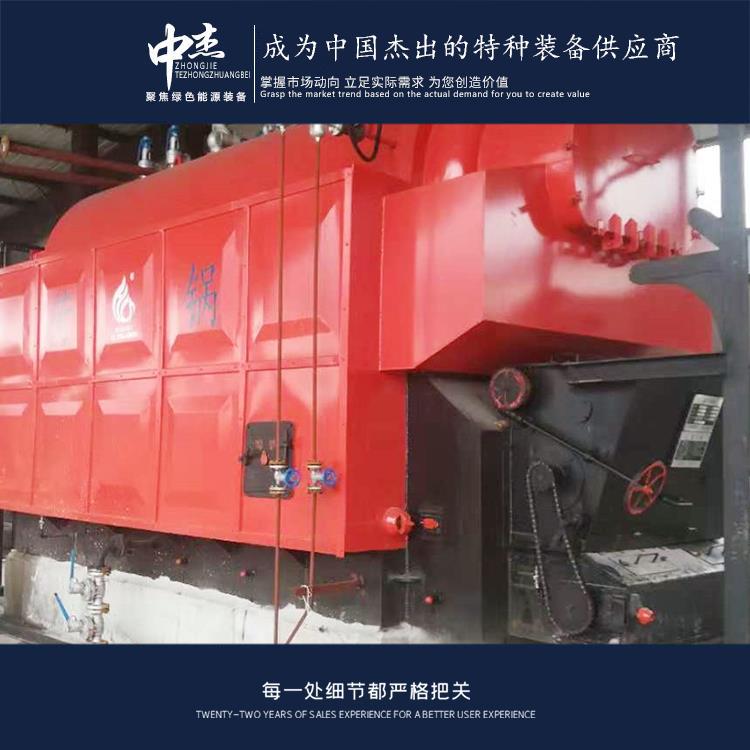

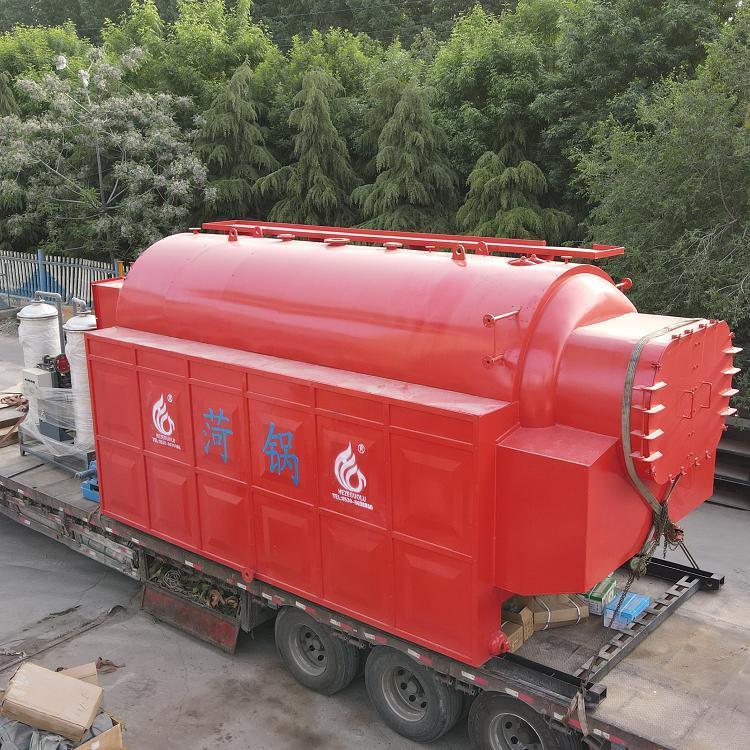
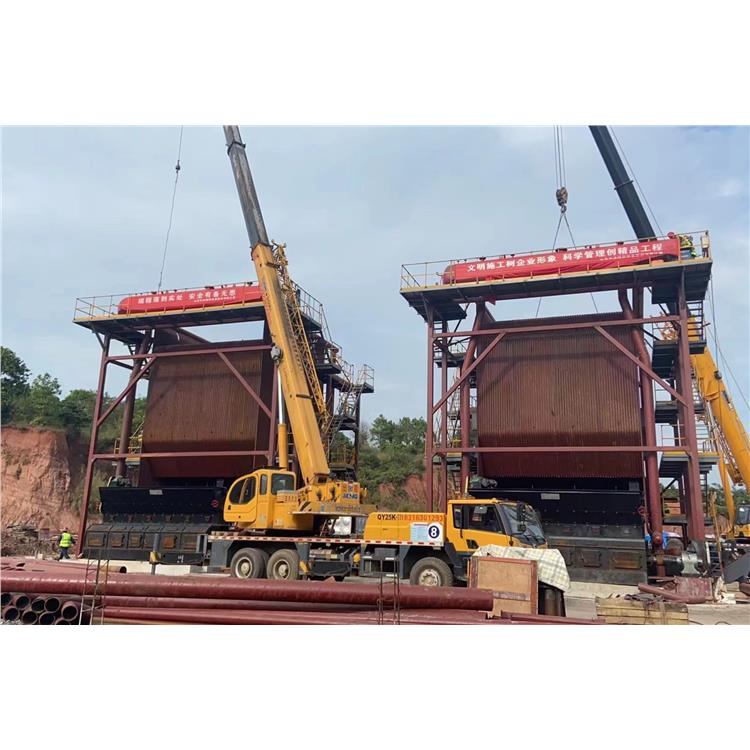



















Shandong Zhongjie Special Equipment (formerly Heze Boiler Factory Co., Ltd.) was established in 2001, located at No. 2218 Jinnan Road, Economic and Technological Development Zone, Heze City. With a registered capital of 50 million yuan and total assets of 500 million yuan, the company has 7 business centers: boiler, deep-freeze containers, pressure vessels, central air conditioning, engineering installation, international trade, and Internet of Things. It has three factory areas on Jinnan Road, East Yangtze Road, and Bohai Road, covering a total area of 200,000 square meters, with the main workshop area being 83,000 square meters. It currently employs 710 people, including 247 engineers and technicians and 82 intermediate-level technicians. In December 2016, it was recognized as a "High-Tech Enterprise" by the Science and Technology Department. In June 2021, it was identified as a "Specialized and New Enterprise in Shandong Province" by the Department of Industry and Information Technology. In June 2022, it was recognized as a "Gazelle Enterprise in Shandong Province" and in August 2022, as a "Specialized and New Small Giant Enterprise" by the Ministry of Industry and Information Technology.
Biomass boilers offer the following environmental benefits:
Renewable Energy: The fuel used in biomass boilers is renewable energy, such as wood chips, straw, waste materials, etc. Compared to fossil fuels, the use of biomass fuel can reduce dependence on limited resources and lower energy consumption.
Low carbon emissions: The amount of carbon dioxide released during the combustion of biomass fuel is roughly equivalent to the amount absorbed during its growth, creating a closed carbon cycle. Compared to the combustion of fossil fuels, biomass boilers emit less carbon, contributing significantly to the reduction of greenhouse gas emissions.
Reduced Pollutant Emissions: The combustion of biomass fuel results in relatively lower emissions of pollutants. Compared to coal combustion, biomass boilers emit fewer nitrogen oxides, sulfur oxides, and particulate matter, leading to less pollution of the atmosphere.
Waste Utilization: Biomass boilers can use waste materials as fuel, such as crop straw, wood waste, etc. If these wastes are not utilized, they may impact the environment. By utilizing biomass boilers, the resource potential of waste can be realized, thereby reducing the problems of waste accumulation and disposal.
Reclaimed Heat Energy: Biomass boiler flue gas contains a large amount of heat energy, which can be recovered and utilized through flue gas waste heat recovery devices. The remaining heat in the flue gas is used for heating, hot water, etc., to improve energy utilization efficiency and reduce energy waste.
Sustainable Development: High sustainability of biomass fuel
Biomass boilers possess the following characteristics:
Fuel adaptable: Biomass boilers can utilize various biomass fuels such as wood chips, straw, etc., demonstrating strong fuel adaptability.
High combustion efficiency: The biomass boiler's combustion technology and equipment enable a combustion process that enhances combustion efficiency.
Eco-friendly & Low-carbon: The carbon dioxide produced during biomass combustion can be absorbed by plants, forming a cycle that reduces the burden on the atmosphere. Additionally, emissions and pollutants from biomass combustion are relatively low, resulting in minimal environmental impact.
Heat Recovery Utilization: Biomass boilers transfer the heat energy generated from combustion to water or other working substances through heat exchangers, achieving heat recovery and utilization, and improving energy efficiency.
Versatility: Biomass boilers are not only used for heating but also for hot water supply and various industrial heating applications.
The efficiency of biomass boilers is influenced by various factors, including fuel quality, the design and adjustment of combustion equipment, and the effectiveness of flue gas purification systems. Generally, the efficiency of biomass boilers can reach over 70%, with some models achieving over 80% efficiency. Improving efficiency can be achieved through optimizing the combustion process, enhancing the heat transfer efficiency of heat exchangers, and reducing flue gas emissions losses. Additionally, proper operation and maintenance play a crucial role in enhancing efficiency.
Biomass boilers offer several advantages:
Renewable Energy: Fuel for biomass boilers comes from organic matter such as plants, animals, and microorganisms, making it a renewable energy source. Compared to traditional fossil fuels, biomass fuel has lower carbon emissions and environmental impact, contributing to the reduction of greenhouse gas emissions and being more environmentally friendly.
Diverse Fuel Sources: Biomass fuel sources are extensive, encompassing wood, straw, waste crops, food scraps, and urban solid waste, among others. This diversity in fuel sources provides biomass boilers with flexibility and adaptability, allowing them to utilize waste and by-products from plants and animals.
Environmental Friendliness: The carbon dioxide produced during the combustion process of biomass boilers can be absorbed by plants, forming a cycle that reduces air pollution. Additionally, the emissions and ash produced by biomass boilers during combustion are relatively low, resulting in minimal environmental impact.
Energy Security: Biomass, as a local renewable energy source, can reduce dependence on imported energy and enhance energy security. In regions with scarce resources, the use of biomass boilers can provide a reliable energy supply.
Economic Efficiency: Biomass fuel is relatively cost-effective, which can reduce energy costs. Moreover, the technology and equipment for biomass boilers are continuously evolving and maturing, making them more economically competitive.
Waste Utilization: Biomass boilers can utilize agricultural by-products such as crop straw and wood waste, effectively utilizing waste resources and reducing resource waste.
In summary, biomass boilers offer advantages such as renewable energy, diverse fuel sources, environmental friendliness, energy security, cost-effectiveness, and waste utilization, making them a sustainable energy option.
To reduce the emissions of nitrogen oxides (NOx) from biomass boilers, the following measures can be taken:
Combustion Control Optimization: By optimizing the combustion process, controlling the combustion temperature and oxygen supply, and reducing NOx emissions. Adjustments can be made to the burner's structure and parameters to make the combustion more complete and uniform, thereby minimizing the formation of localized hot spots.
Combustion Chamber Design Enhancement: Improved the combustion chamber design of biomass boilers, increasing the mixing and residence time within the chamber for better fuel-air mixing, thereby reducing NOx emissions.
SNCR Technology: Selective Non-Catalytic Reduction (SNCR) technology involves adding a reductant, such as urea, during the combustion process to react with NOx and convert it into nitrogen and water. This technology can effectively reduce NOx emissions, but requires system design and adjustments based on specific conditions.
SCR Technology: Selective Catalytic Reduction (SCR) technology is a NOx control method that involves adding catalysts to flue gas, such as, to react with NOx and convert it into nitrogen and water. SCR technology achieves high NOx removal efficiency, but requires significant investment and operating costs.
Flue Gas Recirculation (FGR): Flue gas recirculation technology recycles a portion of flue gas back into the combustion process, reducing combustion temperature and minimizing NOx formation. This technique can control NOx levels by adjusting the recirculation ratio.
Routine Maintenance and Cleaning: Regular maintenance of biomass boilers
Chongjie Special Equipment upholds the grand vision of "realizing employees' dreams, creating value for customers, and striving for the prosperity and strength of our motherland," wholeheartedly devoting itself to the development of green energy equipment. We offer society high-value products and services!
WeChat Official Account

Scan to follow Official Account