


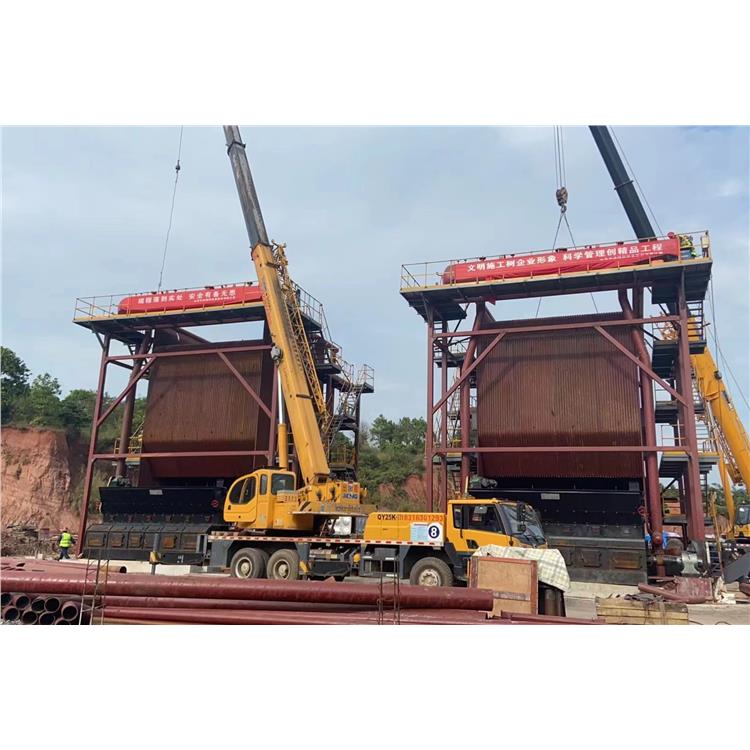

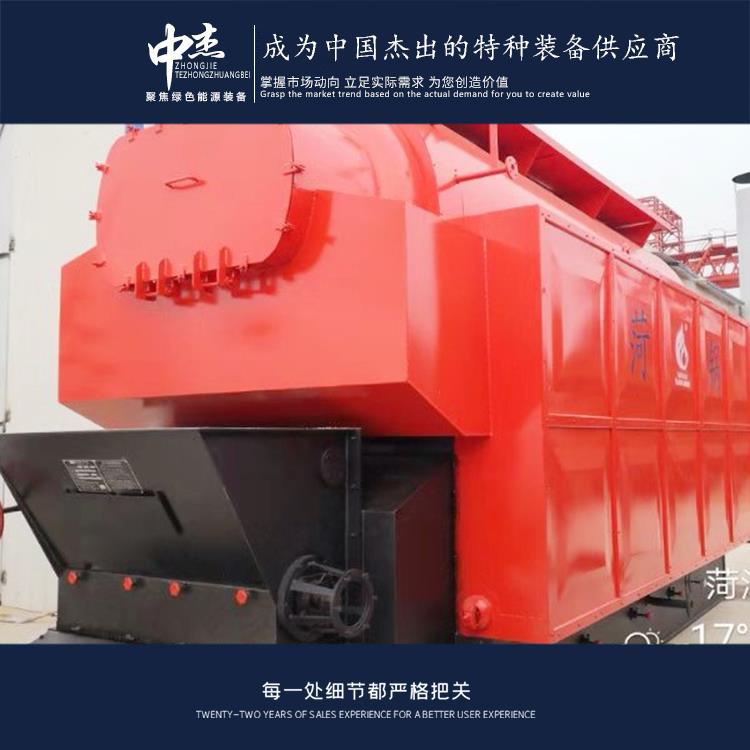
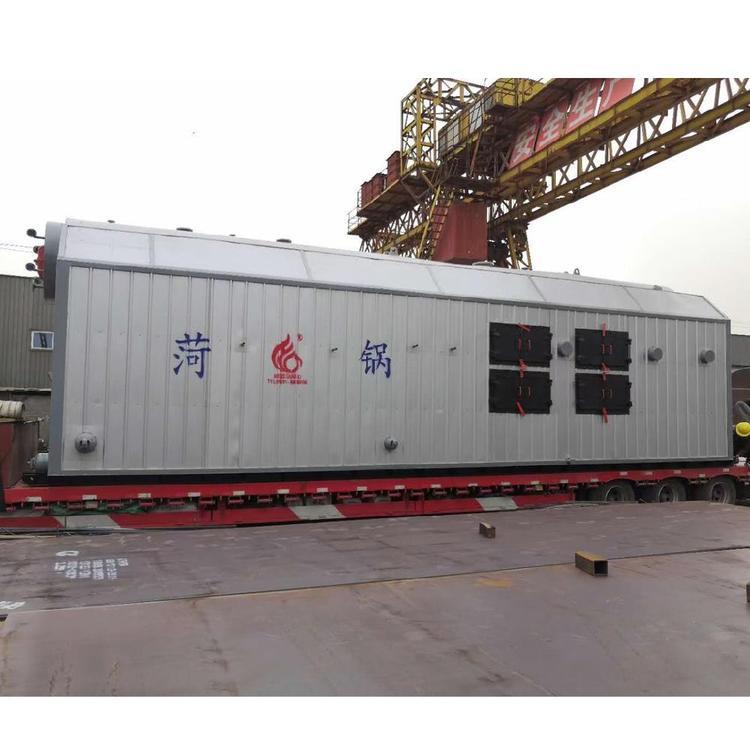



















Shandong Zhongjie Special Equipment's main products include: fuel (gas) boilers, organic heat carrier boilers, biomass boilers, waste heat recovery boilers, and other boiler products; vacuum insulation cryogenic pressure vessels such as LNG tanks, oxygen-nitrogen-argon tanks, and CO2 tanks; pressure vessel products such as denitrification engineering equipment, heat storage and energy storage equipment, and complete chemical equipment; central air conditioning and HVAC equipment like ground (water) source heat pumps, air source units, water-cooled screw units, and air-cooled modular units. Planned products include large-scale energy centers, LNG transport vehicles, LNG tank containers, and other green energy equipment.
Biomass boilers have certain characteristics that give them an advantage in energy conservation and environmental protection:
Renewable Energy: The fuel used in biomass boilers is renewable energy, such as wood chips, straw, and waste materials. Compared to fossil fuels, the use of biomass fuel can reduce dependence on finite resources and lower energy consumption.
Low carbon emissions: The amount of carbon dioxide released during the combustion of biomass fuel is roughly equivalent to the amount absorbed during its growth, forming a closed carbon cycle. Compared to the combustion of fossil fuels, biomass boilers emit less carbon, contributing significantly to the reduction of greenhouse gas emissions.
Combustion: The biomass boiler utilizes advanced combustion and control technologies to ensure efficient combustion. By optimizing the combustion process, we enhance the utilization of thermal energy and minimize energy waste.
Waste Utilization: Biomass boilers can use waste materials as fuel, such as crop straw and wood waste.
A fully automatic biomass boiler refers to a biomass boiler equipped with a fully automatic control system. Here are some points to note:
Regular Maintenance: Although the fully automatic biomass boiler is equipped with an automatic control system, regular maintenance is still necessary. This includes cleaning the combustion chamber, heat exchanger, flue, and other components, inspecting and replacing worn-out parts, to ensure the normal operation of the boiler.
Water Treatment: The quality of water in biomass boilers is crucial for their normal operation. Regularly inspect and treat water quality, including water hardness, alkalinity, and impurities in the water. Implement appropriate water treatment measures based on water quality to prevent scale and corrosion, and protect the boiler's heat exchangers and pipelines.
Fuel Quality Control: The quality of fuel for biomass boilers is crucial for combustion efficiency and the stable operation of the boiler. Select an appropriate amount of biomass fuel and implement proper quality control, including moisture content and particle size of the fuel. Ensure that the fuel quality meets the boiler's requirements to avoid incomplete combustion and blockages.
Regular Cleaning of the Combustion System: The combustion system of fully automatic biomass boilers requires regular cleaning, including the combustion chamber, burners, and burner nozzles. Accumulated soot, sediments, and dirt maintain the system's unobstructed flow, preventing incomplete combustion and unstable flames.
Regular inspection of control systems: The control system of fully automatic biomass boilers requires regular checks and tests to ensure proper operation. This includes verifying the accuracy of sensors and the stability of controllers. Promptly identify and resolve issues with the control system to ensure stable boiler operation.
Maintain accurate records and monitoring: Record and monitor the operational parameters and fault conditions of all active biomass boilers, and conduct analysis. Promptly identify and resolve issues to prevent faults from occurring or escalating.
Above are some precautions when using fully automatic biomass boilers. Through reasonable maintenance, quality control, and operation, stable boiler performance and work can be ensured.
Biofuel hot water boilers may produce scale during operation, which can affect the boiler's heat transfer and efficiency. Here are some methods to reduce scaling:
Fuel Selection: Choose high-quality biomass fuels such as wood chips and straw to minimize soot generation. Avoid fuels with excessive impurities and ash.
Fuel Burn Adjustment: Properly adjust combustion parameters such as fuel supply, oxygen supply, and combustion temperature. Both excessively high and low combustion temperatures can lead to the formation of deposits. Maintaining an appropriate combustion temperature helps reduce the formation of deposits.
Clean combustion chamber: Regularly clean the combustion chamber to remove ash and dirt generated during the combustion process. Use appropriate tools and cleaning agents to ensure the chamber remains clear and clean.
Heat Exchanger Cleaning: Regularly clean heat exchangers, particularly those on the flue side. During the combustion process, flue gases may contain particulates and ash that can adhere to the surface of the heat exchanger, affecting heat transfer efficiency. Using appropriate cleaning methods, such as mechanical or chemical cleaning, can reduce the accumulation of dirt.
Water Treatment: Appropriate water treatment for boiler feedwater to prevent impurities and sediments from settling inside the boiler. Methods such as water softening, deoxygenation, and scaling removal can be employed to maintain the cleanliness and stability of the water supply.
Regular Maintenance: Perform regular maintenance and inspections on the boiler, including cleaning and replacing critical components. Early detection and treatment of soiling issues can prevent further accumulation of dirt and affect the normal operation of the boiler.
Please note that the specific methods for reducing soiling may vary depending on the model and manufacturer of the biomass hot water boiler. It is recommended to refer to the manufacturer's operation manual and guidelines to adopt appropriate soiling reduction measures based on the specific situation.
Possible reasons for incomplete combustion in biomass boilers may include the following aspects:
Poor fuel quality: Low-quality biomass fuel, such as high moisture content and uneven particle size, can affect the combustion process. Fuel with high moisture content can lead to reduced combustion temperature and incomplete combustion.
Insufficient air supply: Air is essential during the combustion process. If the air supply is insufficient, the fuel cannot react fully with oxygen, leading to incomplete combustion. Possible causes include blocked air inlets, fan malfunctions, etc.
Unstable combustion system: The instability of the combustion system may also result in incomplete combustion. For example, improper adjustment of the burner, unreasonable design of the combustion chamber, and other factors may affect the stability of the combustion process.
Insufficient combustion temperature: Low combustion temperature can lead to incomplete combustion. Possible causes include improper adjustment of the burner and unstable fuel supply.
Ash Accumulation in Combustion Chamber: Ash buildup in the combustion chamber can affect the combustion process, hindering fuel and oxygen contact, leading to incomplete combustion.
Insufficient burning time: Inadequate burning time may also result in incomplete combustion. If fuel remains in the combustion chamber for too short a time, it cannot burn fully, leading to unburnt fuel residues.
Improper combustion chamber design: An improperly designed combustion chamber, such as one that is too large or too small, hinders the full mixing of fuel and oxygen, resulting in incomplete combustion.
Above are some possible causes of incomplete combustion in biomass boilers, which require analysis and resolution based on specific circumstances. Regular maintenance, rational fuel selection, and optimization of the combustion system are all necessary.
Zhongjie Special Equipment upholds the great vision of "realizing employees' dreams, creating customer value, and striving for the prosperity and strength of our motherland," focusing solely on the development of green energy equipment. We dedicate products and services with high cost-performance to society!
WeChat Official Account

Scan to follow Official Account




















