


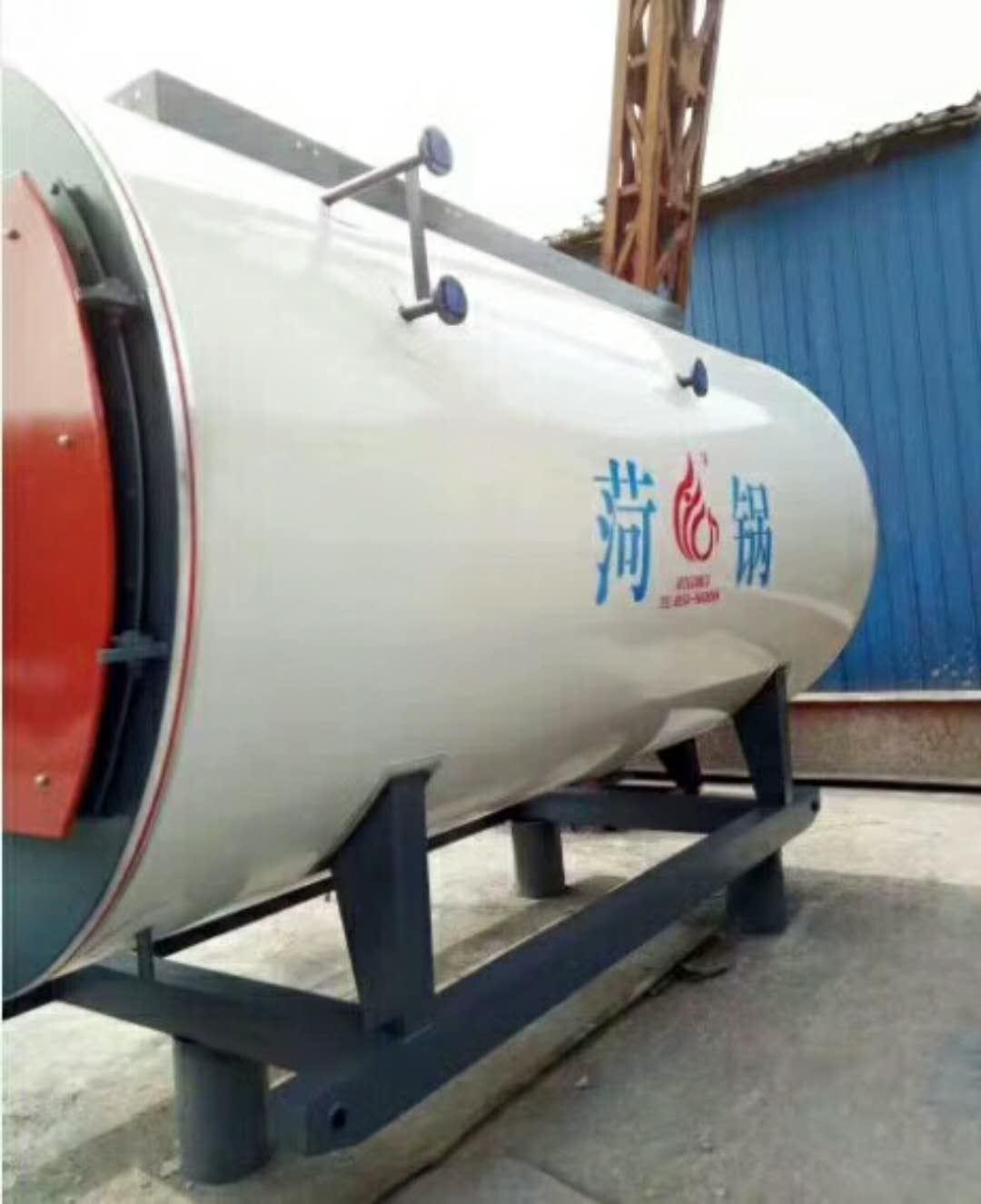

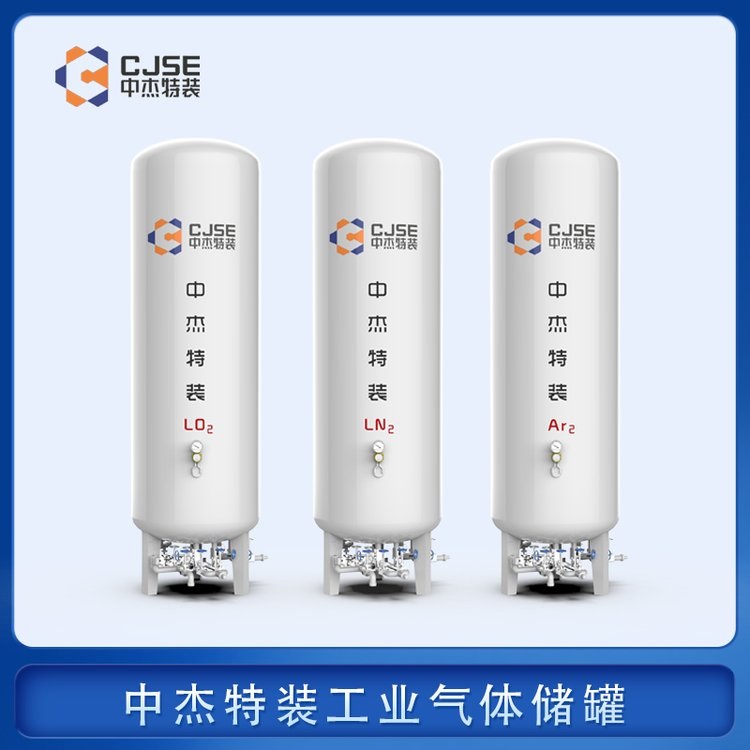



















Shandong Zhongjie Special Equipment's main products include: fuel (gas) boilers, organic heat carrier boilers, biomass boilers, waste heat boilers, and other boiler products; vacuum insulation cryogenic pressure vessels such as LNG tanks, oxygen/nitrogen/argon tanks, and CO2 tanks; pressure vessel products such as denitrification engineering equipment, heat storage equipment, and complete chemical equipment sets; central air conditioning and ventilation equipment such as ground (water) source heat pumps, air source units, water-cooled screw units, and air-cooled modular units. Planned products include large-scale energy centers, LNG transport vehicles, and LNG tank containers, among other green energy equipment.
When selecting the pedestal for a liquid argon tank, several factors should be considered:
Load Capacity: The support must be capable of bearing the weight of the liquid argon tank. Select a support with adequate load capacity based on the tank's capacity and dimensions. Typically, the weight of the liquid argon tank is specified in the design specifications, which can be used to determine the support's load capacity.
Stability: The support must provide sufficient stability to prevent the tank from tilting or rocking during use. The design of the support should take into account the tank's center of gravity and its changes to ensure stable support.
Corrosion Resistance: Liquid argon has low temperature and corrosive properties; the support material should have good corrosion resistance to prevent corrosion and damage. Common support materials include stainless steel, aluminum alloy, etc.
Insulation: Liquid argon storage tanks typically require thermal insulation. The supports should possess certain insulation properties to minimize heat transfer and evaporation of liquid argon. The design of the supports should consider the installation and protection of the insulation layer.
Installation and Maintenance: The support should feature ease of installation and maintenance to facilitate the installation of the storage tank and daily maintenance operations.
When selecting the supports for liquid argon tanks, it's advisable to consult with engineers or suppliers. Choose the appropriate supports based on the specific tank requirements and operating environment. At the same time, adhere to relevant design specifications and safety standards to ensure the quality and reliability of the supports.
Standard specifications for liquid oxygen storage tanks may vary by region. Here are examples of some common standards:
US Standards: The American National Standards Institute (ANSI) and the American Petroleum Institute (API) have issued a series of standards for liquid oxygen storage tanks, such as ANSI/API Standard 2510 "Design and Construction of Liquid Oxygen Tanks" and ANSI/API Standard 2510A "Supplementary Requirements for the Design and Construction of Liquid Oxygen Tanks."
European Standards: The European Committee for Standardization (CEN) has issued a series of standards for liquid oxygen storage tanks, including EN 13458 "Design and Manufacturing of Liquid Oxygen Tanks" and EN 14015 "Design and Manufacturing of Vertical Welded Steel Fixed Tanks."
Chinese Standards: The Standardization Administration of the People's Republic of China (SAC) has issued a series of standards for liquid oxygen storage tanks, such as GB/T 18442 "Design Specifications for Liquid Oxygen Tanks" and GB/T 18443 "Construction and Acceptance Specifications for Liquid Oxygen Tanks."
These standards typically cover requirements for design, manufacturing, installation, operation, maintenance, and inspection of liquid oxygen storage tanks. They encompass provisions for the tank's structure, materials, safety valves, insulation, leak control, fire protection measures, and safety distances to ensure the safety and reliability of the tanks.
When designing, manufacturing, and using liquid oxygen storage tanks, it is essential to follow applicable standards and regulations and cooperate with local regulatory authorities and personnel to ensure compliance with relevant safety requirements and regulations.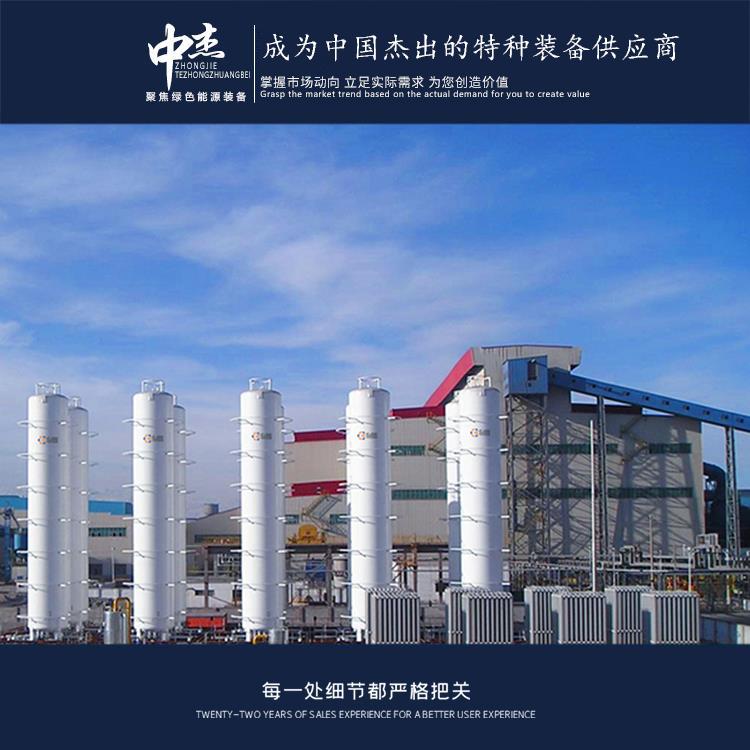
Before filling the liquid nitrogen tank, the following checks must be conducted:
Tank exterior inspection: Check for any visible damage, deformation, corrosion, etc. on the tank's exterior, including the tank wall, valves, pipes, and joints.
Sealability Inspection: Check the sealing performance of the storage tank, including inspecting for any leakage at valve and pipe connections, to ensure the tank's good sealability.
Pressure Check: Verify that the storage tank's pressure gauge is functioning properly and that the pressure is within the normal range to ensure the tank operates normally.
Level Check: Inspect the liquid level of the storage tank to ensure it remains within the normal range, avoiding issues caused by excessive or insufficient levels.
Insulation Layer Inspection: Check for any damage or detachment in the storage tank's insulation layer to ensure effective insulation and reduce evaporation losses of liquid nitrogen.
Leak Inspection: Check for signs of liquid nitrogen leakage around the tank, including frost, ice, or liquid nitrogen stains on the ground.
Safety Equipment Inspection: Verify that the storage tank's safety equipment, such as leak detectors, alarm systems, and safety valves, are functioning properly to ensure the tank's safety.
Clean Inspection: Ensure the interior of the tank is clean of accumulated impurities and dirt to maintain the tank's cleanliness and hygiene.
The above lists the checks required before filling a liquid nitrogen tank, to ensure the safe operation of the tank and the proper storage of liquid nitrogen. During the inspection, strict adherence to the relevant operational procedures and safety standards is essential to ensure operational safety.
During the process of constructing low-temperature liquid oxygen storage tanks with central oxygen supply, special attention should be paid to the following aspects:
Safe Operation: Strict adherence to safety procedures and standards is mandatory during the storage tank installation process. Operators must be trained, familiar with the properties and safety requirements of liquid oxygen, and knowledgeable about the equipment and operational procedures to ensure safe operations.
Fire Prevention Measures: Liquid oxygen contains a high concentration of oxygen, which is prone to cause fires. During the installation process, necessary fire prevention measures should be taken, such as setting up fire barriers, using fire-resistant coatings, and prohibiting open flames, to prevent fires from occurring and spreading.
Leak Control: During the installation process, attention should be paid to leak control. Oxygen leakage can lead to increased oxygen concentration, raising the risk of fire and explosion. Leak detectors and alarm systems should be equipped to promptly detect and control leaks, and appropriate emergency measures should be taken.
Oxygen Concentration Monitoring: During the installation process, the oxygen concentration around the liquid oxygen storage tank should be monitored regularly. High oxygen concentrations can intensify the combustion of flammable materials, increasing the risk of fire and explosion. Take timely measures to ensure the oxygen concentration remains within safe limits.
Grounding and Static Dissipation: During the liquid oxygen facility process, ensure proper grounding of the storage tank and related equipment to minimize static accumulation and discharge. Utilize static conductive materials and antistatic equipment to reduce the dangers caused by static.
Regular inspections and maintenance: After the installation is completed, regular inspections and maintenance of the liquid oxygen tank should be conducted. This includes visual inspections, pressure tests, leak detection, etc., to ensure the tank's safety and stability.
It's important to note that during the installation of the central oxygen supply low-temperature liquid oxygen storage tank, operations should be conducted by experienced personnel and in accordance with relevant safety operating procedures and standards. Close attention should be paid to safety risks during the installation process, and timely measures should be taken to ensure the safety and stability of the installation.
Our company highly values technological innovation and R&D, boasting one city-level technical center in Heze City. We have established test facilities for non-destructive testing,理化 experiments, welding tests, hydrostatic testing, etc. We are equipped with over 600 various instruments and equipment, including CNC machine tools, X-ray flaw detectors, digital ultrasonic flaw detectors, mechanical property test machines, chemical analyzers, spectrometers, tensile test machines, plasma welding machines, and more. Our R&D of key products such as thermal-pressure vessel welding, biomass boiler emission reduction, and waste heat recovery has been successively included in multiple Shandong Provincial Department of Industry and Information Technology science and technology innovation projects, key provincial projects, and Heze City innovative excellence projects. We have accumulated a total of 27 authorized utility models, 16 authorized inventions, participated in drafting 2 standards, 2 industry standards, and registered 15 trademarks. Our technical team, in collaboration with Professor Li Yajiang of Shandong University, has developed deep cryogenic container processing technology using the international plasma arc + filled wire argon arc combination welding (PAW-GTAW) technique. The provincial scientific and technological achievement appraisal confirms that our technology level in deep cryogenic container manufacturing has reached an international standard. Choose ZJ Special Equipment, and let's create brilliance together!
WeChat Official Account

Scan to follow Official Account




















