


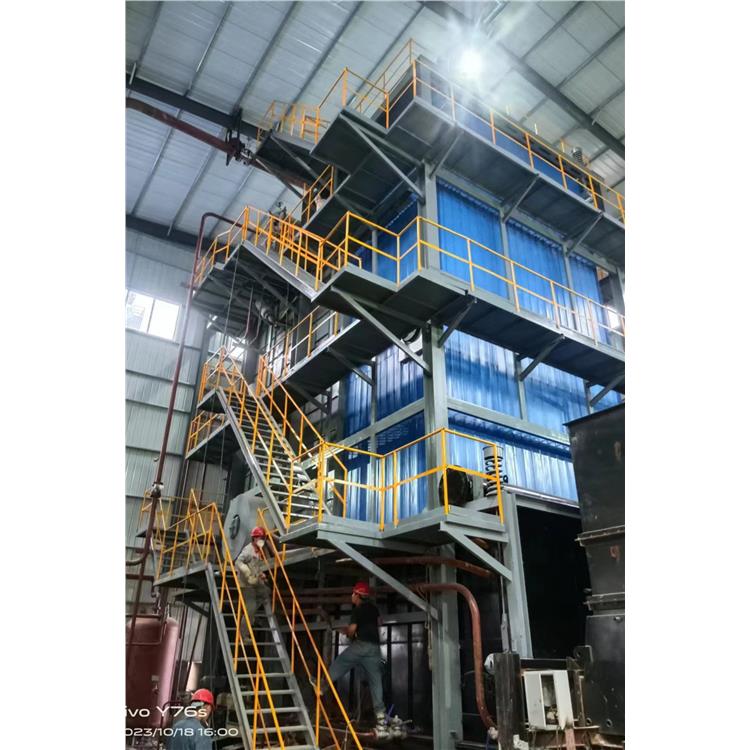

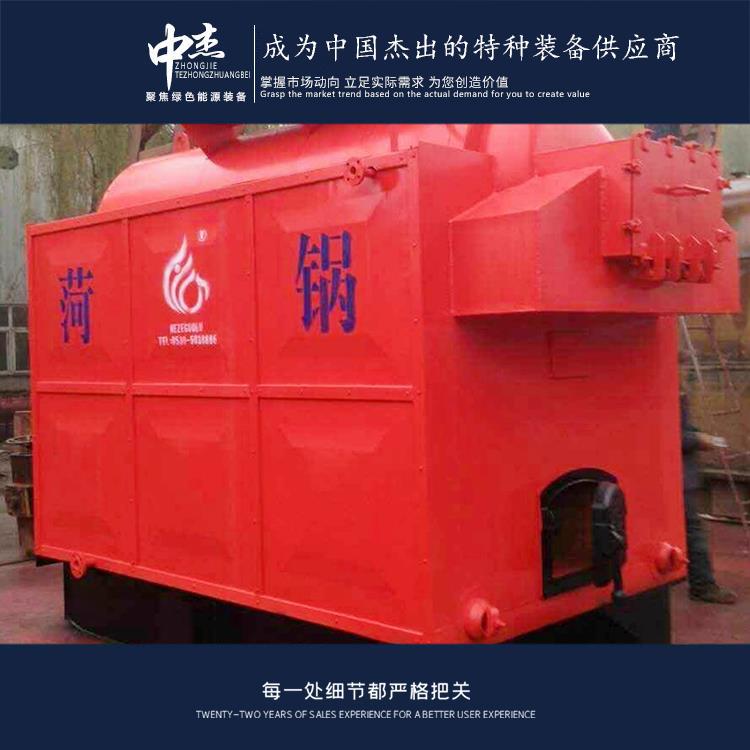
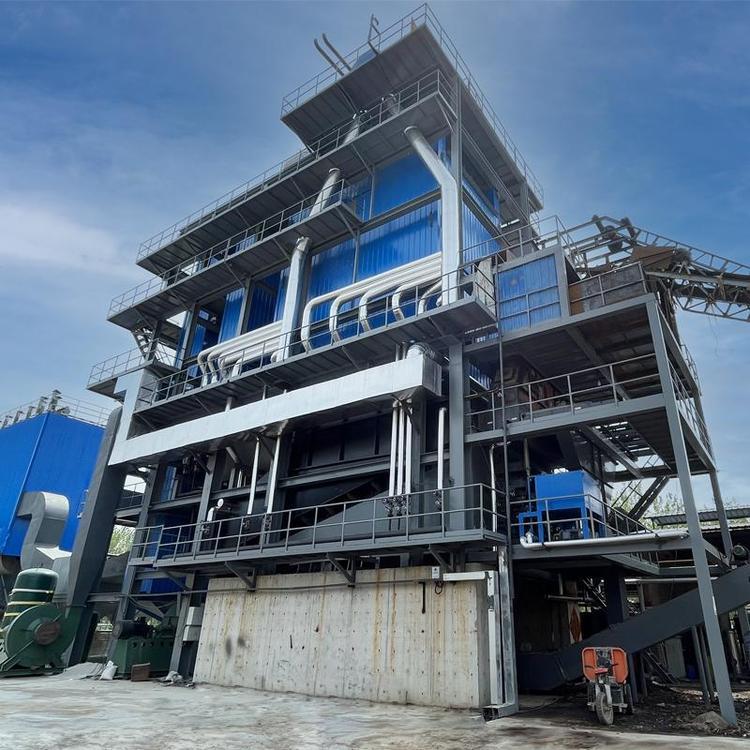



















Shandong Zhongjie Special Equipment (formerly Heze Boiler Factory Co., Ltd.) holds an A-grade boiler manufacturing license, A2-grade pressure vessel manufacturing license, A2-grade pressure vessel design license, B-grade boiler installation license, and GB2/Class, GC2/Class pressure pipeline installation license, as well as an equipment and machinery installation contracting license. It is a member of the China Boiler and Water Treatment Association, the China Chemical Equipment Association, and the director unit of the Shandong Equipment Manufacturing Association. The company has also passed certifications for the ISO9001 Quality Management System, ISO14001 Environmental Management System, OHSAS18001 Occupational Health and Safety Management System, and the American ASME/U2 certification.
Biofuel boilers may produce scale during operation, affecting their thermal efficiency and operational stability. Here are several methods to reduce scale in biofuel boilers:
Fuel Pretreatment: Pre-treat biomass fuel, such as drying and sieving. Reducing the moisture and impurity content of the fuel can minimize the formation of dirt.
Combustion Control: Utilizes a combustion control system that monitors and adjusts parameters such as temperature and oxygen content in real-time during the combustion process. Rational adjustment of combustion parameters can reduce incomplete fuel combustion and decrease soot formation.
Clean combustion chamber: Regularly clean the soot inside the combustion chamber, including the chamber walls and accumulated dust within. Regular cleaning prevents soot buildup and maintains the chamber's flow.
Regularly Clean Heat Exchangers: Biomass boilers' heat exchangers are prone to dirt buildup, affecting heat transfer efficiency. Regular cleaning of the heat exchangers removes dirt and dust, enhancing their heat transfer efficiency.
Water Treatment: The quality of water in biomass boilers also affects the formation of scale. Appropriate water treatment measures, such as water softening and deoxygenation, can reduce the formation of scale and sediment.
Regular Maintenance: Regular maintenance of biomass boilers includes cleaning, inspection, and replacement of parts. Promptly identifying and addressing issues can reduce the formation and accumulation of dirt.
By employing these measures collectively, biomass boiler fouling can be significantly reduced, ensuring the boiler's operation and stability.
Energy-saving methods for biomass hot water boilers mainly include the following aspects:
Fuel Selection: Opt for biomass fuel in bulk, such as wood chips, straw, etc., ensuring the moisture content and particle size meet the boiler's requirements. Low moisture content and appropriate particle size in the fuel can enhance combustion efficiency and reduce energy waste.
Combustion Optimization: Enhance combustion efficiency by optimizing the combustion process. Adjust parameters such as combustion temperature and duration to achieve more complete combustion and minimize fuel waste.
Recovery of Waste Heat: Utilize the excess heat from flue gas for energy recovery. By installing a flue gas waste heat recovery unit, the excess heat in the flue gas is captured and used for other thermal energy needs, such as heating and hot water, to enhance energy utilization efficiency.
Boiler Insulation: Enhance the insulation of the boiler to minimize heat loss. Insulate the boiler shell and pipes to reduce heat dissipation and improve the boiler's thermal efficiency.
Control System Optimization: Improve the control system of the boiler to achieve temperature and pressure control. Through rational control strategies, reduce energy waste, and enhance the operational efficiency of the boiler.
Regular Maintenance: Regular maintenance of biomass hot water boilers is essential to maintain their normal operation. Clean the combustion chamber, heat exchanger, and other components, inspect and replace worn parts, ensuring the boiler's operation.
Energy Management: Establish a scientific energy management system, monitor and analyze energy consumption, and formulate reasonable energy-saving measures. Continuously optimize the operation of boilers through energy management methods to achieve energy-saving goals.
By integrating the above energy-saving methods, the energy utilization efficiency of biomass hot water boilers can be improved, energy waste reduced, and the goal of energy conservation and environmental protection achieved.
Biomass hot water boilers may produce scale during operation, which can affect the boiler's heat transfer and efficiency. Here are some methods to reduce scaling:
Fuel Selection: Choose high-quality biomass fuel such as wood chips and straw to minimize soot generation. Avoid fuels with excessive impurities and ash.
Combustion Adjustment: Properly regulate combustion parameters such as fuel supply, oxygen supply, and combustion temperature. Both excessively high or low combustion temperatures can lead to the formation of deposits. Maintaining an appropriate combustion temperature helps reduce the formation of deposits.
Clean Combustion Chamber: Regularly clean the combustion chamber to remove ash and soot generated during the burning process. Use appropriate tools and cleaning agents to ensure the chamber remains clear and clean.
Heat Exchanger Cleaning: Regularly clean heat exchangers, particularly those on the flue side. Combustion may produce particulates and ash that adhere to the heat exchanger surface, affecting heat transfer efficiency. Employing appropriate cleaning methods, such as mechanical or chemical cleaning, can reduce the accumulation of dirt.
Water Treatment: Appropriate water treatment for boiler feedwater to prevent impurities and sediments from settling inside the boiler. Methods such as water softening, deoxygenation, and scale removal can be employed to maintain the cleanliness and stability of the water supply.
Regular Maintenance: Perform regular maintenance and inspections on the boiler, including cleaning and replacing critical components. Early detection and resolution of soiling issues can prevent further accumulation of soiling and affect the normal operation of the boiler.
Please note that specific methods for reducing sediment may vary depending on the model and manufacturer of biomass hot water boilers. It is recommended to refer to the manufacturer's operating manual and guidelines to adopt appropriate sediment reduction measures based on the specific situation.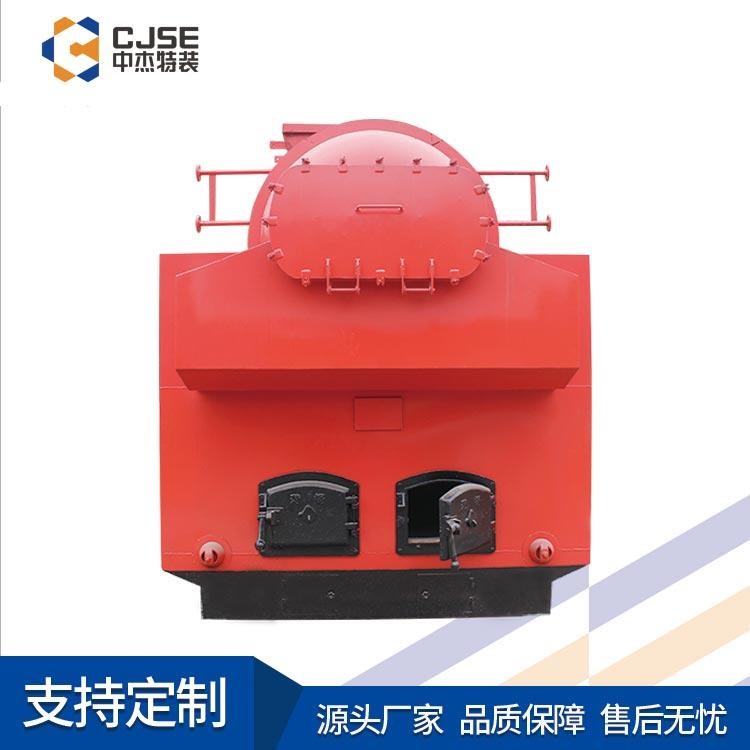
To reduce the emissions of nitrogen oxides (NOx) from biomass boilers, the following measures can be taken:
Burn Control Optimization: By optimizing the combustion process, control the combustion temperature and oxygen supply to reduce NOx emissions. Adjust the burner's structure and parameters to ensure a more thorough and even combustion, minimizing the formation of hot spots.
Combustion Chamber Design Enhancement: Improved the combustion chamber design of biomass boilers, increasing the mixing and residence time within the chamber, leading to more thorough fuel and air mixture and reducing NOx emissions.
SNCR Technology: Selective Non-Catalytic Reduction (SNCR) technology involves adding a reductant, such as urea, during the combustion process, which reacts with NOx to convert it into nitrogen and water. This technology effectively reduces NOx emissions, but requires system design and adjustment based on specific conditions.
SCR Technology: Selective Catalytic Reduction (SCR) technology is a NOx control method that involves adding a catalyst, such as, to flue gas to cause a reaction with NOx, converting it into nitrogen and water. SCR technology can achieve high NOx removal efficiency, but requires a significant investment and operating cost.
Flue Gas Recirculation (FGR): Flue gas recirculation technology recycles a portion of flue gas back into the combustion process, reducing combustion temperature and minimizing NOx formation. This technique allows for NOx control by adjusting the recirculation ratio.
Regular maintenance and cleaning: Regular maintenance of biomass boilers
Our company attaches great importance to technological innovation and R&D design. We have one municipal-level enterprise technology center in Heze City, equipped with non-destructive testing, physical and chemical testing, welding testing, hydrostatic testing, and other testing facilities. We have over 600 types of equipment, including CNC machine tools, X-ray flaw detectors, digital ultrasonic flaw detectors, mechanical property testing machines, chemical analyzers, spectrometers, tensile testing machines, plasma welding machines, and more. The key products and technologies we have developed, such as welding for temperature and pressure vessels, emissions reduction in biomass boilers, and waste heat utilization, have successively been selected for multiple Shandong Provincial Department of Industry and Information Technology science and technology innovation projects, Shandong Provincial key projects, and Heze City innovation and excellence projects. We have accumulated a total of 27 authorized utility models, 16 authorized inventions, participated in drafting 2 standards, 2 industry standards, and registered 15 trademarks. The technical team of our company, in collaboration with Professor Yajiang Li of Shandong University, has developed deep cryogenic container processing technology using the international plasma arc + filler wire tungsten inert gas arc combination welding (PAW-GTAW) technology. After provincial-level scientific and technological achievement evaluation, the technical level has reached an international standard in the field of deep cryogenic container manufacturing. Choose Zhongjie Special Equipment, and let's create brilliance together!
WeChat Official Account

Scan to follow Official Account




















