


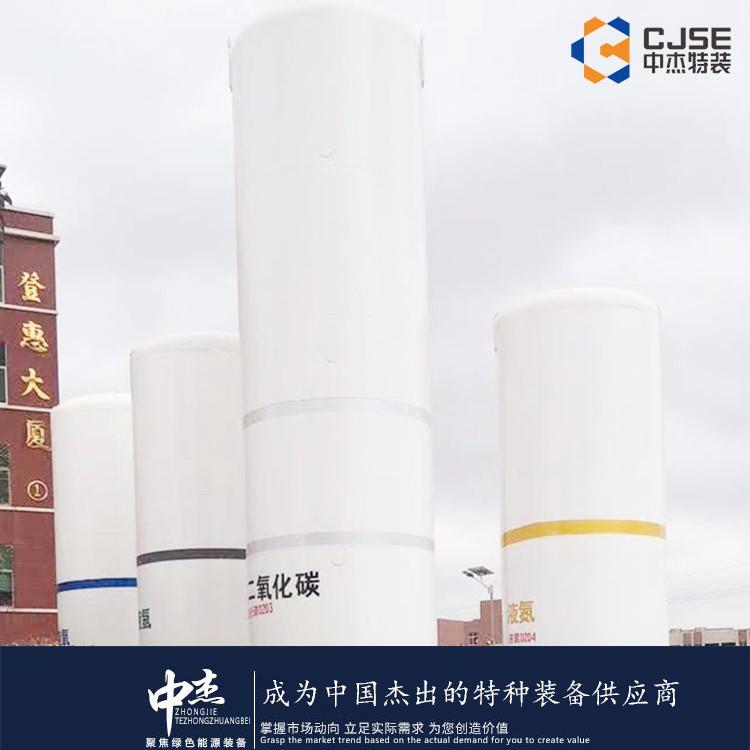

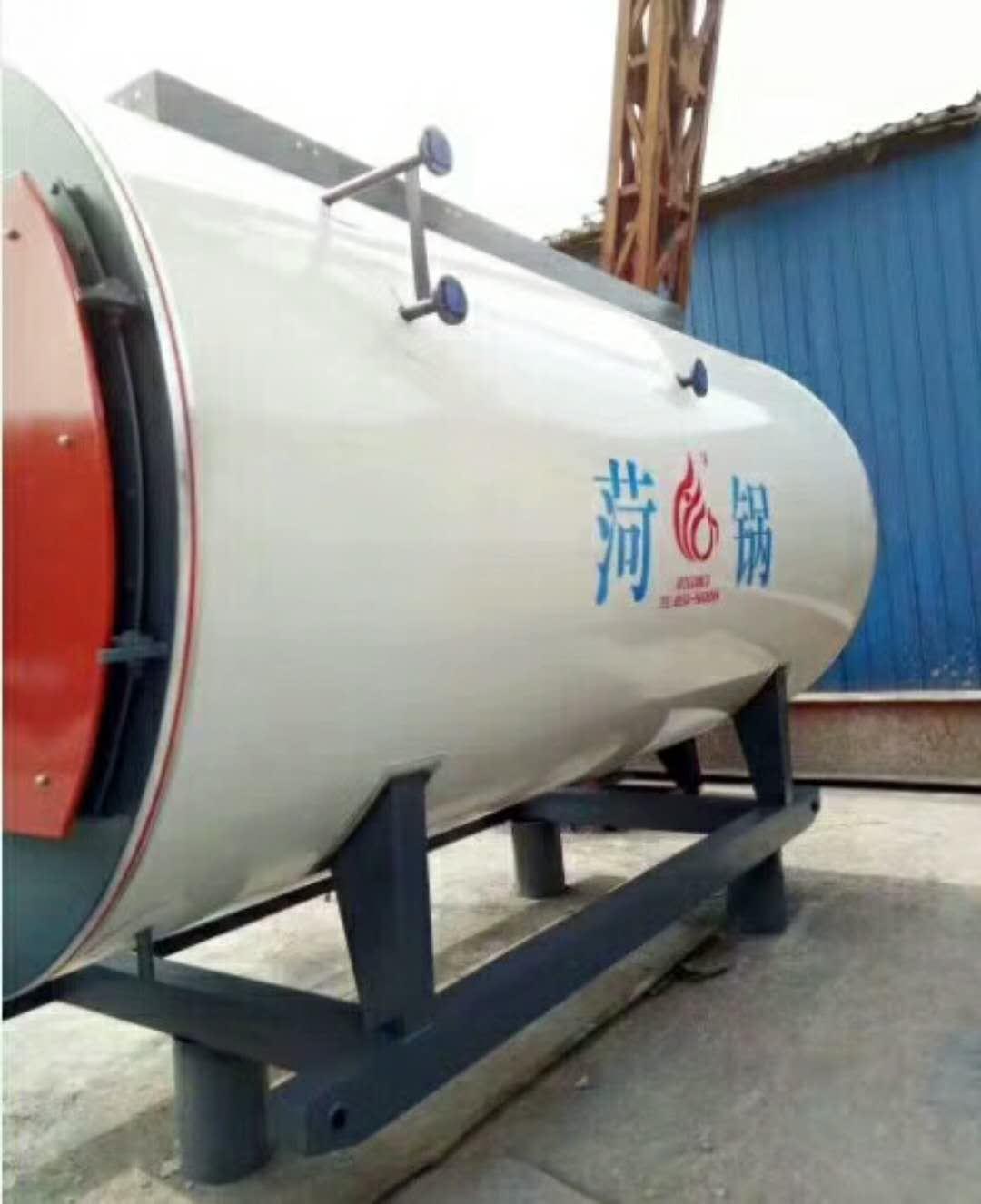
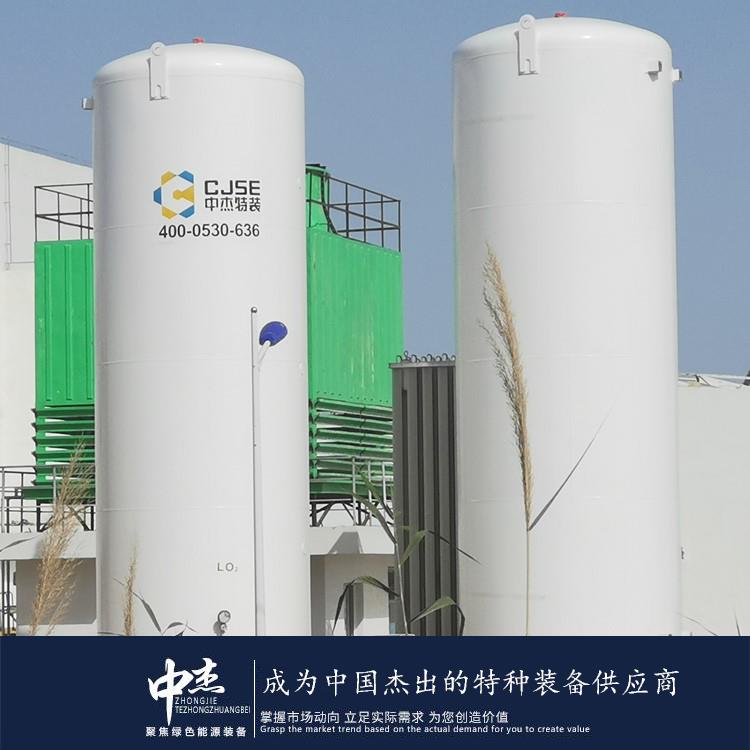



















Shandong Zhongjie Special Equipment's main products include: fuel (gas) boilers, organic heat carrier boilers, biomass boilers, waste heat recovery boilers, and other boiler products; vacuum insulation cryogenic pressure vessels such as LNG tanks, oxygen/nitrogen/argon tanks, and CO2 tanks; pressure vessel products like denitrification engineering equipment, heat storage and energy storage equipment, and complete chemical equipment sets; central air conditioning and HVAC equipment such as ground (water) source heat pumps, air source units, water-cooled screw units, and air-cooled modular units. Planned products include large-scale energy centers, LNG transport vehicles, LNG tank containers, and other green energy equipment.
Carbon dioxide tank level gauges are devices used to measure and monitor the liquid level of CO2 within the tank. Depending on different working principles and application requirements, common types of CO2 tank level gauges include the following:
- Buoy Level Gauge: Utilizes the buoyancy of a float to indicate liquid level highs and lows. The level is measured through a mechanical linkage or an electrical signal sensor connected to the float.
- Pressure Level Gauge: Measures liquid level by utilizing the relationship between liquid pressure and level. Liquid pressure changes on a pressure sensor are measured to calculate the liquid level height.
- Ultrasonic Level Gauge: Measures liquid level using the propagation time of ultrasound. An ultrasonic transmitter emits waves, and when the beam encounters the liquid surface, part of the beam is reflected back. The liquid level height is calculated by measuring the reflection time.
- Capillary Level Gauge: Uses the capillary principle to measure liquid level. By inserting a fine tube into the liquid, the liquid rises within the tube. The liquid level height is calculated based on the rise of the liquid.
- Level Gauge: Measures liquid level by reflecting waves. A transmitter emits waves, and when the beam encounters the liquid surface, part of the beam is reflected back. The liquid level height is calculated by measuring the reflection time.
These level gauges can be selected for use in CO2 tanks based on specific needs and tank design. When selecting and installing level gauges, factors such as liquid properties, working environment, and precision requirements should be considered, and they must be ensured to match the tank's safe operation and monitoring system.
Prior to using a CO2 storage tank, the following preparations must be made:
Safety Inspection: Conduct a safety check on the tank before use to ensure there are no visible damages, corrosion, or leaks. Inspect the tank's exterior, valves, and connecting pipes to ensure they are intact and undamaged.
Tank Cleaning: Ensure the tank is clean both internally and externally. Remove any debris, dirt, and residues to ensure no substances could potentially affect the quality or safety of the CO2.
Connecting Pipes: Check the connections between the tank and related pipes to ensure they are securely fastened and sealed. Verify the valve and pipe switch positions to ensure they are in the correct position.
Pressure Check: Inspect the tank's pressure to ensure it is within the safe range. If necessary, use a pressure gauge or other pressure detection equipment for the check.
Ventilation and Safety Measures: Ensure adequate ventilation around the tank to prevent the accumulation of CO2. During operation, follow relevant safety operating procedures and measures, such as wearing personal protective equipment and avoiding open flames.
Tank Labeling: Label the tank with relevant information such as the type of gas stored, pressure rating, and capacity. This aids operators in correctly identifying and handling the tank.
Note that these preparations may vary depending on the specific type of tank and usage scenario. Before using a CO2 storage tank, it is recommended to refer to the relevant safety operation manuals and guidelines to ensure safe and correct operation.
The filling process for CO2 storage tanks typically includes the following steps:
Preparation: Ensure the tank and filling equipment are in good working condition. Check the tank's appearance and valves for damage or leaks. Inspect the filling equipment's connecting pipes and valves for loose connections or leaks.
Prepare liquid CO2: Extract liquid CO2 from the source and transfer it to the tank of the filling equipment. Ensure the liquid CO2 meets the required quality and purity standards.
Connect the filling equipment: Attach the filling equipment's outlet pipe to the tank's inlet valve. Make sure the connection is secure and there are no leaks.
Open valves: Turn on the valves of both the filling equipment and the tank to allow liquid CO2 to flow from the equipment into the tank. Adjust the valves as needed to control the filling speed and pressure.
Monitor level: Use level sensors or other level-measuring devices to monitor the liquid CO2 level in the tank in real-time. Ensure the level stays within safe limits and avoid overfilling.
Filling complete: Once the tank reaches the predetermined filling level, close the valves of the filling equipment and the tank to stop the CO2 filling.
Inspection and cleanup: Check the valves and pipe connections during the filling process for leaks. Clean up any remaining liquid CO2 around the filling equipment and tank.
Documentation and reporting: Record the relevant information from the filling process, including the filling date, amount, and level monitoring results. Submit filling reports to relevant departments or management as needed.
The above is a general CO2 storage tank filling process. Specific operations should be tailored to the tank's characteristics and requirements. When conducting filling operations, follow relevant safety procedures and have trained professionals perform them.
In recent years, the surge in the development of low-temperature liquid storage tanks can be attributed to several factors:
1. Increased energy demand: As the economy grows and the population expands, the demand for energy continues to rise. Low-temperature liquid storage tanks are primarily used for storing liquid gases (LNG), liquid oxygen (LOX), liquid nitrogen (LIN), and other low-temperature liquid energy sources to meet the growing energy needs.
2. Greenhouse gas emission reduction: These tanks can store and transport liquid carbon dioxide (CO2) for carbon capture and storage (CCS) technologies, helping to reduce greenhouse gas emissions. With growing concerns for environmental protection and climate change, the demand for low-temperature liquid storage tanks in the CCS field has also increased.
3. Industrial development needs: The application of low-temperature liquid storage tanks in the industrial sector is also on the rise. For instance, in industries such as chemicals, pharmaceuticals, food and beverage, there is a need to store and transport low-temperature liquid raw materials or products, like liquid nitrogen, liquid oxygen, and liquid ethylene. As these industries develop, so does the demand for low-temperature liquid storage tanks.
4. Technological advancement and innovation: In recent years, there have been continuous advancements and innovations in the design, manufacturing, and transportation of low-temperature liquid storage tanks. The application of new materials, optimization of tank structures, and improvements in safety control systems have made these tanks safer and more reliable, further propelling their peak development.
In summary, factors such as increased energy demand, greenhouse gas emission reduction, industrial development needs, and technological advancement and innovation have collectively driven the peak development of low-temperature liquid storage tanks in recent years. As related industries continue to grow and technology advances, the demand for these tanks is expected to increase.
Our company attaches great importance to technological innovation and R&D design. We possess one municipal-level enterprise technology center in Heze City, with facilities for non-destructive testing, physical and chemical testing, welding testing, hydrostatic testing, and more. We are equipped with over 600 pieces of equipment including CNC machine tools, X-ray flaw detectors, digital ultrasonic flaw detectors, mechanical property testing machines, chemical analyzers, spectrometers, tensile testing machines, plasma welding machines, and more. The key products and technologies we have developed, such as welding for temperature and pressure vessels, emissions reduction in biomass boilers, and waste heat utilization, have successively been shortlisted for multiple Shandong Provincial Department of Industry and Information Technology Science and Technology Innovation projects, Shandong Provincial Key Projects, and Heze City Innovation and Excellence projects. We have accumulated a total of 27 authorized utility models, 16 authorized inventions, participated in drafting 2 standards, 2 industry standards, and registered 15 trademarks. The technical team of our company, in collaboration with Professor Yajiang Li of Shandong University, has jointly developed deep cryogenic container processing technology, which adopts the international plasma arc + wire feeding argon arc welding (PAW-GTAW) technology. After the provincial-level scientific and technological achievement evaluation, the technical level has reached the international standard in the field of deep cryogenic container manufacturing. Choose Zhongjie Special Equipment, and let's create brilliance together!
WeChat Official Account

Scan to follow Official Account




















