


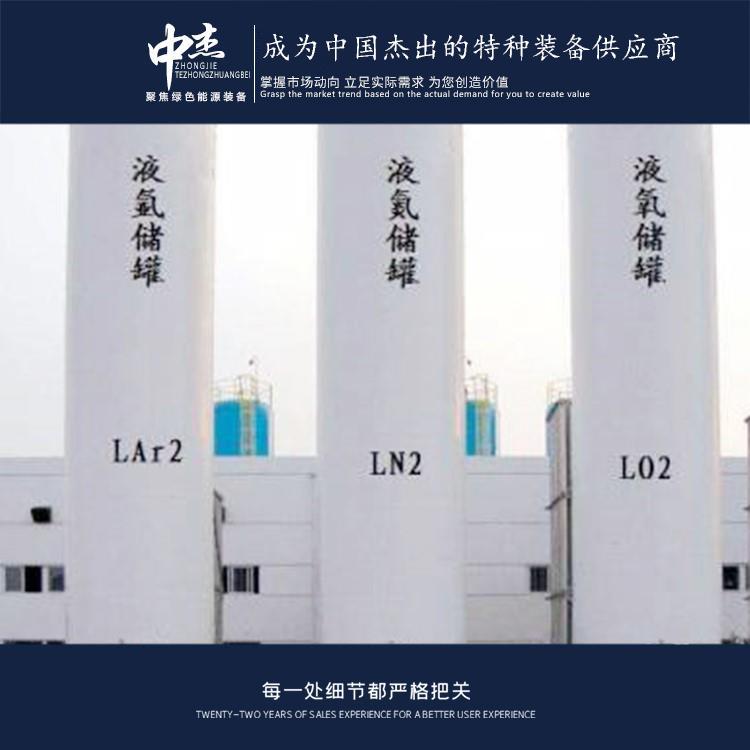

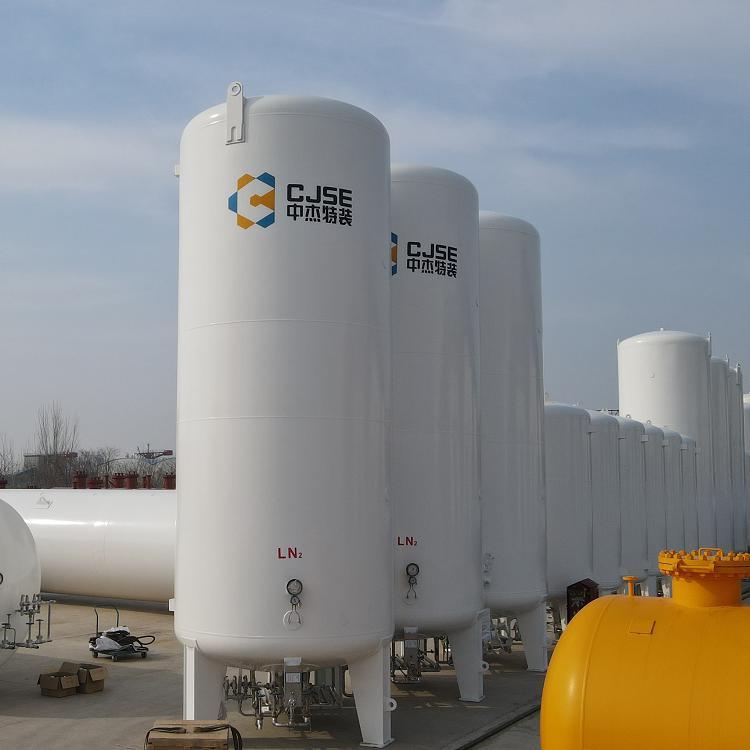
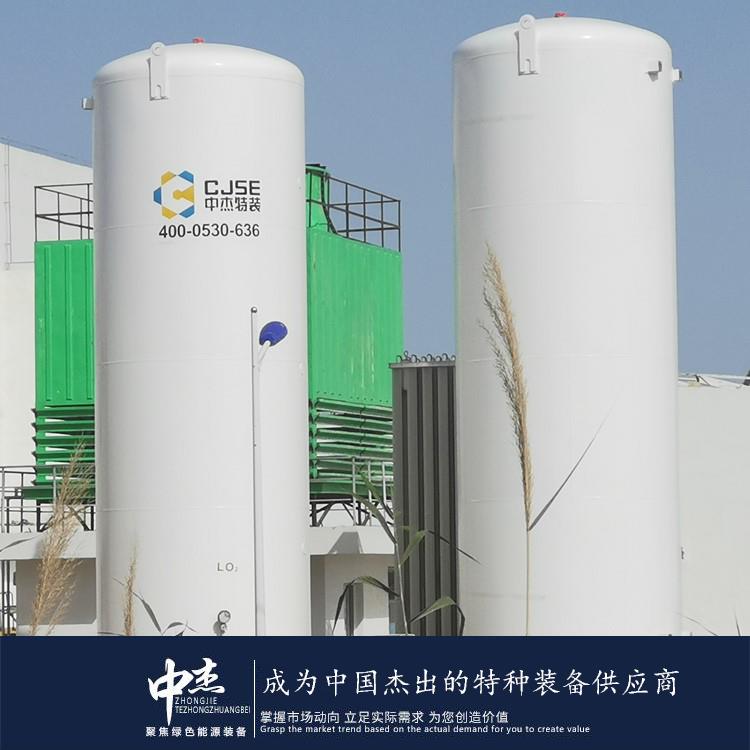



















Shandong Zhongjie Special Equipment Co., Ltd. specializes in the following products: fuel (gas) boilers, organic heat carrier boilers, biomass boilers, waste heat recovery boilers, and other boiler products; vacuum insulation deep-freeze pressure vessels such as LNG storage tanks, oxygen/nitrogen/argon storage tanks, CO2 storage tanks; pressure vessel products including denitrification engineering equipment, heat storage and energy storage equipment, and complete chemical equipment; central air conditioning and ventilation equipment such as ground (water) source heat pumps, air source units, water-cooled screw units, and air-cooled modules. Planned products include large-scale energy centers, LNG transport vehicles, LNG tank containers, and other green energy equipment.
Liquid Oxygen Stations are facilities designed for storing and supplying liquid oxygen, with liquid oxygen tanks being a crucial component of these stations. The liquid oxygen tanks offer several important functions and features:
Store Liquid Oxygen: Liquid oxygen tanks are primarily used for storing liquid oxygen, cooling gaseous oxygen below its critical temperature to convert it into a liquid state. The storage density of liquid oxygen is high, allowing for the storage of large amounts of oxygen in a relatively small space.
Maintain Low Temperature: Liquid oxygen tanks are typically designed with a double-layer structure, separated by a vacuum layer between the inner and outer layers to minimize heat conduction and maintain low temperatures. This helps to keep the liquid oxygen at a low temperature, preventing premature vaporization.
Safety Design: During the design and manufacturing process, liquid oxygen tanks must prioritize safety. They are commonly made from high-strength materials such as stainless steel or aluminum alloy to withstand high pressure and low-temperature conditions. Furthermore, liquid oxygen tanks are equipped with safety valves, pressure sensors, and temperature sensors to ensure the internal pressure and temperature remain within safe limits.
Supply System Connection: Liquid oxygen tanks are typically connected to the supply system to transport liquid oxygen to the required locations. The supply system includes liquid oxygen pumps, pipelines, and valves, among other equipment, which are used to extract liquid oxygen from the tank and deliver it to the user end.
Liquid oxygen tanks play a crucial role in storing and maintaining liquid oxygen in liquid oxygen stations. Their design and operation must strictly adhere to relevant safety regulations and procedures to ensure the safety and reliability of the storage and supply process.
The use of liquid oxygen storage tanks requires special attention to the following safety matters:
Training: Operators of liquid oxygen tanks must undergo training to understand the properties of liquid oxygen, safety operating procedures, and emergency response measures. Only trained personnel are authorized to operate liquid oxygen tanks.
Safety Operating Procedures: Establish and adhere to the safety operating procedures for liquid oxygen storage tanks, including proper operational procedures, protective measures, and emergency response plans. Ensure operators follow the procedures to minimize accident risks.
Protection Measures: When using liquid oxygen tanks, necessary protective measures must be taken, such as wearing protective gloves and suits. Avoid direct contact with liquid oxygen to prevent frostbite.
Leakage Control: Regularly inspect the liquid oxygen storage tank for leaks and equip with leak detection and alarm systems. In the event of a leak, immediate action should be taken to control the leak and carry out repairs.
Fire Prevention Measures: Liquid oxygen contains a high oxygen content, which is prone to causing fires. To prevent and contain fires, fireproof walls and fire-retardant coatings should be installed around the liquid oxygen storage tanks.
Electrostatic Protection: The accumulation of static electricity in liquid oxygen tanks can cause sparks, increasing the risk of fire. Measures such as using electrostatic conductive materials and anti-static equipment should be taken to reduce the accumulation and release of static electricity.
Ventilation Requirements: Ensure adequate ventilation within the enclosed space of the liquid oxygen storage tank to expel vapors produced by the evaporation of liquid oxygen.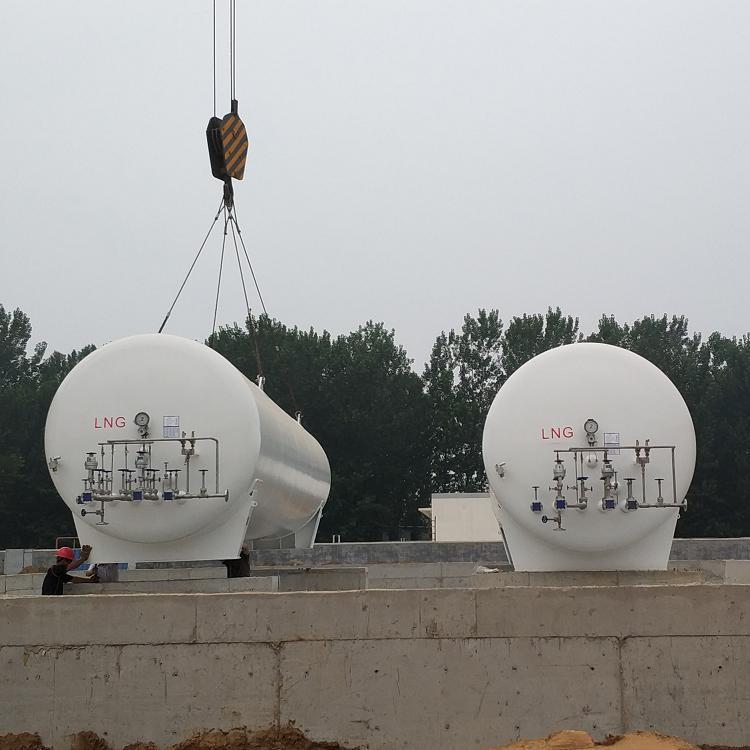
Liquid oxygen storage tanks are devices used for storing liquid oxygen. Liquid oxygen is obtained by cooling oxygen below its boiling point, and it is commonly used in various fields such as medical, industrial production, and equipment. These storage tanks are typically made from high-strength materials like stainless steel to ensure they can withstand the low temperatures and high pressures of liquid oxygen. The interiors often feature insulation to minimize evaporation and maintain the低温 of the liquid oxygen. The design and manufacturing of liquid oxygen storage tanks must prioritize safety and reliability to prevent leaks and explosions. Strict operational procedures and safety standards must be adhered to when using these tanks to ensure the safety of personnel and equipment. The development and manufacturing of liquid oxygen storage tanks are handled by engineers and technical teams, involving expertise and technology from various fields such as materials science, mechanical engineering, and chemical engineering. Different manufacturers may employ different design and manufacturing methods to meet the diverse needs and application scenarios of users.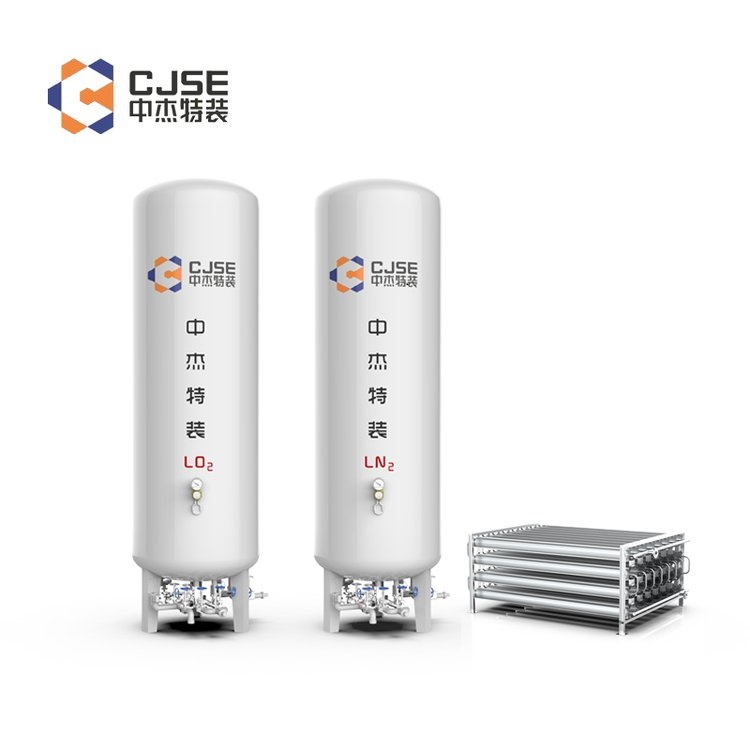
Proper management regulations for the use of low-temperature liquid storage tanks encompass the following aspects:
Tank selection and installation: Choose a suitable low-temperature liquid storage tank and ensure it meets relevant standards and specifications. The installation of the tank should be performed by personnel and conducted according to the manufacturer's instructions and requirements to ensure stability and safety.
Safety Operating Procedures: Establish and implement safety operating procedures for liquid storage tanks, including startup, shutdown, filling, and venting operations. Operators must undergo training to understand the characteristics of liquid storage tanks, safety precautions, and emergency response measures.
Safety Equipment and Protection Measures: Tanks should be equipped with necessary safety devices such as pressure sensors, safety valves, and leak detectors to monitor and control the pressure and temperature of the tank. Additionally, operators should wear appropriate personal protective equipment, such as insulated gloves and protective suits, to ensure their own safety.
Regular Inspections and Maintenance: Regularly inspect and maintain low-temperature liquid storage tanks, including checking the tank's appearance, sealing, and corrosion prevention measures. In case of any issues, promptly repair or replace the tank to ensure its proper operation and safety.
Waste Management: Abandoned low-temperature liquid storage tanks should be disposed of in accordance with relevant environmental protection regulations. The residual liquids in the abandoned tanks should be properly handled to prevent environmental pollution.
Tank Record and Tracking: Establish tank usage records, including filling dates, filling quantities, usage status, etc. Additionally, it is recommended to set up a tank tracking system for monitoring and managing the usage and maintenance of tanks.
Above are some common management regulations for low-temperature liquid storage tanks. Specific regulations may vary by industry and region. When using low-temperature liquid storage tanks, it is essential to comply with relevant laws and standards and formulate suitable management measures based on the actual situation.
Our company attaches great importance to technological innovation and R&D design. We have one municipal-level enterprise technology center in Heze City, equipped with testing facilities for non-destructive testing, physical and chemical testing, welding testing, hydrostatic testing, and more. We have over 600 pieces of various equipment, including CNC machine tools, X-ray flaw detectors, digital ultrasonic flaw detectors, mechanical property testing machines, chemical analyzers, spectrometers, tensile testing machines, plasma welding machines, and others. The key products we have developed, such as temperature and pressure vessel welding, biomass boiler emission reduction, and waste heat utilization, have successively been included in multiple Shandong Provincial Department of Industry and Information Technology science and technology innovation projects, key projects of Shandong Province, and Heze City innovation and excellence projects. We have accumulated 27 authorized utility models, 16 authorized inventions, participated in drafting 2 standards, 2 industry standards, and registered 15 trademarks. Our technical team, in collaboration with Professor Yajiang Li of Shandong University, has developed deep cryogenic container processing technology using the international plasma arc + filler wire tungsten inert gas arc welding (PAW-GTAW) technology. This technology has been appraised as reaching international standards in the field of deep cryogenic container manufacturing at the provincial level. Choose Zhongjie Special Equipment, and let's create brilliance together!
WeChat Official Account

Scan to follow Official Account




















