



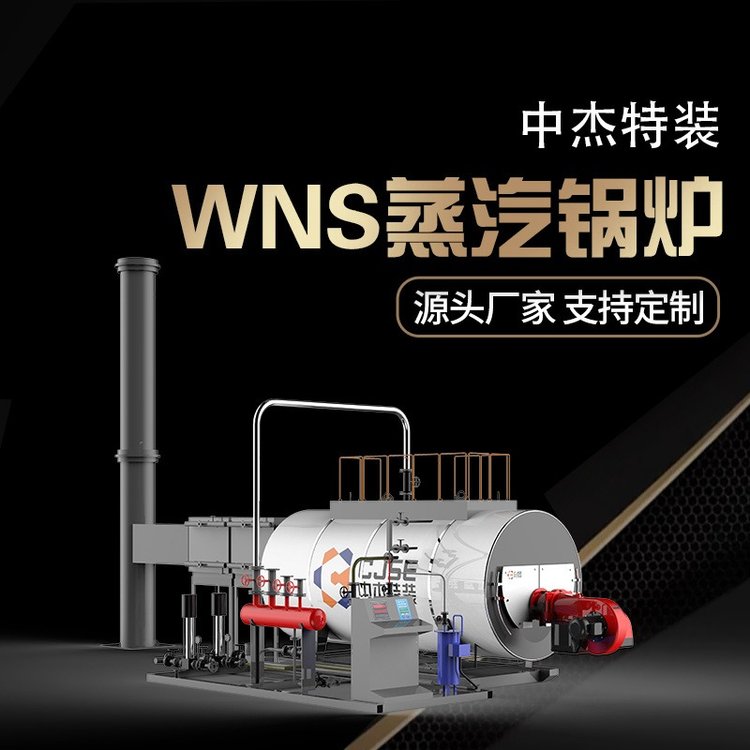
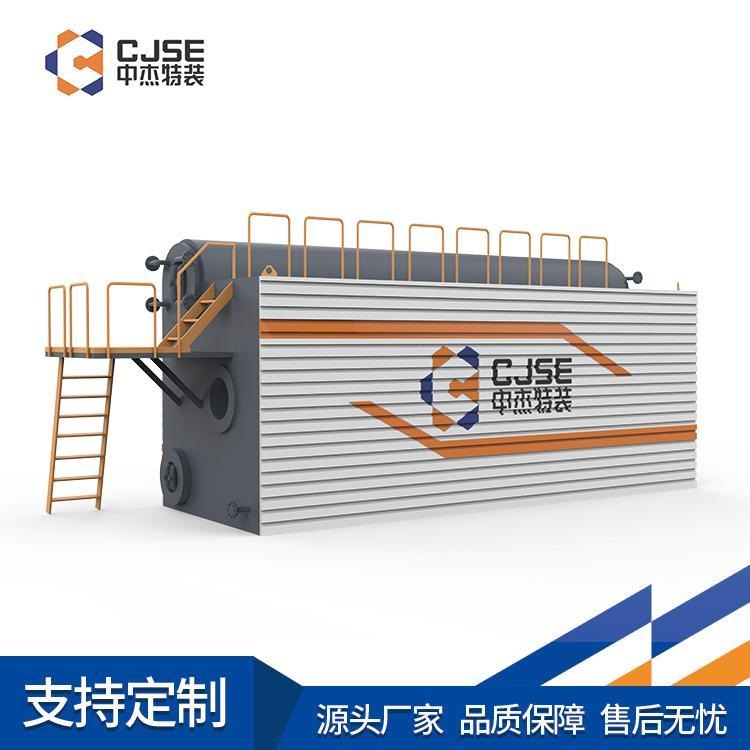



















Shandong Zhongjie Special Equipment Co., Ltd. specializes in the following products: fuel (gas) boilers, organic heat carrier boilers, biomass boilers, waste heat recovery boilers, and other boiler products; vacuum insulated cryogenic pressure vessels such as LNG storage tanks, oxygen/nitrogen/argon storage tanks, and CO2 storage tanks; pressure vessel products including denitrification engineering equipment, heat storage and energy storage equipment, and complete chemical equipment sets; central air conditioning and ventilation equipment such as ground (water) source heat pumps, air source units, water-cooled screw units, and air-cooled modular units. Planned products include large-scale energy centers, LNG transport vehicles, LNG tank containers, and other green energy equipment.
A condensing steam boiler is an energy-saving boiler equipment, with the following working principle and features:
Working Principle:
Steam Generation: The condensing steam boiler produces high-temperature flue gas by burning gas, which then exchanges heat with the water pipes inside the boiler, heating the water into steam.
Steam Condensation: After steam is generated, it enters the condenser where it exchanges heat with the condensing medium (usually cold water or recycled water), releasing heat from the steam and condensing it into water.
Flue Gas Reuse: The flue gas after condensation still contains a certain amount of heat, which can be recovered and reused by the flue gas reuse unit to improve the boiler's thermal efficiency.
Features:
Energy Saving: The condensing steam boiler utilizes the principle of steam condensation to make full use of the heat in the steam, enhancing the thermal energy utilization efficiency and saving energy consumption.
Low Emission: Due to the recovery of most of the heat during the flue gas condensation process, the flue gas temperature is lower, resulting in a relatively lower amount of pollutants emitted, minimizing environmental impact.
Compact Structure: The condensing steam boiler typically features a compact structural design, occupying less floor space, making it suitable for places with limited space.
Quick Start-Up: The condensing steam boiler has the characteristics of quick start-up and shutdown, allowing for flexible adjustments and operation according to actual needs.
Wide Application Range: The condensing steam boiler is suitable for heating and steam requirements in industrial production processes, such as power plants, chemical factories, textile mills, etc.
It should be noted that proper maintenance and care are required for the condensing steam boiler during use to ensure its normal operation and performance, including regular cleaning of the condenser and flue gas reuse unit.
The key to maintaining a hot water boiler is regular maintenance and inspections. Here are some common maintenance steps and precautions:
Clean the burner and flue: Regularly clean the burner and flue to remove ash and dirt, maintaining combustion and heat exchange efficiency. Use cleaning tools and equipment as per the operation manual.
Check water level and pressure: Regularly inspect the water level and pressure of the hot water boiler to ensure safe operation. Top up water and adjust pressure to avoid issues caused by low or high water levels.
Inspect water quality: Regularly conduct water quality tests to check hardness, alkalinity, and oxygen content. Take appropriate water treatment measures based on test results, such as descaling and supplementing missing chemicals, to prevent scale and corrosion damage to the boiler.
Check safety devices: Regularly inspect the safety devices of the hot water boiler, including safety valves, pressure switches, and water level controllers, to ensure proper functioning and safe operation.
Inspect the electrical system: Regularly check the boiler's electrical system, including power connections, controllers, and sensors, to ensure equipment operation and avoid electrical failures.
Regularly flush: Regularly flush out sludge and impurities from the boiler to prevent their impact. Develop a reasonable flushing plan based on the boiler's usage and water quality conditions.
Keep records and monitor: Record operating parameters, maintenance logs, and fault situations, and regularly monitor and analyze to promptly identify and address issues.
Train operators: Ensure operators are adequately trained.
Industrial boilers, during long-term operation, can accumulate scale and deposits, affecting heat exchange efficiency and the normal operation of the boiler. Here are some effective descaling methods:
1. Mechanical Cleaning: Utilizing cleaning equipment and tools, this method employs high-pressure water or mechanical brushing to remove scale and deposits from within the boiler. It is suitable for lighter scale and deposits.
2. Chemical Cleaning: Using chemical cleaning agents, this method dissolves scale and deposits through chemical reactions. Select the appropriate cleaning agent based on the composition and nature of the scale, and follow the instructions for use. Chemical cleaning requires safe operation to avoid damage to equipment and the environment.
3. Acid Cleaning: A common descaling method for certain types of scale and deposits that are difficult to dissolve. Common acid cleaning agents include (list specific agents), and the appropriate cleaning agent and concentration should be selected based on the specific situation. Acid cleaning requires safe operation to avoid harm to equipment and personnel.
4. Alkaline Cleaning: A descaling method for specific types of scale, suitable for alkaline scale. Common alkaline cleaning agents include (list specific agents), and the appropriate cleaning agent and concentration should be selected based on the specific situation. Alkaline cleaning requires safe operation to avoid harm to equipment and personnel.
5. Physical Descaling: Physical descaling methods include ultrasonic cleaning and electro-dissolution. Ultrasonic cleaning uses the vibrational effect of ultrasound to shake the scale into pieces. Electro-dissolution utilizes the principle of electrolysis to dissolve scale through the action of electricity. These physical descaling methods are suitable for special situations and specific types of scale.
When selecting a descaling method, it is necessary to consider the specific conditions of the boiler.
To reduce the operating costs of gas-fired boilers, consider the following aspects:
- Combustion System: Ensure the stability of the combustion system in the gas boiler. Regularly inspect and maintain the burner, clean the nozzles and combustion chamber, adjust the ratio of gas to air to enhance combustion efficiency and reduce gas waste.
- Energy-Saving Control System: Install and use energy-saving control systems such as smart thermostats and timers. These systems can automatically adjust the boiler's operating status based on actual needs, avoiding unnecessary energy waste.
- Regular Maintenance: Conduct regular maintenance on gas-fired boilers, including cleaning heat exchangers, inspecting and replacing seals, and clearing gas pipes. Maintain the boiler's normal operation to reduce energy loss and the occurrence of malfunctions.
- Heat Recovery: Consider installing heat recovery devices such as waste heat recovery units or flue gas heat exchangers. These devices can utilize the excess heat from the flue gas emitted by the gas boiler to heat water or other equipment requiring heat, improving energy utilization efficiency.
- Pipe Insulation and Leak Inspection: Ensure that the insulation of gas and hot water pipes is effective to reduce energy loss. Regularly check for pipe leaks and repair them promptly to avoid energy waste and safety hazards.
- Energy Management and Monitoring: Establish an effective energy management system to monitor and analyze the energy consumption of gas-fired boilers. Through data analysis and optimizing operating strategies, identify energy-saving potential and areas for improvement.
- Training and Awareness: Provide employee training to enhance awareness of operating and maintaining gas-fired boilers. Employee knowledge and skill improvement contribute to better management and operation of the boilers, reducing operating costs.
By considering these factors comprehensively, you can effectively reduce the operation costs of gas-fired boilers.
ZJ Special Equipment adheres to the great vision of "realizing employees' dreams, creating customer value, and striving for the prosperity and strength of our motherland," focusing on the development of green energy equipment industry, and devoting high-quality products and services to society with competitive prices!
WeChat Official Account

Scan to follow Official Account




















