


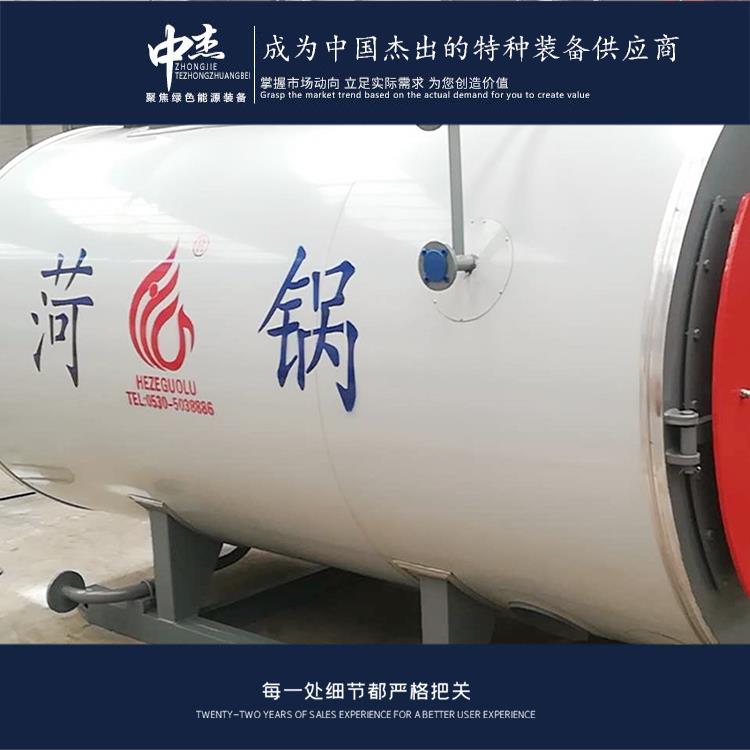

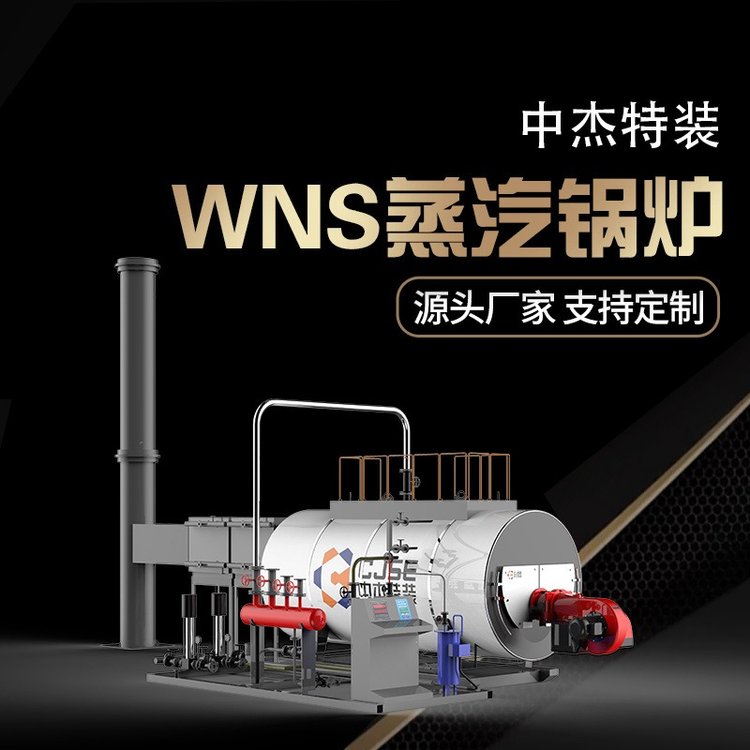
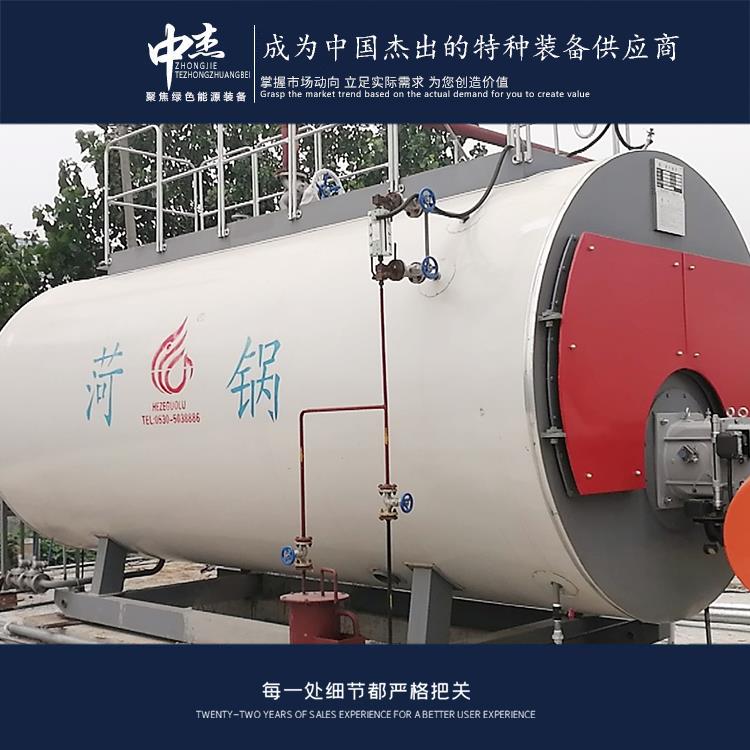



















Shandong Zhongjie Special Equipment (formerly Heze Boiler Factory Co., Ltd.) holds an A-grade boiler manufacturing license, an A2-grade pressure vessel manufacturing license, an A2-grade pressure vessel design license, a B-grade boiler installation license, and GB2/Class and GC2/Class pressure pipeline installation licenses, as well as a mechanical and electrical equipment installation contracting qualification. It is a member of the China Boiler and Water Treatment Association, the China Chemical Equipment Association, and the council unit of the Shandong Equipment Manufacturing Association, and has passed certifications for the ISO9001 Quality Management System, ISO14001 Environmental Management System, OHSAS18001 Occupational Health and Safety Management System, and the U.S. ASME/U2 certification.
A gas thermal oil boiler is a device that uses gas as fuel and transfers heat energy through thermal oil. Its features include:
- High thermal efficiency: The gas thermal oil boiler uses thermal oil as the heat transfer medium, offering high heat transfer efficiency. Thermal oil has high thermal conductivity and stability, allowing for rapid heat transfer and improving energy utilization.
- Temperature control: By controlling the gas supply and thermal oil circulation, the boiler can maintain precise control over operating temperatures. This temperature control meets various process and production requirements, enhancing production efficiency and product quality.
- Safety and reliability: The boiler employs a closed-loop system, with the combustion process occurring in a sealed environment, reducing the risk of gas leaks. Additionally, the thermal oil has a high flash point and ignition point, making the combustion process relatively safe and reliable.
- Versatility: Suitable for multiple industrial sectors such as chemicals, textiles, and food processing, the gas thermal oil boiler can adapt to various process demands and working conditions, offering strong flexibility.
- Environmental friendly and energy-saving: The gas thermal oil boiler emits relatively low amounts of exhaust gases during combustion, causing minimal environmental pollution. With high thermal efficiency and temperature control, it can save energy consumption and reduce energy costs.
- It is important to note that regular maintenance and inspection are required for the proper operation and extended lifespan of the gas thermal oil boiler. Additionally, choosing the right model and supplier is crucial to ensure its features and performance.
The decline in the consumption of thermal oil boilers can be attributed to several factors:
1. Combustion Technology: Modern thermal oil boilers employ advanced combustion technologies such as premixed combustion and afterburning, enabling complete fuel combustion and enhancing energy utilization, thereby reducing energy consumption.
2. Heat Recovery: Thermal oil boilers typically generate a significant amount of excess heat during flue gas emissions. By utilizing heat recovery systems like flue gas heat recovery boilers or flue gas heat exchangers, the excess heat in the flue gas can be recovered and reused, improving energy efficiency and reducing consumption.
3. Intelligent Control Systems: Contemporary thermal oil boilers are equipped with intelligent control systems capable of real-time monitoring and adjustment of operating parameters such as temperature, pressure, and flow. Through precise control and regulation, these systems ensure optimal boiler operation, preventing unnecessary energy waste and loss.
4. Energy-saving Retrofitting and Optimization: For older thermal oil boilers, energy-saving retrofitting and optimization can be performed. This includes installing energy-saving equipment like variable frequency drives and modified burners to enhance energy efficiency. Additionally, optimizing the boiler system, such as improving pipe insulation and reducing leaks, can further reduce energy loss.
5. Energy Management and Maintenance: Effective energy management and regular equipment maintenance are crucial factors in reducing energy consumption. Implementing energy management measures such as energy monitoring, metering, and promoting energy-saving awareness can identify and resolve energy waste issues. Regular equipment maintenance and upkeep ensure the normal operation of the equipment, avoiding unnecessary energy loss.
In summary, the decline in the consumption of thermal oil boilers can be achieved through combustion technology, heat recovery, intelligent control, retrofitting, and energy management.
Yes, durable thermal oil boilers typically have a longer service life. Here are some reasons: Material Quality: Thermal oil boilers are made with high-quality materials such as heat-resistant and corrosion-resistant steel and alloy materials. These materials can withstand high temperatures and pressures, offering good durability and corrosion resistance, thereby extending the boiler's lifespan. Design and Manufacturing Process: Durable thermal oil boilers usually employ advanced design and manufacturing processes. Reasonable structural design and precise manufacturing techniques reduce stress concentration and thermal stress, enhancing the boiler's stability and durability. Regular Maintenance and Care: Regular maintenance and care of thermal oil boilers are crucial for extending their service life. Regularly cleaning and inspecting the internal pipes, flues, and burners, and promptly replacing worn-out parts, can minimize malfunctions and damage, and prolong the boiler's life. Proper Operation and Management: Correct operation and management are also vital factors in ensuring the longevity of thermal oil boilers. Operators should follow the operation manual and procedures, avoid overloading and improper operations, and ensure the boiler operates safely and stably. It's important to note that even durable thermal oil boilers require regular inspections and maintenance to ensure proper operation and extend their lifespan. Additionally, the boiler's lifespan is influenced by factors such as the operating environment, load conditions, and operating methods. Therefore, proper use and maintenance are key to ensuring the longevity of thermal oil boilers.
Excessive exhaust gas temperature in a thermal oil boiler may be due to several reasons: Incomplete combustion: If the fuel is not fully combusted during the boiler's combustion process, it leads to a high concentration of unburned fuel and harmful substances in the flue gas, causing the exhaust gas temperature to rise. Possible causes include insufficient fuel supply, improper adjustment of the burner, and burner wear. Excessive air: An excess of air can lower the combustion temperature, making the heat in the flue gas insufficient to reduce the flue gas temperature to a reasonable range. Reasons for excessive air may include improper burner adjustment and overly open air doors. Flue blockage: Accumulated ash, coking, or other impurities in the flue can obstruct the flow of flue gas, increasing the residence time of the flue gas and leading to higher exhaust gas temperatures. Abnormal thermal oil flow: Abnormal thermal oil flow, either too high or too low, can cause uneven heat transfer, leading to increased flue gas temperatures. Overheating of the boiler: Improper temperature control in the thermal oil boiler can lead to overheating, causing the flue gas temperature to rise. Design issues of the boiler: Design problems such as a small flue or poor flue gas flow may also result in high exhaust gas temperatures. To address the issue of high exhaust gas temperature, a comprehensive inspection and analysis of the thermal oil boiler is required. Solutions may include adjusting burner parameters, cleaning the flue, checking thermal oil flow and temperature control. In severe cases, boiler system modifications or repairs may be necessary. Regular maintenance and inspections are also crucial preventive measures against high exhaust gas temperatures.
Our company attaches great importance to technological innovation and R&D design. We have one municipal-level enterprise technology center in Heze City, equipped with non-destructive testing, physical and chemical testing, welding testing, hydrostatic testing, and other testing facilities. We have over 600 various instruments and equipment, including CNC machine tools, X-ray flaw detectors, digital ultrasonic flaw detectors, mechanical property testing machines, chemical analyzers, spectrometers, tensile testing machines, plasma welding machines, etc. The key products and technologies we have developed, such as temperature and pressure vessel welding, biomass boiler emission reduction, and waste heat utilization, have successively been shortlisted for multiple Shandong Provincial Department of Industry and Information Technology Science and Technology Innovation projects, Shandong Provincial key projects, and Heze City innovation and excellence projects. We have cumulatively obtained 27 authorized utility models, 16 authorized inventions, participated in drafting 2 standards, 2 industry standards, and registered 15 trademarks. The technical team of our company, in collaboration with Professor Yajiang Li of Shandong University, has developed deep cryogenic container processing technology using the international plasma arc + filler wire tungsten inert gas arc welding (PAW-GTAW) technology. After being appraised as a provincial-level scientific and technological achievement, our technology level has reached an international standard in the field of deep cryogenic container manufacturing.
Choose ZJET customized solutions, let's create brilliance together!
WeChat Official Account

Scan to follow Official Account




















