


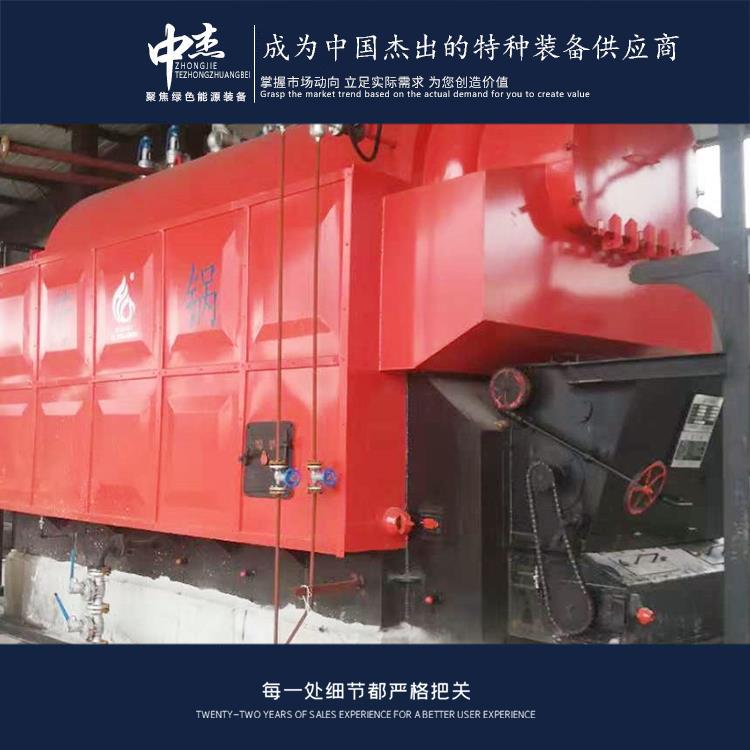



















Shandong Zhongjie Special Equipment (formerly Heze Boiler Factory Co., Ltd.) holds an A-grade boiler manufacturing license, A2-grade pressure vessel manufacturing license, A2-grade pressure vessel design license, B-grade boiler installation and GB2, GC2 pressure pipeline installation licenses, as well as a mechanical and electrical equipment installation contracting license. It is a member of the China Boiler and Water Treatment Association, the China Chemical Equipment Association, and a council member of the Shandong Equipment Manufacturing Association, and has passed the ISO9001 Quality Management System, ISO14001 Environmental Management System, OHSAS18001 Occupational Health and Safety Management System certifications, as well as the American ASME/U2 certification.
Biomass boiler pellets are a common form of biomass fuel, also known as biomass pellets or wood pellets. They are small granular fuels produced by processing biomass raw materials (such as wood chips, straw, wheat straw, fruit shells, etc.) through processes like crushing, drying, and pressing.
Biomass boiler pellet fuel boasts the following features:
High Energy Density: Biomass pellet fuel boasts a high energy density, enabling more energy to be stored in a relatively smaller volume, making it convenient for transportation and storage.
Easy to Burn: Biomass pellet fuel has regular shape and uniform size, ensuring a stable combustion process, easy control of combustion parameters, and improved combustion efficiency.
Low humidity and low ash content: The biomass pellet fuel has been dried and processed, resulting in low humidity and relatively low ash content. This reduces water evaporation and ash production during combustion, benefiting fuel efficiency and reducing pollutant emissions.
Renewable and Eco-friendly: Biomass pellet fuel is a renewable energy source, which can be recycled through the regeneration process. The carbon dioxide released during combustion can be absorbed by biomass for regeneration, creating a cycle with minimal environmental impact.
Wide combustion adaptability: Biomass pellet fuel is suitable for biomass boilers and has strong combustion adaptability. Different types and specifications of pellet fuel can be selected according to actual conditions to meet the needs of various boilers.
Biomass pellets are widely used in biomass boilers, representing a clean and renewable energy source that is crucial for reducing carbon emissions and protecting the environment.
The hot water boiler features the following main characteristics:
Energy-saving: The combustion technology and heat exchanger design of the hot water boiler enable high energy conversion and utilization, enhancing energy efficiency, reducing energy consumption, and operating costs.
Environmental Emission Reduction: The hot water boiler utilizes advanced combustion technology and flue gas purification equipment during the combustion process, effectively controlling and reducing pollutant emissions, protecting the environment and public health.
Safety and Reliability: The hot water boiler is equipped with comprehensive safety protection devices and control systems, capable of real-time monitoring and control of the boiler's operational status, ensuring the safe and reliable operation of the boiler and preventing accidents.
Temperature control intelligence: The temperature control system and intelligent control devices equipped with the hot water boiler enable temperature control and energy consumption management, enhancing system stability and comfort.
Multi-energy supply: Hot water boilers can accommodate various energy sources, including gas, oil, biomass, solar energy, etc., achieving diversified energy use and sustainable development.
Flexible Installation: The hot water boiler features flexible installation methods and structural design, allowing for customization and setup according to various locations and requirements, catering to the needs of both architectural and industrial sites.
Stable: The heat exchangers and combustion system of the hot water boiler can quickly reach the set temperature and maintain a stable supply of hot water, meeting the user's demand for hot water.
Ease of Maintenance: The maintenance and upkeep of the hot water boiler are relatively straightforward, with a clear equipment structure that's easy to clean and repair, reducing downtime and maintenance costs.
These features make hot water boilers the ideal equipment for supplying hot water, widely used in residential areas, industrial factories, commercial buildings, and other locations, providing users with environmentally friendly, safe, and comfortable hot water supply.
Biomass fuel boilers feature the following product characteristics:
Fuel Diversity: Biomass fuel boilers can accommodate a variety of biomass fuels, such as wood chips, straw, rice husks, etc. This diversity makes biomass fuel boilers more flexible and sustainable in energy utilization.
Low-emission and environmentally friendly: Biomass fuel boilers burn biomass fuel, resulting in relatively low emissions during combustion, such as particulates and nitrogen oxides. Consequently, biomass fuel boilers have lower carbon emissions and environmental pollution.
Energy-saving: Biomass fuel boilers utilize advanced combustion technology and heat recovery techniques to achieve efficient combustion and heat utilization. High combustion and thermal efficiency ensure maximum energy extraction from biomass fuel.
Automated Control: The biomass fuel boiler is equipped with an automated control system that can accurately control and adjust parameters such as temperature, pressure, and fuel supply. The control system features safety protection functions to ensure the safe operation of the boiler.
High Reliability and Stability: The materials and processes used in biomass fuel boilers offer excellent durability and stability. Rigorous quality control and testing ensure the boiler's high reliability and long-term stable operation.
Flexible Application: Biomass fuel boilers are widely applicable in industrial, commercial, and residential sectors, such as for heating, heating systems, and steam generators. Offering versatile installation methods and capacity options, they cater to diverse user needs.
When selecting biomass boilers, pay attention to the following factors:
Fuel Adaptability: Different types of biomass boilers are suitable for various fuels, such as wood chips, straw, and waste crops. When selecting a biomass boiler, consider the availability and cost of the required fuel to ensure the boiler can adapt to the fuel type being used.
Boiler Power and Heat Load: Select an appropriate biomass boiler power based on the heating area and heat load required. An undersized boiler power may not meet the heating needs, while an oversized one will result in energy waste.
Combustion Efficiency: Combustion efficiency is a crucial indicator for assessing the energy utilization efficiency of boilers. Choosing biomass boilers with high combustion efficiency can reduce energy consumption and carbon emissions.
Equipment Quality and Reliability: Choose a biomass boiler manufacturer with an excellent reputation to ensure reliable equipment, stable operation, and reduced downtime and maintenance costs.
Environmental Performance: Focus on the environmental performance of biomass boilers, including emission standards and flue gas treatment systems. Choose boilers that reduce environmental pollution.
Control systems and automation level: The advanced control systems and automation level enhance the operational efficiency and stability of biomass boilers, while reducing labor and management costs.
After-sales Service and Technical Support: Choose suppliers with excellent after-sales service and technical support to ensure timely access to technical assistance and repair services during use.
In summary, when selecting biomass boilers, consider fuel adaptability, boiler power and heat load, combustion efficiency, equipment quality and reliability, environmental performance, control systems, and degree of automation.
Shandong Zhongjie Special Equipment, welcome customers to visit our factory for business discussions.
WeChat Official Account

Scan to follow Official Account




















