


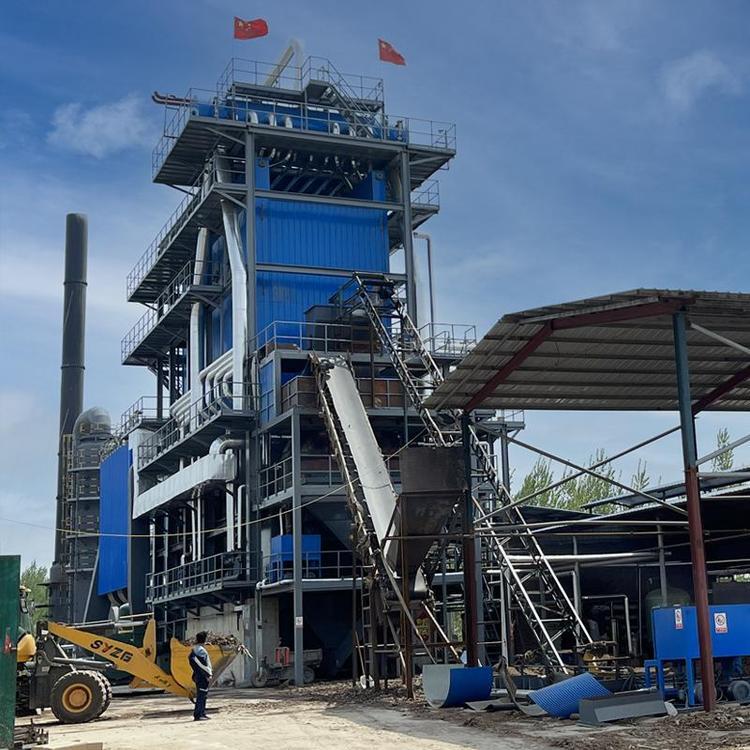



















Shandong Zhongjie Special Equipment's main products include: fuel (gas) boilers, organic heat carrier boilers, biomass boilers, waste heat recovery boilers, and other boiler products; vacuum insulation cryogenic pressure vessels such as LNG tanks, oxygen/nitrogen/argon tanks, and CO2 tanks; pressure vessel products like denitrification engineering equipment, heat storage and energy storage equipment, and complete chemical equipment sets; central air conditioning and HVAC equipment such as ground (water) source heat pumps, air source units, water-cooled screw units, and air-cooled modular units. Planned products include large-scale energy centers, LNG transport vehicles, LNG tank containers, and other green energy equipment.
Fully automatic biomass boilers are biomass boilers equipped with a full automatic control system. Here are some points to note:
Regular Maintenance: Although the fully automatic biomass boiler features an automatic control system, regular maintenance is still necessary. This includes cleaning the combustion chamber, heat exchanger, flue, and other components, inspecting and replacing worn-out parts, to ensure the boiler operates normally.
Water Treatment: The quality of water in biomass boilers is crucial for their normal operation. Regularly inspect and treat water quality, including water hardness, alkalinity, and impurities in the water. Take appropriate water treatment measures based on the water quality to prevent scale and corrosion, and protect the boiler's heat exchangers and pipelines.
Fuel Quality Control: The quality of fuel for biomass boilers is crucial for combustion efficiency and stable operation. Select the appropriate amount of biomass fuel and conduct proper quality control, including moisture content and particle size. Ensure the fuel quality meets the boiler's requirements to avoid incomplete combustion and blockages.
Regular cleaning of the combustion system: The combustion system of a fully automatic biomass boiler requires regular cleaning, including the combustion chamber, burners, and burner nozzles. Accumulation of soot, sediment, and dirt is to maintain the smooth operation of the combustion system, avoiding issues such as incomplete combustion and unstable flames.
Regularly inspect control systems: The control system of a fully automatic biomass boiler requires regular inspections and testing to ensure proper operation. This includes checking the accuracy of sensors and the stability of controllers. Promptly identify and resolve issues with the control system to ensure the stable operation of the boiler.
Maintain records and monitoring: Record operating parameters and fault conditions of all active biomass boilers, and conduct monitoring and analysis. Identify and resolve issues promptly to prevent faults from occurring or escalating.
Above are some precautions when using fully automatic biomass boilers. Through reasonable maintenance, quality control, and operation, the stable operation and work of the boiler can be ensured.
Several advantages come with choosing biomass boilers:
Renewable Energy: Fuel used in biomass boilers comes from organic matter such as plants, animals, and microorganisms, making it a renewable energy source. Compared to traditional fossil fuels, biomass fuel has lower carbon emissions and a smaller environmental impact, contributing to reduced greenhouse gas emissions and being more environmentally friendly.
Diverse fuel sources: Biomass fuel originates from a wide range, including wood, straw, discarded crops, food waste, and municipal solid waste. This diversity in fuel sources allows biomass boilers to be flexible and adaptable, utilizing waste and by-products from plants and animals to reduce resource waste.
Environmental friendliness: The carbon dioxide produced during the combustion process of biomass boilers can be absorbed by plants, forming a cycle that reduces air pollution. Additionally, the emissions and ash produced during the combustion of biomass boilers are relatively low, resulting in minimal environmental impact.
Energy Security: Biomass, as a local renewable energy source, can reduce dependence on imported energy and enhance energy security. In areas with scarce resources, the use of biomass boilers can provide a reliable energy supply.
Economic Efficiency: Biomass fuel is relatively cost-effective, which can reduce energy costs. Moreover, the technology and equipment for biomass boilers are continuously developing and maturing, making them even more economically viable.
Energy-saving methods for biomass hot water boilers mainly include the following aspects:
Fuel Selection: Choose biomass fuels in appropriate quantities, such as wood chips, straw, etc., ensuring the moisture content and particle size meet the boiler's requirements. Low moisture content and suitable particle size of the fuel can enhance combustion efficiency and reduce energy waste.
Combustion Optimization: By optimizing the combustion process, enhance combustion efficiency. Adjust combustion parameters, such as combustion temperature and duration, to achieve more complete combustion and reduce fuel wastage.
Heat Recovery Utilization: Utilize waste heat from flue gas for heat recovery. By installing a flue gas waste heat recovery unit, the waste heat in the flue gas is recovered and used for other heat requirements such as heating and hot water, enhancing energy utilization efficiency.
Boiler Insulation: Enhance the insulation of the boiler to minimize heat loss. Insulate the boiler shell and pipes to reduce heat dissipation and improve the boiler's thermal efficiency.
Control System Optimization: Improve the boiler control system to achieve temperature and pressure control. By utilizing rational control strategies, reduce energy waste and enhance the boiler's operational efficiency.
Regular Maintenance: Perform regular maintenance on biomass hot water boilers to ensure normal operation. Clean the combustion chamber, heat exchangers, and other components, inspect and replace worn parts, and ensure the boiler's operation.
Energy Management: Establish a scientific energy management system, monitor and analyze energy consumption, and formulate reasonable energy-saving measures. Continuously optimize the operation of boilers through energy management methods to achieve energy-saving goals.
By utilizing the comprehensive application of these energy-saving methods, the energy efficiency of biomass hot water boilers can be improved, energy waste reduced, and the goal of energy conservation and environmental protection achieved.
Biomass boilers and coal-fired boilers differ in terms of fuel, environmental performance, and sustainability.
Fuel Type: Biomass boilers utilize renewable biomass fuels such as wood chips and straw, whereas coal-fired boilers use fossil fuels like coal. Biomass fuels are renewable and low-carbon, whereas coal is a finite resource and burning it produces a large amount of carbon dioxide and other pollutants.
Environmental Performance: Biomass boiler combustion produces relatively fewer pollutants, such as carbon dioxide, nitrogen oxides, and particulates. In contrast, coal-fired boilers emit more pollutants, including nitrogen oxides, particulates, and heavy metals, which have a significant impact on air quality and human health.
Sustainability: Biomass fuel is a renewable resource that can be cultivated and recycled through regenerative cycles, offering good sustainability. Coal, on the other hand, is a finite resource, and mining and burning it can cause environmental damage.
Combustion Efficiency: The combustion efficiency of biomass boilers is relatively low due to the complex chemical and physical properties of biomass fuel, which tends to produce more ash and carbon deposits during combustion. In contrast, coal-fired boilers have a higher combustion efficiency, as the chemical properties of coal fuel are more stable and the combustion process is more complete.
Technical Requirements: Biomass boiler compared to coal-fired boiler
Shandong Zhongjie Special Equipment, welcome customers to our factory for business discussions.
WeChat Official Account

Scan to follow Official Account




















