



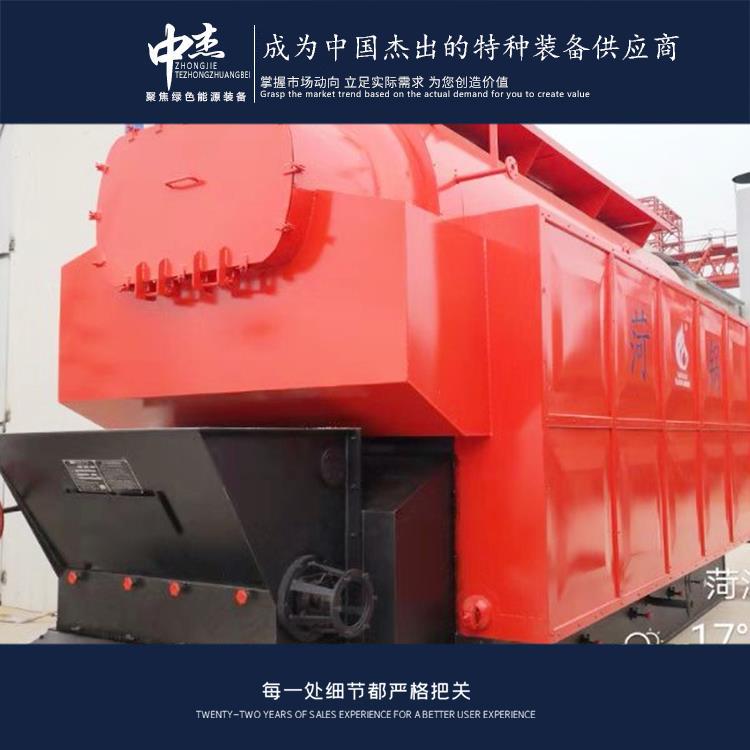
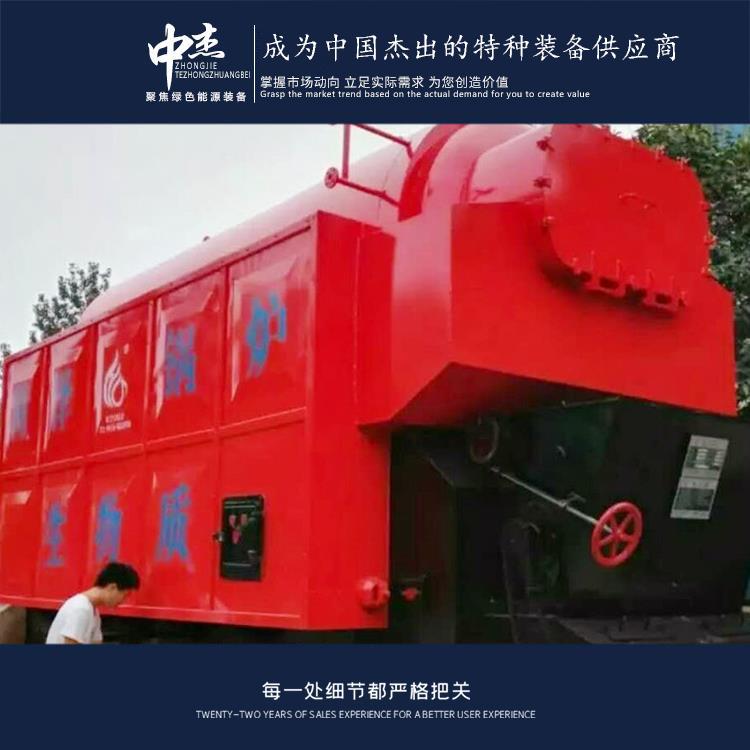



















Shandong Zhongjie Special Equipment (formerly Heze Boiler Factory Co., Ltd.) was established in 2001, located at No. 2218 Jinnan Road, Development Zone, Heze City, with a registered capital of 50 million yuan and total assets of 500 million yuan. The company has 7 business centers: boilers, deep-freeze containers, pressure vessels, central air conditioning, engineering installation, international trade, and Internet of Things. It has three factory sites on Jinnan Road, East Changjiang Road, and Bohai Road, covering a total of 200,000 square meters, with the main workshop spanning 83,000 square meters. It currently employs 710 people, including 247 engineers and technicians, and 82 intermediate-level technicians. In December 2016, it was recognized as a "High-Tech Enterprise" by the Science and Technology Department. In June 2021, it was identified as a "Specialized and New Enterprise in Shandong Province" by the Ministry of Industry and Information Technology. In June 2022, it was recognized as a "Gazelle Enterprise in Shandong Province" and in August 2022, it was identified as a "Specialized and New Small Giant Enterprise" by the Ministry of Industry and Information Technology.
Before using biomass boilers, the following measures can be taken:
Safety Inspection: Conduct a safety check on biomass boilers to ensure the normal operation of all components and equipment. Inspect the condition of the boiler's burners, valves, sensors, etc., for any signs of leakage or damage.
Clean combustion chamber: Clean the combustion chamber of biomass boiler, removing ash and soot produced during the combustion process. Use appropriate tools and cleaning agents to ensure the chamber remains clear and clean.
Inspect fuel supply system: Verify that the fuel supply system of the biomass boiler is clear and unobstructed, and ensure an adequate fuel supply in the storage containers. Also, check the fuel quality to confirm it meets specifications, free of impurities or moisture.
Check Water Quality: Inspect the water supply for the boiler to ensure it meets the required standards. Conduct water quality tests to measure parameters such as hardness and pH, and implement appropriate water treatment measures based on the test results.
Ensure good ventilation: Biomass boilers produce flue gas during combustion, so it's crucial to maintain good ventilation around the boiler to exhaust the smoke and heat. Ventilation equipment can be installed or ensure the room housing the boiler has adequate ventilation openings.
Training and Operation Guidance: Provide training and operational guidance to personnel using biomass boilers to ensure they are familiar with the boiler's operation, safety precautions, and emergency response procedures.
These measures help ensure the safety and proper operation of biomass boilers before use, reducing the occurrence of malfunctions and accidents. Additionally, regular maintenance and upkeep are crucial for the long-term stable operation of biomass boilers.
A biomass boiler economizer is a device used to recover waste heat from flue gas, which functions to enhance the boiler's thermal efficiency and reduce energy waste. The economizer transfers heat from the flue gas to the boiler's incoming water, preheating it and thereby reducing fuel consumption.
According to their structure and working principle, biomass boiler economizers can be classified into the following categories:
Tube-type economizer: A common type, consisting of a series of parallel pipes. Flue gas flows over the outside of the tubes, while feedwater circulates inside the tubes. Heat transfer through the tube walls recovers the waste heat from the flue gas.
Finned Economizer: The finned economizer is an improvement on the tube economizer, featuring fins that increase the heat transfer area and enhance efficiency. It is suitable for high-temperature flue gas conditions.
Direct-Flow Economizer: A direct-flow economizer is a structure that separates flue gas and incoming water, achieving cross heat transfer between the two through multiple parallel flue gas and water channels, thereby enhancing heat transfer efficiency.
Recirculation refers to the process of reintroducing the waste heat from the economizer back into the boiler combustion zone to enhance combustion temperature and thermal efficiency. Recirculation can be controlled by adjusting the recirculation ratio, typically during the boiler's operation as needed. Recirculation can increase combustion temperature, improve combustion completeness, and reduce pollutants.
The application methods for biomass boilers can be selected and adjusted according to specific application needs and scenarios. Here are some common application methods:
Heating Systems: Biomass boilers can be used in heating systems to provide hot water or steam for buildings, industrial plants, etc. Heat energy can be transmitted through pipelines to the areas requiring heating, meeting needs for heating and hot water.
Industrial Production: Biomass boilers can be used for heat supply in industrial production processes, such as food processing, pulp and papermaking, and chemical industries. The heat provided by biomass boilers meets the heating and steam requirements for industrial production.
Greenhouse Heating: Biomass boilers can be used in greenhouse heating systems, providing hot water or steam to maintain the ideal temperature and humidity within the greenhouse, promoting plant growth.
Rural Heating: Biomass boilers can be used in rural heating systems to provide warmth and hot water for rural residents. They can meet the heating needs of rural areas through centralized or decentralized heating.
Hot Water Pump Drying: Biomass boilers can be used in hot water pump drying systems for drying wood, grain, and other materials. By providing hot water or steam, it accelerates the drying process and enhances efficiency.
Biomass Power Generation: Biomass boilers can be integrated with power generation equipment for biomass power generation. By burning biomass fuel, steam is produced to drive the generator, achieving energy utilization and conversion.
Above are some common applications of biomass boilers. According to specific requirements and scenarios, suitable application methods can be chosen, and configurations and adjustments can be made in conjunction with relevant equipment and systems.
Transforming coal-fired boilers into biomass boilers can offer the following benefits:
Environmentally Friendly: Fuel for biomass boilers comes from organic matter such as plants, animals, and microorganisms. Compared to coal boilers, biomass boilers emit less carbon dioxide during combustion, reducing greenhouse gas emissions and being more environmentally friendly.
Energy conservation and emission reduction: Biomass boilers employ combustion technology and heat recovery systems to enhance energy efficiency and minimize energy waste. Additionally, the combustion of biomass fuel generates relatively less ash, slag, and pollutants, thereby reducing environmental pollution.
Energy Security: Biomass, as a domestic renewable energy source, can reduce dependence on imported energy and enhance energy security. In areas with scarce resources, switching to biomass boilers can provide a reliable energy supply.
Economic benefits: Biomass fuel is relatively cost-effective and can reduce energy costs. Moreover, the technology and equipment for biomass boilers are continuously evolving and maturing, making them more economically competitive.
Waste Utilization: Transforming coal-fired boilers into biomass boilers can utilize agricultural residues like straw and wood waste, effectively utilizing waste resources and reducing resource wastage.
Note that transforming a coal-fired boiler into a biomass boiler requires corresponding technical upgrades and equipment updates, including the combustion system, fuel supply system, and flue gas treatment system. The transformation process must consider fuel characteristics, combustion properties, and equipment adaptability to ensure the stable operation of the biomass boiler post-upgrade and achieve the expected energy-saving and emission-reduction effects. Therefore, it is advisable to seek engineering technical support and consultation when carrying out the coal-fired boiler transformation.
Shandong Zhongjie Special Equipment, welcome customers to our factory for business discussions.
WeChat Official Account

Scan to follow Official Account




















