


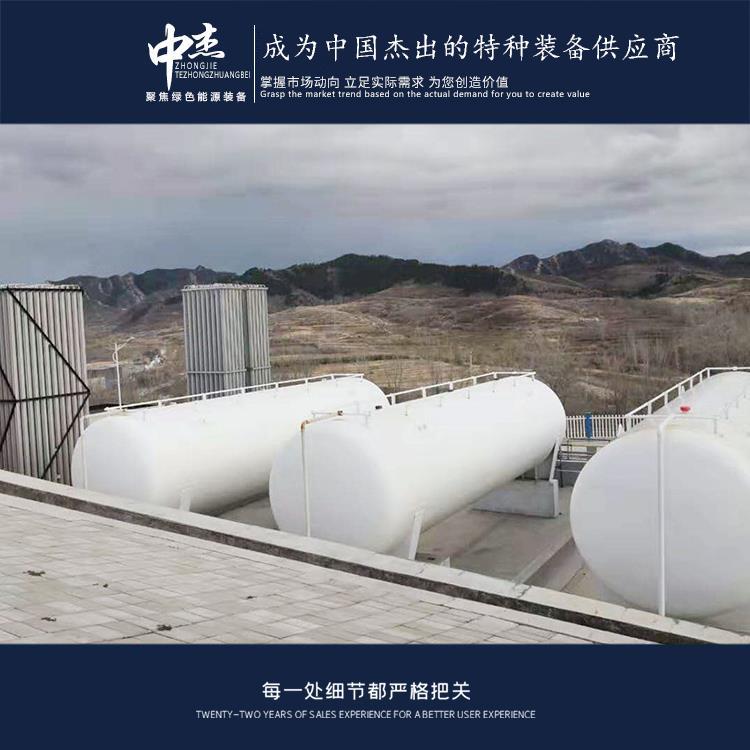



















Shandong Zhongjie Special Equipment (formerly Heze Boiler Factory Co., Ltd.) was established in 2001, located at No. 2218 Jinan Road, Development Zone, Heze City. With a registered capital of 50 million yuan and total assets of 500 million yuan, the company has 7 business centers: boilers, deep-freezing containers, pressure vessels, central air conditioning, engineering installation, international trade, and Internet of Things. It operates three factory sites on Jinan Road, East Changjiang Road, and Bohai Road, covering a total area of 200,000 square meters, with the main workshop spanning 83,000 square meters. The company currently employs 710 people, including 247 engineers and technicians, and 82 intermediate-level technical personnel. In December 2016, it was recognized as a "High-tech Enterprise" by the Science and Technology Department. In June 2021, it was identified as a "Specialized and New Enterprise in Shandong Province" by the Ministry of Industry and Information Technology. In June 2022, it was recognized as a "Gazelle Enterprise in Shandong Province" and in August 2022, it was identified as a "Specialized and New Small Giant Enterprise" by the Ministry of Industry and Information Technology.
During the operation of low-temperature liquid storage tanks, the following points should be noted:
Protective Gear: When handling low-temperature liquid storage tanks, it is mandatory to wear appropriate protective gear, including gloves, protective clothing, and anti-slip shoes. This gear helps protect the skin from damage caused by low-temperature liquids.
Avoid direct contact: Low-temperature liquids can be cold, which may cause chilling. Hence, it is advisable to avoid direct contact with low-temperature liquids, especially with the skin. Use tools or utensils for handling to prevent direct hand contact with low-temperature liquids.
Ventilation Requirements: In the operational area of low-temperature liquid storage tanks, adequate ventilation must be ensured to expel gases produced by the evaporation of low-temperature liquids. Maintain air circulation to avoid excessive oxygen concentration, and reduce the risk of fire and explosion.
Prevent Leaks: Regularly inspect the leakage conditions of low-temperature liquid storage tanks, equip with leak detection and alarm systems. In the event of a leak, take immediate measures to control and repair the leak. Avoid harm to personnel and the environment caused by the leakage of low-temperature liquids.
Fire Prevention Measures: Low-temperature liquids have low boiling and freezing points, which are prone to causing fires. To prevent and contain fires, fireproof walls and fire-retardant coatings should be installed around low-temperature liquid storage tanks.
Static Protection: Handling low-temperature liquids may generate static electricity, increasing the risk of sparks causing fires. Measures such as using static-conductive materials and anti-static equipment should be taken to reduce the accumulation and release of static electricity.
Regular inspections and maintenance: Conduct regular checks of the state of low-temperature liquid storage tanks and related equipment, including valves, pipes, pressure gauges, etc. Ensure that the equipment is in perfect condition and promptly repair or replace any damaged parts.
Waste Gas Treatment: During the process of using low-temperature liquids, waste gas is produced, and appropriate waste gas treatment measures must be taken to minimize environmental impact.
Above are the precautions to be taken when using low-temperature liquid storage tanks, ensuring safe operation and normal tank function. During operation, strict adherence to relevant operational procedures and safety requirements is mandatory, avoiding...
Prior to cooling the liquid oxygen tank, the following prerequisites must be met:
Clean Tanks: Ensure the interior of the tank is clean, free of impurities and contaminants. The tank should be properly cleaned and flushed to maintain its internal cleanliness.
Deaeration and exhaust: Empty the tank of gases and expel them through the exhaust system to reduce the gas content inside the tank. This minimizes the interference of gases on the cooling process.
Safety Precautions: Prior to cooling the liquid oxygen tank, necessary safety precautions must be taken. Liquid oxygen is highly flammable and has low-temperature characteristics; operators should wear appropriate protective suits, gloves, and other personal protective equipment to ensure safe operation.
Temperature Control: During the cooling process of the liquid oxygen storage tank, it is necessary to control the tank's temperature. Typically, low-temperature mediums such as liquid nitrogen are used to cool the tank, ensuring that the tank's temperature gradually drops below the boiling point of liquid oxygen.
Insulation and Heat Retention: Liquid oxygen tanks are typically designed with double or multi-layer structures, filled with insulating material in between to minimize heat transfer and evaporation of the liquid oxygen. Ensuring the integrity and excellent insulation of the insulating layer enhances the cooling efficiency of the tank.
Under the above前提 conditions met, cooling operations for the liquid oxygen tank can be conducted. The cooling process must strictly adhere to the relevant safety regulations and operating guidelines to ensure the safe operation and use of the tank.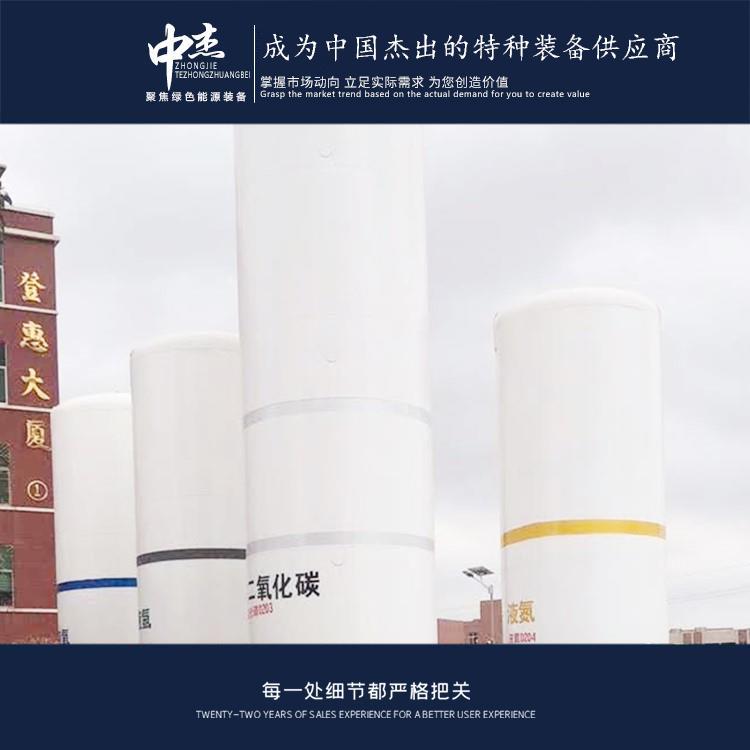
Low-temperature liquid storage tanks feature the following characteristics and advantages:
Feature:
Low-Temperature Storage: Low-temperature liquid storage tanks can store low-temperature liquids (such as liquid nitrogen, liquid oxygen, etc.) at low temperatures, maintaining their liquid state. Liquid storage significantly enhances storage density and saves space.
Insulation: The low-temperature liquid storage tank is equipped with special insulation materials and structural design, effectively reducing heat conduction and loss, maintaining a stable temperature for the low-temperature liquid. This helps to minimize energy loss and liquid evaporation.
Safety: Low-temperature liquid storage tanks boast excellent safety performance. The tanks are constructed with special materials and design, capable of withstanding low temperatures and high pressures. Additionally, the tanks are equipped with safety devices, such as pressure relief valves and level alarms, to ensure safe operation and usage.
Utilization Advantages:
High Purity Supply: Low-temperature liquid storage tanks can provide high-purity liquid substance supply. Through refrigeration and purification processing, high-purity liquid gases can be obtained to meet application requirements in fields such as industry and scientific research.
Long-term Storage: Low-temperature liquid storage tanks are designed for long-term storage of cold liquids, extending their service life. By controlling the temperature inside the tank and the performance of the insulation layer, the evaporation and oxidation of the liquid can be slowed down, maintaining its stability and purity.
Versatile Applications: Low-temperature liquid storage tanks are widely used in various fields such as industry and scientific research. They can be used for storing liquid oxygen to provide oxygen supply; in the industrial sector, they are suitable for storing liquefied natural gas (LNG) and other process gases; and in the scientific research field, they can store low-temperature experimental samples.
Environmental Protection and Energy Saving: Low-temperature liquid storage tanks enable effective storage and utilization of low-temperature liquids, reducing energy waste and environmental pollution. Storage of liquid substances
Oxygen cylinders and liquid oxygen tanks are devices used for storing oxygen, but they have some distinctions: Storage form: Oxygen cylinders are typically used for storing gaseous oxygen, while liquid oxygen tanks are for storing liquid oxygen. Oxygen is in a gaseous state at room temperature but can be cooled to a liquid state at lower temperatures for more efficient storage and use. Storage pressure: Oxygen cylinders usually store high-pressure oxygen, with pressures around 200-300 bar. Liquid oxygen tanks, however, store liquid oxygen at lower pressures, generally around 2-5 bar. Storage capacity: Oxygen cylinders usually have smaller capacities, suitable for personal or small-scale use. Liquid oxygen tanks have larger capacities, suitable for industrial or large-scale use. Storage method: Oxygen cylinders store oxygen in a gaseous form, via compressed gas storage. Liquid oxygen tanks store oxygen as a liquid, by cooling it to temperatures below its boiling point. Safety requirements: Due to the highly oxidizing nature of liquid oxygen, liquid oxygen tanks require stricter safety requirements in design and use. Liquid oxygen tanks typically need to have good thermal insulation, leak control, and fire prevention measures to ensure safe operation. It is important to note that the specific design and specifications of oxygen cylinders and liquid oxygen tanks may vary depending on different regions, applications, and locations. When using these tanks, it is necessary to follow applicable regulations, standards, and safety guidelines, and to cooperate with local regulatory authorities and personnel to ensure the safety and reliability of the tanks.
ZJ Special Equipment adheres to the grand vision of "realizing employees' dreams, creating value for customers, and striving for the prosperity and strength of our motherland," and is dedicated to the development of the green energy equipment industry. We offer products and services with high cost-performance to contribute to society!
WeChat Official Account

Scan to follow Official Account




















